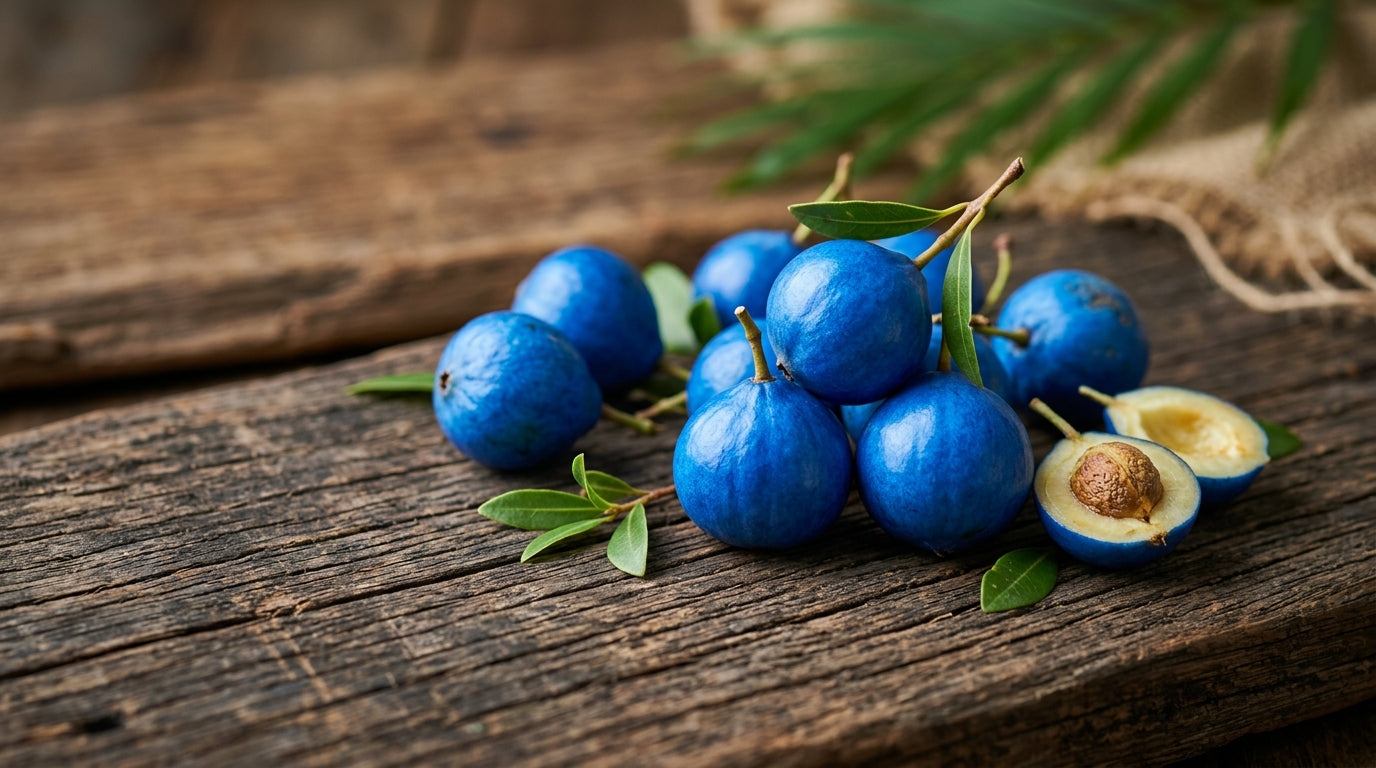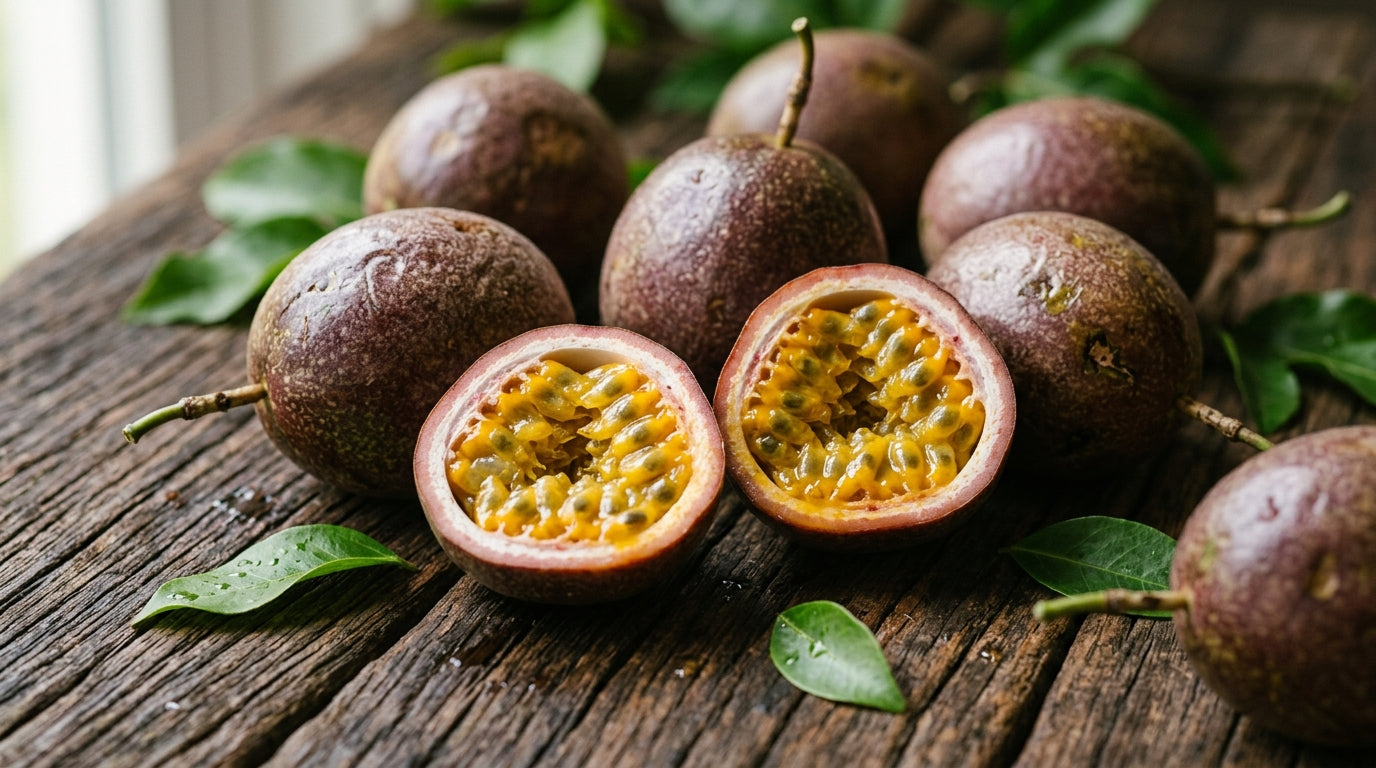
Passiflora ligularis, commonly called sweet granadilla or Bolivian passionfruit, delivers antioxidant protection through flavonoids and carotenoids that neutralize reactive oxygen species. Its high dietary fiber content promotes digestive health by supporting beneficial gut microbiota and enhancing intestinal motility.

Origin
The Bolivian Passionfruit (Passiflora ligularis) is a vibrant fruit native to the Andean regions of Bolivia, Colombia, Ecuador, and Peru, thriving in subtropical montane forests at elevations of 2,000 to 3,200 meters. This ecologically significant fruit provides sustenance for local wildlife and offers a rich profile of antioxidants and fiber, making it a valuable functional food for holistic wellness.
Potential benefits
- Exhibits potent antioxidant activity through flavonoids and carotenoids, neutralizing free radicals and reducing oxidative stress.
- Supports digestive health via high dietary fiber content, promoting regularity, gut motility, and microbiome balance.
- Enhances cardiovascular wellness by contributing to cholesterol regulation and providing potassium for blood pressure support.
- Boosts immune function with abundant vitamin C, aiding in pathogen defense and collagen synthesis.
- Promotes skin vitality and cellular repair through a diverse range of antioxidants and essential nutrients.
- Contributes to metabolic health by supplying nutrients involved in energy production and cellular metabolism.
How it works
Flavonoids including quercetin and kaempferol derivatives scavenge free radicals through electron donation, while carotenoids like beta-carotene quench singlet oxygen species. The fruit's soluble and insoluble fiber fractions modulate gut microbiome composition and promote short-chain fatty acid production. Potassium content supports cardiovascular function through sodium-potassium pump regulation and vascular smooth muscle relaxation.
What the research says
Limited specific clinical data exists for Passiflora ligularis as a distinct variety, with most research focusing on Passiflora edulis and related species. Nutritional analyses confirm high fiber content (10-15g per 100g) and significant antioxidant capacity through ORAC and DPPH assays. Small-scale studies on passion fruit species generally demonstrate improved antioxidant status and digestive parameters, though larger controlled trials specific to P. ligularis are lacking. Current evidence relies primarily on phytochemical analysis and traditional use data rather than robust clinical validation.
Safety and interactions
Passiflora species are generally well-tolerated with rare reports of allergic reactions in sensitive individuals. The fruit may interact with anticoagulant medications due to vitamin K content, though clinically significant interactions are uncommon. High fiber intake may cause gastrointestinal discomfort including bloating or loose stools in sensitive individuals. Pregnancy and lactation safety data is limited, requiring caution in these populations despite traditional food use.
Suggested use
- Common Forms: Fresh fruit, juice, smoothies, jams, sauces, desserts.
- Traditional Use: Consumed fresh or as juice by Andean communities; used in folk remedies for digestion and immunity.
- Dosage: Recommended intake is 1–2 fruits daily for optimal health benefits.
- Preparation: Pulp can be scooped and eaten raw, or blended into beverages and recipes.
Frequently asked questions
What makes Bolivian passionfruit different from regular passion fruit?
Passiflora ligularis has a harder shell and sweeter pulp compared to Passiflora edulis, with higher sugar content and different flavor compounds. It grows at higher altitudes (2,000+ meters) in Andean regions, developing unique phytochemical profiles adapted to mountainous conditions.
How much fiber does Bolivian passionfruit contain?
Bolivian passionfruit contains approximately 10-15 grams of dietary fiber per 100 grams of fruit pulp. This includes both soluble fiber that supports cholesterol management and insoluble fiber that promotes digestive regularity and gut motility.
Can Bolivian passionfruit help with blood pressure?
The fruit provides significant potassium content (approximately 350mg per 100g) which supports blood pressure regulation through sodium-potassium balance. However, clinical studies specifically measuring blood pressure effects of P. ligularis consumption are currently lacking.
What antioxidants are found in Bolivian passionfruit?
Primary antioxidants include flavonoids such as quercetin and kaempferol derivatives, plus carotenoids including beta-carotene and lycopene. These compounds demonstrate free radical scavenging activity in laboratory assays, though specific concentrations vary based on growing conditions and fruit maturity.
Is it safe to eat Bolivian passionfruit daily?
Daily consumption is generally safe for healthy individuals as part of a balanced diet, given its traditional food use in Andean cultures. However, individuals on anticoagulant therapy or with fiber sensitivity should consult healthcare providers due to potential vitamin K content and high fiber levels.
Does Bolivian passionfruit interact with blood pressure or cholesterol medications?
Bolivian passionfruit contains potassium and compounds that support cardiovascular health, which may have additive effects with antihypertensive or statin medications. If you take blood pressure or cholesterol-lowering drugs, consult your healthcare provider before adding Bolivian passionfruit supplements to ensure safe co-administration. Most dietary amounts are generally compatible, but individualized medical advice is recommended.
Is Bolivian passionfruit safe to take during pregnancy or while breastfeeding?
Limited clinical safety data exists specifically for Bolivian passionfruit supplementation during pregnancy and lactation. Whole fruit consumption in normal dietary amounts is typically considered safe, but concentrated supplements should only be used under healthcare provider guidance. Pregnant or nursing women should consult their doctor before starting any new supplement regimen.
What does research show about Bolivian passionfruit's effect on immune function?
Bolivian passionfruit contains flavonoids and carotenoids that support immune cell activity and reduce oxidative stress linked to immune dysfunction. While preliminary evidence suggests these compounds enhance immune response, large-scale human clinical trials specifically measuring immune markers are limited. Current research is promising but would benefit from additional well-designed studies in human populations.
References
- https://www.ncbi.nlm.nih.gov/search/all/?term=Bolivian+Passionfruit
- https://fdc.nal.usda.gov/fdc-app.html#/search?query=Bolivian+Passionfruit
- https://www.ncbi.nlm.nih.gov/pmc/articles/PMC3257681/
- https://www.sciencedirect.com/science/article/pii/S0963996911004043
This article is educational and is not medical advice. Statements have not been evaluated by the FDA and are not intended to diagnose, treat, cure, or prevent any disease. Consult a healthcare professional before use.