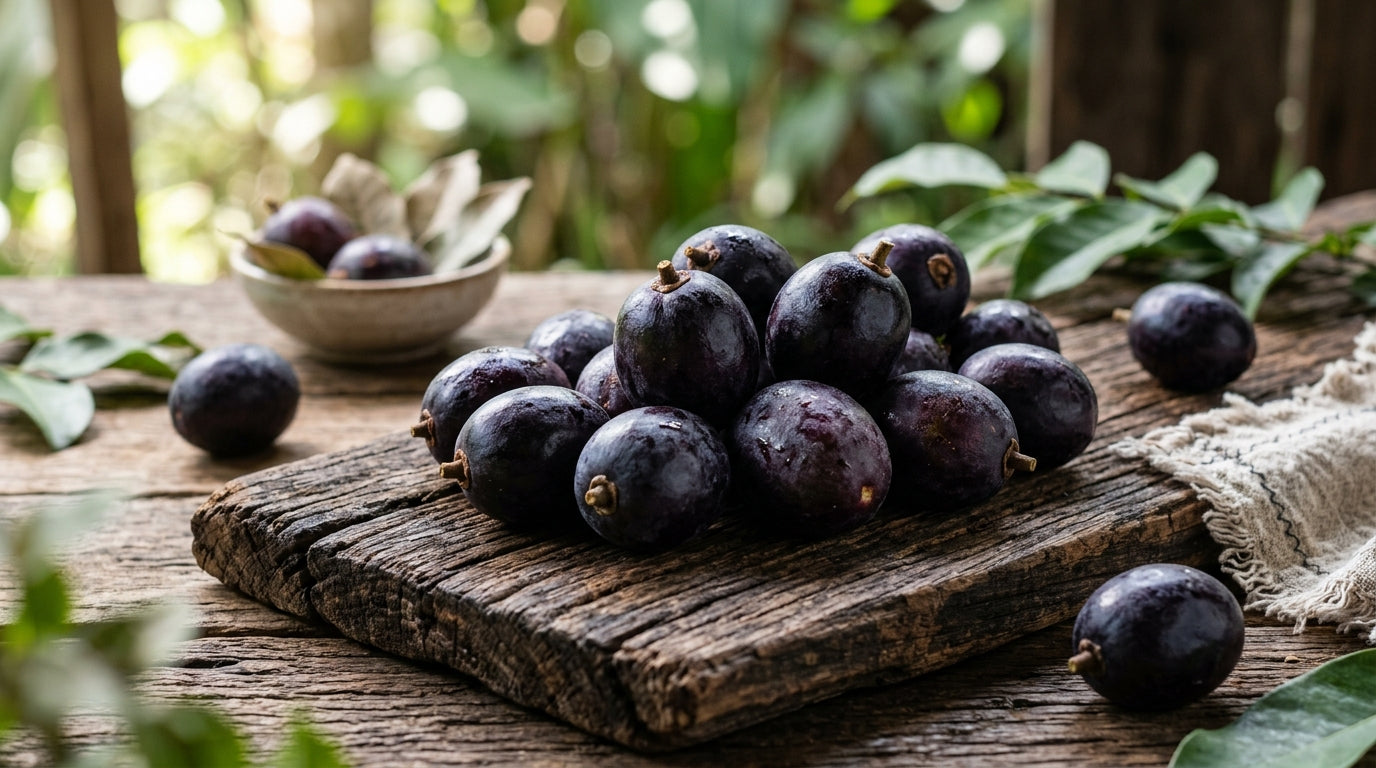
Dabai (Canarium odontophyllum) contains anthocyanins, polyphenols, and salicylic acid that activate AMPK pathways to reduce cholesterol and triglyceride synthesis. The fruit's peel extracts inhibit lipid peroxidation while elevating antioxidant enzymes SOD and GPx, demonstrating cardioprotective mechanisms.

Origin
Dabai (Canarium odontophyllum) is a tropical fruit native to the rainforests of Borneo, specifically Malaysia, Indonesia, and Brunei. It thrives in humid, nutrient-rich, well-drained soils and is valued for its exceptional nutritional density and functional properties.
Potential benefits
- Supports cardiovascular health by improving lipid profiles and reducing oxidative stress.
- Enhances cognitive function through neuroprotective compounds that promote brain cell regeneration.
- Regulates blood sugar levels by optimizing insulin sensitivity and glucose metabolism.
- Promotes digestive wellness by nourishing beneficial gut microbiota with prebiotic fiber.
- Provides systemic anti-inflammatory benefits by reducing oxidative damage.
- Facilitates liver detoxification processes and improves overall metabolic efficiency.
- Enhances skin rejuvenation by supporting collagen synthesis and cellular vitality.
How it works
Anthocyanins in dabai activate AMPK, inhibiting HMG-CoA reductase for cholesterol reduction and ACC1/ACC2 for lower triglycerides while promoting fatty acid oxidation. Salicylic acid stimulates Pparα for enhanced oxidation while suppressing Pparγ-Srebp-1c and Srebp-2 to reduce lipid synthesis. These compounds also elevate antioxidant enzymes SOD and GPx while inhibiting lipid peroxidation through reduced plasma MDA levels.
What the research says
Current evidence derives exclusively from animal studies and in vitro research, with no published human clinical trials available. Rat studies using defatted dabai peel extract demonstrated inhibition of lipid peroxidation and enhanced SOD and GPx enzyme activity. DPPH radical scavenging assays showed skin extract EC50 values ranging from 198.76 ± 1.06 µg/mL to 320.64 ± 1.09 µg/mL. The absence of human clinical data significantly limits the strength of evidence for therapeutic applications.
Safety and interactions
No specific safety concerns, drug interactions, or contraindications have been documented in available research. Animal and in vitro studies report no toxicity from dabai extracts, though comprehensive safety profiling remains incomplete. The lack of human clinical trials means safety data during pregnancy, lactation, and in pediatric populations is unavailable. Patients should consult healthcare providers before using dabai supplements, especially when taking cardiovascular or diabetes medications due to potential additive effects.
Suggested use
- Traditionally, Dabai fruit is soaked in warm water to soften, then consumed fresh, fermented, or roasted.
- Modern applications include high-antioxidant superfruit powders, botanical extracts, and functional foods.
- Recommended dosage for powdered extracts is typically 1-2 servings daily, or as directed by product specifications.
Frequently asked questions
What are the active compounds in dabai fruit?
Dabai contains anthocyanins (cyanidin, delphinidin), polyphenols, flavonoids, and salicylic acid, with the highest concentrations found in the peel and skin extracts. These compounds demonstrate DPPH radical scavenging activity with EC50 values ranging from 198.76-320.64 µg/mL.
How does dabai help with cholesterol levels?
Anthocyanins activate AMPK pathways, inhibiting HMG-CoA reductase for cholesterol synthesis reduction and ACC1/ACC2 for triglyceride control. Salicylic acid suppresses Srebp-1c and Srebp-2 transcription factors that regulate lipid and cholesterol synthesis.
Are there clinical studies on dabai fruit?
No human clinical trials have been published on dabai fruit. Current evidence comes only from animal studies in rats and in vitro laboratory research, significantly limiting the clinical applicability of findings.
What parts of dabai fruit are used medicinally?
Research focuses on extracts from dabai peel, skin, pulp, and seeds, with peel extracts showing the strongest cardioprotective effects. Skin extracts demonstrate notable antioxidant activity, while supercritical CO2 extracts from pulp and seeds show lipid-modulating properties.
Is dabai fruit safe to consume?
Animal and in vitro studies report no toxicity from dabai extracts, but comprehensive human safety data is unavailable. No drug interactions or contraindications have been documented, though patients should consult healthcare providers before supplementation due to limited safety profiling.
Can dabai fruit interact with blood sugar medications or insulin?
Dabai fruit may enhance insulin sensitivity and glucose metabolism, which could potentially potentiate the effects of diabetes medications. Individuals taking metformin, sulfonylureas, or insulin should monitor their blood sugar levels closely and consult with their healthcare provider before adding dabai supplements to their regimen. Dosage adjustments to existing medications may be necessary to avoid hypoglycemia.
Is dabai fruit safe for pregnant or breastfeeding women?
There is limited clinical safety data on dabai fruit supplementation during pregnancy and lactation, so it is generally recommended that pregnant and breastfeeding women consult their healthcare provider before use. While the fruit is consumed as food in some regions, the concentrated bioactive compounds in supplement form have not been thoroughly studied in these populations. A cautious approach with medical guidance is advised.
How does dabai compare to other cardiovascular fruits like pomegranate or blueberry?
Dabai contains high levels of polyphenols and fatty acids that support lipid profiles, while pomegranate is known for punicalagins and blueberry for anthocyanins—all offering distinct antioxidant mechanisms. Dabai's unique strength lies in its combination of fiber for gut health and compounds supporting insulin sensitivity, whereas pomegranate excels in endothelial function and blueberry in cognitive protection. The choice depends on individual health goals, though combining these fruits offers complementary cardiovascular benefits.
References
- https://fdc.nal.usda.gov/fdc-app.html#/search?query=Dabai
- https://fdc.nal.usda.gov/fdc-app.html#/search?query=Dabai+Berry
- https://fdc.nal.usda.gov/fdc-app.html#/search?query=Dabai+Flower
- https://fdc.nal.usda.gov/fdc-app.html#/search?query=Dabai+Oil
- https://fdc.nal.usda.gov/food-search?query=Dabai+Seed
- https://jtafs.mardi.gov.my/jtafs/43-1/Dabai%20fruit.pdf
- https://www.healthbenefitstimes.com/know-about-the-dabai/
- https://www.mdpi.com/1420-3049/25/5/1180
- https://www.mdpi.com/2223-7747/11/19/2646
- https://www.ncbi.nlm.nih.gov/search/all/?term=Dabai
- https://www.ncbi.nlm.nih.gov/search/all/?term=Dabai+Berry
- https://www.ncbi.nlm.nih.gov/search/all/?term=Dabai+Flower
- https://www.ncbi.nlm.nih.gov/search/all/?term=Dabai+Fruit+Extract
- https://www.ncbi.nlm.nih.gov/search/all/?term=Dabai+Husk
- https://www.ncbi.nlm.nih.gov/search/all/?term=Dabai+Oil
This article is educational and is not medical advice. Statements have not been evaluated by the FDA and are not intended to diagnose, treat, cure, or prevent any disease. Consult a healthcare professional before use.