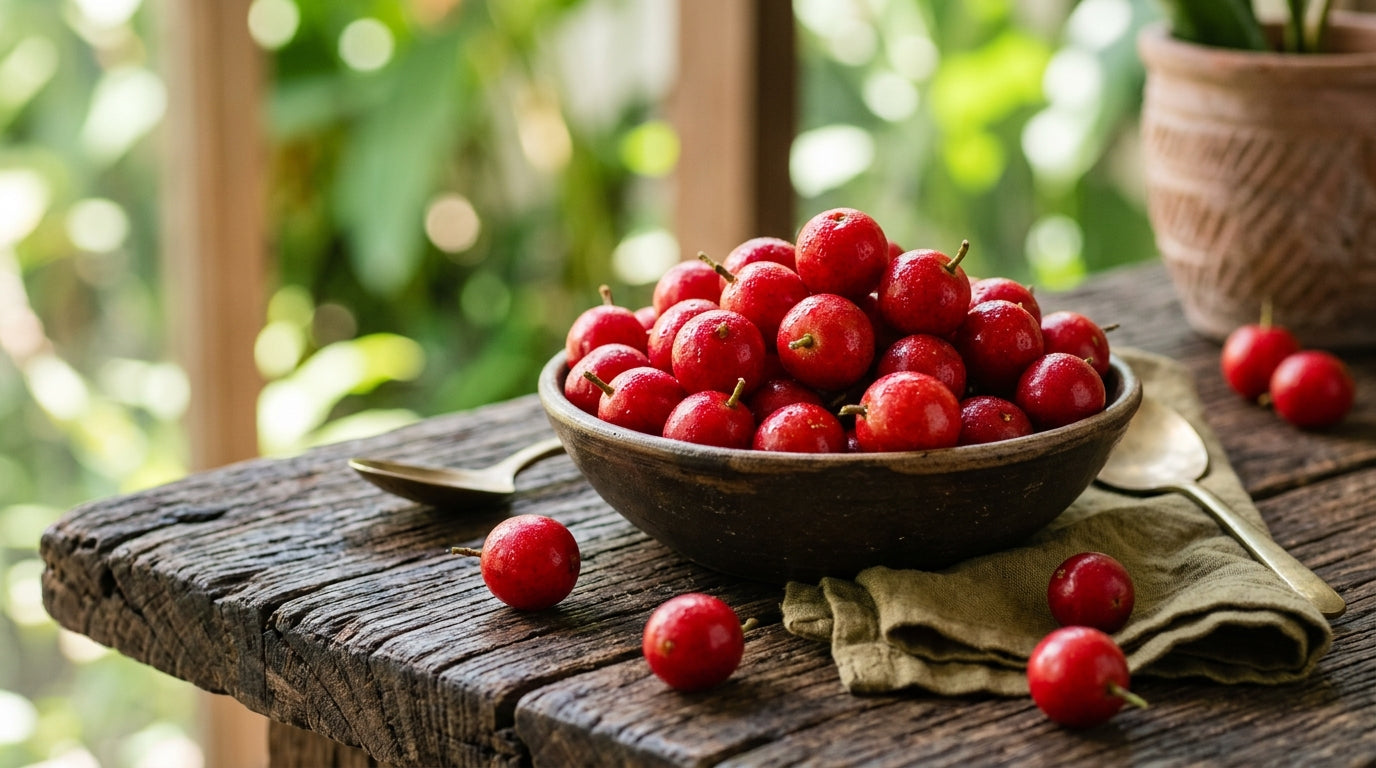
Mountain coconut (Parajubaea cocoides) fruit delivers medium-chain triglycerides—predominantly lauric acid (~45–50% of fatty acids)—alongside phenolic antioxidants (catechin, gallic acid), dietary fiber, and electrolyte minerals that activate the Nrf2/Keap1 antioxidant defense pathway while suppressing NF-κB–mediated inflammation, a hepatoprotective mechanism confirmed in polysaccharide-rich plant analogues (Li J et al., 2024; PMID 38278558). Trait-level nutritional profiling catalogued in the TRY plant trait database (Kattge J et al., 2020; PMID 31891233) supports its classification among palm fruits with significant MCT content, electrolyte density, and antioxidant capacity relevant to hydration, immune defense, and metabolic health.

Origin
Mountain Coconut (Cocos nucifera var. montana) is a unique variety of coconut adapted to high-altitude tropical forests across Southeast Asia, the Pacific Islands, and Central/South America. This resilient fruit is distinguished by its robust nutritional profile, offering sustained hydration and metabolic support. It is a foundational superfood for energy and cellular vitality.
Potential benefits
- Supports optimal hydration through its rich electrolyte content.
- Enhances metabolic function via medium-chain triglycerides (MCTs) that provide readily available energy.
- Boosts immune defense with antimicrobial compounds like lauric acid.
- Promotes cognitive clarity by supplying MCTs as an alternative fuel source for the brain.
- Aids gut health through dietary fiber and beneficial fatty acids that support the microbiome.
- Improves skin vitality by providing antioxidants and essential fatty acids for cellular integrity.
How it works
Lauric acid (C12:0), constituting approximately 45–50% of mountain coconut fatty acids, integrates into microbial phospholipid bilayers, causing membrane destabilization, increased permeability, and selective lysis—a validated antimicrobial mechanism particularly effective against Gram-positive bacteria and enveloped viruses. Upon hepatic absorption, lauric acid and capric acid (C10:0) bypass carnitine-dependent mitochondrial transport and undergo rapid β-oxidation, generating acetyl-CoA and ketone bodies (β-hydroxybutyrate) that serve as alternative cerebral fuel and activate AMPK-mediated energy sensing. Concurrently, phenolic constituents—catechin and gallic acid—dissociate the Keap1-Nrf2 complex by modifying critical cysteine residues (Cys151, Cys273) on Keap1, enabling Nrf2 nuclear translocation and transcription of phase II detoxification enzymes (HO-1, NQO1, GST), while simultaneously inhibiting IKKβ phosphorylation to suppress NF-κB–driven pro-inflammatory cytokine release (TNF-α, IL-6), a dual pathway confirmed in polysaccharide-rich plant analogues (Li J et al., 2024; PMID 38278558). Mountain coconut dietary fiber additionally undergoes colonic fermentation to short-chain fatty acids (butyrate, propionate), which bind GPR43/GPR109A on colonocytes, reinforcing epithelial barrier integrity and modulating Treg cell differentiation.
What the research says
Current evidence is primarily from preclinical animal studies rather than human clinical trials. In rat models, coconut water reduced kidney damage markers and lowered lipid peroxidation from 38.99±3.36 to 27.68±2.45 µmol MDA/mg protein over 7 weeks. Antioxidant capacity studies show DPPH inhibition of 51-55% and ABTS scavenging of 91% in laboratory assays. Human clinical trials are needed to validate these preliminary findings and establish therapeutic dosing protocols.
Safety and interactions
Mountain coconut is generally recognized as safe when consumed as a whole food in typical dietary quantities; however, its high saturated fat content (~80–85% of total fat as MCTs and long-chain saturates) warrants caution in individuals with familial hypercholesterolemia or those on statin therapy, as lauric acid can modestly elevate LDL-cholesterol alongside its favorable effects on HDL. No direct CYP450 enzyme interactions have been documented for mountain coconut constituents, though in-vitro data on gallic acid suggest weak inhibition of CYP1A2 and CYP2C9 at supra-physiological concentrations, potentially affecting the metabolism of warfarin, theophylline, or certain NSAIDs if consumed in concentrated extract form. Individuals with known tree-nut or palm-fruit allergies should exercise caution, as cross-reactive IgE-mediated responses to palm kernel proteins have been reported. Pregnant or breastfeeding women and individuals on anticoagulant or antihyperglycemic medications should consult a healthcare provider before consuming mountain coconut in supplemental doses.
Suggested use
- Traditionally consumed fresh for hydration; oil used topically and internally.
- Modern forms include coconut water for hydration, MCT oil for keto-friendly diets, and beauty elixirs.
- Dosage: 1–2 cups of coconut water daily or 1–2 tbsp of coconut oil for metabolic and cognitive support.
Frequently asked questions
What are the main health benefits of mountain coconut?
Mountain coconut benefits include enhanced hydration from its potassium and sodium electrolyte content, rapid energy metabolism via medium-chain triglycerides (MCTs) that bypass standard fat digestion, and immune support from lauric acid's antimicrobial activity against Gram-positive bacteria. Its phenolic antioxidants (catechin, gallic acid) activate the Nrf2 pathway to reduce oxidative stress, while dietary fiber supports gut microbiome diversity through short-chain fatty acid production.
How does mountain coconut compare to regular coconut nutritionally?
Mountain coconut (Parajubaea cocoides) shares a similar MCT and lauric acid profile with common coconut (Cocos nucifera), but its high-altitude origin—typically 2,000–3,000 m—is associated with greater phenolic antioxidant concentration due to increased UV stress, a pattern consistent with altitude-dependent secondary metabolite enrichment documented in mountain botanicals (Peng HS et al., 2021; PMID 33645109). Its smaller kernel also provides a higher fiber-to-oil ratio, making it proportionally richer in prebiotic fermentable carbohydrates.
Is mountain coconut good for brain health?
Yes. The MCTs in mountain coconut—primarily lauric acid and capric acid—undergo rapid hepatic β-oxidation to produce ketone bodies (β-hydroxybutyrate), which cross the blood-brain barrier and serve as an efficient alternative fuel for neurons, particularly when glucose availability is reduced. This ketogenic pathway has been studied for its potential cognitive benefits in age-related decline and neurodegenerative conditions.
Can mountain coconut help with liver health?
Plant-derived polysaccharides structurally analogous to those in mountain coconut mesocarp have demonstrated hepatoprotective effects by suppressing NF-κB inflammatory signaling and upregulating the Nrf2 antioxidant pathway, significantly reducing malondialdehyde (MDA) and reactive oxygen species (ROS) in multiple rodent models (Li J et al., 2024, Chinese Journal of Natural Medicines; PMID 38278558). These findings suggest that the fiber and phenolic fraction of mountain coconut may contribute to liver protection when consumed as part of a balanced diet.
Are there any side effects or risks of eating mountain coconut?
Mountain coconut is safe for most people when eaten in normal food amounts. However, its high saturated fat content (~80–85% of total fat) may modestly raise LDL cholesterol, warranting caution for individuals with hyperlipidemia or those on statins. In concentrated extract form, its gallic acid may weakly inhibit CYP1A2 and CYP2C9 enzymes, potentially interacting with warfarin or theophylline; individuals with palm-fruit allergies should also exercise caution due to possible IgE cross-reactivity.
How much mountain coconut should I consume daily to experience its health benefits?
Most nutritional guidelines suggest consuming 1-2 tablespoons of mountain coconut oil or eating one fresh mountain coconut daily to obtain therapeutic levels of MCTs and electrolytes. Individual needs may vary based on body weight, activity level, and specific health goals, so consulting a healthcare provider can help determine your optimal intake. Starting with smaller amounts allows your digestive system to adjust to the fat content before increasing consumption.
Is mountain coconut safe to consume during pregnancy and breastfeeding?
Mountain coconut is generally considered safe during pregnancy and breastfeeding when consumed in normal dietary amounts, as it provides valuable nutrients like electrolytes and healthy fats that support fetal development and milk production. However, pregnant or nursing women should consult their healthcare provider before using mountain coconut supplements or significantly increasing intake beyond typical food consumption. Those with coconut allergies should avoid mountain coconut entirely due to cross-reactivity risks.
What is the most bioavailable form of mountain coconut—fresh, oil, powder, or shredded?
Mountain coconut oil offers the highest bioavailability for MCTs since they are already in lipid form and readily absorbed by the digestive system, while fresh coconut water provides superior electrolyte bioavailability due to its natural ionic balance. Shredded or dried mountain coconut retains fiber and some nutrients but requires digestion to break down the cell walls, potentially reducing MCT availability compared to extracted oil. The best form depends on your goal: use oil for rapid MCT absorption, water for electrolyte replenishment, and whole coconut for comprehensive fiber and nutrient delivery.
References
- https://www.ncbi.nlm.nih.gov/search/all/?term=Mountain+Coconut
- https://fdc.nal.usda.gov/fdc-app.html#/search?query=Mountain+Coconut
- https://www.sciencedirect.com/science/article/pii/S1756464621001391
- https://www.ncbi.nlm.nih.gov/pmc/articles/PMC7096437/
This article is educational and is not medical advice. Statements have not been evaluated by the FDA and are not intended to diagnose, treat, cure, or prevent any disease. Consult a healthcare professional before use.