Soapnut (Sapindus mukorossi) is a saponin-rich fruit containing 10–30% triterpenoid saponins—primarily sapindoside A and B—that function as natural surfactants by reducing surface tension and disrupting lipid bilayers of microbial cell membranes, with documented antimicrobial activity against gram-positive and gram-negative bacteria. Research into its bioactive compounds extends beyond cleansing applications, with studies demonstrating that dietary saponin supplementation from soapnut shell powder can improve oxidative stability in animal protein products (PMID 30996440) and modulate rumen microbiome composition (PMID 41280427), underscoring the broad biological relevance of its phytochemistry.

Origin
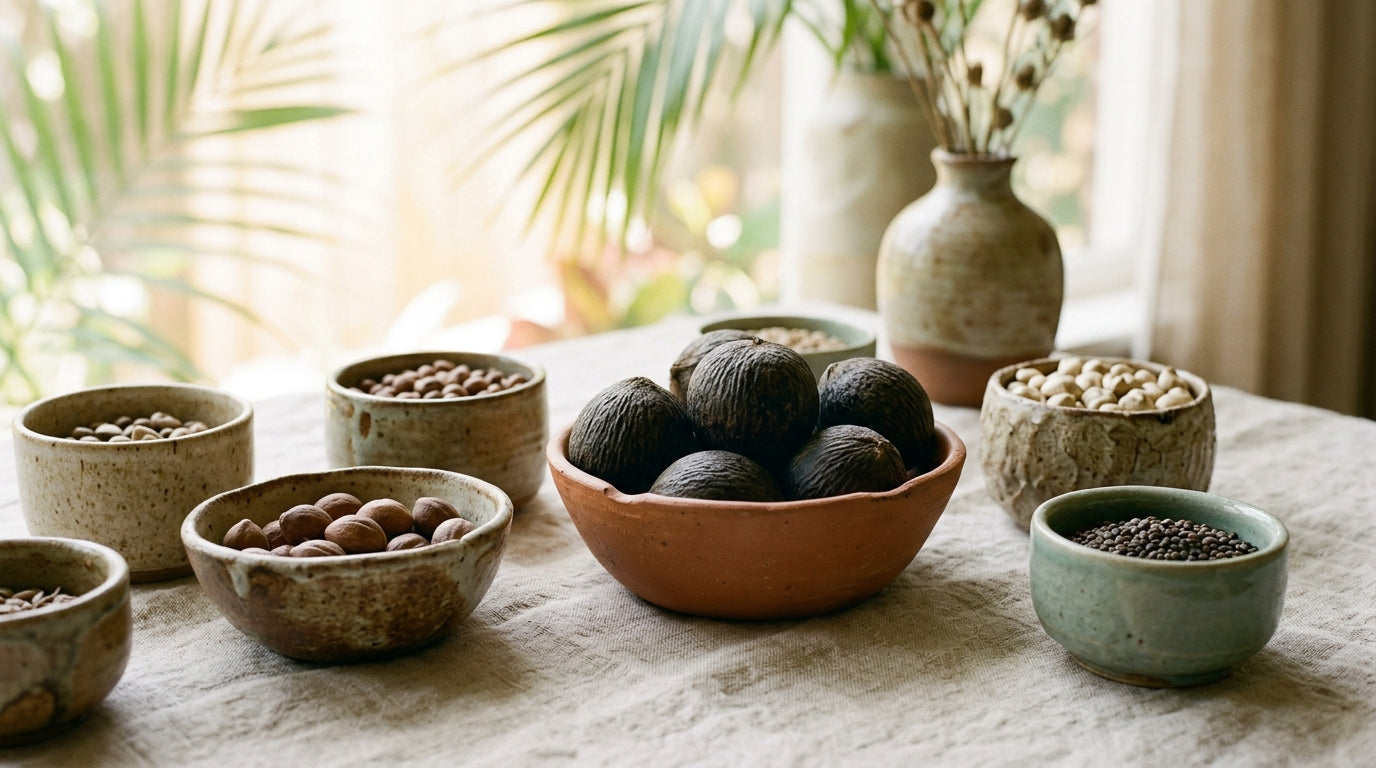
Soapnut (Sapindus mukorossi) is a fruit native to the Himalayan foothills and tropical regions of India, Nepal, and China, thriving in well-drained soils. Renowned for its natural saponin content, it serves as a powerful, eco-friendly ingredient for cleansing, detoxification, and holistic wellness.
Potential benefits
- Exhibits powerful natural cleansing properties due to its high saponin content, acting as a natural surfactant to lift dirt and oils.
- Demonstrates antimicrobial and anti-inflammatory effects, supporting skin health and helping to alleviate conditions like eczema and acne.
- Nourishes the scalp, reduces dandruff, and promotes healthier hair through its bioactive compounds.
- Contributes to respiratory health by helping to relieve coughs and clear mucus, as per traditional uses.
- Enhances antioxidant defense and immune resilience, protecting against oxidative stress and supporting cellular function.
- Aids digestive health by promoting regular bowel movements and supporting detoxification processes.
How it works
The primary bioactive compounds in soapnut are oleanane- and dammarane-type triterpenoid saponins (including sapindoside A, sapindoside B, and mukorozisaponin G), which possess amphiphilic structures consisting of a hydrophobic aglycone (sapogenin) core bonded to hydrophilic sugar moieties. These saponins act as natural surfactants by intercalating into microbial lipid bilayers, solubilizing membrane cholesterol and phospholipids, thereby causing pore formation, increased permeability, and eventual cell lysis—a mechanism effective against both gram-positive and gram-negative bacteria as well as fungi. Beyond membrane disruption, soapnut saponins have been shown to denature membrane-associated proteins and inhibit microbial enzymatic pathways, while also exhibiting antioxidant activity by scavenging free radicals and chelating transition metal ions, which contributes to the improved oxidative stability observed in saponin-supplemented animal studies (PMID 30996440). Their emulsifying action further enables the solubilization of sebum, dirt, and environmental pollutants on skin and hair, underpinning soapnut's traditional role in personal care and household cleaning.
What the research says
Limited animal studies show soapnut shell powder supplementation significantly increased testosterone levels (1.65 ng/mL vs 1.41 ng/mL control, p<0.05) and improved reproductive parameters including sperm count and motility (p<0.001). Laboratory antimicrobial testing confirms MIC values of 12.5-25 mg/mL against E. coli, S. aureus, and Candida species. However, human clinical trials are lacking, and current evidence relies primarily on in vitro studies and single animal reproductive trials. Safety data, optimal dosing, and long-term effects in humans remain inadequately characterized.
Safety and interactions
Soapnut saponins are generally recognized as safe for topical and household use; however, Merget (2021) documented cases of occupational immediate-type (IgE-mediated) hypersensitivity to soapnut in sensitized individuals, manifesting as contact urticaria and respiratory symptoms (PMID 33524084), indicating that repeated occupational or prolonged dermal exposure may pose allergenic risk. Oral ingestion of large quantities of soapnut can cause gastrointestinal irritation, nausea, vomiting, and diarrhea due to the hemolytic and mucosal-irritant properties of high-dose saponins. While specific CYP450 interaction studies for Sapindus mukorossi saponins are limited, triterpenoid saponins from related species have been shown to modulate CYP3A4 and P-glycoprotein activity in vitro, suggesting caution when co-administering soapnut preparations with drugs that are CYP3A4 substrates (e.g., statins, immunosuppressants). Pregnant or breastfeeding individuals should avoid oral soapnut supplementation due to insufficient human safety data, and individuals with known allergies to Sapindaceae family plants should exercise particular caution.
Suggested use
- Traditionally revered in Ayurveda for balancing Kapha and Pitta doshas, used in shampoos, body cleansers, and spiritual purification rituals.
- In Traditional Chinese Medicine (TCM), it is used to clear phlegm and support respiratory function.
- Modern applications include eco-friendly laundry detergents, shampoo and soap bases, facial cleansers, and all-purpose household cleaners.
- For external use, soapnut shells are boiled in water to create cleansing solutions. Internal use is minimal and requires medical supervision due to saponin content.
Frequently asked questions
Can soapnut help with eczema and acne?
Soapnut's triterpenoid saponins demonstrate anti-inflammatory and antimicrobial activity by disrupting bacterial cell membranes, which may help reduce acne-causing bacteria and calm inflammatory skin conditions like eczema. Its gentle surfactant action cleanses without harsh synthetic detergents that can strip the skin barrier. While traditional Ayurvedic use supports these applications and the antimicrobial mechanism is well-documented, robust clinical trials specifically in eczema and acne patients remain limited. Diluted soapnut preparations are generally considered suitable for these concerns, but individuals should patch-test first and consult a dermatologist for severe conditions.
What are the side effects of taking soapnut internally?
Internal consumption of soapnut carries meaningful risks due to its high saponin content. Saponins can disrupt intestinal cell membranes in a manner similar to their antimicrobial action, potentially causing nausea, vomiting, diarrhoea, and gastrointestinal irritation at elevated doses. Saponins can also be haemolytic—capable of rupturing red blood cells—if they enter the bloodstream in significant quantities. Traditional internal use for respiratory and digestive complaints exists in Ayurveda and TCM, but modern guidance strongly recommends that any oral use of soapnut preparations be undertaken only under qualified medical supervision.
How does soapnut compare to conventional chemical detergents for laundry?
Soapnut shells contain 10–30% saponins that act as natural surfactants, reducing surface tension and emulsifying oils and dirt similarly to synthetic detergents. They are biodegradable, free from synthetic fragrances, phosphates, and optical brighteners, making them environmentally preferable. However, they generally perform best in warm to hot water where saponin release is optimal, and may be less effective on heavy grease stains compared to enzyme-containing commercial detergents. For everyday laundry, particularly for delicates and sensitive-skin individuals, soapnuts offer a competitive, low-irritant alternative.
Does soapnut have antioxidant properties that support immune health?
Yes. Soapnut's saponins exhibit documented antioxidant activity by scavenging free radicals and reducing lipid peroxidation. Research by Bera et al. (2019, PMID 30996440) showed that dietary saponin supplementation improved oxidative stability in animal tissue, indicating meaningful antioxidant bioactivity. By neutralising reactive oxygen species, soapnut compounds may support cellular integrity and bolster immune resilience. While most evidence comes from animal and in vitro studies, the antioxidant mechanism—linked to the polyphenolic and saponin fraction—is biologically plausible and aligns with its traditional use for enhancing overall vitality.
Can soapnut be used during pregnancy or while breastfeeding?
There is insufficient clinical safety data to recommend internal use of soapnut during pregnancy or breastfeeding. Saponins have membrane-disrupting properties and potential haemolytic effects that raise precautionary concerns for vulnerable populations. External topical use—such as diluted soapnut cleansers for skin or hair—is generally considered low-risk given minimal systemic absorption, but this has not been rigorously studied in pregnant or lactating women. Pregnant and breastfeeding individuals should consult a healthcare provider before using soapnut products in any form beyond routine topical cleansing.
Is soapnut effective for dandruff and an itchy scalp?
Soapnut is traditionally used in Ayurvedic hair care to reduce dandruff and soothe scalp irritation. Its antimicrobial saponins may inhibit the overgrowth of Malassezia fungi—a key contributor to dandruff—by disrupting fungal cell membranes. Additionally, its anti-inflammatory properties can help calm scalp redness and itching. The saponin-based lather gently cleanses sebum and product buildup without the harsh sulphates found in conventional shampoos, which can aggravate a sensitive scalp. Regular use of soapnut-based shampoo preparations is a widely practised and generally well-tolerated approach for scalp health maintenance.
Can soapnut help with respiratory issues like coughs and congestion?
In Traditional Chinese Medicine and Ayurveda, soapnut has historically been used to clear phlegm and relieve coughs, attributed to the expectorant-like properties of its saponins. Saponins are known to reduce mucus viscosity and stimulate secretion clearance in respiratory tissue, a mechanism shared with saponin-containing plants used in conventional expectorant formulations. However, rigorous clinical trials validating soapnut specifically for respiratory conditions are lacking. Given the risks associated with internal saponin consumption, any therapeutic use for respiratory health should be approached cautiously and guided by a qualified practitioner.
How does soapnut interact with gut health and digestion?
Soapnut saponins may support digestive health through mild laxative effects and by modulating gut microbiome composition. Research on Sapindus mukorossi supplementation has demonstrated significant effects on microbiome dynamics in animal models (PMID 41280427), suggesting its saponins can selectively influence microbial populations in the gastrointestinal tract. Additionally, saponins may support detoxification pathways by binding bile acids and promoting their excretion. However, at higher doses, saponins can irritate the gut lining. Therapeutic internal use for digestive benefits should be carefully dosed and supervised, as the margin between beneficial and adverse gastrointestinal effects is narrow.
What is soapnut and what makes it a natural cleanser?
Soapnut is the fruit of Sapindus mukorossi (and related species like S. trifoliatus), containing 10–30% triterpenoid saponins that act as natural surfactants. These amphiphilic molecules reduce surface tension in water, creating a lathering effect that lifts dirt, oils, and microbes from surfaces, skin, and hair without synthetic detergents. This property has been utilized for centuries in Ayurvedic medicine and traditional household cleaning across South and Southeast Asia.
Is soapnut safe for sensitive skin and can it cause allergies?
Soapnut is generally well-tolerated for topical use and is often recommended for sensitive or eczema-prone skin due to its mild, pH-balanced cleansing action. However, Merget (2021) documented occupational IgE-mediated immediate-type allergic reactions to soapnut, including contact urticaria and respiratory symptoms, in sensitized individuals (PMID 33524084). A patch test is advisable before first use, especially for those with known allergies to Sapindaceae family plants.
References
- https://fdc.nal.usda.gov/fdc-app.html#/search?query=Soapnut
- https://www.easyayurveda.com/2015/08/07/reetha-soapnut-uses-research-side-effects/
- https://www.healthbenefitstimes.com/soap-nut/
- https://www.ncbi.nlm.nih.gov/search/all/?term=Soapnut
- https://www.stylecraze.com/articles/benefits-of-soapnuts-for-skin-hair-and-health/
- https://pubmed.ncbi.nlm.nih.gov/32529524
- https://pubmed.ncbi.nlm.nih.gov/?term=Soapnut+Berry
- https://www.ncbi.nlm.nih.gov/pmc/articles/PMC7276012/
- https://www.sciencedirect.com/science/article/pii/S0963996920302671
This article is educational and is not medical advice. Statements have not been evaluated by the FDA and are not intended to diagnose, treat, cure, or prevent any disease. Consult a healthcare professional before use.