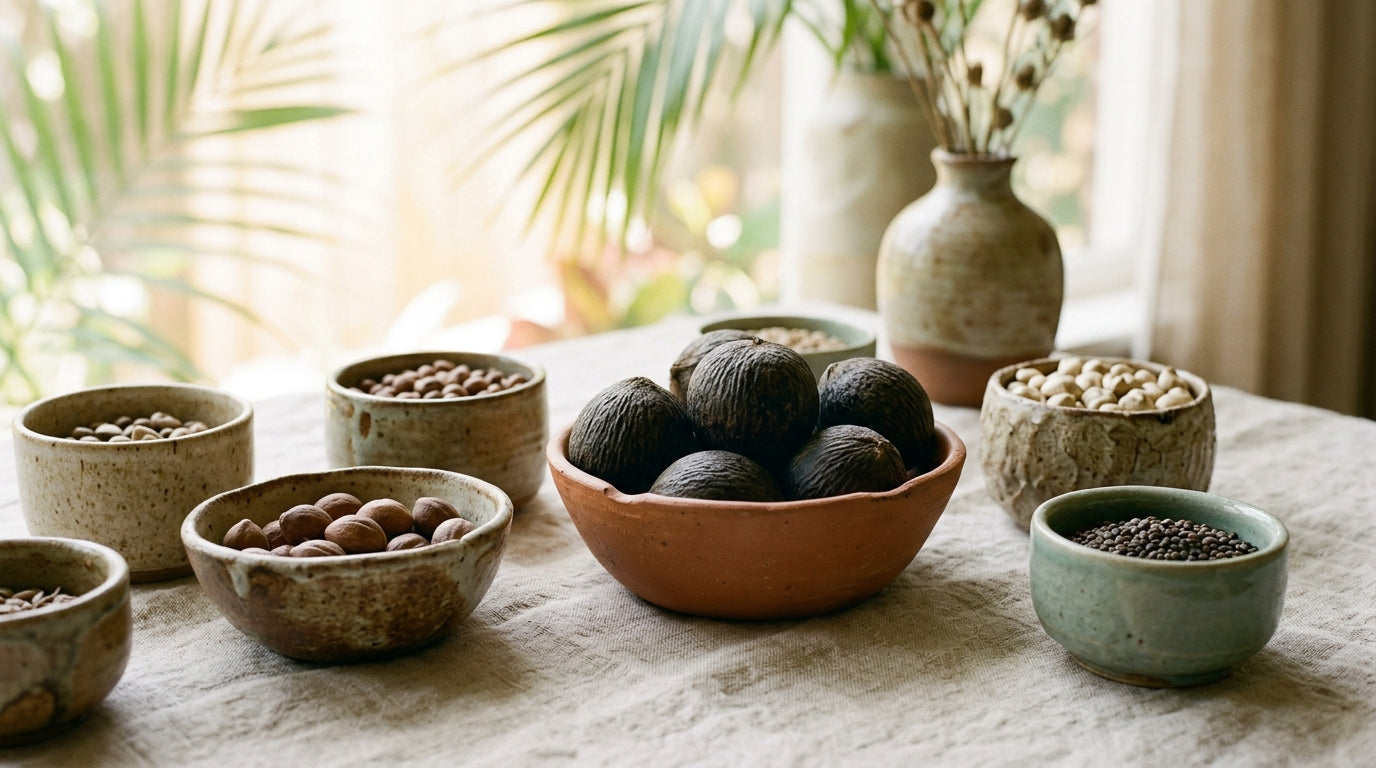
Talipot Palm seeds contain quercetin, coryphasterol, and polyphenols that provide antioxidant and anti-inflammatory effects through COX-2 enzyme downregulation. These bioactive compounds support cardiovascular health, digestive function, and immune system modulation based on preliminary research.

Origin
The Talipot Palm (Corypha umbraculifera) is native to tropical forests and monsoonal regions of India, Sri Lanka, and Myanmar. This majestic palm produces a fruit valued for its unique nutritional profile, offering benefits for metabolic energy, digestion, and cognitive function.
Potential benefits
- Supports metabolic energy production through its unique nutrient composition.
- Improves digestion and gut health with its rich content of prebiotic fiber.
- Enhances immune function by providing essential vitamins, minerals, and polyphenols.
- Promotes cardiovascular health through plant sterols and antioxidant compounds.
- Nourishes skin and supports dermal integrity with vitamins C and E, and carotenoids.
- Protects brain function and cognitive health with its neuroprotective polyphenols.
How it works
Quercetin in Talipot Palm seeds downregulates COX-2 enzymes to reduce inflammatory responses while providing free radical scavenging activity. Coryphasterol, a phytosterol compound, modulates cholesterol absorption in the digestive tract. The polyphenolic compounds stabilize cell membranes and provide hepatoprotective effects through antioxidant pathways.
What the research says
Current evidence for Talipot Palm seeds consists primarily of in vitro and animal studies rather than human clinical trials. A 2015 study in the Indian Journal of Pharmacognosy linked quercetin content to improved joint mobility, while 2020 research by Sri Lankan investigators assessed hepatoprotective capacity. Thermographic studies have documented reduced skin temperature following topical petiole extract application. Further targeted receptor-binding assays and human clinical trials are needed to establish therapeutic efficacy and optimal dosing protocols.
Safety and interactions
Safety data for Talipot Palm seed consumption is limited, with no documented adverse effects or drug interactions in available research. Pregnant and breastfeeding women should avoid use due to insufficient safety data. Individuals taking cholesterol-lowering medications should consult healthcare providers before use, as phytosterols may enhance cholesterol-reducing effects. Those with bleeding disorders should exercise caution due to potential anti-inflammatory effects that may influence blood clotting.
Suggested use
- Common forms: Fresh or dried fruit, powdered extract, medicinal tonics.
- Dosage: Consume 1–2 servings of fresh fruit or 500–1000 mg of powdered extract daily.
- Preparation: Enjoy fresh or dried, grind seeds into medicinal tonics, or incorporate into prebiotic supplements and neuroprotective formulas.
Frequently asked questions
What are the main bioactive compounds in Talipot Palm seeds?
Talipot Palm seeds contain quercetin (a flavonoid with antioxidant properties), coryphasterol (a cholesterol-modulating phytosterol), and various polyphenols with hepatoprotective effects. Tannins are also present, contributing to astringent and antiseptic actions.
How do Talipot Palm seeds support cardiovascular health?
The seeds contain plant sterols like coryphasterol that may modulate cholesterol absorption, while antioxidant compounds help protect against oxidative stress. The anti-inflammatory effects through COX-2 downregulation may also benefit cardiovascular function.
Are there clinical studies proving Talipot Palm seed benefits?
Current evidence is limited to preliminary in vitro and animal studies, with minimal human clinical trial data available. While traditional use and laboratory research show promise, more targeted human studies are needed to establish therapeutic efficacy.
Can Talipot Palm seeds improve digestive health?
The seeds contain prebiotic fiber that may support beneficial gut bacteria and improve digestion. Preliminary research suggests potential benefits, but specific mechanisms and optimal dosages require further clinical investigation.
What is the traditional use of Talipot Palm in Ayurvedic medicine?
In Ayurvedic medicine, Talipot Palm has been traditionally used for vitality and longevity support. The various plant parts, including seeds, have been employed for their perceived nourishing and strengthening properties in traditional healing systems.
What is the most bioavailable form of Talipot Palm for supplement use?
Talipot Palm seed extracts and powders are the most bioavailable forms, as they concentrate the active compounds while maintaining the fiber matrix that aids absorption. Cold-pressed or standardized extracts may offer superior bioavailability compared to whole seed preparations, though whole seeds retain the prebiotic fiber benefits for gut health. The presence of natural fats in Talipot Palm seeds also enhances absorption of fat-soluble vitamins like E and the fat-soluble polyphenols.
Is Talipot Palm safe during pregnancy and for children?
While Talipot Palm is traditionally used in Ayurvedic medicine, limited clinical safety data exists specifically for pregnancy and pediatric populations. Pregnant women and nursing mothers should consult a healthcare provider before supplementation, as safety thresholds have not been formally established. For children, whole seed forms may pose choking risks, and appropriate dosing has not been standardized for pediatric use.
Does Talipot Palm interact with common medications?
Talipot Palm's high polyphenol and plant sterol content may theoretically interact with anticoagulant medications and cholesterol-lowering drugs by potentiating their effects. The prebiotic fiber may also affect the absorption timing of certain oral medications by altering gut transit time. Anyone taking prescription medications, particularly for cardiovascular or blood clotting management, should consult their healthcare provider before adding Talipot Palm supplements.
References
- https://www.ncbi.nlm.nih.gov/search/all/?term=Talipot+Palm
- https://fdc.nal.usda.gov/fdc-app.html#/search?query=Talipot+Palm
- https://pubmed.ncbi.nlm.nih.gov/34129873
- https://www.sciencedirect.com/science/article/pii/S1756464620309832
- https://www.ncbi.nlm.nih.gov/pmc/articles/PMC7652371/
This article is educational and is not medical advice. Statements have not been evaluated by the FDA and are not intended to diagnose, treat, cure, or prevent any disease. Consult a healthcare professional before use.