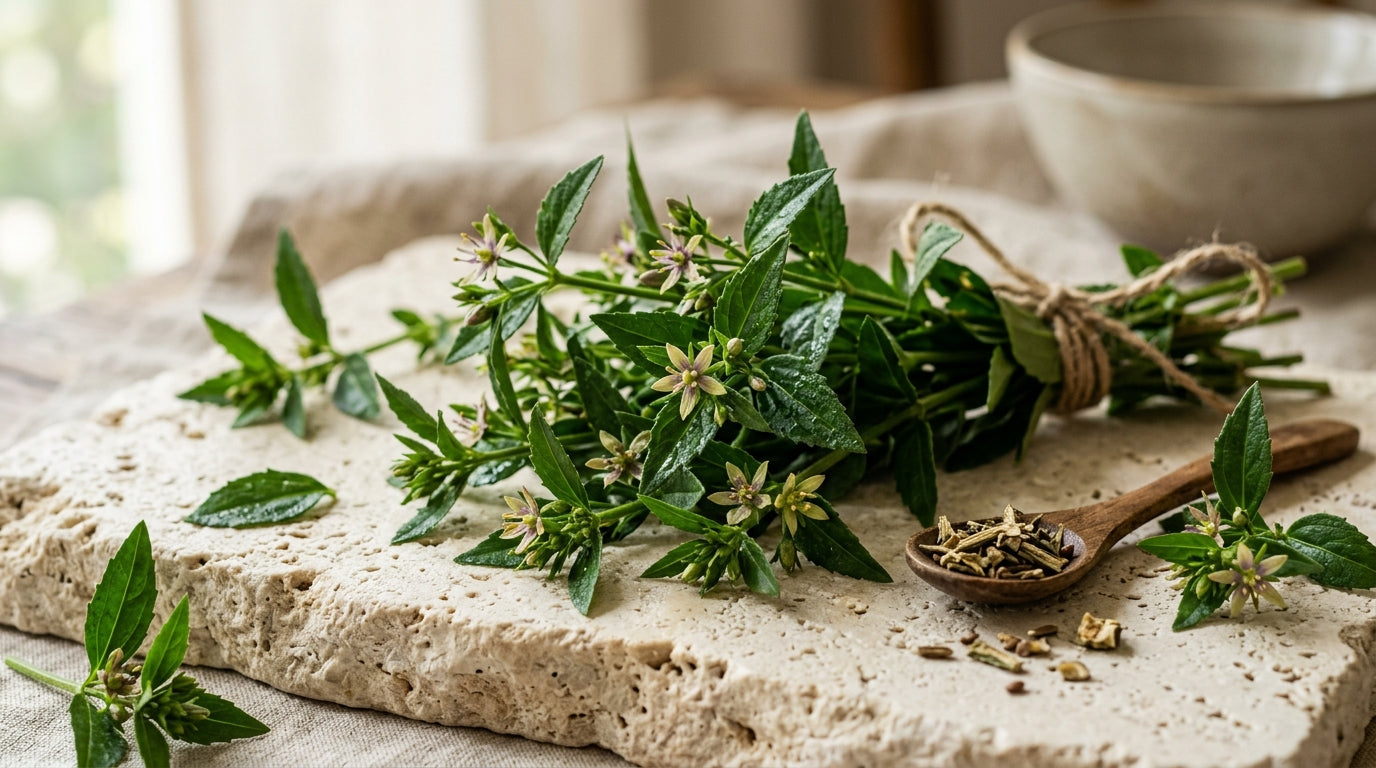
Ceriman leaf (Monstera deliciosa) contains volatile nitrogenous compounds and ethyl acetate extracts that demonstrate antimicrobial activity against bacteria like Staphylococcus epidermidis and E. coli through cell membrane disruption. Methanol extracts upregulate superoxide dismutase and show anticancer properties by increasing apoptosis in preclinical studies.

Origin
Ceriman (Monstera deliciosa), also known as Mexican Breadfruit, is a tropical fruit native to the rainforests of Central and South America, particularly Mexico, Panama, and Brazil. It thrives in humid, nutrient-rich environments. This unique fruit is valued for its complex flavor and its traditional use in supporting digestive and immune health.
Potential benefits
- Supports digestive health by providing natural enzymes and prebiotic fibers that soothe gut inflammation.
- Enhances immune function through its antimicrobial and antiviral compounds, bolstering cellular defense.
- Promotes cardiovascular health by improving circulation and reducing oxidative stress on arterial walls.
- Aids metabolic regulation by stabilizing blood sugar and supporting healthy lipid metabolism.
- Provides neuroprotective benefits by reducing oxidative damage and enhancing cognitive function.
- Contributes to skin health by supporting collagen synthesis and hydration.
- Modulates inflammation throughout the body due to its rich flavonoid content.
How it works
Volatile nitrogenous compounds and ethyl acetate extracts from Ceriman leaf disrupt bacterial cell membranes and inhibit key enzymes, leading to bacteriostasis or bacteriolysis. Methanol extracts upregulate antioxidant enzymes like superoxide dismutase, reducing oxidative stress. Anticancer effects involve tumor growth inhibition through increased apoptosis and reduced mitotic activity in cancer cells.
What the research says
No human clinical trials exist for Ceriman leaf, with evidence limited to preclinical studies. In tumor-bearing mice, methanol extract showed notable tumor growth inhibition, increased survival time, and reduced ascitic fluid volume with decreased mitotic activity and increased apoptotic bodies. Ethyl acetate stem extracts demonstrated superior antimicrobial activity against Serratia marcescens compared to streptomycin. The evidence base remains preliminary and requires human studies for validation.
Safety and interactions
No specific safety data, drug interactions, or contraindications have been reported for Ceriman leaf in available literature. General precautions apply to unstudied plant extracts, including potential cytotoxicity at high doses, though this has not been directly studied for Monstera deliciosa. Pregnant and nursing women should avoid use due to lack of safety data. Patients taking medications should consult healthcare providers before use due to unknown interaction potential.
Suggested use
- Common forms: Fully ripened raw fruit, smoothies, powdered extracts, medicinal teas.
- Dosage: Consume 1-2 servings of ripened fruit or extract daily for digestive and immune support.
- Important Note: Raw, unripe fruit and leaves contain calcium oxalate crystals and must be processed or fully ripened before consumption to avoid irritation.
- Traditional topical use (leaf): Applied in poultices or baths for skin conditions and inflammation.
Frequently asked questions
What are the main active compounds in Ceriman leaf?
The primary bioactive compounds include volatile nitrogenous compounds and ethyl acetate extracts that provide antimicrobial effects. Methanol extracts contain compounds that upregulate superoxide dismutase and demonstrate anticancer properties.
Has Ceriman leaf been tested in human studies?
No human clinical trials have been conducted with Ceriman leaf. All available evidence comes from preclinical in vitro and animal studies, making the evidence base preliminary.
What bacteria does Ceriman leaf work against?
Preclinical studies show Ceriman leaf extracts are effective against Staphylococcus epidermidis, Escherichia coli, Serratia marcescens, and Candida albicans. Ethyl acetate extracts showed superior activity against Serratia marcescens compared to streptomycin.
Is Ceriman leaf safe to use?
Safety data for Ceriman leaf is not available in current literature. No specific contraindications or drug interactions have been reported, but general precautions apply to unstudied plant extracts.
How does Ceriman leaf affect cancer cells?
In animal studies, Ceriman leaf methanol extract inhibited tumor growth by increasing apoptosis and reducing mitotic activity in cancer cells. However, these anticancer effects have only been demonstrated in preclinical models, not human trials.
What is the best form of Ceriman leaf supplement — powder, extract, or capsule?
Ceriman leaf extract concentrates the active compounds and provides superior bioavailability compared to whole powder, making it more efficient for targeted health benefits. Capsules offer convenience and consistent dosing, while powders allow for flexible serving sizes and can be added to beverages or foods. The extract form is generally preferred by practitioners seeking maximum potency, though all three forms can support digestive and immune health when sourced from quality suppliers.
Can I get the same health benefits from eating fresh Ceriman fruit instead of taking a leaf supplement?
While fresh Ceriman fruit provides beneficial enzymes and fiber, the leaf contains significantly higher concentrations of the antimicrobial and antiviral compounds responsible for immune and digestive support. To obtain therapeutic levels of the active compounds from whole fruit would require consuming impractical quantities daily. A standardized leaf supplement delivers clinically relevant doses in a convenient form that fresh fruit alone cannot match.
Does Ceriman leaf supplementation interact with blood sugar medications or blood pressure drugs?
Ceriman leaf's blood sugar-stabilizing properties may potentiate the effects of antidiabetic medications, potentially requiring dosage adjustment under medical supervision. Its cardiovascular benefits through improved circulation could theoretically enhance the effects of blood pressure medications. Anyone taking prescription medications for metabolic or cardiovascular conditions should consult their healthcare provider before adding Ceriman leaf supplementation to their regimen.
References
- https://fdc.nal.usda.gov/fdc-app.html#/search?query=Ceriman+Fruit
- https://fdc.nal.usda.gov/fdc-app.html#/search?query=Ceriman+Leaf
- https://www.ncbi.nlm.nih.gov/search/all/?term=Ceriman+Fruit
- https://www.ncbi.nlm.nih.gov/search/all/?term=Ceriman+Leaf
- https://pubmed.ncbi.nlm.nih.gov/?term=Ceriman+Fruit
- https://www.ncbi.nlm.nih.gov/pmc/articles/PMC8009271/
- https://www.sciencedirect.com/science/article/pii/S1756464620315622
This article is educational and is not medical advice. Statements have not been evaluated by the FDA and are not intended to diagnose, treat, cure, or prevent any disease. Consult a healthcare professional before use.