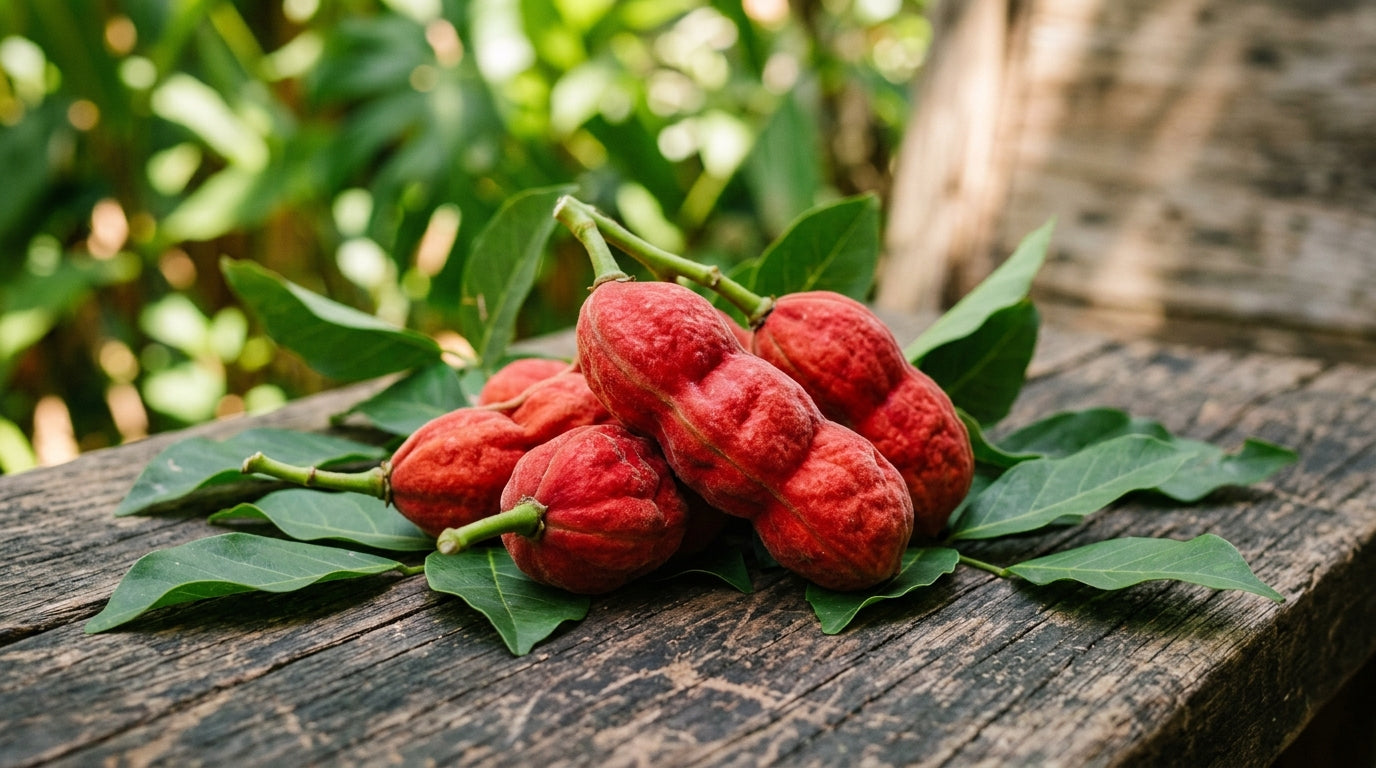
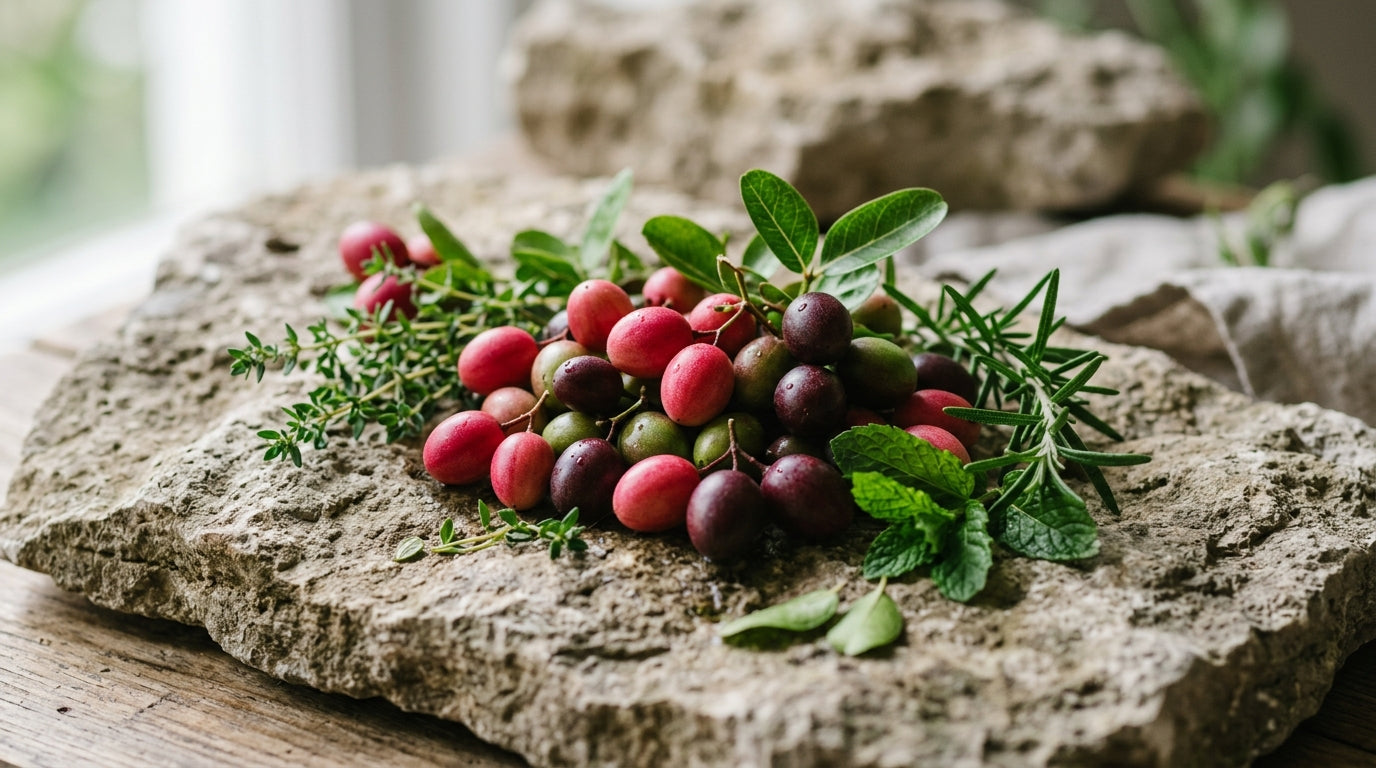
Jocote (Spondias mombin) contains high levels of tannins (57.50 mg AAE/g), saponins, and flavonoids that demonstrate anti-hyperlipidemic effects by reducing oxidative stress markers and increasing SOD activity. Animal studies show 200-400 mg/kg extracts significantly lower lipid profiles through polyphenol-mediated antioxidant pathways.

Origin
Jocote (Spondias mombin) is a deciduous tree native to the tropical regions of Central and South America, particularly thriving in Mexico, Honduras, and Brazil. It flourishes in warm climates with well-drained soils and moderate humidity. This fruit is valued in functional nutrition for its rich profile of fiber, vitamins, and antioxidants.
Potential benefits
- Promotes digestive health through high dietary fiber and mild laxative properties, supporting gut motility and microbiome balance.
- Boosts immune function via abundant vitamin C and antimicrobial bioactives, stimulating white blood cell activity.
- Provides robust antioxidant protection from polyphenols and flavonoids, neutralizing free radicals and reducing systemic inflammation.
- Enhances skin vitality by promoting collagen synthesis and reducing oxidative stress.
- Supports cardiovascular health by improving circulation and regulating cholesterol levels.
- Enhances metabolic efficiency by stabilizing blood sugar and optimizing lipid metabolism.
- Offers neuroprotective effects by reducing oxidative damage and supporting cognitive function.
How it works
Jocote's high tannin content (57.50 mg AAE/g) and flavonoids (40.34 mg RE/g) activate superoxide dismutase (SOD) enzyme systems while reducing lipid peroxidation markers. Key compounds including 9-Octadecenoic acid derivatives and saponins modulate lipid metabolism pathways. The polyphenolic profile neutralizes DPPH free radicals and enhances antioxidant capacity through FRAP-mediated electron transfer mechanisms.
What the research says
Current evidence is limited to animal studies and in vitro research, with no published human clinical trials available. In poloxamer 407-induced hyperlipidemic rats, Spondias mombin extract at 200-400 mg/kg doses significantly improved lipid profiles and oxidative stress markers. Laboratory studies confirm antioxidant activity through DPPH and FRAP assays, along with documented protein content of 6.4 g/100g. Human clinical trials are needed to establish therapeutic efficacy and optimal dosing protocols.
Safety and interactions
No specific safety concerns, drug interactions, or contraindications have been documented in available research literature. Jocote is widely consumed as food without reported adverse effects, suggesting general safety for dietary use. However, the absence of human clinical trials limits comprehensive safety data, particularly for concentrated extracts or therapeutic doses. Pregnant and breastfeeding women should exercise caution due to insufficient safety data for these populations.
Suggested use
- Forms: Consumed fresh, dried, juiced, or as pulp; incorporated into jams, salsas, and fermented beverages.
- Traditional Use: Revered in Indigenous Mesoamerican medicine as a digestive tonic, immune booster, and for treating fevers and infections.
- Modern Use: Integrated into smoothies, detox blends, superfruit extracts, and metabolic botanical infusions.
- Dosage: 1/2 to 1 cup fresh fruit or 1–2 tablespoons of pulp per serving, 1–2 servings daily.
Frequently asked questions
Does jocote help lower cholesterol?
Animal studies suggest jocote extract may support cholesterol regulation through its high tannin and flavonoid content. At doses of 200–400 mg/kg, polyphenol-mediated antioxidant pathways reduced lipid peroxidation and enhanced superoxide dismutase (SOD) activity, both of which are linked to improved lipid profiles. Saponins and 9-Octadecenoic acid derivatives also appear to modulate lipid metabolism pathways. However, large-scale human clinical trials are still needed to confirm these anti-hyperlipidemic effects in people.
Can jocote help with blood sugar control?
Jocote's polyphenol and flavonoid profile may help stabilize blood sugar by reducing oxidative stress associated with metabolic dysfunction and modulating lipid metabolism pathways. Its dietary fiber content can also slow glucose absorption in the gut, contributing to more stable post-meal blood sugar levels. While these mechanisms are promising, current evidence is largely based on animal models and traditional use. Human clinical trials are ongoing and needed before specific glycemic recommendations can be made.
What are the side effects of eating jocote?
Jocote is generally considered safe when consumed in typical food amounts, such as half to one cup of fresh fruit or one to two tablespoons of pulp per serving. Its high tannin and fiber content may cause digestive discomfort, bloating, or loose stools if consumed in large quantities, particularly due to its mild laxative properties. Individuals with sensitive digestive systems or tannin sensitivities should introduce it gradually. No significant adverse effects have been documented in the available research at standard dietary doses.
Does jocote have antimicrobial properties?
Yes, jocote contains bioactive compounds including tannins, saponins, and flavonoids that have demonstrated antimicrobial activity in laboratory settings. These compounds are believed to disrupt microbial cell membranes and inhibit pathogen growth. Traditional Mesoamerican medicine used jocote to treat fevers and infections, aligning with this mechanistic evidence. Its vitamin C content further supports immune defense by stimulating white blood cell activity. While promising, most antimicrobial data comes from in vitro studies, and clinical human evidence is limited.
Is jocote good for skin health?
Jocote may benefit skin health through two primary mechanisms. Its high vitamin C content promotes collagen synthesis, which supports skin structure and elasticity. Additionally, its polyphenols and flavonoids neutralize free radicals and reduce oxidative stress, which is a key driver of skin aging and cellular damage. These antioxidant effects are supported by documented DPPH radical scavenging activity and FRAP-mediated electron transfer capacity in research on the fruit's extracts. Topical or dietary use for skin vitality aligns with both traditional use and mechanistic evidence.
How does jocote support digestive health?
Jocote promotes digestive health primarily through its high dietary fiber content, which supports gut motility, regularity, and microbiome balance. It also exhibits mild laxative properties, consistent with its traditional use as a digestive tonic in Indigenous Mesoamerican medicine. The polyphenolic compounds in jocote may additionally support the gut environment by reducing oxidative stress and exhibiting antimicrobial activity against potentially harmful gut pathogens. A typical serving of half to one cup of fresh fruit or one to two tablespoons of pulp once or twice daily is commonly recommended.
Can I take jocote supplements if I am on cholesterol medication?
If you are taking cholesterol-lowering medications such as statins, consult your healthcare provider before adding jocote extracts or concentrated supplements to your routine. Jocote's tannins, saponins, and polyphenols influence lipid metabolism pathways, and there is a theoretical possibility of additive effects on lipid levels. Its antioxidant compounds may also interact with drug metabolism via enzyme modulation. Fresh fruit consumed in typical dietary amounts is generally considered low risk, but concentrated extracts warrant professional guidance, particularly given the current lack of human pharmacokinetic interaction data.
Does jocote have antioxidant benefits?
Yes, jocote is a potent source of antioxidants. It contains tannins at 57.50 mg AAE per gram and flavonoids at 40.34 mg RE per gram, which neutralize free radicals through DPPH scavenging activity and FRAP-mediated electron transfer mechanisms. These compounds activate superoxide dismutase enzyme systems and reduce lipid peroxidation markers, helping to lower systemic oxidative stress. This antioxidant capacity supports multiple health outcomes including cardiovascular protection, reduced cellular aging, and immune function, making jocote one of the richer polyphenol-containing fruits used in traditional and modern botanical formulations.
What are the active compounds in jocote fruit?
Jocote contains high levels of tannins (57.50 mg AAE/g), saponins (40.02 mg/100g), and flavonoids (40.34 mg RE/g). GC-MS analysis identifies 9-Octadecenoic acid derivatives and octadecadienoic acid as key bioactive compounds.
How much jocote extract was used in studies?
Animal studies used Spondias mombin extract doses of 200 mg/kg and 400 mg/kg body weight, both showing significant anti-hyperlipidemic effects. No human clinical trials have established therapeutic dosing guidelines for jocote supplementation.
References
- https://fdc.nal.usda.gov/fdc-app.html#/search?query=Jocote
- https://fdc.nal.usda.gov/fdc-app.html#/search?query=Jocote+%28Hog+Plum%29
- https://fdc.nal.usda.gov/fdc-app.html#/search?query=Jocote+Seed
- https://www.ncbi.nlm.nih.gov/search/all/?term=Jocote
- https://www.ncbi.nlm.nih.gov/search/all/?term=Jocote+%28Hog+Plum%29
- https://www.ncbi.nlm.nih.gov/search/all/?term=Jocote+Seed
- https://doi.org/10.1016/j.jfca.2020.103427
- https://pubmed.ncbi.nlm.nih.gov/31374183
- https://pubmed.ncbi.nlm.nih.gov/34029125
- https://pubmed.ncbi.nlm.nih.gov/?term=Jocote
- https://www.ncbi.nlm.nih.gov/pmc/articles/PMC7503467/
- https://www.sciencedirect.com/science/article/pii/S1756464621002560
- https://www.sciencedirect.com/science/article/pii/S2213452219302154
This article is educational and is not medical advice. Statements have not been evaluated by the FDA and are not intended to diagnose, treat, cure, or prevent any disease. Consult a healthcare professional before use.