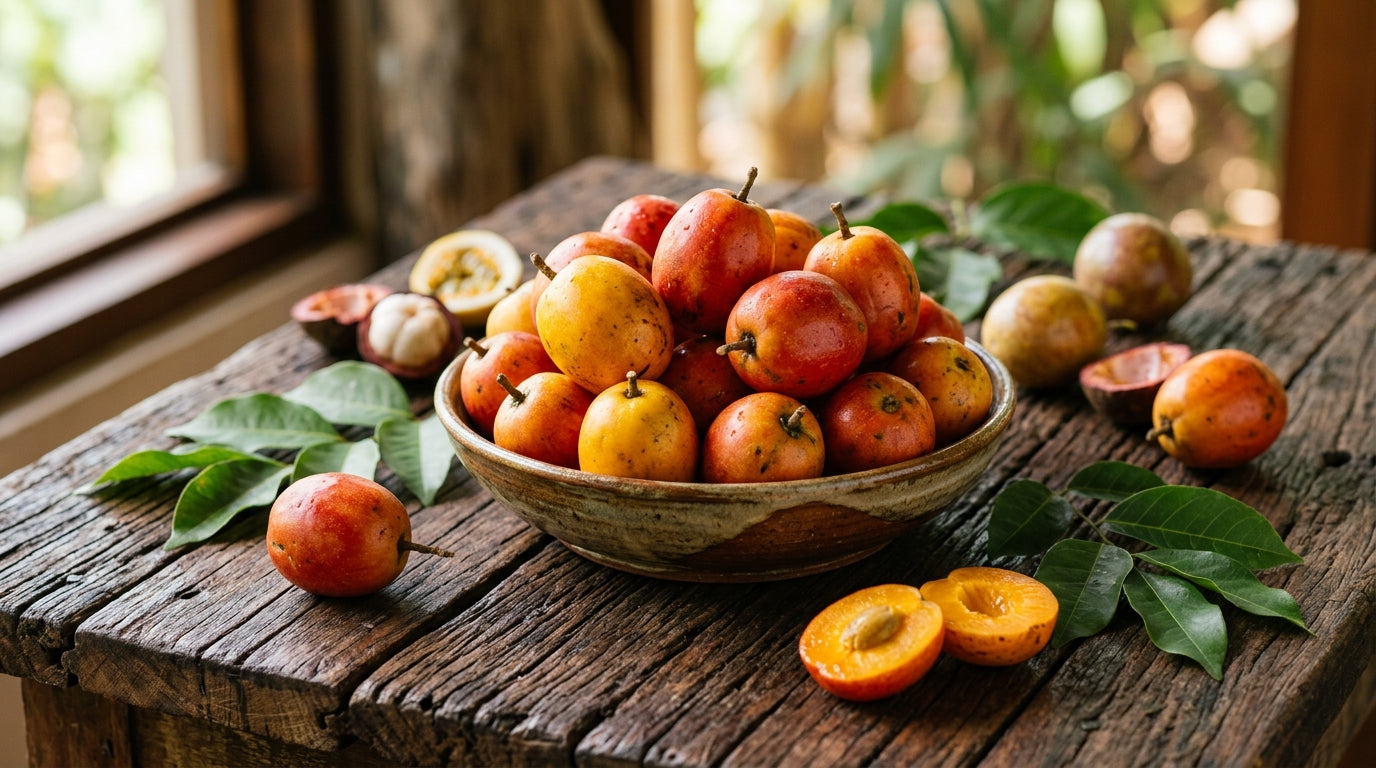
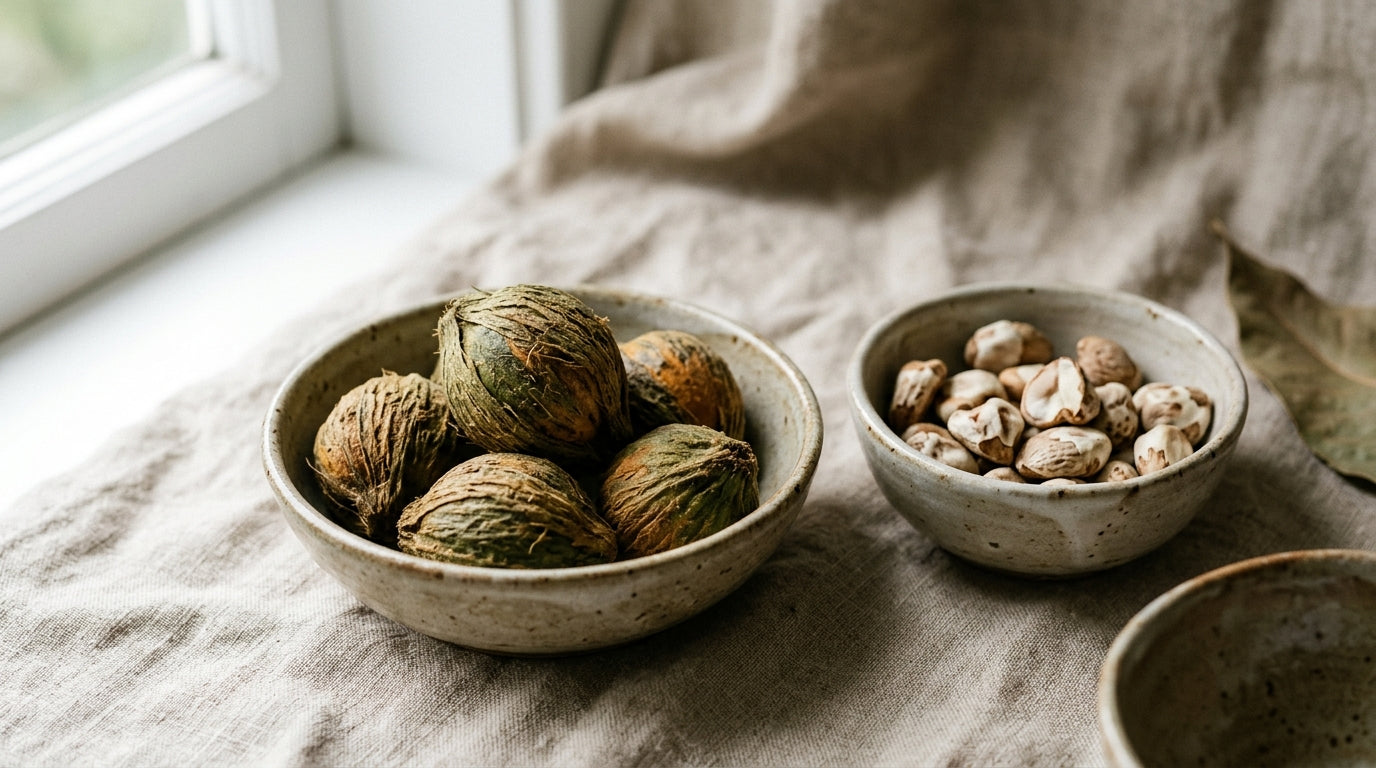
Karanda (Carissa carandas) leaf and fruit extracts are rich in phenolic compounds, flavonoids, and anthocyanins that inhibit tyrosinase by up to 80% and collagenase by over 80%, while methanol extracts demonstrate anti-inflammatory activity by inhibiting protein denaturation up to 78% (PMID 34159148). Research also confirms antidiabetic potential from unripe fruit extracts and broad-spectrum antimicrobial activity against resistant pathogens including MRSA, positioning Karanda as a multifunctional botanical with clinically relevant bioactivities (PMID 21439367, PMID 29269969).

Origin
Karanda (Carissa carandas) is a botanical native to South and Southeast Asia, particularly India, Sri Lanka, Bangladesh, and Thailand. It thrives in tropical and subtropical climates and is traditionally revered in Ayurvedic and Siddha medicine for its potent antioxidant, cardiovascular-supporting, and metabolic-regulating properties.
Potential benefits
- Supports cardiovascular health by improving circulation and modulating arterial inflammation, contributing to healthy blood pressure.
- Protects cells from oxidative stress through a rich antioxidant content, enhancing immune resilience and promoting healthy aging.
- Aids digestive wellness by balancing the gut microbiome and improving nutrient absorption.
- Provides anti-inflammatory support, benefiting joint health and mitigating inflammatory conditions.
- Aids metabolic health by regulating blood sugar levels and enhancing insulin sensitivity.
- Promotes cognitive clarity and stress resilience through neuroprotective flavonoids and adaptogenic effects.
How it works
Karanda's phenolic acids, flavonoids (including quercetin and kaempferol derivatives), and anthocyanins competitively inhibit tyrosinase—the rate-limiting enzyme in melanogenesis—by chelating the copper active site, reducing melanin biosynthesis by up to 80% as documented in PMID 34159148. These same polyphenolic compounds inhibit matrix metalloproteinases (MMPs) including collagenase and elastase through direct enzyme binding, blocking extracellular matrix degradation and preserving collagen integrity by over 80%. Anti-inflammatory activity is mediated through suppression of heat-induced protein denaturation (up to 78%) and inhibition of erythrocyte hemolysis (up to 55%), indicating membrane-stabilizing effects that modulate prostaglandin and cytokine-driven inflammatory cascades. The antidiabetic mechanism, confirmed in PMID 21439367, is attributed to alpha-glucosidase and alpha-amylase inhibition by phenolic glycosides, alongside potential pancreatic beta-cell protection via reduction of oxidative stress-induced lipid peroxidation.
What the research says
Current evidence is limited to in vitro enzyme inhibition studies and animal models, with no human clinical trials available. Animal studies using 400 mg/kg methanol extract showed 74% inhibition of carrageenan-induced edema and 71% reduction in formaldehyde-induced paw edema, comparable to indomethacin controls. In vitro studies demonstrate significant enzyme inhibition with fresh ripe fruit extracts containing 100.31 ± 2.64 mg GAE/g total phenolic content. The evidence base requires human clinical validation to establish therapeutic efficacy and safety profiles.
Safety and interactions
Karanda is generally recognized as safe at culinary and traditional medicinal doses, with a well-documented history of use across South Asian Ayurvedic practice; no acute toxicity has been reported in human studies to date, though formal clinical safety trials remain limited. Due to its demonstrated hypoglycemic activity in preclinical models (PMID 21439367), concurrent use with insulin secretagogues or biguanides such as metformin may potentiate blood glucose-lowering effects, warranting medical supervision in diabetic patients. The anthocyanin and polyphenol load in concentrated extracts may interact with CYP3A4 and CYP2C9 enzyme pathways based on structural analogy to other flavonoid-rich botanicals, potentially altering the metabolism of co-administered drugs such as warfarin or statins, though direct CYP450 inhibition studies specific to Carissa carandas are not yet published. Pregnant and breastfeeding individuals should exercise caution with high-dose extracts, as the plant has traditional emmenagogue associations, and individuals on antihypertensive medications should monitor blood pressure given its vasomodulatory bioactives.
Suggested use
- Traditionally used in Ayurvedic and Siddha medicine for treating digestive disorders, respiratory issues, and inflammatory conditions.
- Unripe fruits are used as a souring agent, while ripe fruits are eaten fresh or made into jams.
- Modern applications include supplements targeting cardiovascular, metabolic, and immune health, functional teas, and botanical skincare.
- Recommended dosage: 300–500 mg/day of standardized extract or 1–2 grams dried leaves in infusions.
Frequently asked questions
What is Karanda and what is it used for?
Karanda (Carissa carandas) is a thorny shrub native to South Asia whose fruit and leaves have been used in Ayurvedic medicine for centuries to treat fever, digestive disorders, anemia, and skin conditions. Modern research confirms its bioactive compounds—including phenolics, flavonoids, and anthocyanins—exert antidiabetic, antimicrobial, anti-inflammatory, and cosmeceutical effects (PMID 34159148, PMID 21439367). It is also consumed as a culinary ingredient in chutneys, pickles, and jams across India and Southeast Asia.
What are the health benefits of Karanda (Karonda)?
Karanda offers evidence-supported benefits including blood glucose regulation via alpha-glucosidase inhibition (PMID 21439367), broad-spectrum antimicrobial activity against MRSA and Candida species (PMID 29269969), and potent antioxidant protection that mitigates oxidative stress-linked chronic disease. Its collagenase and tyrosinase inhibition (over 80% and up to 80% respectively) supports skin health by preserving collagen and reducing hyperpigmentation (PMID 34159148). Additional benefits include cardiovascular support through flavonoid-mediated arterial inflammation modulation and digestive wellness linked to its prebiotic fiber and phytochemical profile.
Does Karanda help with diabetes?
Yes—a 2011 study in the Journal of Ethnopharmacology (PMID 21439367, Itankar PR et al.) demonstrated significant antidiabetic potential of unripe Carissa carandas fruit extract in preclinical models, attributed to inhibition of carbohydrate-digesting enzymes and reduction of oxidative stress. These findings align with traditional Ayurvedic use of Karanda for glycemic management. Patients using antidiabetic medications should consult a healthcare provider before using concentrated Karanda extracts, as additive hypoglycemic effects are possible.
Is Karanda effective for skin care and reducing pigmentation?
Karanda fruit extracts have demonstrated up to 80% inhibition of tyrosinase—the enzyme responsible for melanin production—making them highly relevant for reducing hyperpigmentation and uneven skin tone (PMID 34159148, Khuanekkaphan M et al., J Adv Pharm Technol Res, 2021). The same study showed over 80% inhibition of collagenase, indicating anti-aging potential by protecting skin's structural collagen matrix. These findings support Karanda's growing application in cosmeceutical formulations targeting brightening, anti-wrinkle, and skin-firming effects.
What bioactive compounds are found in Karanda leaves and fruit?
Karanda (Carissa carandas) contains a diverse array of bioactive phytochemicals including phenolic acids, flavonoids (quercetin, kaempferol, rutin), anthocyanins, terpenoids, and alkaloids such as carissin. The fruit is particularly rich in vitamin C, iron, and anthocyanin pigments, while leaf extracts are concentrated sources of polyphenols responsible for enzyme inhibition and anti-inflammatory activity (PMID 34159148). A 2023 phytonutritional assessment of the related Carissa spinarum (PMID 37720775) further corroborates the genus's exceptional functional nutrient density, supporting its use in novel food and nutraceutical applications.
Is Karanda safe to take with blood pressure or heart medications?
Karanda may potentiate the effects of antihypertensive medications due to its cardiovascular benefits and blood pressure-modulating properties, so concurrent use should be discussed with a healthcare provider. If you are taking medications for hypertension or heart conditions, consult your doctor before adding Karanda supplements to avoid potential interactions or dosage adjustments. Monitoring blood pressure regularly when combining Karanda with cardiovascular medications is recommended.
What is the most effective form of Karanda supplement—leaf extract, powder, or whole fruit?
Standardized leaf extracts typically offer the highest concentration of bioactive compounds like antioxidants and anti-inflammatory agents compared to whole fruit or powder forms. However, whole fruit or leaf powder may provide better bioavailability in some cases due to the synergistic effects of multiple phytonutrients working together. The most effective form depends on the specific health goal; extracts are preferred for targeted therapeutic benefits, while whole-food forms support general wellness and gut microbiome balance.
Who should avoid Karanda supplements or consult a doctor before use?
Pregnant and breastfeeding women should consult healthcare providers before using Karanda supplements, as safety data in these populations is limited. Individuals with blood clotting disorders or those taking anticoagulant medications should exercise caution, as Karanda's bioactive compounds may have mild anticoagulant properties. People with severe digestive conditions or those scheduled for surgery should discuss Karanda use with their healthcare provider due to its effects on inflammation and circulation.
References
- https://en.wikipedia.org/wiki/Carissa_carandas
- https://fdc.nal.usda.gov/fdc-app.html#/search?query=Karanda
- https://fdc.nal.usda.gov/fdc-app.html#/search?query=Karanda+Leaf
- https://www.healthbenefitstimes.com/karanda/
- https://www.ncbi.nlm.nih.gov/search/all/?term=Karanda
- https://www.ncbi.nlm.nih.gov/search/all/?term=Karanda+Leaf
- https://www.netmeds.com/health-library/post/karonda-tremendous-health-benefits-of-the-black-currant-fruit
- https://pubmed.ncbi.nlm.nih.gov/31833018
- https://pubmed.ncbi.nlm.nih.gov/?term=Karanda
- https://pubmed.ncbi.nlm.nih.gov/?term=Karanda+Berry
- https://www.ncbi.nlm.nih.gov/pmc/articles/PMC7266016/
- https://www.sciencedirect.com/science/article/pii/S2213453019302810
This article is educational and is not medical advice. Statements have not been evaluated by the FDA and are not intended to diagnose, treat, cure, or prevent any disease. Consult a healthcare professional before use.