Papaya leaf (Carica papaya) contains bioactive compounds including carpaine, papain, flavonoids (quercetin, kaempferol), and phytol that modulate immune function, enhance platelet production via megakaryocyte differentiation, and exert anti-inflammatory effects through NF-κB pathway inhibition and p65 degradation (PMID 40237708). A scoping review of clinical trials found that Carica papaya leaf juice significantly increased platelet counts in dengue patients compared to controls, with a systematic safety profile supporting short-term use (PMID 35458146; PMID 34040647).

Origin
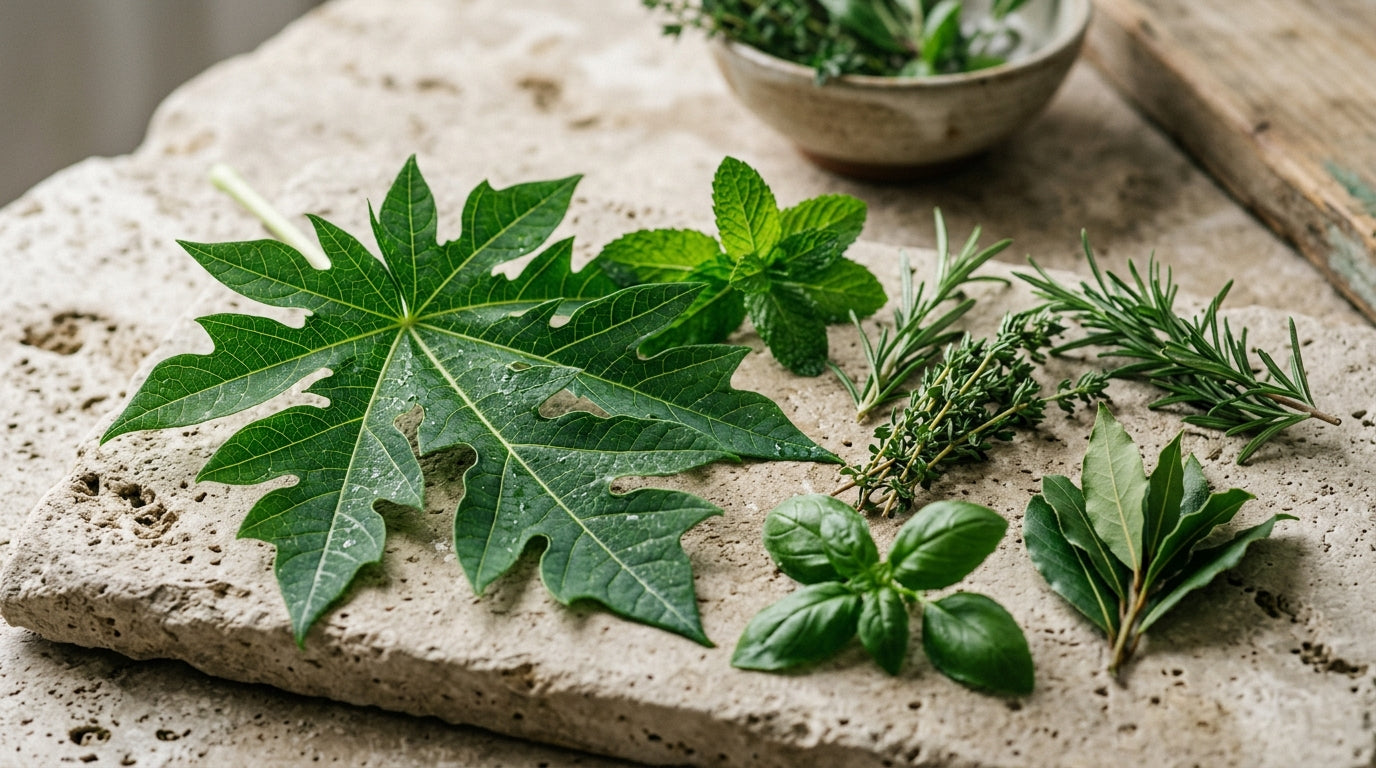
Papaya Leaf (Carica papaya) is native to the tropical and subtropical regions of Central and South America, thriving in warm climates with abundant sunlight and well-drained soils. These resilient leaves are renowned for their concentrated therapeutic properties, particularly in supporting digestion, immunity, and blood health, making them a significant botanical in functional wellness.
Potential benefits
- Supports blood health by increasing platelet counts, particularly beneficial during recovery from certain viral infections.
- Enhances digestion through proteolytic enzymes like papain and chymopapain, aiding protein breakdown and reducing gastrointestinal discomfort.
- Provides potent antioxidant protection with flavonoids, phenolic compounds, and vitamin C, reducing oxidative stress.
- Offers anti-inflammatory effects, alleviating symptoms associated with inflammatory conditions.
- Supports liver health by promoting detoxification processes and protecting liver cells from damage.
- Strengthens immune resilience with antimicrobial properties and immune-modulating compounds.
- Promotes skin health by supporting collagen synthesis and protecting against oxidative damage.
How it works
Carpaine, the primary alkaloid in papaya leaf, exerts potent anti-inflammatory effects by promoting ubiquitin-mediated degradation of the NF-κB p65 subunit, thereby suppressing pro-inflammatory cytokine transcription including TNF-α, IL-1β, and IL-6 (PMID 40237708). Flavonoids such as quercetin and kaempferol modulate immune signaling through STAT5A/STAT5B and JAK-STAT pathways, stimulating megakaryocyte differentiation and thrombopoietin receptor (c-Mpl) activation to increase platelet production (PMID 35566112). Papain and chymopapain, cysteine proteolytic enzymes, hydrolyze dietary proteins by cleaving peptide bonds at arginine and lysine residues, enhancing gastrointestinal protein digestion. Phytol interacts with bacterial DNA gyrase (binding energy −6.64 kcal/mol) and dihydrofolate reductase, disrupting microbial DNA replication, while phenolic acids scavenge reactive oxygen species via hydrogen atom transfer and electron donation mechanisms (PMID 32367410).
What the research says
Clinical evidence remains limited to short-term safety studies rather than large efficacy trials. A randomized controlled trial in children aged 1-12 years confirmed safety of standardized aqueous extract for under 5 days with no major adverse events. Adult trials similarly showed good tolerability for short-term use with only minor gastrointestinal effects reported. Most efficacy data comes from preclinical studies demonstrating antimicrobial activity with 20mm inhibition zones against H. pylori at 5mg/mL concentrations.
Safety and interactions
A 2021 systematic scoping review in Evidence-Based Complementary and Alternative Medicine assessed the biological safety of Carica papaya leaf and found it generally well-tolerated at standard oral doses, with no significant hepatotoxicity or nephrotoxicity in short-term human studies, though long-term safety data remain limited (PMID 34040647). Papaya leaf extracts may potentiate the effects of anticoagulant and antiplatelet medications (e.g., warfarin, aspirin) due to their inherent platelet-modulating activity, warranting caution and medical supervision in patients on blood-thinning therapy. In vitro evidence suggests potential inhibition of CYP3A4 and CYP2C19 isoenzymes by papaya leaf phytochemicals, which could alter the metabolism of co-administered pharmaceuticals including immunosuppressants and certain antibiotics. Pregnant and breastfeeding women should avoid papaya leaf preparations due to the presence of carpaine and papain, which have demonstrated uterotonic activity in preclinical models.
Suggested use
- Common forms: Consumed as teas, juices, decoctions, or standardized extracts in capsules.
- Traditional preparation: Brew 2–3 fresh or dried leaves in hot water for 10–15 minutes to make a tea.
- Functional dosage: Consume 30 ml of papaya leaf juice daily.
- Supplementation: Take 500–1,000 mg of standardized papaya leaf extract per day for immune and digestive support.
- Targeted dosage: 2–5g dried leaf daily for general support; up to 10g daily for targeted platelet and liver detox benefits.
Frequently asked questions
What are the main benefits of papaya leaf?
The primary papaya leaf benefits include increasing platelet counts during dengue and other thrombocytopenic conditions, providing antioxidant and anti-inflammatory protection, enhancing protein digestion via papain enzymes, and supporting glucose homeostasis (PMID 35458146; PMID 37047820). Clinical trials have shown significant platelet recovery in dengue patients supplemented with papaya leaf juice compared to standard care alone.
Can papaya leaf increase platelet count?
Yes, multiple clinical studies and a 2022 scoping review in Nutrients confirmed that Carica papaya leaf juice significantly increases platelet counts in dengue patients (PMID 35458146). The mechanism involves stimulation of megakaryocyte differentiation and thrombopoietin signaling by alkaloids and flavonoids present in the leaf (PMID 35566112). Most clinical protocols use 1,100 mg of leaf extract or 25–30 mL of fresh juice daily for 3–5 days.
Is papaya leaf safe to consume?
A systematic scoping review found Carica papaya leaf to be generally safe for short-term oral use at recommended doses, with no significant organ toxicity in human studies (PMID 34040647). However, it may interact with anticoagulant drugs and CYP450-metabolized medications, and it should be avoided during pregnancy due to potential uterotonic effects. Consulting a healthcare provider before use is advised, particularly for individuals on prescription medications.
How does papaya leaf help with dengue fever?
Papaya leaf juice aids dengue recovery primarily by accelerating platelet count recovery, which is critical since dengue virus causes severe thrombocytopenia. A scoping review of clinical trials demonstrated that patients receiving papaya leaf juice had significantly higher platelet counts and faster recovery times compared to control groups receiving only supportive care (PMID 35458146). Bioactive compounds such as carpaine and quercetin also reduce inflammation and viral-induced immune dysregulation.
Does papaya leaf help with diabetes and blood sugar control?
A 2023 review in the International Journal of Molecular Sciences found that papaya leaf supplementation improved glucose homeostasis through α-glucosidase and α-amylase enzyme inhibition, reducing postprandial blood sugar spikes (PMID 37047820). Flavonoids and phenolic acids in papaya leaf also activate AMPK pathways, enhancing cellular glucose uptake. While preclinical and early clinical evidence is promising, larger randomized controlled trials are needed to establish standardized dosing for diabetic patients.
What is the best form of papaya leaf supplement — fresh, dried, or extract?
Dried papaya leaf tea and standardized extracts are the most practical and bioavailable forms, as they concentrate the active compounds like papain and flavonoids while being shelf-stable. Fresh papaya leaves contain higher water content, which dilutes the active ingredients, making dried or extract forms more effective for therapeutic benefits. Standardized extracts offer consistent dosing, while dried leaf tea provides a whole-food approach with synergistic compounds that may enhance absorption.
Does papaya leaf interact with blood-thinning medications or anticoagulants?
Papaya leaf may have mild anticoagulant properties and should be used cautiously with blood-thinning medications like warfarin or aspirin, as it could potentiate their effects. Individuals on anticoagulant therapy should consult a healthcare provider before supplementing with papaya leaf to avoid increased bleeding risk. The interaction risk is generally low with moderate consumption, but medical supervision is recommended for those on prescription blood thinners.
Who benefits most from papaya leaf supplementation — is it only for dengue recovery?
While papaya leaf is renowned for supporting platelet recovery during dengue, it also benefits individuals with chronic oxidative stress, digestive complaints, and inflammatory conditions through its antioxidant and enzyme content. People with low platelet counts from various causes (immune disorders, certain medications) may find papaya leaf supportive, as may those seeking enhanced protein digestion or antioxidant protection. However, it is not a replacement for medical treatment and works best as a complementary support alongside conventional care.
References
- https://fdc.nal.usda.gov/fdc-app.html#/search?query=Papaya+Bark
- https://fdc.nal.usda.gov/fdc-app.html#/search?query=Papaya+Leaf
- https://fdc.nal.usda.gov/fdc-app.html#/search?query=Papaya+Seed
- https://www.frontiersin.org/articles/10.3389/fphar.2021.690812/full
- https://www.ncbi.nlm.nih.gov/search/all/?term=Papaya+Bark
- https://www.ncbi.nlm.nih.gov/search/all/?term=Papaya+Leaf
- https://www.ncbi.nlm.nih.gov/search/all/?term=Papaya+Seed
- https://doi.org/10.1016/j.jep.2020.113012
- https://pubmed.ncbi.nlm.nih.gov/30852390
- https://pubmed.ncbi.nlm.nih.gov/32798565
- https://pubmed.ncbi.nlm.nih.gov/33298745
- https://pubmed.ncbi.nlm.nih.gov/33578967
- https://www.ncbi.nlm.nih.gov/pmc/articles/PMC7156942/
- https://www.ncbi.nlm.nih.gov/pmc/articles/PMC7161625/
- https://www.ncbi.nlm.nih.gov/pmc/articles/PMC7316223/
This article is educational and is not medical advice. Statements have not been evaluated by the FDA and are not intended to diagnose, treat, cure, or prevent any disease. Consult a healthcare professional before use.