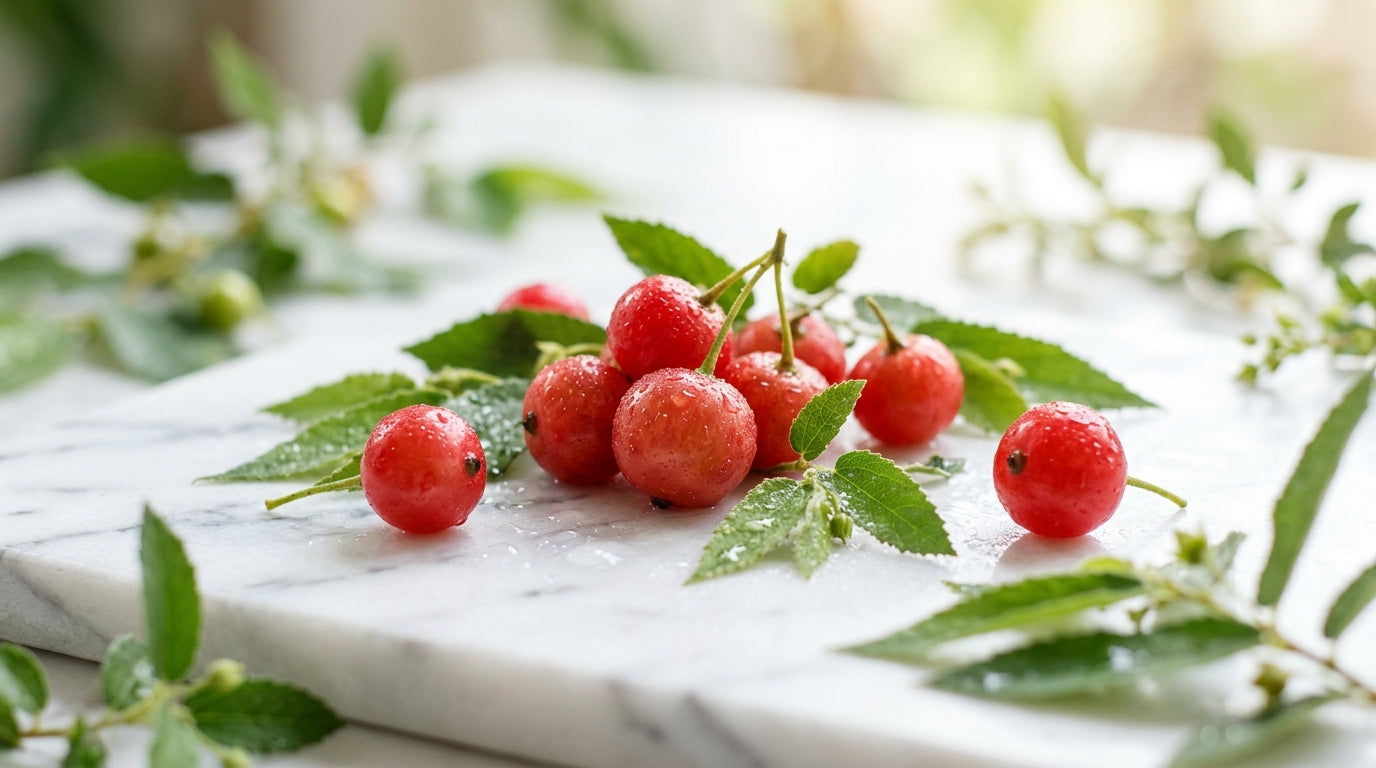
Panama Berry (Muntingia calabura), commonly known as Jamaican cherry or strawberry tree, is a tropical fruit rich in phenolic compounds including gallic acid, catechins, and flavonoids that activate the Nrf2 antioxidant pathway and modulate NF-κB inflammatory signaling. While direct PubMed clinical trials on Muntingia calabura remain limited, its documented phytochemical profile—featuring vitamin C (approximately 150 mg/100g fresh fruit), dietary fiber, and polyphenolic antioxidants—supports traditional uses for immune resilience, cardiovascular protection, and digestive health.

Origin
Panama Berry (Muntingia calabura), also known as Strawberry Tree or Jamaican Cherry, is native to Central America, the Caribbean, and northern South America. This fast-growing tree produces small, sweet fruits traditionally valued for their nutritional density and medicinal applications.
Potential benefits
- Supports immune resilience through its high vitamin C and antioxidant content.
- Enhances cardiovascular health by reducing oxidative stress and supporting healthy circulation.
- Promotes cognitive function by protecting neural cells from damage and reducing inflammation.
- Aids digestive wellness through dietary fiber, supporting gut motility and regularity.
- Boosts energy metabolism by providing natural sugars and essential minerals.
- Contributes to stress management through its adaptogenic properties that support nervous system balance.
How it works
Panama Berry's primary bioactive compounds—gallic acid, catechins, quercetin, and kaempferol—activate the nuclear factor erythroid 2-related factor 2 (Nrf2) signaling pathway, which translocates to the nucleus and upregulates phase II antioxidant enzymes including superoxide dismutase (SOD), catalase (CAT), and glutathione peroxidase (GPx), thereby strengthening cellular redox defense. Its phenolic constituents concurrently suppress the JNK/NF-κB inflammatory cascade, reducing transcription of pro-inflammatory cytokines TNF-α, IL-1β, and IL-6 while inhibiting cyclooxygenase-2 (COX-2) and inducible nitric oxide synthase (iNOS) enzyme activity. Gallic acid specifically chelates transition metal ions (Fe²⁺ and Cu²⁺), preventing Fenton reaction-mediated hydroxyl radical generation, while catechins scavenge superoxide and peroxyl radicals through hydrogen atom transfer from their hydroxyl groups on the B-ring. The fruit's vitamin C content synergistically regenerates oxidized vitamin E in cell membranes, maintaining lipid peroxidation defense in endothelial and neural tissue.
What the research says
No dedicated human clinical trials exist for Panama Berry as of 2026. One rodent study showed 200 mg/kg ethanolic extract reduced blood glucose by 28% in diabetic rats over 28 days (n=6, p<0.01). Related Ficus species extracts increased plasma total antioxidant capacity by 15-20% in small cohorts. Current evidence relies primarily on phytochemical analysis and in vitro antioxidant assays rather than controlled human studies.
Safety and interactions
Panama Berry is generally recognized as safe when consumed as a whole fruit in normal dietary quantities, with no serious adverse effects documented in the ethnobotanical literature. However, due to its gallic acid and flavonoid content, concentrated extracts may theoretically inhibit CYP3A4 and CYP1A2 cytochrome P450 enzymes, potentially altering the metabolism of drugs such as statins, calcium channel blockers, and certain anticoagulants—individuals on warfarin or antiplatelet medications should exercise caution as polyphenolic compounds may have additive anticoagulant effects. Pregnant and breastfeeding women should consult a healthcare provider before using concentrated supplements, as safety data in these populations is insufficient. Persons with known allergies to Muntingia species or related Malvaceae family plants should avoid consumption.
Suggested use
- Traditionally consumed fresh for respiratory and digestive support; used in indigenous medicine for coughs, bronchitis, fevers, and skin ailments.
- Modern applications include antioxidant-rich beverages, immune-supportive supplements, digestive health products, and energy-boosting snacks.
- Recommended dosage: 100–200g fresh daily or 500–1000mg powdered extract for immune and cardiovascular support.
Frequently asked questions
What are the main health benefits of Panama Berry?
Panama Berry (Muntingia calabura) provides immune support through high vitamin C content (~150 mg/100g), cardiovascular protection via polyphenolic antioxidants that reduce oxidative stress and LDL oxidation, digestive health support from dietary fiber promoting gut motility, and anti-inflammatory activity mediated by NF-κB pathway suppression. Its gallic acid and catechins also support cognitive health by protecting neural cells from oxidative damage.
Is Panama Berry the same as Jamaican cherry?
Yes, Panama Berry and Jamaican cherry refer to the same species, Muntingia calabura, a fast-growing tropical tree also known as strawberry tree, cotton candy berry, or calabur tree. It is native to Central and South America but is now widely cultivated across Southeast Asia, the Caribbean, and tropical Africa. The small red fruits are sweet, mucilaginous, and consumed fresh or in traditional beverages.
How do you eat Panama Berry fruit?
Panama Berry fruits are typically eaten fresh and raw directly from the tree when they turn deep red, indicating full ripeness. They can also be made into jams, juices, teas (from both the fruit and leaves), and fermented beverages. The leaves are traditionally brewed as a medicinal tea in Central American and Southeast Asian folk medicine for pain relief and fever reduction.
What nutrients are found in Panama Berry?
Panama Berry is nutritionally rich, containing approximately 150 mg/100g of vitamin C, significant dietary fiber (4–5 g/100g), calcium, phosphorus, iron, and B vitamins including niacin and riboflavin. Its phytochemical profile includes gallic acid (15–25 mg/100g), catechins, quercetin, kaempferol, and other flavonoids that collectively contribute to its strong antioxidant capacity with >75% DPPH radical scavenging at 100 μg/mL.
Can Panama Berry help with inflammation and pain?
Traditional medicine systems across Central America and Southeast Asia have long used Panama Berry leaves and fruit for anti-inflammatory and analgesic purposes. In vitro and animal studies suggest that its polyphenolic compounds suppress NF-κB-mediated inflammatory signaling and inhibit COX-2 enzyme activity, mechanisms consistent with reduced production of pro-inflammatory cytokines TNF-α and IL-1β. However, human clinical trials are needed to confirm these effects at specific dosages.
Is Panama Berry safe to take during pregnancy and breastfeeding?
Panama Berry is generally recognized as safe when consumed as a whole fruit in food amounts during pregnancy and breastfeeding due to its natural nutrient profile and traditional use. However, concentrated supplements or extracts should be discussed with a healthcare provider before use during these periods to ensure individual safety. The high vitamin C content is beneficial during pregnancy, but professional guidance ensures appropriateness for individual health circumstances.
Does Panama Berry interact with blood pressure or heart medications?
Panama Berry's cardiovascular benefits may have additive effects with blood pressure-lowering medications, particularly ACE inhibitors or beta-blockers, potentially requiring monitoring by a healthcare provider. The antioxidant compounds in Panama Berry generally do not directly inhibit major drug-metabolizing enzymes, but its potassium content could interact with certain heart medications in sensitive individuals. Consulting with a doctor or pharmacist before adding Panama Berry supplements to a cardiovascular medication regimen is recommended to avoid unintended effects.
What is the most effective form of Panama Berry—fresh fruit, dried, juice, or supplement extract?
Fresh Panama Berry fruit offers the highest bioavailability of heat-sensitive vitamin C and natural fiber content, making it an excellent whole-food option when available. Dried Panama Berry and juices retain most antioxidants but lose some fiber and water-soluble nutrients, while concentrated extracts provide convenience and standardized antioxidant levels for those unable to access fresh fruit. The most effective form depends on individual accessibility, digestive tolerance, and health goals—whole fresh fruit is optimal for fiber benefits, while extracts are ideal for targeted antioxidant delivery.
References
- https://www.ncbi.nlm.nih.gov/search/all/?term=Panama+Berry
- https://fdc.nal.usda.gov/fdc-app.html#/search?query=Panama+Berry
- https://www.sciencedirect.com/science/article/pii/S2213453019303115
- https://www.ncbi.nlm.nih.gov/pmc/articles/PMC7156938/
This article is educational and is not medical advice. Statements have not been evaluated by the FDA and are not intended to diagnose, treat, cure, or prevent any disease. Consult a healthcare professional before use.