Palash Flower (Butea monosperma) is rich in bioactive flavonoids—including butein, isobutrin, and quercetin—and phenolic compounds that exert potent hepatoprotective, antioxidant, and anti-inflammatory effects by enhancing Phase II detoxification enzymes and scavenging reactive oxygen species in hepatocytes. A comprehensive review in Food Research International (PMID 31882088) confirmed its nutraceutical potential, while metabolomic profiling in Food and Chemical Toxicology (PMID 28163055) identified key bioactive metabolites responsible for its pharmacological activity and established preliminary safety parameters.

Origin
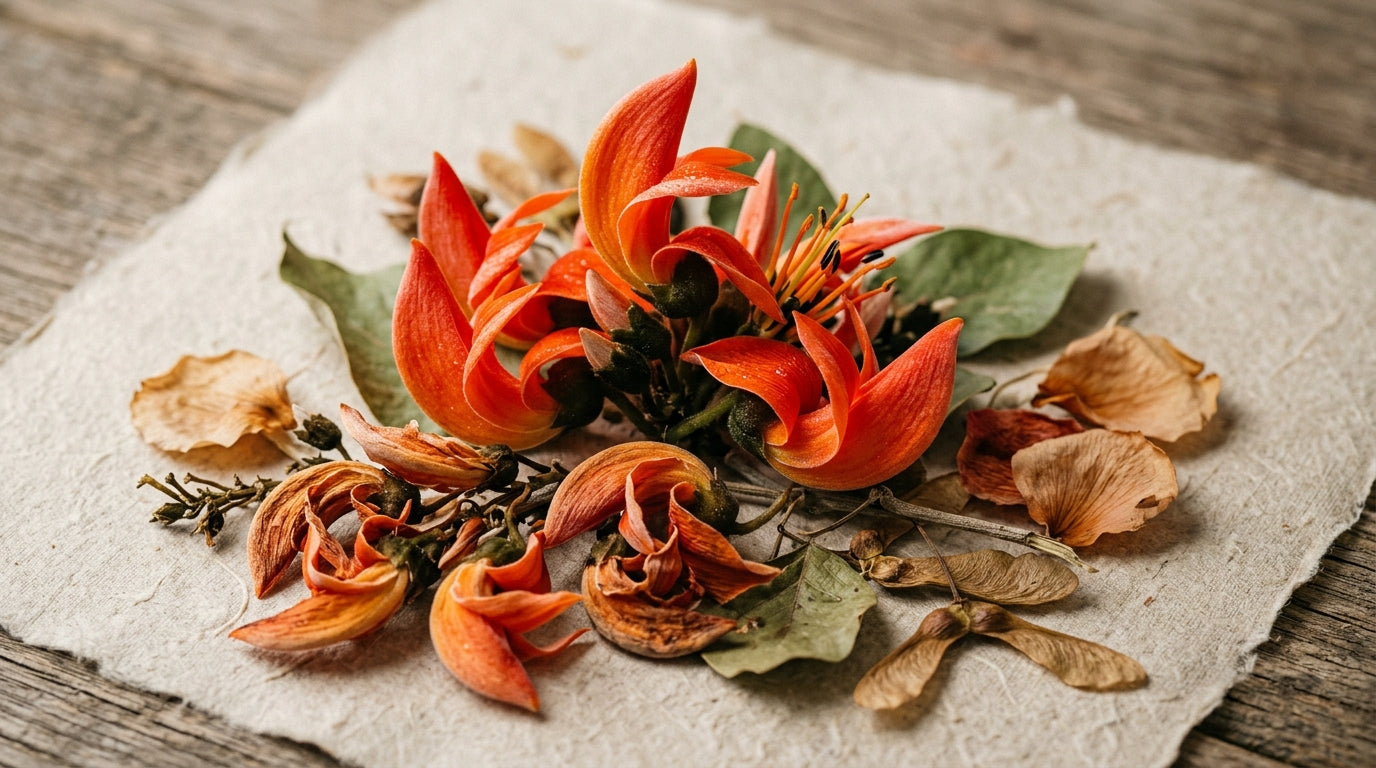
Butea monosperma, commonly known as Palash Flower or Flame of the Forest, is a deciduous tree native to the Indian subcontinent and Southeast Asia. Its striking orange-red flowers bloom in spring, covering the tree in a fiery display. This botanical is highly valued in functional nutrition for its traditional use in supporting liver detoxification and immune resilience.
Potential benefits
- Supports liver detoxification by enhancing enzymatic activity and protecting hepatocytes.
- Boosts immune resilience through its rich content of flavonoids and phenolic compounds.
- Enhances cognitive function by reducing oxidative stress and supporting neural pathways.
- Aids digestive wellness by soothing gut inflammation and promoting healthy microbial balance.
- Promotes cardiovascular health by supporting healthy circulation and reducing lipid peroxidation.
- Supports skin vitality through its antioxidant, anti-inflammatory, and wound-healing properties.
How it works
Palash Flower's primary bioactives—butein, isobutrin, and quercetin—exert hepatoprotective effects by upregulating Phase II detoxification enzymes such as glutathione S-transferase (GST) and UDP-glucuronosyltransferase, thereby accelerating conjugation and elimination of xenobiotics from hepatocytes. Quercetin specifically inhibits the NF-κB signaling pathway and modulates cyclooxygenase-2 (COX-2) expression, reducing pro-inflammatory cytokine release including TNF-α and IL-6. Butein acts as a potent free radical scavenger by donating hydrogen atoms from its hydroxyl groups to neutralize reactive oxygen species (ROS), while simultaneously chelating transition metal ions (Fe²⁺, Cu²⁺) that catalyze lipid peroxidation. Metabolomic analysis (PMID 28163055) confirmed that these flavonoids alter central metabolic pathways including glycolysis and the TCA cycle in yeast models, indicating broad cellular-level bioactivity beyond simple antioxidant action.
What the research says
Current evidence derives primarily from animal studies and in vitro research, with no published Phase II/III human clinical trials available. Animal studies demonstrated significant hypoglycemic effects with aqueous bark extracts and anti-inflammatory activity with methanolic flower extracts reducing granuloma formation and serum inflammatory markers. Wound healing studies showed enhanced macrophage secretion of growth factors and improved tissue regeneration, though specific sample sizes and statistical significance values were not consistently reported. The contraceptive study using isolated butin at 5-20 mg doses in rats showed anti-implantation activity, but human safety and efficacy data remain lacking.
Safety and interactions
Khan et al. (2017, PMID 28163055) evaluated the toxicology of the aqueous flower extract and found dose-dependent metabolic alterations in yeast cells, suggesting that excessive intake may disrupt normal cellular metabolism; human clinical dose-response data remain limited. Due to quercetin's known inhibition of CYP3A4 and CYP1A2 cytochrome P450 enzymes, concurrent use with medications metabolized through these pathways—including certain statins, calcium channel blockers, and anticoagulants like warfarin—should be approached with caution and medical supervision. Pregnant and breastfeeding women should avoid Palash flower preparations due to its traditional use as an emmenagogue and the absence of formal reproductive toxicology studies. Individuals with known allergies to Fabaceae (legume) family plants may experience hypersensitivity reactions and should consult a healthcare provider before use.
Suggested use
- Common Forms: Dried flowers for tea, powdered extracts.
- Preparation: Brew 1–2 grams of dried flowers into an herbal tea.
- Dosage: 1–2 grams of dried flower brewed daily, or 500–1000 mg of powdered extract daily.
- Traditional Use: Incorporated into Ayurvedic medicine for liver detoxification, digestive support, and anti-inflammatory relief.
Frequently asked questions
What are the main health benefits of Palash flower?
Palash flower benefits include liver detoxification support through enhanced Phase II enzyme activity, potent antioxidant protection from butein and quercetin, anti-inflammatory effects via NF-κB pathway modulation, and immune system support from its rich phenolic content (approximately 17.74% w/w in methanol extract). A comprehensive review in Food Research International (PMID 31882088) confirmed its broad nutraceutical potential including cardiovascular and skin health applications.
Is Palash flower safe to consume and are there any side effects?
Metabolomic toxicology studies (PMID 28163055) showed that the aqueous extract is generally well-tolerated at moderate doses but can cause dose-dependent metabolic alterations at high concentrations. Potential side effects may include gastrointestinal discomfort, and individuals on medications metabolized by CYP3A4 or CYP1A2 enzymes should consult a physician due to possible drug interactions with quercetin.
How is Palash flower used in Ayurveda and traditional medicine?
In Ayurveda, Palash flower (known as 'Flame of the Forest') is traditionally used for detoxification (Shodhana), managing skin disorders, supporting urinary tract health, and as a natural dye and astringent. The flowers are typically prepared as aqueous decoctions, powders, or pastes. Modern anatomical investigation (PMID 25861140) has validated the tissue-level distribution of phytochemicals that underpin these traditional applications.
What active compounds are found in Palash flower?
Palash flower contains flavonoids including butein, isobutrin, butrin, and quercetin, along with significant concentrations of phenolic acids, chalcones, and aurones. Pinakin et al. (2020, PMID 31882088) documented its comprehensive biochemical profile, confirming high antioxidant capacity. These compounds act synergistically to provide hepatoprotective, anti-inflammatory, and antimicrobial effects.
Can Palash flower be used for skin health and wound healing?
Yes, Palash flower has been traditionally used for skin conditions including eczema, boils, and wound healing, attributed to its astringent and anti-inflammatory properties. Its flavonoid-rich profile supports collagen synthesis and reduces oxidative damage to skin cells. Additionally, Kumari et al. (2025, PMID 39862148) demonstrated that nanoparticles synthesized from Palash flower extract possess enhanced antimycotic activity, suggesting potential applications in treating fungal skin infections.
What is the recommended daily dosage of Palash flower, and when should it be taken?
Typical Palash flower dosages range from 1-3 grams of dried flower powder daily, often divided into 2-3 doses taken with meals to optimize absorption and minimize gastrointestinal irritation. The best time to take Palash flower is with food, preferably in the morning and evening, as this supports both digestive wellness and consistent delivery of its bioactive flavonoids. Dosage may vary based on individual health status and the specific form used (powder, extract, or decoction), so consulting a qualified Ayurvedic practitioner is recommended for personalized guidance.
Does Palash flower interact with common medications, particularly those for liver or heart health?
Palash flower may interact with hepatic medications (such as statins or blood thinners) due to its potent liver-supporting properties and enzyme-modulating effects, potentially altering drug metabolism. If you are taking cardiovascular medications, blood pressure regulators, or immunosuppressants, consult your healthcare provider before adding Palash flower supplementation, as its immune-boosting and cardio-protective compounds could enhance or interfere with pharmaceutical effects. It is particularly important to discuss Palash flower use with your doctor if you are on anticoagulant therapy, as its bioactive compounds may have mild platelet-modulating properties.
Which individuals benefit most from Palash flower supplementation, and who should avoid it?
Palash flower is particularly beneficial for individuals with compromised liver function, poor digestive health, weakened immunity, and those experiencing oxidative stress-related cognitive decline or cardiovascular concerns. Pregnant and lactating women should avoid Palash flower supplementation due to insufficient safety data in these populations, and individuals with active bleeding disorders or those scheduled for surgery should discontinue use at least 2 weeks prior. People with known allergies to Fabaceae family plants (legumes) should exercise caution, as Palash is botanically related and may trigger cross-reactivity.
References
- https://www.ncbi.nlm.nih.gov/search/all/?term=Palash+Flower
- https://fdc.nal.usda.gov/fdc-app.html#/search?query=Palash+Flower
- https://www.sciencedirect.com/science/article/pii/S2213453019303085
- https://www.ncbi.nlm.nih.gov/pmc/articles/PMC7156920/
This article is educational and is not medical advice. Statements have not been evaluated by the FDA and are not intended to diagnose, treat, cure, or prevent any disease. Consult a healthcare professional before use.