Research on Bur Marigold primarily consists of in vitro and animal studies, which have supported its anti-inflammatory, antioxidant, and antimicrobial properties. These studies suggest potential benefits in modulating immune function and treating skin conditions, attributed to its flavonoid and phenolic acid content. However, human clinical trials are currently limited, meaning the efficacy and safety in humans require further comprehensive investigation.

Origin
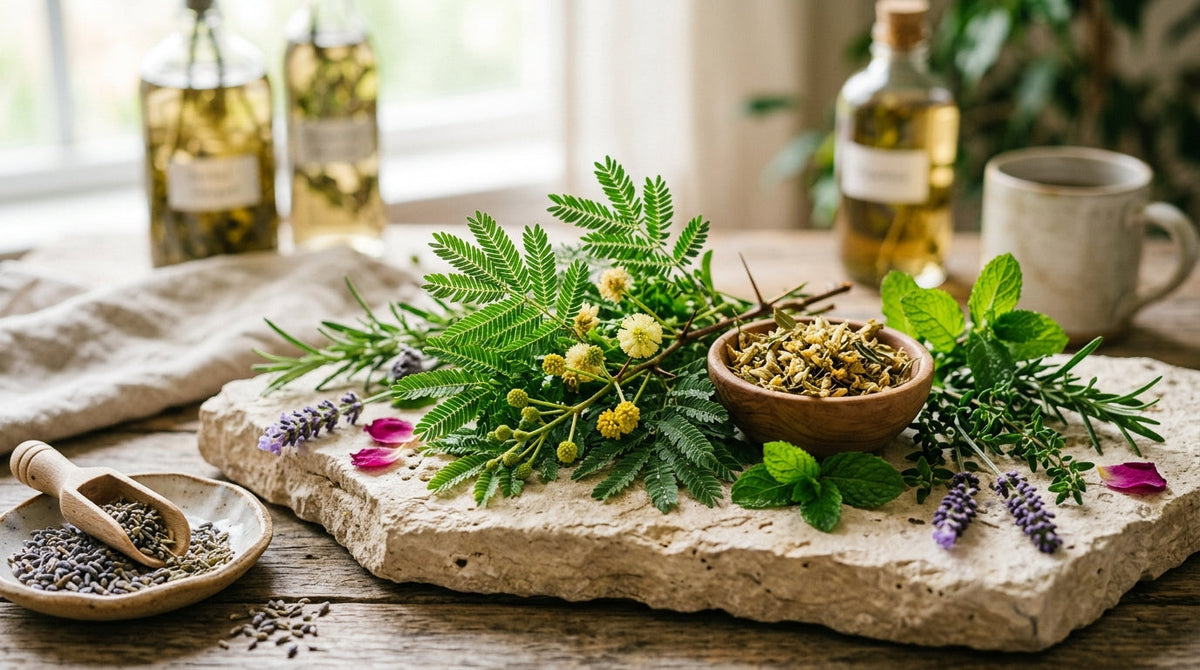
Bur Marigold (Bidens tripartita) is an herbaceous plant widely recognized in traditional folk medicine. It is native to temperate regions across Europe and Asia, thriving in wetlands and damp environments. This botanical is valued in functional nutrition for its rich profile of flavonoids, phenolic acids, and essential oils, which contribute to its immune-supporting and anti-inflammatory properties.
Potential benefits
- Reduces systemic inflammation by modulating cytokine pathways through its flavonoid and phenolic acid content.
- Supports immune system function with antimicrobial properties from essential oils and flavonoids.
- Protects cells from oxidative damage due to the presence of potent antioxidants like quercetin and chlorogenic acid.
- Promotes skin healing and soothes irritation through its antimicrobial and anti-inflammatory compounds.
- Aids in gastrointestinal health by reducing inflammation and supporting a balanced microbiome.
How it works
Bur Marigold exerts its anti-inflammatory effects primarily through flavonoids like luteolin and quercetin, alongside phenolic acids such as chlorogenic acid, which modulate cytokine pathways to reduce systemic inflammation. Its antimicrobial and antifungal actions are attributed to polyacetylenes, notably phenylheptatriyne, while potent antioxidants like flavonoids and phenolic acids protect cells by scavenging free radicals and reducing oxidative stress.
What the research says
Research, including in vitro and animal studies, supports Bur Marigold's anti-inflammatory, antioxidant, and antimicrobial properties, attributed to its flavonoid and phenolic acid content. Studies have explored its potential in treating skin conditions and supporting immune function. While promising, more human clinical trials are needed to confirm efficacy and optimal dosages.
Safety and interactions
While traditional uses suggest a generally safe profile, specific clinical data regarding the safety, side effects, and drug interactions of Bur Marigold in humans are very limited. Due to insufficient research, it is generally advised against use during pregnancy and lactation. Individuals with allergies to plants in the Asteraceae family should exercise caution.
Suggested use
- Common forms: Tea (dried herb), tincture, extract, capsules, topical creams/ointments.
- For internal use: 500-1,000 mg of extract per day, or as a tea.
- For topical application: Apply creams or ointments containing Bur Marigold extract several times daily to affected skin areas.
- Dosage may vary based on extract concentration and specific health needs.
Frequently asked questions
What are the primary traditional uses of Bur Marigold?
Bur Marigold has traditionally been used in folk medicine for its purported antiseptic, anti-inflammatory, diuretic, and styptic properties. These applications primarily utilize the aerial parts of the plant, including the herb, flowers, and leaves.
Which bioactive compounds are responsible for Bur Marigold's effects?
Key bioactive compounds include flavonoids like luteolin and quercetin, phenolic acids such as chlorogenic acid, and polyacetylenes, specifically phenylheptatriyne. These compounds collectively contribute to its anti-inflammatory, antioxidant, and antimicrobial activities.
How does Bur Marigold reduce inflammation?
Bur Marigold reduces inflammation primarily through its flavonoid and phenolic acid content, which modulate cytokine pathways. By influencing these inflammatory mediators, the plant helps to alleviate systemic inflammation.
What evidence exists for Bur Marigold's antimicrobial properties?
In vitro and animal studies support Bur Marigold's antimicrobial and antifungal properties, largely attributed to its essential oils, flavonoids, and particularly polyacetylenes like phenylheptatriyne. These compounds have shown efficacy against various pathogens.
Is Bur Marigold extensively studied in humans?
While promising in vitro and animal studies explore its anti-inflammatory, antioxidant, and antimicrobial potential, clinical evidence in humans remains limited. More comprehensive human trials are needed to fully establish its efficacy and safety.
Is Bur Marigold safe to use during pregnancy and breastfeeding?
Limited safety data exists for Bur Marigold use during pregnancy and breastfeeding, so it is generally recommended to avoid supplementation during these periods unless directed by a healthcare provider. Traditional use does not establish safety in these populations, and the herb's bioactive compounds may cross the placental barrier or be present in breast milk. Pregnant and nursing women should consult with their healthcare practitioner before using Bur Marigold supplements.
References
- https://www.ncbi.nlm.nih.gov/pmc/articles/PMC4566882
- https://www.ncbi.nlm.nih.gov/pmc/articles/PMC7310456
This article is educational and is not medical advice. Statements have not been evaluated by the FDA and are not intended to diagnose, treat, cure, or prevent any disease. Consult a healthcare professional before use.