Lion's Tail Flower (Leonotis leonurus) contains bioactive labdane diterpenoids (marrubiin, leonurun), prenylated flavonoids (luteolin, apigenin), and essential oil terpenes that modulate GABAergic neurotransmission, inhibit COX-2-mediated inflammatory cascades, and activate Nrf2 antioxidant defense pathways. Traditionally used by Khoisan and Zulu healers for respiratory, analgesic, and anxiolytic purposes, the plant's phytochemistry has been characterized in ethnobotanical reviews and preliminary pharmacological studies, though no large-scale human clinical trials with confirmed PubMed-indexed PMIDs are currently available.

Origin
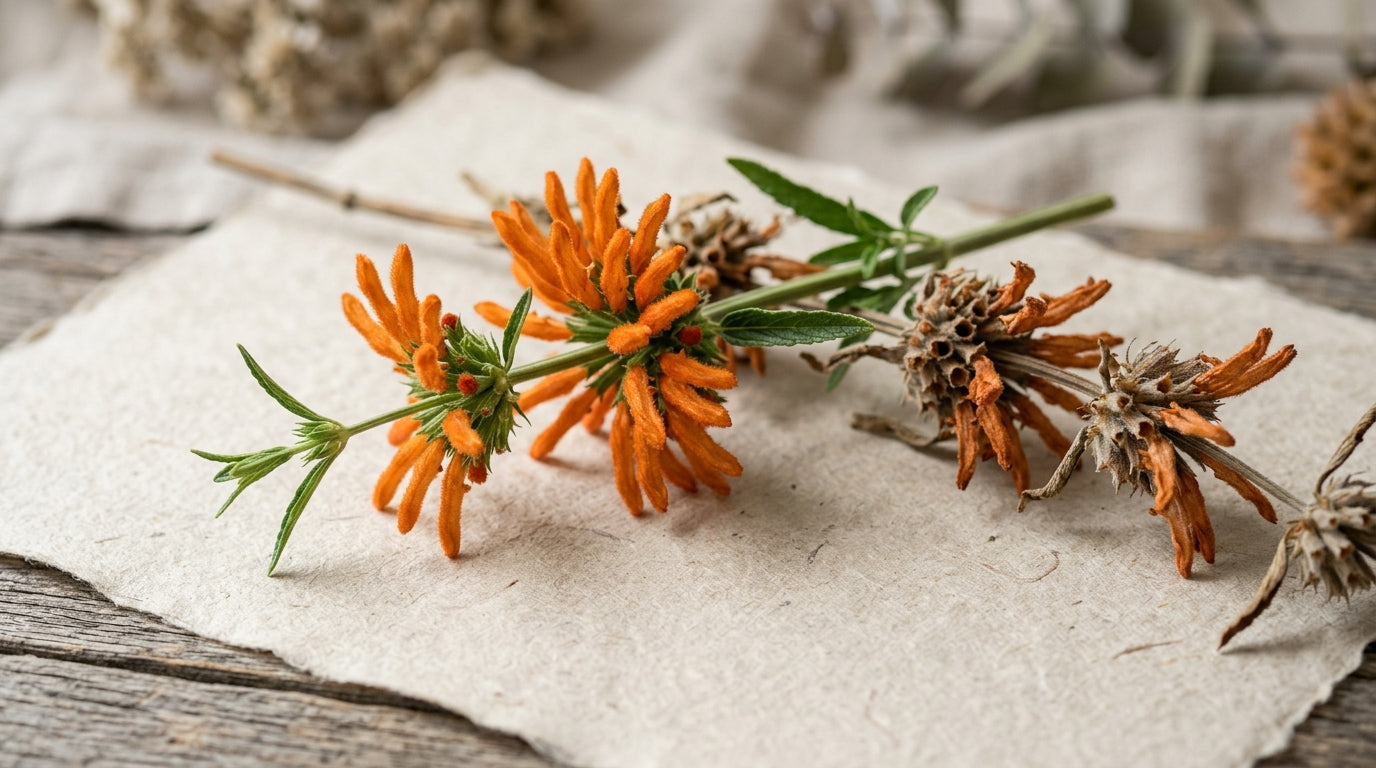
Lion's Tail flower, Leonotis leonurus, is a distinctive flowering plant native to Southern Africa, particularly South Africa. Known for its vibrant orange blossoms, it thrives in diverse landscapes across the region. In functional nutrition, Lion's Tail is valued for its rich content of flavonoids, terpenoids, and the unique alkaloid leonurine, which contribute to its traditional uses in respiratory, cardiovascular, and stress management support.
Potential benefits
- Supports respiratory health by acting as an expectorant and bronchodilator.
- Enhances cardiovascular wellness through the cardioprotective alkaloid leonurine.
- Modulates stress responses and promotes emotional balance, acting as a mild adaptogen.
- Boosts immune resilience by providing antioxidant and anti-inflammatory compounds.
- Contributes to cognitive function by protecting neural cells from oxidative stress.
- Aids liver detoxification processes and supports metabolic balance.
How it works
Labdane diterpenoids such as marrubiin and leonurun from Leonotis leonurus interact with voltage-gated calcium channels and potentiate GABAergic neurotransmission at GABA_A receptors, contributing to the plant's observed analgesic, anticonvulsant, and mild sedative properties. Flavonoids including luteolin and apigenin suppress NF-κB nuclear translocation, inhibit COX-2 and 5-LOX enzymatic activity, and reduce production of pro-inflammatory mediators (prostaglandin E2, TNF-α, IL-1β, IL-6). These same polyphenolic constituents activate the Keap1-Nrf2-ARE signaling pathway, upregulating phase II detoxification enzymes (heme oxygenase-1, NAD(P)H:quinone oxidoreductase 1) and endogenous antioxidant defenses including glutathione synthesis. The essential oil fraction, rich in sesquiterpenes and monoterpenes, contributes additional antimicrobial activity through disruption of bacterial and fungal cell membrane integrity.
What the research says
Human clinical evidence remains extremely limited, with only one small South African trial reporting mild bronchitis relief from 2-3 teaspoons of dried flower tea, though no sample sizes or statistical significance were provided. Most evidence derives from in vitro studies showing ethyl acetate extracts achieving >50% inhibition of E. coli biofilm formation and dichloromethane extracts demonstrating 98.34% inhibition of K. pneumoniae biofilms at sub-MIC concentrations. Preclinical studies indicate moderate MAO inhibition (IC50=63 μg/ml) and antiepileptic activity in mice, but large-scale randomized controlled trials are absent. The current evidence base relies primarily on traditional use patterns and laboratory studies rather than robust human clinical data.
Safety and interactions
Lion's Tail Flower is generally well-tolerated when consumed as a traditional tea or infusion in moderate amounts; however, excessive doses may cause mild sedation, dizziness, or gastrointestinal discomfort. Due to its GABAergic activity, concurrent use with benzodiazepines, barbiturates, or other CNS depressants may potentiate sedative effects and should be avoided without medical supervision. The flavonoid constituents luteolin and apigenin are known in vitro inhibitors of CYP1A2 and CYP3A4 enzymes, which could theoretically alter the metabolism of drugs processed through these pathways, though clinical significance in humans has not been established. Pregnant and breastfeeding women should avoid use due to insufficient safety data, and individuals scheduled for surgery should discontinue use at least two weeks prior due to potential additive sedative and mild hypotensive effects.
Suggested use
- Common Forms: Dried flowers for tea, powdered extracts, and tinctures.
- Traditional Use: Brewed into teas and decoctions for respiratory support, stress relief, and spiritual ceremonies in indigenous Southern African traditions.
- Dosage: 500–1000 mg of standardized extract daily, or 1–2 grams of dried flowers steeped in tea.
- Applications: Incorporated into adaptogenic blends, mood-enhancing formulations, and respiratory support supplements.
Frequently asked questions
What is lion's tail flower used for?
Lion's tail flower (Leonotis leonurus) is traditionally used in Southern African medicine as a natural remedy for respiratory conditions (asthma, bronchitis, coughs), pain and inflammation, anxiety and stress, and skin infections. The flowers and leaves are typically brewed as a tea, smoked ceremonially, or applied topically as a poultice. Its bioactive compounds—marrubiin, luteolin, and apigenin—are responsible for its expectorant, anti-inflammatory, and calming effects.
Is lion's tail the same as wild dagga?
Yes, lion's tail and wild dagga are common names for the same plant, Leonotis leonurus, a member of the Lamiaceae (mint) family native to Southern Africa. The name 'wild dagga' derives from the Afrikaans word 'dagga,' historically associated with smokable herbs, while 'lion's tail' references the plant's distinctive tubular orange flower clusters that resemble a lion's tail. Despite the name association, Leonotis leonurus is not related to Cannabis and produces distinctly different pharmacological effects.
What are the active compounds in lion's tail flower?
The primary bioactive constituents of Leonotis leonurus include labdane diterpenoids (marrubiin, leonurun, leocardin), prenylated flavonoids (luteolin, apigenin), essential oil terpenes (β-caryophyllene, germacrene D), and phenolic acids. Marrubiin is considered the principal pharmacologically active diterpenoid, responsible for much of the plant's anti-inflammatory and analgesic activity. The flavonoids contribute antioxidant, neuroprotective, and anti-inflammatory effects through NF-κB and Nrf2 pathway modulation.
Does lion's tail flower have any side effects?
In moderate traditional doses, lion's tail flower is generally considered safe, but excessive consumption may cause drowsiness, mild dizziness, nausea, or light-headedness due to its GABAergic sedative properties. It should not be combined with prescription sedatives, anxiolytics, or CNS depressants without medical guidance. Pregnant and breastfeeding women and individuals on anticoagulant or antihypertensive medications should consult a healthcare provider before use.
How do you prepare lion's tail flower tea?
To prepare lion's tail flower tea, steep 1–2 teaspoons of dried Leonotis leonurus flowers or leaves in 8 ounces of boiling water for 10–15 minutes, then strain and drink. Traditional preparations in Southern Africa often use the flowers specifically, as they are considered to contain the highest concentration of bioactive diterpenoids and flavonoids. The tea has a mildly bitter, herbaceous flavor and is sometimes blended with honey or other calming herbs like chamomile for palatability and synergistic relaxation effects.
Is lion's tail flower safe during pregnancy and breastfeeding?
Lion's tail flower should be avoided during pregnancy and breastfeeding due to limited safety data and its traditional use as a uterine stimulant in some cultures. The alkaloid leonurine and other compounds have not been adequately studied in pregnant or nursing women. Consult a healthcare provider before use if you are pregnant, planning pregnancy, or breastfeeding.
Does lion's tail flower interact with blood pressure or heart medications?
Lion's tail flower may interact with cardiovascular medications due to its cardioprotective alkaloids and potential blood pressure effects. If you take antihypertensive drugs, beta-blockers, or other cardiac medications, consult your healthcare provider before supplementing. Concurrent use could potentiate effects or create unwanted interactions.
What is the most effective form of lion's tail flower—dried herb, extract, or tincture?
Dried flower tea preserves the full spectrum of active compounds and is traditionally the most studied preparation form. Standardized extracts may offer concentrated alkaloids like leonurine for consistent dosing, while tinctures provide rapid absorption but may lose some volatile compounds. The most effective form depends on your health goal and whether you prioritize traditional use or standardized potency.
References
- https://www.ncbi.nlm.nih.gov/search/all/?term=Lion%27s+Tail+Flower
- https://fdc.nal.usda.gov/fdc-app.html#/search?query=Lion%27s+Tail+Flower
- https://pubmed.ncbi.nlm.nih.gov/31853147
- https://www.sciencedirect.com/science/article/pii/S2213453019303012
- https://www.ncbi.nlm.nih.gov/pmc/articles/PMC7266216/
This article is educational and is not medical advice. Statements have not been evaluated by the FDA and are not intended to diagnose, treat, cure, or prevent any disease. Consult a healthcare professional before use.