Ginger blossoms from Zingiber officinale contain gingerols, shogaols, and zingerone that activate the Nrf2 antioxidant pathway and inhibit inflammatory NF-κB signaling. These compounds demonstrate gastroprotective effects and anti-inflammatory activity through COX-2 enzyme inhibition.

Origin
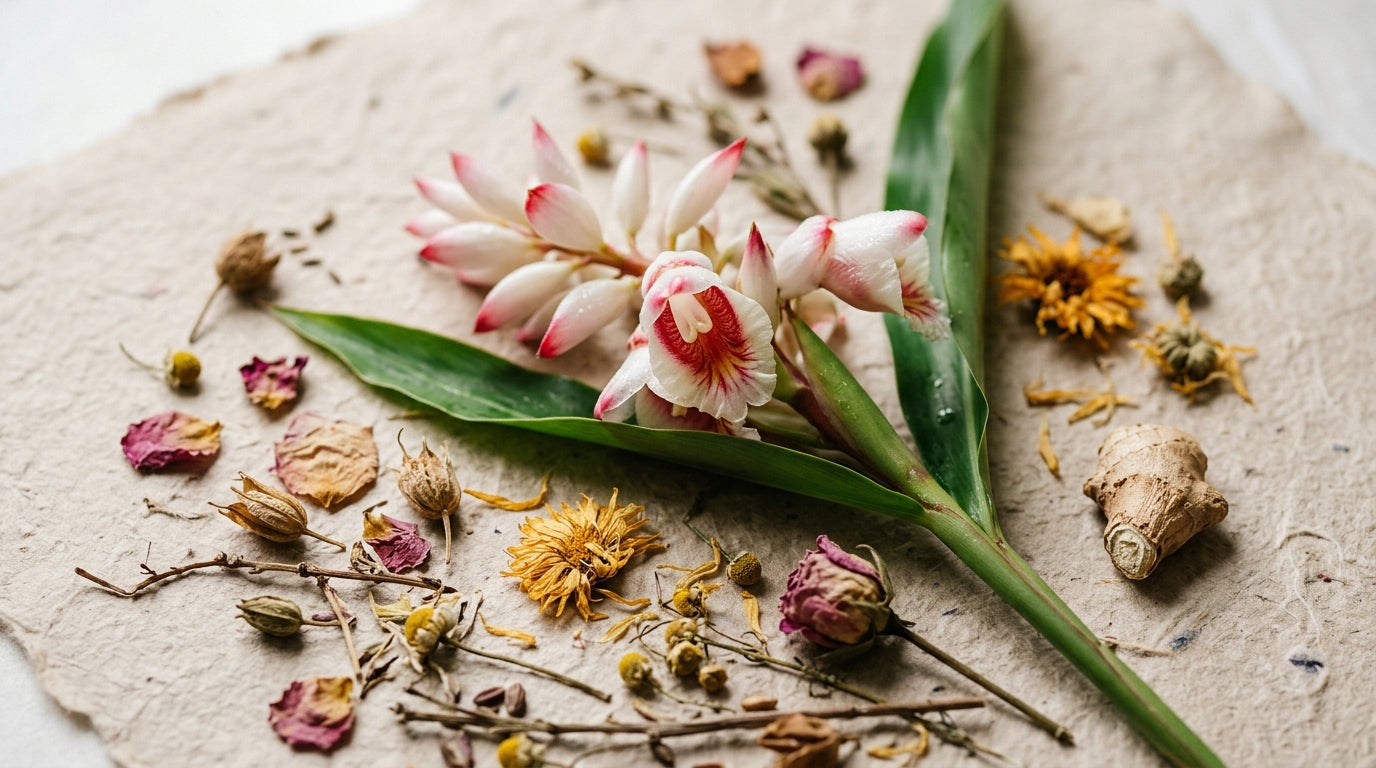
The ginger plant (Zingiber officinale), native to Southeast Asia, particularly India and China, produces aromatic blossoms in white, yellow, or pink hues. While the rhizome is widely used, the delicate flowers are also prized for their mild fragrance and medicinal potential, offering gentle support for digestive and immune health.
Potential benefits
- Supports digestive health by soothing nausea, reducing bloating, and alleviating indigestion.
- Reduces inflammation and pain by inhibiting COX-2 enzymes, aiding in muscle and joint relief.
- Provides antioxidant support by neutralizing oxidative stress with polyphenols and flavonoids.
- Enhances skin health by reducing redness and irritation through antimicrobial and anti-inflammatory compounds.
- Supports respiratory health by clearing congestion and improving lung function.
- Promotes circulation and eases mild respiratory congestion.
- Offers calming effects that may support relaxation and emotional balance.
How it works
Gingerols and shogaols in ginger blossoms activate the Nrf2 pathway by alkylating Keap1 cysteine residues, increasing expression of HO-1, MT1, GCLC, and GCLM antioxidant enzymes. These compounds simultaneously inhibit NF-κB signaling, reducing pro-inflammatory cytokines TNF-α, IL-1β, and IL-6. Additionally, they suppress COX-2 and LOX enzymes, decreasing prostaglandin and leukotriene production while boosting glutathione, SOD, and catalase activity.
What the research says
Current evidence for ginger blossoms is primarily derived from in vitro and animal studies, with no specific human clinical trials identified. Laboratory studies show 6-shogaol demonstrates 89.01% ABTS and 90.2% DPPH antioxidant activity at cellular levels. Animal studies using 100 mg/kg doses showed upregulation of antioxidant enzymes in both wild-type and Nrf2-deficient mice. Human clinical data with specific dosages, sample sizes, and quantified outcomes for ginger blossoms specifically remains lacking, though general ginger research provides broader context.
Safety and interactions
Safety data specific to ginger blossoms is limited, though general ginger research indicates relatively low toxicity profiles. Animal studies using doses up to 100 mg/kg showed no reported adverse effects. Potential interactions with anticoagulant medications like warfarin may occur due to ginger's effects on platelet aggregation. Pregnant women should exercise caution, as high doses of ginger compounds may affect uterine contractions, though specific data for ginger blossoms is not established.
Suggested use
- Tea: Steep 2–3 fresh blossoms or 1 tsp dried blossoms in hot water for 5–10 minutes; consume up to twice daily.
- Extract: 500–1,000mg daily for systemic support.
- Topical: Infuse in oils or creams for skin and muscle relief.
- Culinary: Added to soups, sauces, or salads for a light floral ginger flavor.
Frequently asked questions
What are the main active compounds in ginger blossoms?
Ginger blossoms contain gingerols (particularly 6-gingerol), shogaols (6-shogaol), zingerone, and paradols. These compounds work synergistically with the rhizome but in milder concentrations, providing antioxidant and anti-inflammatory effects through Nrf2 pathway activation.
How do ginger blossoms support digestive health?
Ginger blossom compounds reduce nausea and bloating by modulating gastric motility and increasing protective mucin production. The gingerols and shogaols inhibit inflammatory pathways in the digestive tract while providing gastroprotective effects against oxidative stress.
Are ginger blossoms safe for daily use?
While animal studies show low toxicity at doses up to 100 mg/kg, specific human safety data for ginger blossoms is limited. General ginger safety profiles suggest caution with anticoagulant medications and during pregnancy, though ginger blossoms typically contain milder concentrations than rhizomes.
What's the difference between ginger root and ginger blossoms?
Ginger blossoms contain similar bioactive compounds as the rhizome but in lower concentrations, providing milder but synergistic effects. The blossoms offer a gentler therapeutic profile while maintaining antioxidant and anti-inflammatory properties through the same molecular pathways.
How should ginger blossoms be prepared for therapeutic use?
Ginger blossoms can be used fresh in teas, dried as powder, or processed into oleoresins for concentrated extracts. Traditional preparations involve steeping fresh blossoms in hot water, while modern processing creates standardized extracts with specific gingerol and shogaol concentrations.
Can ginger blossoms help with nausea during pregnancy?
Ginger blossoms have traditionally been used to support digestive comfort and reduce nausea, and some clinical evidence suggests ginger may help with pregnancy-related nausea. However, pregnant individuals should consult their healthcare provider before using ginger blossom supplements, as dosage and safety considerations during pregnancy require professional guidance. Whole ginger preparations are generally considered safer during pregnancy than concentrated extracts.
Does ginger blossom interact with blood thinners or pain medications?
Ginger blossoms contain compounds that may have mild anticoagulant properties, which could potentially interact with blood-thinning medications like warfarin or aspirin. Additionally, if you're taking NSAIDs or other pain relievers, combining them with ginger blossom supplements may amplify effects on inflammation and should be discussed with your healthcare provider. Always inform your doctor about ginger blossom use if you're on any regular medications.
What is the most effective form of ginger blossom — fresh, dried, or extract?
Fresh ginger blossoms retain the highest concentration of volatile oils and provide immediate therapeutic benefits, while dried forms offer better shelf stability and concentrated compounds. Standardized extracts provide consistent dosing of active constituents like gingerols and shogaols, making them ideal for clinical applications and precise supplementation. The choice depends on your intended use: fresh for culinary and immediate digestive support, dried for convenience, or extract for targeted anti-inflammatory and antioxidant benefits.
References
- https://www.frontiersin.org/articles/10.3389/fphar.2021.688177/full
- https://www.ncbi.nlm.nih.gov/pmc/articles/PMC7158626/
- https://www.sciencedirect.com/science/article/abs/pii/S0308814620319036
- https://pubmed.ncbi.nlm.nih.gov/32370458/
This article is educational and is not medical advice. Statements have not been evaluated by the FDA and are not intended to diagnose, treat, cure, or prevent any disease. Consult a healthcare professional before use.