Current scientific understanding of Myoga Ginger's therapeutic effects is largely derived from *in vitro* studies and traditional culinary uses, focusing on its antioxidant and anti-inflammatory compounds. Research has identified key constituents like aframodial, galanal B, and [6]-gingerol, demonstrating their ability to suppress oxidative stress and inflammation in cell-based models (e.g., HL-60 and RAW264.7 cells). While these findings suggest promising health benefits, specific targeted clinical studies involving human subjects are still needed to fully elucidate its efficacy, optimal dosages, and therapeutic applications for various conditions. Therefore, claims beyond antioxidant and anti-inflammatory properties require further rigorous investigation.

Origin
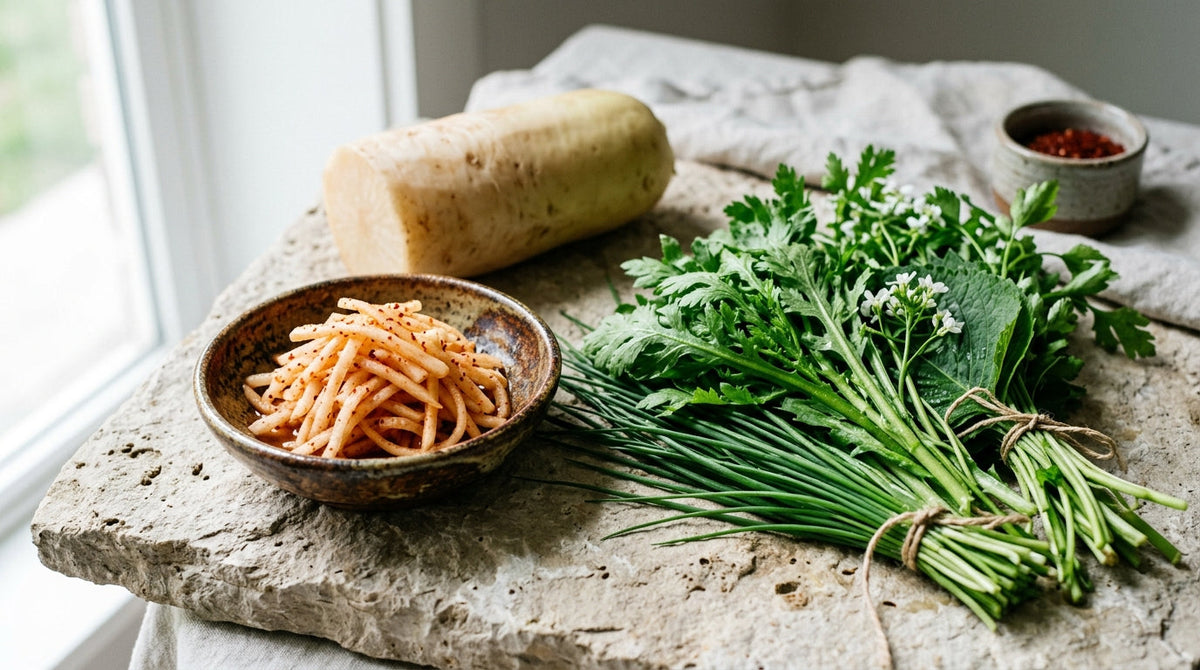
Myoga Ginger (Zingiber mioga) is a herbaceous perennial native to Japan and Korea, thriving in shaded, moist environments with well-drained soils. Its edible flower buds are highly prized in East Asian cuisine and traditional medicine for their unique aromatic flavor and health-promoting properties.
Potential benefits
- Exhibits potent antioxidant properties due to anthocyanins, which neutralize free radicals and reduce oxidative stress.
- Contains α-pinene, offering anti-inflammatory effects that may alleviate systemic inflammation.
- Provides neuroprotective benefits through α-pinene, potentially enhancing cognitive function and neural health.
- Traditionally used to alleviate digestive issues, promoting comfort and regularity.
- Improves circulation, contributing to overall metabolic health and vitality.
How it works
Myoga Ginger's anti-inflammatory and antioxidant properties are primarily attributed to compounds such as aframodial, galanal B, and [6]-gingerol. Aframodial significantly suppresses superoxide (O₂⁻) generation by inhibiting NADPH oxidase and xanthine oxidase pathways, demonstrating an 84.6% inhibition rate in HL-60 cells. Additionally, it strongly reduces nitric oxide (NO) production (95.9% inhibition in RAW264.7 cells) and completely inhibits NF-κB activation, thereby mitigating inflammation-linked reactive oxygen species (ROS) and inducible nitric oxide synthase (iNOS) expression.
What the research says
Research on Myoga Ginger highlights its chemical constituents, including anthocyanins and α-pinene, which contribute to its antioxidant and anti-inflammatory properties. While traditional culinary uses are well-documented, further targeted clinical studies are needed to fully elucidate its specific health benefits and mechanisms.
Safety and interactions
Myoga Ginger has a long history of culinary use in Japan and Korea, suggesting a general safety profile when consumed as food. However, specific clinical trials evaluating its safety, potential side effects, or drug interactions as a concentrated supplement are limited. Individuals with known allergies to ginger or other Zingiberaceae family plants should exercise caution. Due to the lack of specific research, pregnant or breastfeeding individuals, and those on medications (especially anticoagulants or blood pressure-lowering drugs, given ginger's general properties) should consult a healthcare professional before using Myoga Ginger in medicinal quantities.
Suggested use
- Common forms: Fresh flower buds (raw, pickled), incorporated into various dishes and beverages.
- Traditional use: Consumed raw as a garnish for soups, noodles, and sashimi in Japanese and Korean cuisines, or pickled.
- Modern applications: Incorporated into salads, tempura, and infused in beverages.
- Dosage: Typically consumed as a culinary ingredient; no specific medicinal dosage provided.
Frequently asked questions
What are the primary health benefits of Myoga Ginger?
Myoga Ginger primarily offers potent antioxidant and anti-inflammatory benefits. Its unique compounds, such as aframodial and anthocyanins, help neutralize free radicals, reduce oxidative stress, and alleviate systemic inflammation by modulating key biochemical pathways.
How does Myoga Ginger differ from common ginger?
Myoga Ginger (Zingiber mioga) is distinct from common ginger (Zingiber officinale) primarily by its use of the flower buds in cuisine and medicine, rather than the rhizome. It also contains unique bioactive compounds like aframodial, galanal B, and galanolactone, which contribute to its specific flavor profile and therapeutic properties.
What specific compounds contribute to Myoga Ginger's anti-inflammatory effects?
Key compounds contributing to Myoga Ginger's anti-inflammatory effects include aframodial, galanal B, and α-pinene. Aframodial, for instance, has been shown to suppress nitric oxide production and inhibit NF-κB activation, crucial pathways in inflammatory responses.
Has Myoga Ginger been studied in human clinical trials?
While traditional culinary uses are well-documented and *in vitro* studies highlight its bioactive compounds and mechanisms, targeted clinical studies involving human subjects are currently limited. Further research is needed to establish its efficacy, dosages, and therapeutic applications in humans.
Is Myoga Ginger safe to consume?
Myoga Ginger has a long history of safe culinary use in traditional Japanese and Korean cuisine. However, specific safety data for concentrated forms or medicinal dosages are limited. As with any food or supplement, individuals with allergies or those on medication should consult a healthcare professional, especially pregnant or breastfeeding individuals.
What is the bioavailability of Myoga Ginger, and does the form (fresh, powder, extract) affect absorption?
Myoga Ginger's active compounds, including anthocyanins and α-pinene, are fat-soluble, meaning absorption is enhanced when consumed with dietary fats. Standardized extracts typically offer higher bioavailability than whole powder due to concentrated phytochemical levels, though fresh preparations preserve heat-sensitive compounds better. The specific extraction method and presence of adjuvant ingredients can significantly impact how efficiently your body absorbs and utilizes Myoga Ginger's therapeutic compounds.
References
This article is educational and is not medical advice. Statements have not been evaluated by the FDA and are not intended to diagnose, treat, cure, or prevent any disease. Consult a healthcare professional before use.