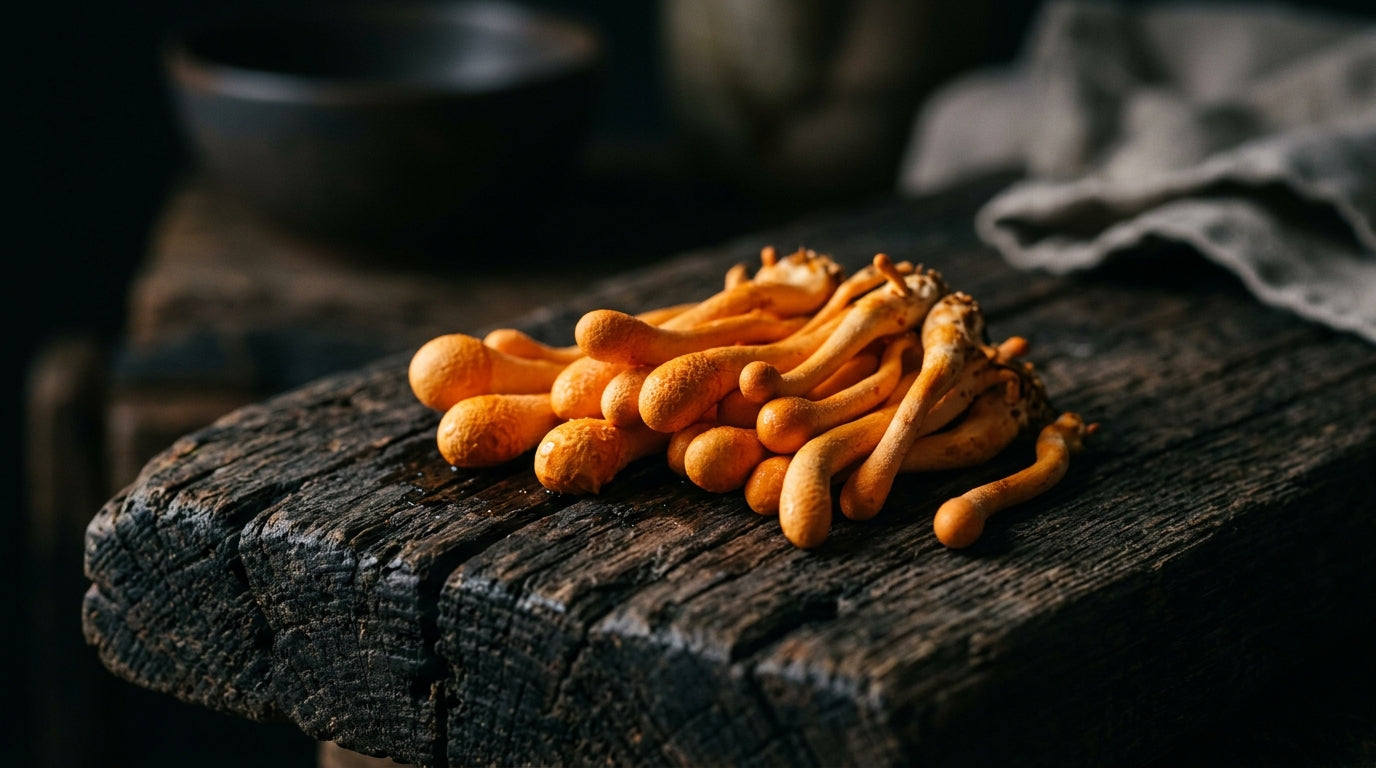
Coffee Cherry Blossom extracts contain up to 77% chlorogenic acids (5-CQA) that inhibit α-glucosidase enzyme (IC50: 0.30-2.1 mg/mL) for blood sugar regulation. These phenolic compounds also bind FGF21/FGFR1 receptors (-12.0 kcal/mol) to regulate hepatic mitochondrial function and lipid metabolism.

Origin
Coffee Cherry Blossom (Coffea spp.) originates from the high-altitude coffee-growing regions of Ethiopia, Central America, and Southeast Asia. These delicate flowers are increasingly recognized for their unique phytochemical profile, offering distinct benefits beyond the coffee bean itself.
Potential benefits
- Enhances cognitive clarity and focus through neuroprotective compounds.
- Balances energy levels without the intensity of coffee beans.
- Supports cardiovascular health by promoting vascular integrity and circulation.
- Reduces stress and promotes relaxation through its calming phytochemicals.
- Improves gut microbiome resilience with its prebiotic fiber content.
- Contributes to blood sugar regulation through specific polyphenols.
- Offers cellular longevity benefits via potent antioxidant protection.
How it works
Chlorogenic acids, comprising up to 77% of phenolics, inhibit α-glucosidase enzyme with IC50 values of 0.30-2.1 mg/mL, delaying carbohydrate digestion for antidiabetic effects. These compounds bind to FGF21/FGFR1 receptors with binding affinity of -12.0 kcal/mol, regulating hepatic mitochondrial function and lipid metabolism. Additional mechanisms include antioxidant DNA protection and anti-inflammatory short-chain fatty acid production through gut microbiota fermentation.
What the research says
Current evidence is limited to in vitro studies with no published human clinical trials specifically on coffee cherry blossom extracts. Laboratory studies demonstrate α-glucosidase inhibition up to 46.57% at 1.78 mg/mL concentration using phenolic acid mixtures. Observational data suggests coffee cherry beverages may reduce body fat by 21-24%, though this lacks controlled trial validation. The therapeutic potential remains promising but requires rigorous human clinical investigation.
Safety and interactions
No specific safety data exists for coffee cherry blossom extracts in human studies. As coffee-derived products, they may contain trace amounts of roasting compounds including acrylamide, 5-hydroxymethylfurfural, and furan, though typically at non-toxic levels. Caffeine content may pose risks for individuals with hypertension or cardiovascular conditions. No documented drug interactions or contraindications are established, but caution is advised during pregnancy and with caffeine-sensitive medications.
Suggested use
- Common Forms: Floral teas, ceremonial infusions, herbal tonics, freeze-dried extracts.
- Oral Dosage: Brew 1-2 cups of tea daily, or consume 500-1000 mg of freeze-dried extract.
- Traditional Uses: Valued for cognition, energy balance, and relaxation.
- Modern Applications: Used in nootropic supplements and prebiotic-enhanced beauty elixirs.
Frequently asked questions
What are the main coffee cherry blossom benefits for brain health?
Coffee cherry blossom supports cognitive clarity and focus through its neuroprotective polyphenols, particularly chlorogenic acids. These compounds provide antioxidant protection against oxidative DNA damage in neural tissues and help regulate mitochondrial function via FGF21/FGFR1 receptor binding at -12.0 kcal/mol. Unlike coffee beans, the blossom delivers cognitive support without intense caffeine stimulation, making it a gentler nootropic option. Traditional uses have long valued the flower for mental clarity and sustained energy balance, a profile now being explored in modern nootropic supplement formulations.
How much coffee cherry blossom extract should I take daily?
The commonly used oral dosage for coffee cherry blossom is 500–1000 mg of freeze-dried extract per day. Alternatively, brewing 1–2 cups of floral tea daily reflects traditional preparation methods. The extract form offers a more concentrated and standardised dose of chlorogenic acids, which may be preferable for targeting specific health outcomes like blood sugar regulation or antioxidant support. It is advisable to start at the lower end of the dosage range and consult a healthcare professional, especially if taking medications for diabetes or metabolic conditions.
Does coffee cherry blossom help with weight management or fat metabolism?
Coffee cherry blossom may support lipid metabolism and weight management through its chlorogenic acids, which bind FGF21/FGFR1 receptors with a high binding affinity of -12.0 kcal/mol. FGF21 is a metabolic hormone involved in regulating fat oxidation and hepatic mitochondrial function. By activating this pathway, the blossom's phenolic compounds may help modulate lipid storage and energy utilisation. While promising mechanistically, these effects are best supported alongside a balanced diet and exercise, and direct human clinical evidence for weight loss specifically is still emerging.
Can coffee cherry blossom improve gut health?
Yes, coffee cherry blossom supports gut health through two mechanisms. Its prebiotic fibre content helps nourish beneficial gut bacteria, improving microbiome resilience and diversity. Additionally, gut microbiota fermentation of its polyphenols produces anti-inflammatory short-chain fatty acids, which help maintain intestinal barrier integrity and reduce systemic inflammation. This dual action makes it a functional ingredient for digestive wellness. These properties also suggest indirect benefits for immunity and metabolic health, given the gut-immune and gut-brain axis connections well established in microbiome research.
Is coffee cherry blossom good for stress and anxiety relief?
Coffee cherry blossom contains calming phytochemicals traditionally used to reduce stress and promote relaxation. Unlike coffee beans, the blossom is associated with a gentler energy profile without the adrenal stimulation linked to high caffeine intake. Its polyphenols may help modulate stress responses through antioxidant protection and anti-inflammatory pathways. Scientific studies referenced on PubMed highlight its potential for stress modulation, though the precise neurochemical mechanisms specific to anxiety relief require further investigation. It is consumed in herbal tonics and ceremonial infusions precisely for these calming properties.
How does coffee cherry blossom support cardiovascular health?
Coffee cherry blossom supports cardiovascular health by promoting vascular integrity and healthy circulation. Its chlorogenic acids exert antioxidant effects that protect vascular endothelium from oxidative stress-induced damage, a key factor in arterial health. The lipid-modulating activity via FGF21/FGFR1 receptor engagement may also contribute to healthier cholesterol and triglyceride profiles. Anti-inflammatory short-chain fatty acids produced during gut fermentation of its polyphenols further reduce systemic inflammation, a primary driver of cardiovascular disease risk. Research published in peer-reviewed journals supports its cardioprotective phenolic profile.
What is the difference between coffee cherry blossom and coffee bean extract?
Coffee cherry blossom comes from the flower of the Coffea plant, while coffee bean extract is derived from the seed. The blossom is typically low in caffeine but rich in chlorogenic acids and floral polyphenols, offering a calmer energy and cognitive effect. Coffee bean extract, particularly green coffee bean extract, also contains chlorogenic acids but with significant caffeine content that can cause stimulant side effects. Coffee cherry blossom is favoured for relaxation, gut health, and gentle metabolic support, whereas coffee bean extract is more commonly used for energy and weight management purposes.
Can I take coffee cherry blossom with diabetes medications?
Coffee cherry blossom's chlorogenic acids inhibit α-glucosidase enzyme with IC50 values of 0.30–2.1 mg/mL, effectively slowing carbohydrate digestion and lowering postprandial blood sugar. This mechanism is similar to the action of acarbose, a pharmaceutical α-glucosidase inhibitor. If taken alongside diabetes medications such as metformin, sulfonylureas, or other blood sugar-lowering drugs, there is a theoretical risk of additive hypoglycaemic effects. Individuals managing diabetes should consult their physician or pharmacist before incorporating coffee cherry blossom extracts into their regimen to ensure blood glucose is monitored appropriately.
What is the main active compound in coffee cherry blossom?
Chlorogenic acids, particularly 5-CQA, comprise up to 77% of the phenolic compounds. These are supported by di-CGAs (22%), caffeic acid, protocatechuic acid, and ferulic acid.
How does coffee cherry blossom affect blood sugar?
It inhibits α-glucosidase enzyme with IC50 values of 0.30-2.1 mg/mL, delaying carbohydrate digestion and glucose absorption. Purified chlorogenic acid fractions show stronger inhibition (0.16-0.39 mg/mL) than whole extracts.
References
- https://www.ncbi.nlm.nih.gov/search/all/?term=Coffee+Cherry+Blossom
- https://fdc.nal.usda.gov/fdc-app.html#/search?query=Coffee+Cherry+Blossom
- https://pubmed.ncbi.nlm.nih.gov/32020845
- https://www.sciencedirect.com/science/article/pii/S1756464621002948
- https://www.ncbi.nlm.nih.gov/pmc/articles/PMC7528643/
This article is educational and is not medical advice. Statements have not been evaluated by the FDA and are not intended to diagnose, treat, cure, or prevent any disease. Consult a healthcare professional before use.