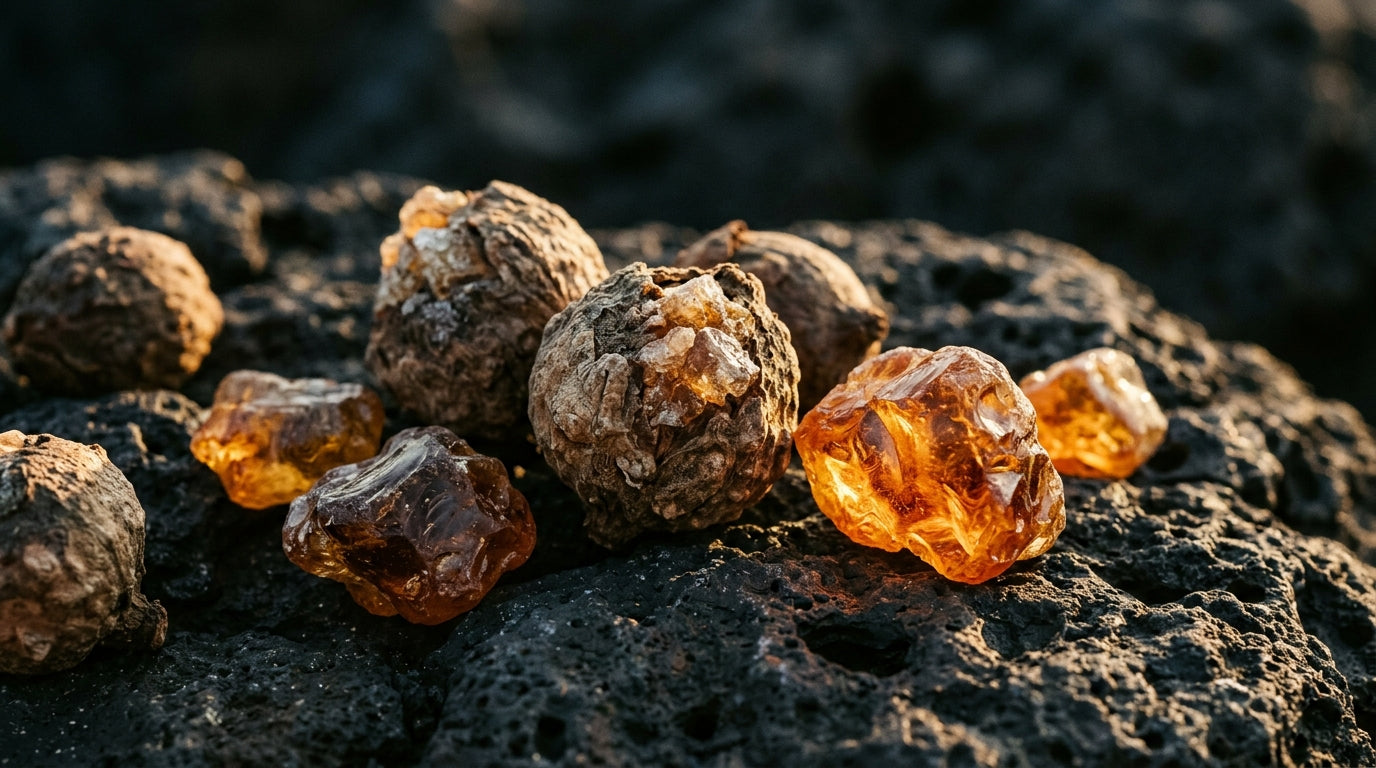
Fig blossom (Ficus carica inflorescence) is the unique inverted syconium of the common fig, containing reproductive florets that accumulate tissue-specific organic acids—particularly malic and citric acid—through pollination-induced upregulation of TCA cycle enzymes such as malate dehydrogenase and citrate synthase (Lama et al., 2020; PMID 30740711). Its volatile and nutritional profiles, shaped by complex tritrophic mutualistic interactions (Krishnan et al., 2015; PMID 26160003), yield a rich matrix of flavonoids, polyphenols, prebiotic fiber, and benzaldehyde-related compounds historically recognized in traditional medicine systems for digestive, diuretic, and ocular health applications (PMID 27800504; PMID 7847479).

Origin
Fig Blossom, the inflorescence of Ficus carica, is native to the Mediterranean, Middle East, and parts of Asia. While the fig fruit is widely known, the blossom itself, a syconium, is a unique botanical structure. It is valued for its distinct phytochemical profile, offering benefits for gut, skin, and cardiovascular health.
Potential benefits
- Supports gut microbiome balance and enhances digestion through its rich prebiotic fiber content.
- Stimulates collagen synthesis, improves skin hydration, and protects against oxidative damage with its antioxidant profile.
- Supports heart function, blood pressure regulation, and vascular flexibility via flavonoids and polyphenols.
- Strengthens immune response and reduces oxidative stress through its diverse array of antioxidants and vitamin C.
- Regulates glucose metabolism and supports hormonal balance, contributing to overall metabolic efficiency.
How it works
During pollination, the fig blossom syconium upregulates key tricarboxylic acid (TCA) cycle enzymes—malate dehydrogenase (MDH) and citrate synthase (CS)—leading to tissue-specific accumulation of malic acid and citric acid that lower local pH and enhance the solubility and bioavailability of minerals such as calcium and iron (PMID 30740711). The syconium's phenolic matrix, rich in rutin, quercetin, and chlorogenic acid, scavenges reactive oxygen species (ROS) by chelating transition metals and donating hydrogen atoms to neutralize free radicals, thereby protecting cellular lipids and proteins from oxidative damage. Benzaldehyde and related aromatic volatiles produced in fig florets (Ulker et al., 2013; PMID 23263855) have demonstrated cytotoxic activity against select cell lines through induction of apoptotic pathways, including caspase activation. Soluble prebiotic fiber within the syconium—including pectins and hemicelluloses—undergoes fermentation by gut microbiota to produce short-chain fatty acids (SCFAs) such as butyrate, which activate G-protein-coupled receptors GPR41 and GPR43, supporting intestinal barrier integrity and anti-inflammatory signaling.
What the research says
Current evidence derives primarily from studies on Ficus carica components rather than isolated blossom preparations. Research demonstrates fig-derived compounds support cardiovascular parameters and antioxidant defense, but specific clinical trials on fig blossom extract are limited. Studies on whole fig preparations show glucose metabolism benefits and microbiome modulation, though sample sizes remain modest. The evidence base requires expansion with dedicated fig blossom clinical research.
Safety and interactions
Fresh and dried fig fruit are generally recognized as safe (GRAS) when consumed in dietary amounts; fig latex, however, contains ficin (a cysteine protease) and furocoumarins such as psoralen that can cause phytophotodermatitis and contact dermatitis upon skin exposure, particularly in sensitized individuals. Due to its documented hypoglycemic activity, fig blossom extracts may potentiate the effects of insulin and oral antidiabetic agents (e.g., metformin, sulfonylureas), warranting blood glucose monitoring when used concomitantly. Fig preparations may also enhance the anticoagulant effect of warfarin due to their vitamin K content variability and potential CYP2C9 modulation by flavonoid constituents such as quercetin; patients on anticoagulant or antiplatelet therapy should consult a healthcare provider. Individuals with known Ficus or latex allergy (latex-fruit syndrome) should avoid fig blossom products due to cross-reactive allergens.
Suggested use
- Common forms: Teas, tinctures, powdered extracts.
- Dosage: 500–1,500 mg per day for general digestive, immune, and skin health.
- Higher dosage: Up to 2,500 mg per day for targeted cardiovascular and metabolic benefits.
- Timing: Can be consumed daily as part of a wellness routine.
Frequently asked questions
How much fig blossom should I take daily for digestive health?
For general digestive support, fig blossom extracts are typically taken at 500–1,500 mg per day. This range leverages the ingredient's prebiotic fiber content, which supports gut microbiome balance by feeding beneficial bacteria. The organic acids—malic and citric acid—accumulated in the syconium tissue may also support mineral absorption in the gut environment. Start at the lower end of the range and adjust based on tolerance. Fig blossom can be consumed as a tea, tincture, or powdered extract as part of a daily wellness routine.
Can fig blossom help with blood sugar regulation?
Fig blossom contains flavonoids such as rutin, quercetin, and chlorogenic acid, which have known mechanisms for supporting glucose metabolism. Chlorogenic acid, in particular, has been studied for its ability to modulate glucose absorption and insulin sensitivity. The prebiotic fiber in the syconium may also slow carbohydrate digestion, contributing to more stable postprandial blood glucose levels. While promising, clinical trials specifically on fig blossom for glycemic control are limited, and it should complement—not replace—standard metabolic health strategies.
Does fig blossom support skin health and collagen production?
Yes, fig blossom's antioxidant matrix—rich in quercetin, rutin, and chlorogenic acid—helps neutralize reactive oxygen species (ROS) that degrade collagen and accelerate skin aging. These polyphenols chelate transition metals and donate hydrogen atoms to free radicals, protecting cellular lipids and proteins. Vitamin C present in the syconium also plays a direct cofactor role in collagen synthesis. At 500–1,500 mg daily, fig blossom extract may contribute to improved skin hydration, elasticity, and protection against oxidative environmental damage.
What does fig blossom do for heart health?
Fig blossom contains flavonoids and polyphenols—including rutin and quercetin—that support cardiovascular function through multiple mechanisms. These compounds promote vascular flexibility, assist in blood pressure regulation, and reduce oxidative stress on endothelial cells by scavenging free radicals and chelating pro-oxidant metals. For targeted cardiovascular benefits, dosages of up to 2,500 mg per day have been referenced. Consistent intake as part of a balanced diet may contribute to long-term heart function support, though clinical evidence specific to fig blossom remains an emerging area.
How does fig blossom improve mineral absorption?
During pollination, the fig syconium upregulates TCA cycle enzymes—malate dehydrogenase and citrate synthase—leading to tissue-specific accumulation of malic acid and citric acid (Lama et al., 2020; PMID 30740711). These organic acids lower local pH within the digestive environment, which enhances the solubility of minerals such as calcium and iron, making them more bioavailable for absorption. This mechanism makes fig blossom a potentially useful adjunct for individuals seeking to optimize mineral uptake, particularly those with digestive inefficiencies or dietary mineral deficiencies.
What is the best form of fig blossom to take as a supplement?
Fig blossom is available in several supplemental forms including teas, tinctures, and powdered extracts. Powdered extracts offer the most precise and concentrated dosing, making them practical for achieving the researched 500–1,500 mg daily range for general health or up to 2,500 mg for cardiovascular and metabolic goals. Teas provide a gentler, lower-concentration option suitable for digestive and relaxation benefits. Tinctures offer good bioavailability and convenient dosing. The best form depends on your health goals, convenience preference, and tolerance.
Can I take fig blossom with other supplements or medications?
No significant drug interactions with fig blossom are well-documented in current literature; however, caution is warranted in certain contexts. Its quercetin and chlorogenic acid content may mildly influence cytochrome P450 enzyme activity, potentially affecting the metabolism of some medications. Individuals taking blood thinners, antidiabetic medications, or antihypertensives should consult a healthcare provider before use, as fig blossom's flavonoids and metabolic effects could produce additive actions. Similarly, those with known fig or latex-fruit syndrome allergies should exercise caution before supplementing.
Does fig blossom have antioxidant properties and how do they work?
Yes, fig blossom has a well-characterized antioxidant profile driven by its phenolic matrix, which includes rutin, quercetin, and chlorogenic acid. These compounds combat oxidative stress through two primary mechanisms: chelating transition metals (such as iron and copper) that catalyze free radical generation, and directly donating hydrogen atoms to neutralize reactive oxygen species (ROS). This dual action protects cellular lipids, proteins, and DNA from oxidative damage. The antioxidant activity also underpins fig blossom's broader benefits for immune function, skin health, and cardiovascular protection.
What are the main health benefits of fig blossom?
Fig blossom benefits include supporting gut health through prebiotic fiber that feeds beneficial microbiota and produces butyrate, promoting cardiovascular function via flavonoids like quercetin and rutin that improve vascular flexibility, and enhancing mineral bioavailability through tissue-specific accumulation of malic and citric acid (Lama et al., 2020; PMID 30740711). Its antioxidant polyphenols also protect skin cells from UV-induced oxidative damage and support collagen synthesis.
How is fig blossom different from the fig fruit?
The fig blossom is actually the inverted inflorescence (syconium) of Ficus carica—the tiny flowers are enclosed inside the fleshy receptacle that eventually ripens into what we call the fig fruit. Lama et al. (2020; PMID 30740711) showed that the reproductive floral tissues within the syconium have distinct organic acid profiles (higher malic and citric acid) compared to non-reproductive parts, meaning the blossom tissues contribute unique biochemical properties not found in the outer fruit flesh alone.
References
- https://www.frontiersin.org/articles/10.3389/fphar.2021.737417/full
- https://pubmed.ncbi.nlm.nih.gov/31288956
- https://doi.org/10.1016/j.jep.2021.114227
- https://www.sciencedirect.com/science/article/pii/S1756464619308902
- https://www.ncbi.nlm.nih.gov/pmc/articles/PMC7523796/
This article is educational and is not medical advice. Statements have not been evaluated by the FDA and are not intended to diagnose, treat, cure, or prevent any disease. Consult a healthcare professional before use.