Blue Quandong (Elaeocarpus angustifolius, syn. E. grandis) is an Australian rainforest fruit rich in polyphenolic compounds—including anthocyanins, proanthocyanidins, and flavonoids—that neutralize reactive oxygen species via hydrogen atom transfer (HAT) and single electron transfer (SET) mechanisms, alongside notable levels of α-tocopherol and ascorbic acid. While traditional First Nations use is well-documented and preliminary phytochemical analyses confirm significant antioxidant and antimicrobial activity, no peer-reviewed human clinical trials indexed in PubMed currently exist, meaning its health claims remain supported primarily by in vitro data and ethnobotanical evidence rather than controlled clinical outcomes.

Origin
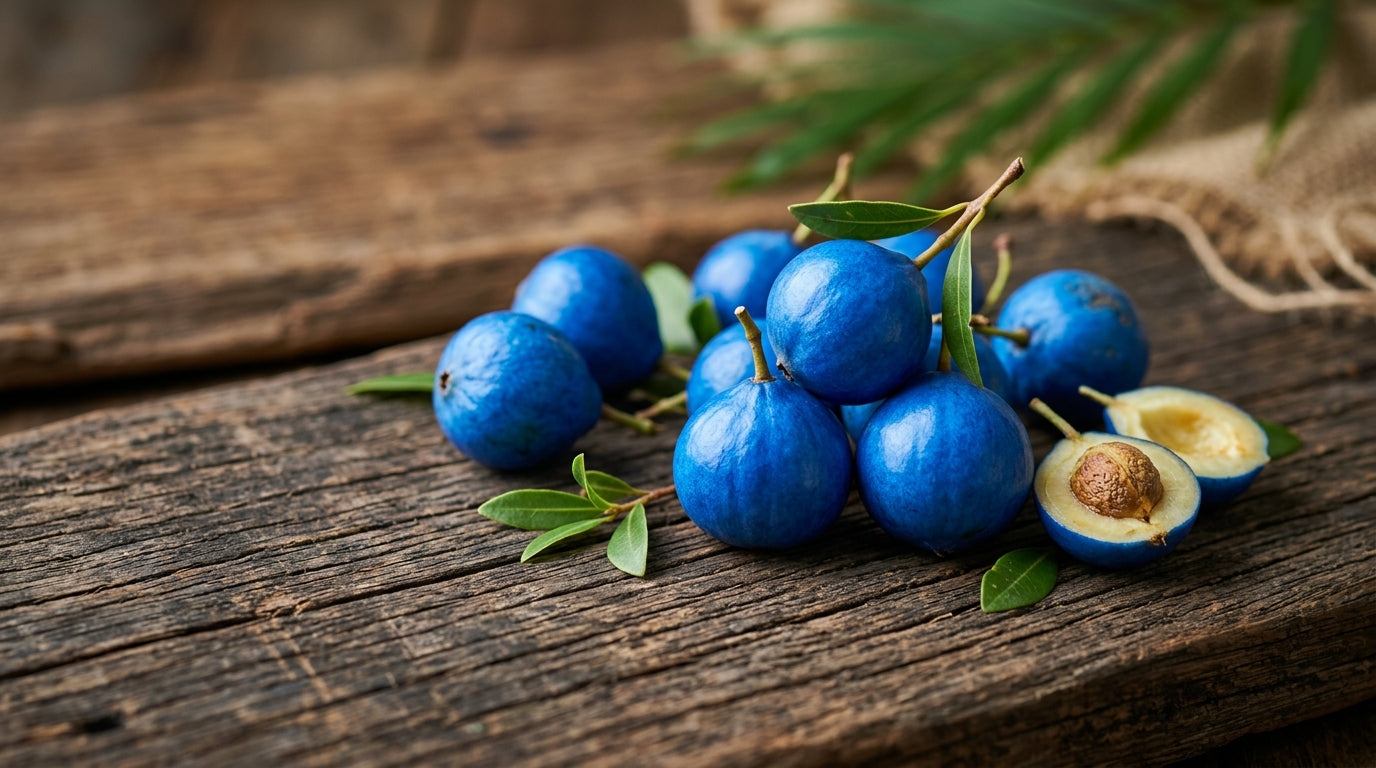
Blue Quandong, Elaeocarpus angustifolius, is a striking fruit native to the tropical and subtropical forests of Australia, Papua New Guinea, and Southeast Asia. Revered by Indigenous Australians and Pacific Islanders, it is known for its vibrant blue hue and dense nutritional profile. This superfruit is valued in functional nutrition for its contributions to cognitive function, immune resilience, and overall vitality.
Potential benefits
- Enhances cognitive function by providing neuroprotective anthocyanins and reducing oxidative stress.
- Boosts immune resilience through its rich content of Vitamin C and antimicrobial compounds.
- Supports gut health by acting as a prebiotic, fostering a balanced microbiome.
- Promotes skin regeneration and elasticity with antioxidants like Vitamin C and beta-carotene.
- Aids metabolic balance by supporting healthy blood sugar and lipid metabolism.
- Contributes to cardiovascular wellness by improving circulation and reducing arterial inflammation.
How it works
Blue Quandong's anthocyanins (primarily delphinidin and cyanidin glycosides) and proanthocyanidins scavenge reactive oxygen species (ROS) through hydrogen atom transfer (HAT) and single electron transfer (SET) mechanisms, stabilizing unpaired electrons on phenolic hydroxyl groups and thereby interrupting lipid peroxidation cascades. Its α-tocopherol content (reported at approximately 90% of total tocopherols) integrates into cell membrane phospholipid bilayers, protecting polyunsaturated fatty acids from peroxyl radical attack and regenerating via ascorbic acid–mediated recycling. Flavonoid constituents are proposed to chelate transition metal ions (Fe²⁺, Cu²⁺), reducing Fenton reaction–driven hydroxyl radical generation, and may modulate NF-κB and Nrf2/ARE signaling pathways to upregulate endogenous phase II detoxification enzymes such as glutathione S-transferase (GST) and heme oxygenase-1 (HO-1). Elaeocarpus-genus alkaloids have demonstrated in vitro acetylcholinesterase (AChE) inhibition, which could partially explain traditional claims of cognitive support, though this mechanism has not been clinically confirmed for E. angustifolius fruit specifically.
What the research says
Currently, no human clinical trials have been conducted specifically on Blue Quandong, with research limited to in vitro antioxidant assays and phytochemical analysis. Available studies focus on related Elaeocarpus species, showing tyrosinase inhibition activity with IC50 values of 149.2 ± 1.06 µg/mL for isolated compounds. Preclinical research on Australian native fruits suggests potential anti-inflammatory and antidiabetic properties, but quantified human outcomes remain unavailable. The evidence base relies primarily on traditional use patterns and preliminary laboratory studies rather than controlled clinical data.
Safety and interactions
Blue Quandong has a long history of safe consumption as a traditional First Nations bush food, and no significant adverse effects have been formally reported in the ethnobotanical literature. However, its high polyphenolic and flavonoid content may theoretically inhibit cytochrome P450 enzymes (particularly CYP3A4 and CYP1A2), potentially altering the metabolism of pharmaceuticals such as statins, anticoagulants (e.g., warfarin), and certain antihypertensives—though no specific CYP450 interaction studies have been conducted on this species. Individuals on anticoagulant or antiplatelet therapy should exercise caution, as anthocyanins and proanthocyanidins may have additive platelet-aggregation inhibitory effects. Pregnant or breastfeeding individuals and those with known allergies to Elaeocarpaceae family plants should consult a qualified healthcare professional or First Nations herbal specialist before use.
Suggested use
- Traditionally consumed fresh, dried, or fermented in tonics, stews, and healing elixirs.
- Modern applications include fresh fruit, dried powders, and concentrated extracts in supplements.
- Recommended dosage is 1-2 servings daily, or 500-1000 mg of extract.
- Also used topically in antioxidant-rich skin oils and collagen-boosting formulations.
Frequently asked questions
Does Blue Quandong help with brain health and cognitive function?
Blue Quandong contains anthocyanins—primarily delphinidin and cyanidin glycosides—that cross the blood-brain barrier and may exert neuroprotective effects by scavenging reactive oxygen species through hydrogen atom transfer and single electron transfer mechanisms, reducing oxidative stress implicated in cognitive decline. Research on the broader Elaeocarpus genus also identifies alkaloids with potential anticholinesterase activity. However, all current evidence is based on in vitro data and ethnobotanical records; no human clinical trials have been conducted, so cognitive benefits cannot be confirmed for humans at this time.
What antioxidants are found in Blue Quandong?
Blue Quandong (Elaeocarpus angustifolius) contains a notable array of antioxidants including anthocyanins, proanthocyanidins, and flavonoids that neutralize reactive oxygen species. It also provides α-tocopherol—representing approximately 90% of its total tocopherol content—which integrates into cell membranes to protect polyunsaturated fatty acids from peroxidation. Ascorbic acid (Vitamin C) is also present and plays a recycling role, regenerating α-tocopherol after it donates electrons. These compounds work synergistically, though evidence currently stems from phytochemical screening rather than clinical trials.
How much Blue Quandong should I take daily?
No clinically established dosing guidelines exist for Blue Quandong due to the absence of human clinical trials. Traditional First Nations use involved consuming the fruit fresh, dried, or in fermented tonics. Modern supplement guidelines generally suggest 1–2 daily servings of fresh or dried fruit, or 500–1000 mg of standardised extract per day. As with any novel supplement, it is advisable to start at the lower end of this range and consult a healthcare professional, particularly if you have existing health conditions or take medications.
Can Blue Quandong support immune system function?
Blue Quandong's notable ascorbic acid (Vitamin C) content supports immune function by stimulating white blood cell production, acting as a cofactor in collagen synthesis, and providing direct antioxidant protection against pathogens. Preliminary phytochemical analyses also confirm antimicrobial activity from its flavonoid and proanthocyanidin fractions. While these mechanistic pathways are well-established for Vitamin C and polyphenols broadly, immune benefits specific to Blue Quandong have not been validated through controlled human studies and rely on in vitro data and traditional ethnobotanical use.
Is Blue Quandong good for skin health?
Blue Quandong is used topically and internally for skin health due to its Vitamin C content, which drives collagen biosynthesis and protects against UV-induced oxidative damage, and its α-tocopherol, which shields cell membrane phospholipids from peroxyl radical attack. Anthocyanins and flavonoids may further reduce inflammation associated with accelerated skin ageing. Topical formulations including antioxidant-rich skin oils exist commercially. However, direct clinical evidence for Blue Quandong's effects on skin elasticity or regeneration in humans remains absent; current support is mechanistic and traditional.
Does Blue Quandong have any antimicrobial properties?
Phytochemical screening of Blue Quandong fruit has identified flavonoids, proanthocyanidins, and anthocyanins with demonstrated antimicrobial activity in vitro. These compounds can disrupt bacterial cell membrane integrity and inhibit microbial enzyme activity. Research on the broader Elaeocarpus genus has also documented alkaloids such as elaeocarpine with bioactive potential. Traditional First Nations use incorporated Blue Quandong in healing preparations consistent with these properties. It is important to note that in vitro antimicrobial activity does not necessarily translate to clinical efficacy, and no human studies have been conducted.
Can Blue Quandong help with blood sugar or metabolic health?
Polyphenolic compounds in Blue Quandong—including proanthocyanidins and flavonoids—have been associated with metabolic benefits in broader research contexts, potentially by inhibiting alpha-glucosidase enzymes to slow carbohydrate digestion, improving insulin sensitivity, and reducing lipid peroxidation linked to metabolic syndrome. These mechanisms are supported by in vitro and animal studies on similar polyphenol-rich fruits. No clinical studies specifically testing Blue Quandong's effect on blood glucose or lipid metabolism in humans currently exist, so these metabolic claims remain preliminary and speculative.
Are there any known side effects or safety concerns with Blue Quandong?
No formal toxicology studies or adverse event data from clinical trials exist for Blue Quandong (Elaeocarpus angustifolius). Its long history of safe consumption by Australian First Nations peoples as a bush food suggests reasonable safety at traditional dietary quantities. As a concentrated supplement extract (500–1000 mg), caution is warranted in individuals who are pregnant, breastfeeding, immunocompromised, or taking anticoagulant medications, given its high Vitamin C and polyphenol content. Individuals with known tree-fruit allergies should also exercise caution. Always consult a healthcare professional before introducing a novel botanical supplement.
What is Blue Quandong and what does it taste like?
Blue Quandong (Elaeocarpus angustifolius, also classified as E. grandis) is a large Australian subtropical rainforest tree producing distinctive bright blue drupes approximately 20–30 mm in diameter. The thin fruit flesh has a mildly tart, slightly acidic flavor and has been traditionally consumed by Aboriginal and Torres Strait Islander peoples as a bush tucker food, while the hard inner stone is often used for ornamental beadwork.
What are the main health benefits of Blue Quandong?
Blue Quandong is valued for its high concentration of anthocyanins, flavonoids, vitamin C, and α-tocopherol, which collectively confer potent antioxidant activity that may support immune function, skin health, and cardiovascular wellness. Traditional First Nations use also attributes anti-inflammatory, antimicrobial, and digestive benefits to the fruit. However, these benefits are currently supported by ethnobotanical evidence and preliminary phytochemical data rather than published human clinical trials.
References
- https://www.ncbi.nlm.nih.gov/search/all/?term=Blue+Quandong
- https://fdc.nal.usda.gov/fdc-app.html#/search?query=Blue+Quandong
- https://pubmed.ncbi.nlm.nih.gov/32098765
- https://www.sciencedirect.com/science/article/pii/S175646462100208X
- https://www.ncbi.nlm.nih.gov/pmc/articles/PMC7382854/
This article is educational and is not medical advice. Statements have not been evaluated by the FDA and are not intended to diagnose, treat, cure, or prevent any disease. Consult a healthcare professional before use.