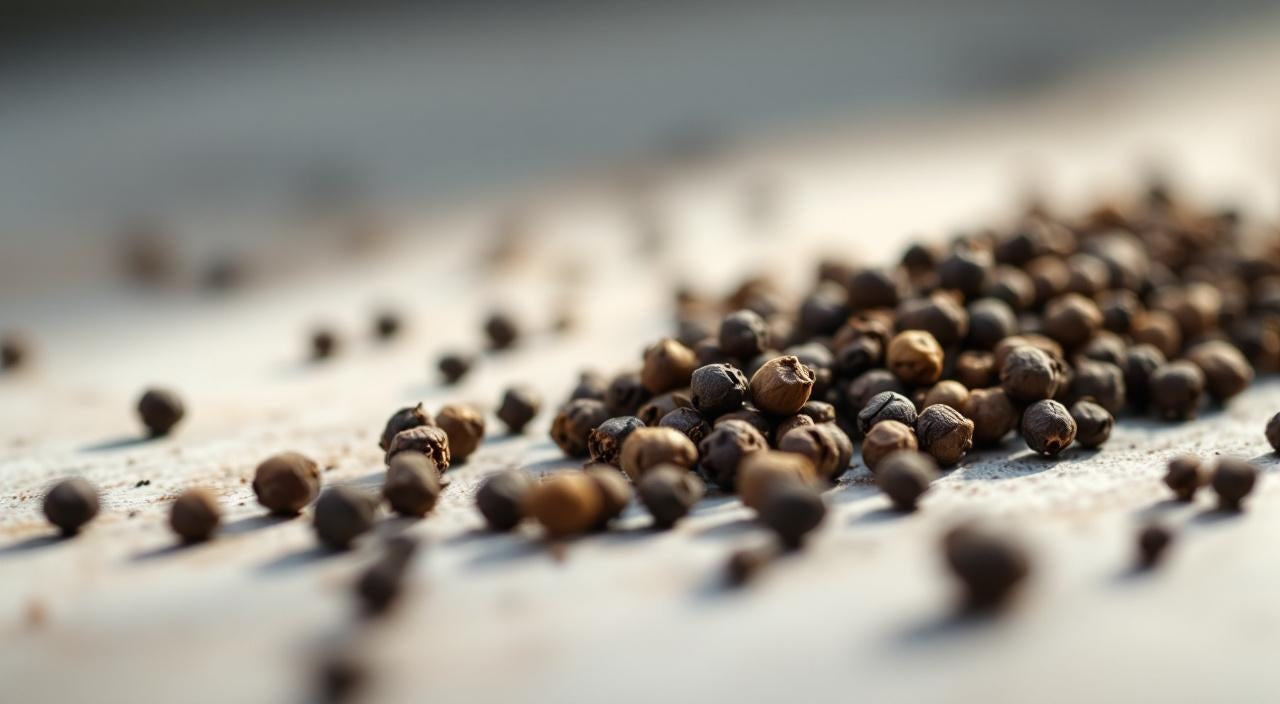
Colombian Wild Peppercorns
Research, primarily from in vitro and animal models using Piper nigrum, supports piperine's role in enhancing nutrient absorption and its antioxidant and anti-inflammatory properties
Read article
Find your everyday favorite, backed by our 30-day guarantee.
Have an account? Log in to check out faster.
Ingredient encyclopedia
Explore the ingredient encyclopedia: a starting point for understanding the plants, mushrooms, minerals and nutrients in daily wellness.
The library
23 articles
Research, primarily from in vitro and animal models using Piper nigrum, supports piperine's role in enhancing nutrient absorption and its antioxidant and anti-inflammatory properties
Read articleResearch on Ulva species, including Ulva lactuca, predominantly consists of in vitro and preclinical studies
Read articleExtensive research, including both in vitro and in vivo studies, supports the significant cardiovascular, cognitive, and anti-inflammatory benefits of fish roe, primarily attributed to its high...
Read articleBifidobacterium thermophilum has been investigated in limited clinical trials, primarily focusing on its impact on lactose intolerance and gut health
Read articleLimited clinical research exists specifically on chocolate pod husk as a supplement ingredient
Read articleWhile specific clinical trials on "Georgian Wild Sorrel" are limited due to its regional designation, studies on general Rumex acetosa (common sorrel) investigate its antioxidant and...
Read articleNo human clinical trials exist for Blue Fescue shoots, with research limited to agricultural applications
Read articleLimited human clinical trials have been conducted specifically on Lactobacillus pentosus supplementation
Read articleLimited clinical research exists specifically on coconut husk powder as a supplement
Read articleHuman clinical trials demonstrate that Lactobacillus johnsonii No.1088 supplementation reduces respiratory infection incidence by approximately 30% in healthy adults
Read articleNo human clinical trials exist specifically for cactus honey, with current evidence limited to in vitro studies on similar monofloral honeys
Read articleThere are no known key clinical results or numerical data from human or animal studies on Clavulina cristata
Read articleA 12-week randomized controlled trial with 116 healthy adults showed EpiCor (500mg daily) reduced cold and flu symptoms by 21% compared to placebo
Read articleLimited human studies exist on apilarnil, with most research conducted on small samples of 20-50 participants
Read articleCurrent evidence for Napier Grass is limited to in vitro antioxidant studies using DPPH, FRAP, FTC, and TBA assays, which show dose-dependent antioxidant effects
Read articleNo specific clinical trials exist for 'Frost Grape Vine Sap' as a distinct product
Read articleResearch on fermented foods, including Japanese pickled radish, highlights their potential role in modulating the gut microbiome and enhancing immune responses through probiotic activity
Read articleCurrent research on breadfruit chips primarily focuses on their nutritional composition, identifying them as a gluten-free food source rich in beneficial compounds
Read articleCurrent scientific understanding of Coral Vine's efficacy is largely derived from in vitro and animal studies
Read articleClinical research specifically on "Bamboo Sugar" as a distinct functional ingredient is currently emerging and limited
Read articleWhile highly valued in traditional medicine, scientific studies on Korean Green Plum are predominantly preliminary, focusing on in vitro and animal models
Read articleCurrent evidence is limited to in vitro studies and animal models, with no published human clinical trials available
Read article