Clinical studies specifically on Green Sapote (*Pouteria viridis*) are currently limited. Research primarily focuses on its nutritional composition and ethnobotanical uses. However, *in vitro* and animal studies on closely related Sapotaceae fruits, such as Mamey Sapote (*Pouteria sapota*), have demonstrated significant antioxidant, anti-inflammatory, and antidiabetic potential, suggesting a promising pharmacological profile for the broader family. Further human trials are required to confirm these benefits for *Pouteria viridis*.

Origin
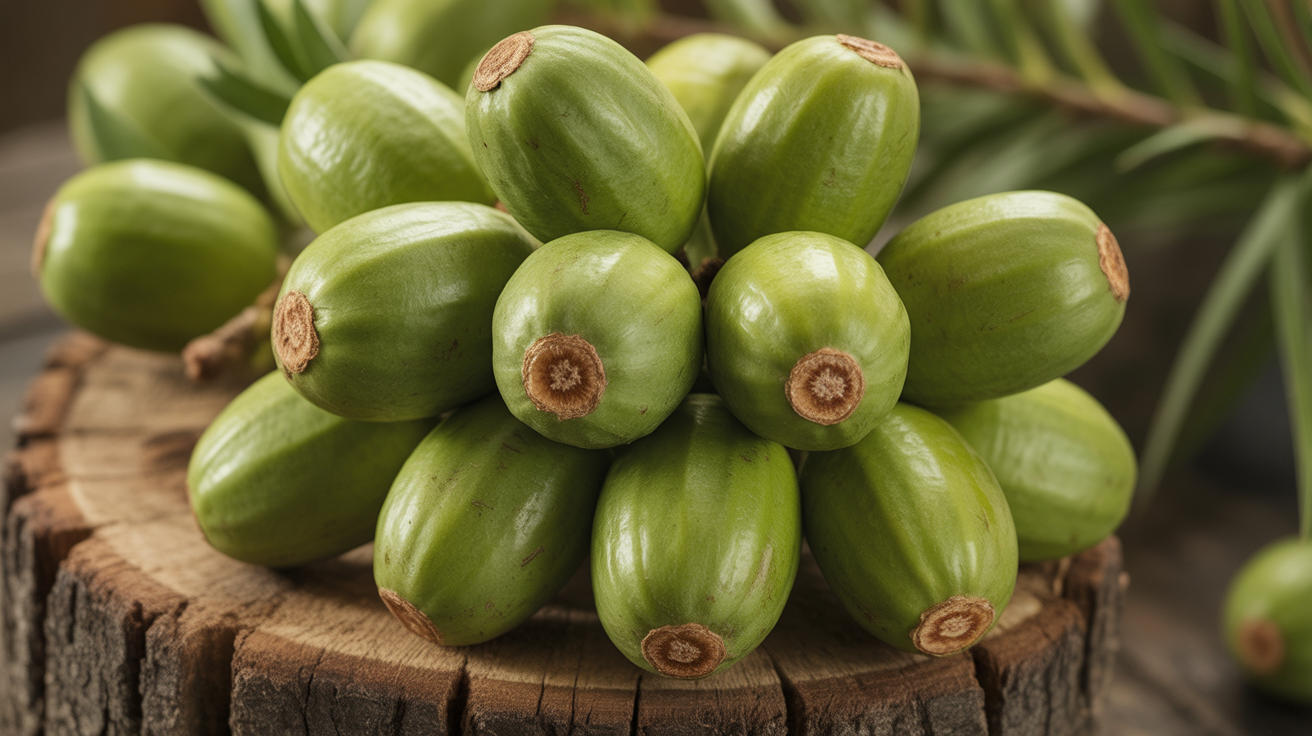
Green Sapote (*Pouteria viridis*) is a tropical fruit indigenous to the highland regions of Central America, particularly Guatemala and southern Mexico. It thrives in subtropical climates with rich volcanic soils, producing large, oval fruits with creamy, orange flesh. This fruit is prized in functional nutrition for its unique blend of vitamins, minerals, and fiber that support immune, digestive, and skin health.
Potential benefits
- Supports immune function through robust Vitamin C content, enhancing immune cell performance and resistance to infection.
- Reduces oxidative stress via high levels of Vitamins A and C, which combat free radicals and protect cellular integrity.
- Promotes skin health by supplying essential nutrients for collagen synthesis, hydration, and elasticity, contributing to a youthful appearance.
- Aids in digestion through its significant dietary fiber content, improving gut motility and supporting microbiome balance.
- Contributes to overall vitality by providing essential minerals like potassium and iron, supporting energy metabolism and muscle function.
How it works
The robust antioxidant capacity of Green Sapote (*Pouteria viridis*) is primarily attributed to its high content of Vitamins A and C, which directly scavenge free radicals and support cellular defense. While specific pathways for *Pouteria viridis* are not extensively elucidated, related Sapotaceae fruits like Mamey Sapote (*Pouteria sapota*) exhibit antioxidant and anti-inflammatory properties through phenolic compounds such as gallic acid, catechins, and carotenoids like sapotexanthin, which modulate oxidative pathways and prostaglandin inhibition.
What the research says
Studies confirm Green Sapote's strong antioxidant profile, attributed to its rich vitamin content and phenolic compounds. While specific pharmacological studies on *Pouteria viridis* are limited, its nutrient density and ethnobotanical records affirm its potential as a functional fruit for immune, digestive, and skin health.
Safety and interactions
Specific safety information regarding Green Sapote (*Pouteria viridis*) consumption, including potential side effects, drug interactions, or contraindications, is not well-documented in scientific literature. As with any fruit, individuals with known allergies to similar tropical fruits should exercise caution. Pregnant or breastfeeding women and individuals with underlying health conditions should consult a healthcare professional before consuming Green Sapote in medicinal quantities due to the lack of specific safety data.
Suggested use
- Culinary: Enjoy fresh, or incorporate into desserts, smoothies, and preserves for its custard-like texture and complex sweetness.
- Traditional: Roasted seeds have been used culinarily, and bark latex for natural chewing gum.
- Dosage: Regular consumption as part of a balanced diet supports immune, digestive, and skin health.
Frequently asked questions
What is the primary difference between Green Sapote and Mamey Sapote?
Green Sapote refers to *Pouteria viridis*, a distinct species within the Sapotaceae family, characterized by its often reddish-orange flesh and slightly different flavor profile. Mamey Sapote, *Pouteria sapota*, is another well-known species in the same family, typically having a salmon-pink to reddish flesh and being more extensively studied scientifically.
What are the main nutritional components of Green Sapote?
Green Sapote (*Pouteria viridis*) is rich in essential vitamins, particularly Vitamin C and Vitamin A, which are potent antioxidants. It also contains various phenolic compounds, contributing to its overall health benefits and supporting immune function and cellular integrity.
Are there scientific studies specifically confirming the health benefits of *Pouteria viridis*?
Specific pharmacological studies directly on *Pouteria viridis* (Green Sapote) are limited. Most scientific evidence for health benefits, such as antioxidant and anti-inflammatory effects, often refers to its close relatives like Mamey Sapote (*Pouteria sapota*) or the broader Sapotaceae family, which share similar phytochemical profiles.
Can Green Sapote help with inflammation?
While direct studies on Green Sapote (*Pouteria viridis*) for inflammation are scarce, fruits from the Sapotaceae family, including Mamey Sapote, have demonstrated anti-inflammatory properties in *in vitro* and animal models. These effects are often attributed to their content of phenolic compounds like catechins and the inhibition of prostaglandin synthesis.
Is Green Sapote safe for everyone to consume?
Green Sapote is generally consumed as a fruit, suggesting it is safe in dietary amounts. However, due to the limited scientific research on *Pouteria viridis*, specific safety data for medicinal consumption, potential allergies, or interactions with medications are not well-established. It's always advisable to consult a healthcare provider if you have concerns or specific health conditions.
Can Green Sapote be consumed fresh, or does it need to be processed for supplement form?
Green Sapote is primarily consumed fresh as a whole fruit, offering maximum nutrient retention when ripe and eaten raw. For supplement applications, the fruit is typically processed into powders, extracts, or freeze-dried forms to concentrate its bioactive compounds and extend shelf life, though fresh consumption remains the most traditional and nutrient-dense approach.
References
This article is educational and is not medical advice. Statements have not been evaluated by the FDA and are not intended to diagnose, treat, cure, or prevent any disease. Consult a healthcare professional before use.