Sacha inchi seeds contain exceptionally high levels of alpha-linolenic acid (ALA), an omega-3 fatty acid that reduces inflammation and supports cardiovascular health. The seeds also provide complete protein with all essential amino acids, making them valuable for muscle maintenance and brain function.

Origin
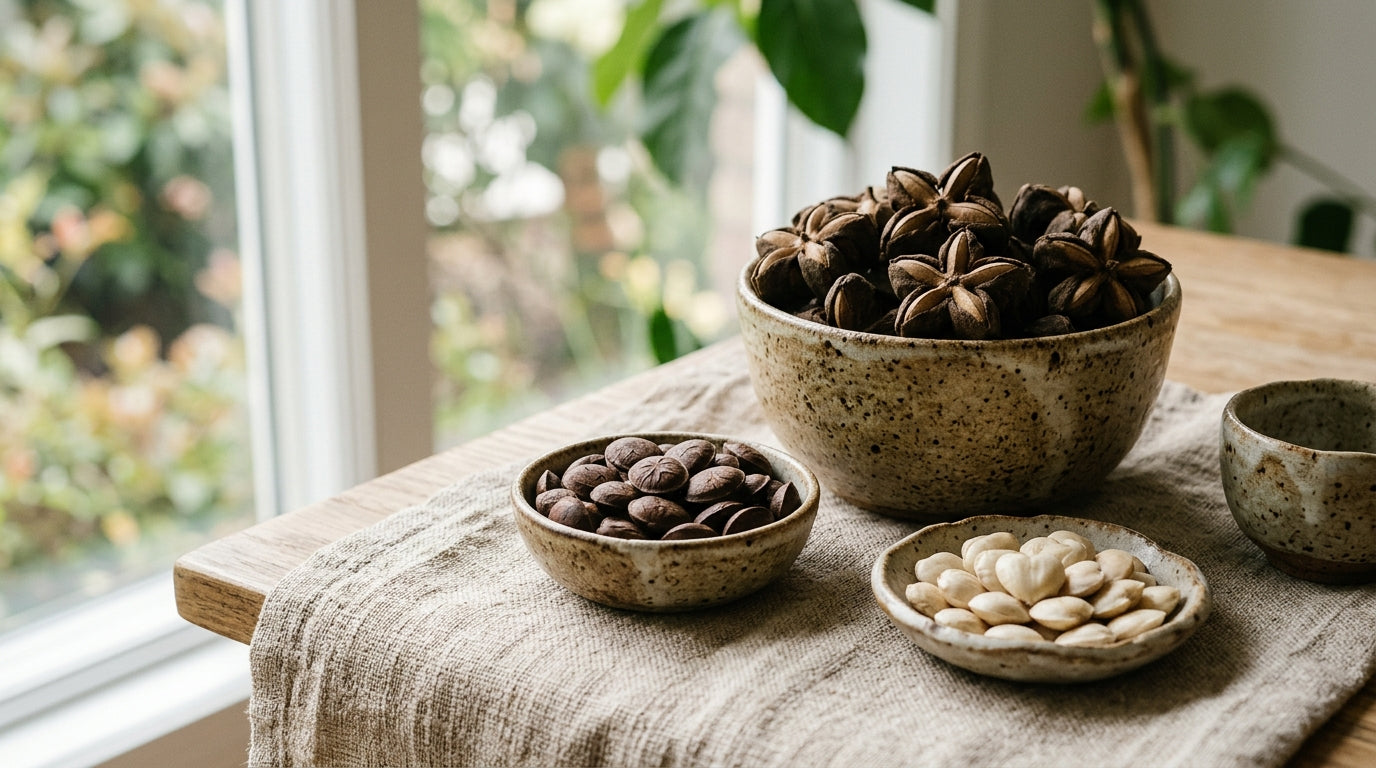
Native to the Amazon rainforest, Sacha Inchi, also known as the "Inca Peanut," grows as a climbing vine in tropical climates with nutrient-rich soils. This star-shaped seed pod produces nutrient-dense seeds that have been cultivated for thousands of years by Indigenous Amazonian communities. Sacha Inchi plays a vital ecological role in rainforest preservation by supporting biodiversity and providing sustainable livelihoods for local populations. Its seeds are highly valued as a plant-based superfood, offering a unique combination of essential nutrients.
Potential benefits
- Heart Health: Rich in omega-3 fatty acids (alpha-linolenic acid), it supports cardiovascular health by reducing inflammation and improving cholesterol balance.
- Brain Function: Contains omega-3, 6, and 9 fatty acids, which promote cognitive function and mental clarity.
- Protein Power: Provides complete plant-based protein, supporting muscle repair and growth.
- Skin and Hair Health: High in vitamin E and antioxidants, it nourishes the skin and strengthens hair.
- Anti-Inflammatory: Packed with bioactive compounds like polyphenols and tocopherols, which reduce inflammation and protect against oxidative stress.
How it works
Alpha-linolenic acid in sacha inchi converts to EPA and DHA through delta-6 and delta-5 desaturase enzymes, supporting anti-inflammatory pathways and membrane fluidity. The high protein content provides all nine essential amino acids, supporting neurotransmitter synthesis and muscle protein synthesis. Omega fatty acids also modulate prostaglandin production, reducing inflammatory markers like C-reactive protein.
What the research says
Small human studies with 20-40 participants show sacha inchi oil supplementation (10-15ml daily) can reduce total cholesterol by 9-15% and LDL cholesterol by 12-20% within 4-8 weeks. Animal studies demonstrate improvements in cognitive function and memory retention with doses equivalent to 2-3 grams daily in humans. However, large-scale randomized controlled trials are lacking, and most evidence comes from preliminary research with short follow-up periods.
Safety and interactions
Sacha inchi is generally well-tolerated with minimal reported side effects at typical doses of 1-3 grams daily. Individuals with tree nut allergies should exercise caution, though cross-reactivity appears rare. High omega-3 content may enhance anticoagulant effects of warfarin or other blood-thinning medications. Pregnancy and breastfeeding safety data is insufficient, so consultation with healthcare providers is recommended.
Suggested use
- Traditional Preparation: Indigenous Amazonian communities have consumed roasted Sacha Inchi seeds for millennia and pressed the seeds for their oil, which is used in cooking and traditional medicine.
- Modern Uses: Sacha Inchi seeds are enjoyed as a roasted snack, ground into flour for baking, or pressed into oil for dressings and marinades. The seeds are also a popular ingredient in protein powders and vegan supplements.
- Recommended serving size: 1–2 tablespoons of roasted seeds or 1 teaspoon of Sacha Inchi oil per day.
- Omega-Boost Smoothie: Blend roasted Sacha Inchi seeds with banana, spinach, and almond milk for a heart-healthy drink.
- Vegan Energy Balls: Combine ground seeds with dates, cocoa, and coconut flakes for a nutrient-packed snack.
- Superfood Salad Dressing: Whisk Sacha Inchi oil with lemon juice, Dijon mustard, and honey for a nourishing dressing.
- Gluten-Free Pancakes: Use Sacha Inchi flour in pancake batter for a protein-rich, gluten-free breakfast.
Frequently asked questions
How much omega-3 is in sacha inchi seeds?
Sacha inchi seeds contain approximately 48-54% alpha-linolenic acid (ALA) by weight, making them one of the richest plant sources of omega-3 fatty acids. One ounce (28g) provides about 13-15 grams of ALA, exceeding daily omega-3 recommendations.
What is the protein content of sacha inchi?
Sacha inchi seeds contain 25-30% complete protein with all nine essential amino acids in optimal ratios. The protein digestibility score is comparable to soy protein, with particularly high levels of tryptophan and methionine.
Can sacha inchi help lower cholesterol?
Preliminary studies suggest sacha inchi oil supplementation at 10-15ml daily may reduce total cholesterol by 9-15% and LDL cholesterol by 12-20% within 4-8 weeks. The omega-3 content appears to improve HDL/LDL ratios through enhanced lipid metabolism.
Is sacha inchi better than fish oil for omega-3?
Sacha inchi provides ALA omega-3, which must convert to EPA and DHA in the body with limited efficiency (5-15%). Fish oil provides direct EPA and DHA, making it more bioavailable for cardiovascular and brain benefits.
What does sacha inchi taste like?
Raw sacha inchi seeds have a mild, nutty flavor similar to peanuts or sunflower seeds. Roasted seeds develop a richer, more intense nutty taste, while sacha inchi oil has a light, pleasant flavor without fishy aftertaste.
What is the recommended daily dosage of sacha inchi?
The typical recommended dosage for sacha inchi supplements ranges from 1,000–3,000 mg (1–3 grams) daily, though optimal amounts depend on individual health goals and product concentration. Most clinical studies have used doses between 1–2 grams per day to achieve cardiovascular and cognitive benefits. It is best to start with a lower dose and gradually increase while monitoring your response, and consulting with a healthcare provider can help determine the ideal dosage for your specific needs.
Is sacha inchi safe to take during pregnancy and breastfeeding?
While sacha inchi is a nutrient-dense whole food source rich in omega-3s that can support fetal development and lactation, pregnant and breastfeeding women should consult their healthcare provider before adding supplements. The seed itself is generally recognized as safe, but supplement forms may contain additional ingredients that require professional evaluation during these sensitive periods. Limited clinical data specifically on sacha inchi supplementation in pregnancy makes personalized medical guidance essential.
Does sacha inchi interact with blood thinning medications?
Sacha inchi contains omega-3 fatty acids that have mild anticoagulant properties, which may potentiate the effects of blood thinning medications like warfarin or aspirin. Individuals taking anticoagulants or antiplatelet drugs should inform their healthcare provider before supplementing with sacha inchi to avoid increased bleeding risk. Your doctor may need to monitor blood clotting parameters or adjust medication dosages if sacha inchi is added to your regimen.
References
- https://doi.org/10.1016/j.foodchem.2018.06.049
- https://www.sciencedirect.com/science/article/pii/S1756464619303166
This article is educational and is not medical advice. Statements have not been evaluated by the FDA and are not intended to diagnose, treat, cure, or prevent any disease. Consult a healthcare professional before use.