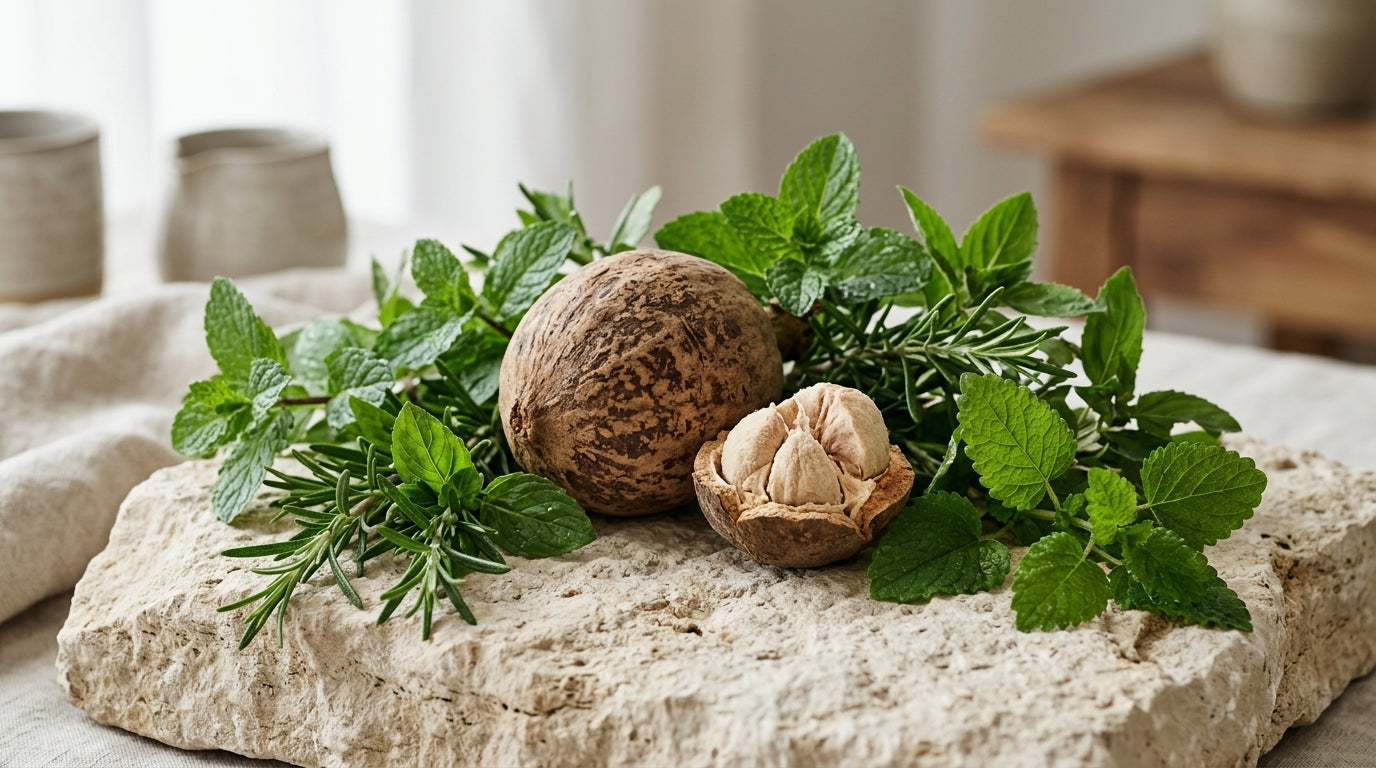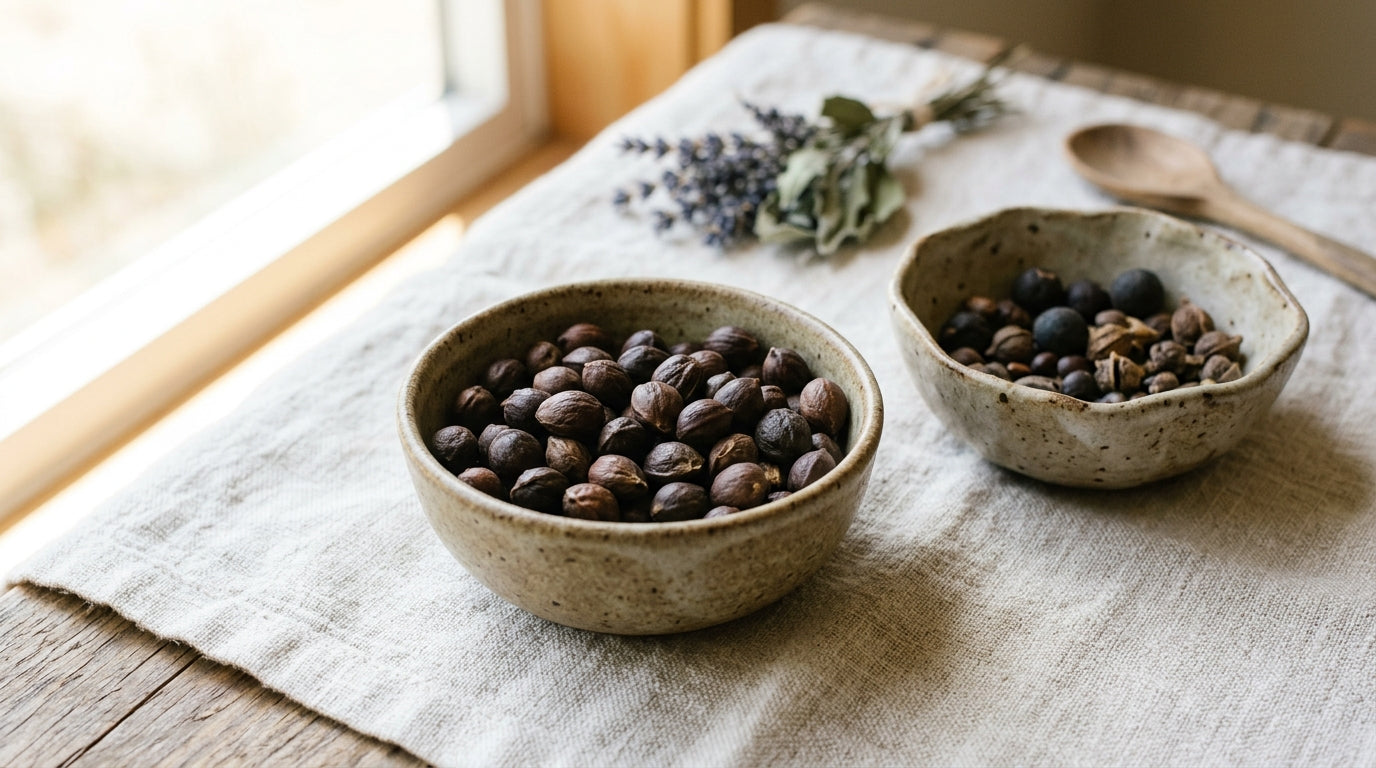
Yopo Bean (Anadenanthera peregrina) contains bufotenin as its primary bioactive compound at concentrations up to 74 mg per gram, alongside trace amounts of 5-MeO-DMT and N,N-DMT. These tryptamine alkaloids act as serotonin receptor agonists, particularly at 5-HT2B receptors with Ki values of 6.2-630 nM, producing psychoactive effects traditionally used in indigenous shamanic practices.

Origin
Yopo Bean (Anadenanthera peregrina) is a leguminous tree native to the Amazon and Caribbean regions of Venezuela, Colombia, and Brazil. Its seeds have been historically significant in indigenous cultures for their unique bioactive compounds. This powerful seed is recognized for its potential cognitive-enhancing, adaptogenic, and circulatory-supporting properties.
Potential benefits
- Enhances cognitive function, promoting focus and mental clarity.
- Acts as an adaptogen, supporting the body's resilience to stress.
- Supports circulatory health by influencing blood flow and vascular function.
- Modulates mood regulation, contributing to emotional balance.
- Provides immune support through its various bioactive compounds.
- Contributes to metabolic balance by influencing energy pathways.
How it works
Bufotenin, the primary bioactive compound in yopo beans, acts as an agonist at multiple 5-HT receptor subtypes, with highest affinity for 5-HT2B receptors (Ki 6.2-630 nM) and moderate affinity for 5-HT2A receptors (Ki 15->10,000 nM). The compound produces psychoactive effects through serotonergic pathway activation, with enhanced potency when combined with MAO-inhibiting β-carbolines from Banisteriopsis caapi. Additional tryptamine alkaloids including 5-MeO-DMT and N,N-DMT contribute to the overall pharmacological profile through similar serotonin receptor mechanisms.
What the research says
No modern human clinical trials have been conducted specifically on yopo beans, with available evidence limited to historical bufotenin studies from the 1950s onward that lack detailed quantitative outcomes. Animal studies indicate an intraperitoneal LD50 of 200-300 mg/kg for bufotenin in rodents, which scales to approximately 135 grams of beans for a lethal dose in a 50 kg human. Early insufflation experiments in 25-30g rodents demonstrated rapid onset effects within 3 minutes, progressing to dyspnea at 5-6 minutes and convulsions at 8 minutes, with recovery occurring at 35-40 minutes. Human intravenous bufotenin trials showed significant peripheral toxicity including tachycardia and respiratory difficulty at doses as low as 8 mg, highlighting the narrow therapeutic window and safety concerns.
Safety and interactions
Yopo beans present significant safety risks due to bufotenin's toxicity profile, with human intravenous studies showing dangerous cardiovascular effects (tachycardia, respiratory arrest, facial discoloration) at 8 mg doses. Animal studies demonstrate intense nasal irritation, agitation, and convulsions with insufflated administration, though this route shows fewer side effects than injection. Synergistic interactions occur with MAO-inhibiting plants like Banisteriopsis caapi, which potentiate and prolong psychoactive effects through enhanced bufotenin activity. Contraindications include cardiovascular or respiratory vulnerabilities, and extreme caution is warranted given the estimated lethal dose of approximately 135 grams of beans for a 50 kg adult based on animal LD50 data.
Suggested use
- Common forms: Ground powder (snuff), herbal tonics, roasted seeds, standardized extract.
- Dosage: 100–500 mg of standardized extract daily.
- Preparation: Can be incorporated into adaptogenic nootropics, metabolic-balancing supplements, or neuroprotective blends.
Frequently asked questions
What is the main psychoactive compound in yopo beans?
Bufotenin is the primary psychoactive compound, present at concentrations up to 74 mg per gram of seeds. This tryptamine alkaloid acts on serotonin receptors and is accompanied by smaller amounts of 5-MeO-DMT and N,N-DMT.
How do indigenous people traditionally use yopo beans?
Indigenous groups in South America grind the seeds into a hallucinogenic snuff for shamanic and healing purposes. Piaroa shamans often combine it with Banisteriopsis caapi to enhance visions through MAO inhibition synergy.
What are the dangerous effects of yopo bean consumption?
Human studies show bufotenin can cause tachycardia, respiratory difficulty, facial discoloration, and potential respiratory arrest at doses as low as 8 mg. Animal studies indicate convulsions, dyspnea, and intense nasal irritation with insufflated use.
How does bufotenin work in the brain?
Bufotenin acts as an agonist at multiple serotonin receptors, particularly 5-HT2B receptors with Ki values of 6.2-630 nM. This serotonergic activity produces the psychoactive effects through altered neurotransmitter signaling pathways.
Are there any clinical trials on yopo beans for health benefits?
No modern human clinical trials exist for yopo beans, with available research limited to historical bufotenin studies from the 1950s that lack detailed outcomes. Current evidence is restricted to animal studies and traditional use reports without rigorous scientific validation.
Is yopo bean safe to use during pregnancy or while breastfeeding?
Yopo bean is not recommended during pregnancy or breastfeeding due to its psychoactive alkaloid content and limited safety data in these populations. The presence of bufotenin and related compounds may pose risks to fetal development and could transfer to breast milk, making avoidance the safest approach for pregnant and nursing individuals.
Does yopo bean interact with antidepressants or other psychiatric medications?
Yopo bean may interact with serotonergic medications such as SSRIs and MAOIs due to its bufotenin content, which affects serotonin pathways in the brain. Individuals taking psychiatric medications should consult a healthcare provider before using yopo bean supplements to avoid potentially dangerous drug interactions.
What is the difference between yopo bean powder and yopo bean extract in terms of potency and effects?
Yopo bean extract is typically more concentrated and potent than raw powder, as the extraction process isolates alkaloids like bufotenin for stronger effects. Raw powder provides a gentler, more gradual experience with a broader spectrum of plant compounds, while extracts deliver faster-acting results but carry greater risk of intense effects and adverse reactions.
References
- https://www.ncbi.nlm.nih.gov/search/all/?term=Yopo+Bean
- https://fdc.nal.usda.gov/fdc-app.html#/search?query=Yopo+Bean
- https://www.sciencedirect.com/science/article/pii/S1756464620315156
- https://www.ncbi.nlm.nih.gov/pmc/articles/PMC7964872/
This article is educational and is not medical advice. Statements have not been evaluated by the FDA and are not intended to diagnose, treat, cure, or prevent any disease. Consult a healthcare professional before use.