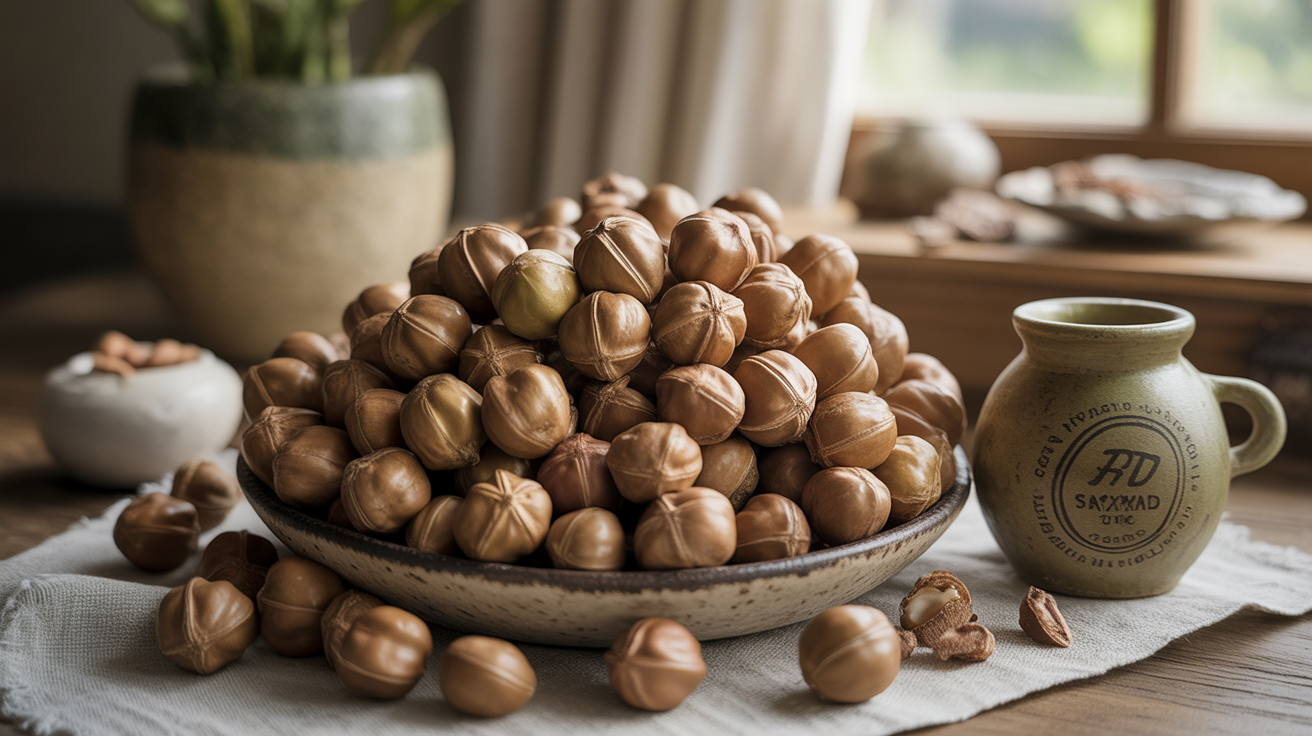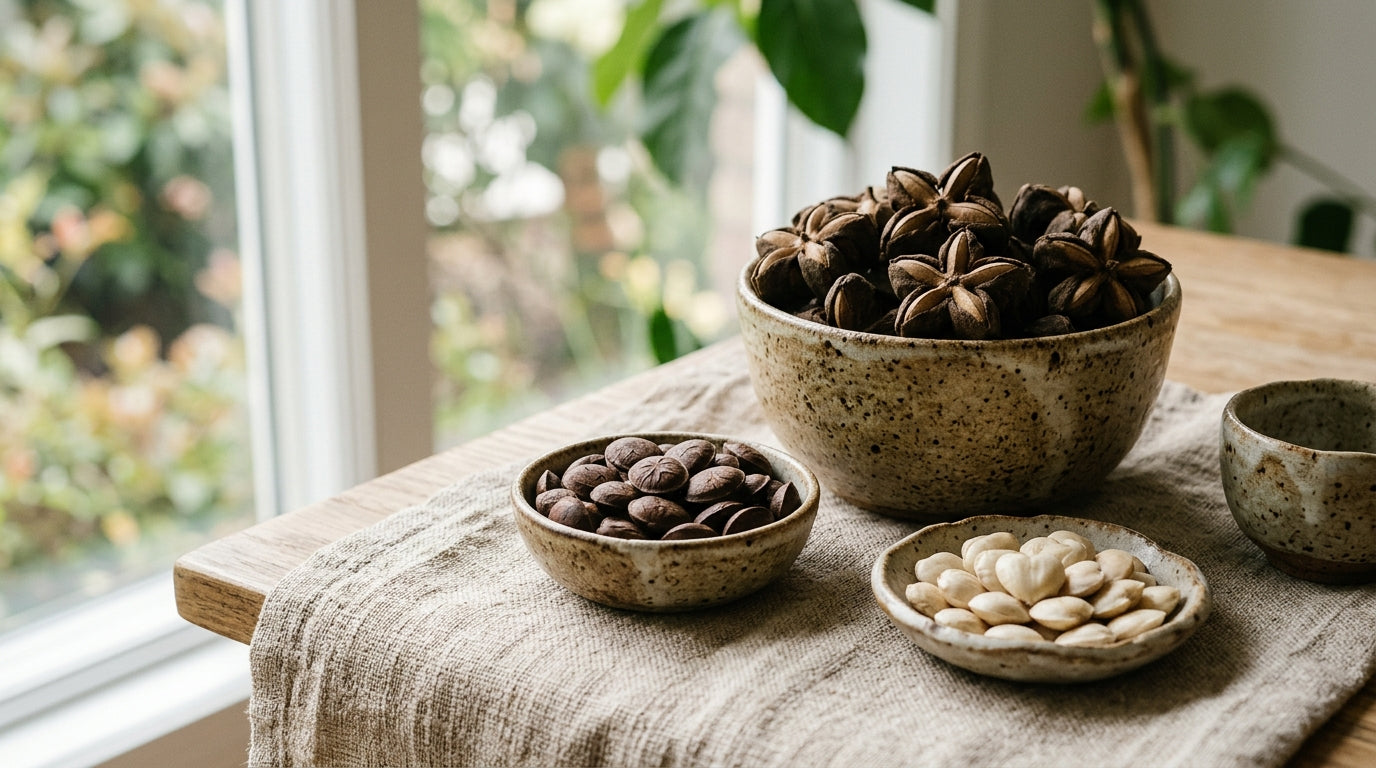
Sacha Inchi (Plukenetia volubilis) seeds contain over 80% polyunsaturated fatty acids, primarily alpha-linolenic acid (ALA), which reduces inflammatory mediators PGE2, TXA2, and LTB4 through competitive enzyme inhibition. Clinical trials demonstrate significant improvements in acne severity, insulin sensitivity, and lipid profiles, with EPA/DHA accumulation observed in multiple tissues within 3 weeks.

Origin
Sacha Inchi (Plukenetia volubilis) is a star-shaped seed native to the Peruvian Amazon, where it has been cultivated and consumed by Indigenous communities for thousands of years. Highly valued for its exceptional concentration of omega fatty acids and complete protein profile, Sacha Inchi is a plant-based powerhouse. Its delicate nutty flavor and nutrient density have earned it global recognition as a premium superfood.
Potential benefits
- Supports cardiovascular health by reducing cholesterol, regulating blood pressure, and promoting arterial flexibility through omega-3 fatty acids (ALA).
- Enhances brain and cognitive function, including memory and mental clarity, via its high content of omega-3 fatty acids and complete protein.
- Provides potent anti-inflammatory and cellular protection, reducing oxidative stress through polyphenols and omega-3s.
- Promotes skin and collagen regeneration with antioxidants and Vitamin E, supporting hydration and protecting against UV damage.
- Aids in metabolic and blood sugar regulation by improving insulin sensitivity and supporting healthy glucose metabolism.
- Contributes to gut health and digestion through its dietary fiber content, nourishing beneficial gut bacteria.
How it works
Alpha-linolenic acid (ALA) increases PPAR-α activation, forming non-functional complexes with NF-κB p65 subunit to block inflammatory pathways. EPA competes with arachidonic acid for cyclooxygenase and lipoxygenase enzymes, reducing prostaglandin E2, thromboxane A2, and leukotriene B4 production. Phytosterols like sitosterol enhance insulin sensitivity via PI3K/Akt pathway activation while reducing pancreatic insulin levels.
What the research says
A controlled trial with 32 volunteers showed significant acne reduction after 8 weeks using 6 mL Sacha Inchi oil plus erythromycin. In 42 sedentary men aged 29-64, 15 mL daily improved insulin sensitivity and reduced postprandial hyperglycemia with increased SIRT-1 expression. Animal studies demonstrated EPA/DHA tissue accumulation in liver, kidneys, heart, and brain within 3 weeks of 33% Sacha Inchi oil supplementation. In vitro studies show 17.2% apoptosis induction in HeLa cells, though human cancer efficacy remains unproven.
Safety and interactions
No explicit safety data, adverse events, or drug interaction studies are available in current literature, representing a critical evidence gap. Theoretical concerns include potential anticoagulant potentiation due to EPA/DHA accumulation, possible interactions with immunosuppressive therapies given IL-6 and TNF-α reduction, and cholesterol-lowering effects that may interact with statin medications. The immunomodulatory effects could theoretically affect immune-dependent conditions, though clinical significance remains unknown. Pregnant women, individuals on anticoagulants, and immunocompromised patients should consult healthcare providers before use.
Suggested use
- Common Forms: Whole roasted seeds, cold-pressed oil, protein powder, flour.
- Dosage: 1–2 tablespoons (10–15g) of roasted seeds daily, or 1–2 tablespoons of Sacha Inchi oil daily.
- Preparation: Enjoy roasted seeds as a snack, incorporate oil into dressings and smoothies, or use powder/flour in baking and protein shakes.
- Timing: Can be consumed at any time of day, often with meals to enhance nutrient absorption.
Frequently asked questions
What is the omega-3 content in Sacha Inchi seeds?
Sacha Inchi seeds contain over 80% polyunsaturated fatty acids, with alpha-linolenic acid (ALA) being the predominant omega-3 fatty acid. This concentration is significantly higher than most plant-based omega-3 sources, making it one of the richest vegetarian sources available.
How much Sacha Inchi oil should I take daily?
Clinical studies have used dosages ranging from 6-15 mL daily, with 15 mL showing benefits for insulin sensitivity in sedentary men and 6 mL effective for acne when combined with treatment. However, optimal dosing varies by individual needs and health conditions, so consultation with a healthcare provider is recommended.
Can Sacha Inchi help with diabetes management?
Research shows 15 mL daily Sacha Inchi oil increased insulin sensitivity and reduced postprandial hyperglycemia in sedentary men through SIRT-1 upregulation. The sitosterol content also decreases glycated hemoglobin and serum glucose via PI3K/Akt pathway activation, though more extensive clinical trials are needed.
Is Sacha Inchi safe during pregnancy?
No safety data exists for Sacha Inchi use during pregnancy or breastfeeding, representing a significant evidence gap. The immunomodulatory effects and high omega-3 content could theoretically affect pregnancy outcomes, so pregnant women should avoid use until proper safety studies are completed.
What makes Sacha Inchi different from fish oil?
Sacha Inchi provides primarily plant-based alpha-linolenic acid (ALA) that converts to EPA/DHA in the body, while fish oil provides direct EPA/DHA. Studies show Sacha Inchi increases EPA/DHA levels in tissues within 3 weeks, offering a vegetarian alternative with additional antioxidants like tocopherols and phenolic compounds not found in fish oil.
Does Sacha Inchi interact with blood thinners or anticoagulant medications?
Sacha Inchi contains omega-3 fatty acids (ALA) that may have mild blood-thinning properties, so individuals taking warfarin, aspirin, or other anticoagulants should consult their healthcare provider before supplementing. While dietary amounts are generally safe, high-dose supplementation could theoretically potentiate the effects of these medications. Medical supervision is recommended to monitor clotting parameters if combining these treatments.
What is the most bioavailable form of Sacha Inchi—oil, powder, or whole seeds?
Sacha Inchi oil offers superior bioavailability because the omega-3 fatty acids (ALA) are already in liquid form and readily absorbed by the digestive system. Whole seeds provide additional fiber and other nutrients but require proper mastication or processing for optimal nutrient extraction. Powdered forms fall between these two, offering moderate absorption rates while retaining some whole-food benefits.
Who should avoid Sacha Inchi supplementation or take it with caution?
Individuals with nut or seed allergies should avoid Sacha Inchi as it may trigger cross-reactive allergic responses, and those with bleeding disorders or taking anticoagulant medications should consult a healthcare provider first. People with irritable bowel syndrome may experience digestive discomfort due to its high fiber and fat content when taken in large amounts. Those with shellfish allergies generally do not need to avoid Sacha Inchi, as it is botanically unrelated.
References
- https://fdc.nal.usda.gov/fdc-app.html#/search?query=Sacha+Inchi
- https://fdc.nal.usda.gov/fdc-app.html#/search?query=Sacha+Inchi+Leaf
- https://fdc.nal.usda.gov/fdc-app.html#/search?query=Sacha+Inchi+Oil
- https://fdc.nal.usda.gov/food-search?query=Sacha+Inchi+%28Plukenetia+volubilis%29
- https://www.frontiersin.org/articles/10.3389/fphar.2021.678987/full
- https://www.frontiersin.org/articles/10.3389/fphar.2021.679062/full
- https://www.ncbi.nlm.nih.gov/search/all/?term=Sacha+Inchi
- https://www.ncbi.nlm.nih.gov/search/all/?term=Sacha+Inchi+Leaf
- https://www.ncbi.nlm.nih.gov/search/all/?term=Sacha+Inchi+Oil
- https://doi.org/10.1016/j.foodchem.2018.06.049
- https://doi.org/10.1016/j.foodchem.2020.127592
- https://doi.org/10.1016/j.foodchem.2020.127857
- https://pubmed.ncbi.nlm.nih.gov/30802487
This article is educational and is not medical advice. Statements have not been evaluated by the FDA and are not intended to diagnose, treat, cure, or prevent any disease. Consult a healthcare professional before use.