Royal jelly contains unique bioactive compounds including 10-hydroxy-2-decenoic acid (10-HDA) and major royal jelly protein 1 (MRJP1) that modulate estrogen receptors, inhibit histone deacetylases, and regulate inflammatory pathways. These mechanisms support its documented effects on immune function, hormonal balance, and neuroprotection through AMPK/PI3K/AKT signaling pathways.

Origin
Royal Jelly is a nutrient-rich secretion produced by worker bees (Apis mellifera) to nourish the queen bee and young larvae. It is globally sourced from regions where these bees thrive, including Europe, Asia, and the Americas. This unique substance is prized in functional nutrition for its complex bioactive profile, supporting cellular regeneration and overall vitality.
Potential benefits
- Enhances cognitive function by supporting acetylcholine synthesis and neuroprotection.
- Modulates immune response through antimicrobial and antiviral peptides, boosting resilience.
- Supports hormonal balance by regulating estrogen levels, particularly beneficial for menopausal wellness.
- Promotes skin regeneration and elasticity by stimulating collagen synthesis and hydration.
- Improves cardiovascular health by supporting healthy circulation and cholesterol levels.
- Boosts energy and stress resilience by enhancing red blood cell production and oxygen utilization.
How it works
10-Hydroxy-2-decenoic acid (10-HDA) binds to estrogen receptors (ERα/ERβ) with -6.3 kcal/mol affinity and inhibits histone deacetylases to alter gene expression. Major royal jelly protein 1 (MRJP1) promotes cell proliferation and albumin synthesis while royal jelly acid modulates p-JNK, p-p38, and NF-κB pathways. These compounds collectively enhance FOXO1-mediated autophagy and activate AMPK/PI3K/AKT signaling for neuroprotection and immune modulation.
What the research says
Current evidence relies primarily on preclinical in vitro and animal studies, with limited large-scale human clinical trials available. Research demonstrates 10-HDA's HDAC binding affinity and royal jelly acid's dose-dependent inhibition of cancer cells through complement and coagulation pathways. While rat hepatocyte studies show MRJP1's cell proliferation effects and S. aureus biofilm inhibition has been documented, specific numerical outcomes from human trials are lacking. Further clinical validation through randomized controlled trials is needed to confirm therapeutic efficacy and establish dosing protocols.
Safety and interactions
Preclinical data suggests low toxicity and biocompatible profile for royal jelly derivatives, though bioavailability enhancement may be needed for optimal peptide absorption. Individuals with bee product allergies should exercise caution, as royal jelly may trigger allergic reactions ranging from mild skin irritation to severe anaphylaxis. No specific drug interactions have been documented in available research, but the estrogenic activity of 10-HDA may theoretically interact with hormone-sensitive medications. Safety data in pregnancy and lactation is insufficient, warranting caution in these populations.
Suggested use
- Common forms include fresh, freeze-dried powder, capsules, and tinctures.
- Typical oral dosage ranges from 500–1000 mg of fresh or powdered royal jelly daily.
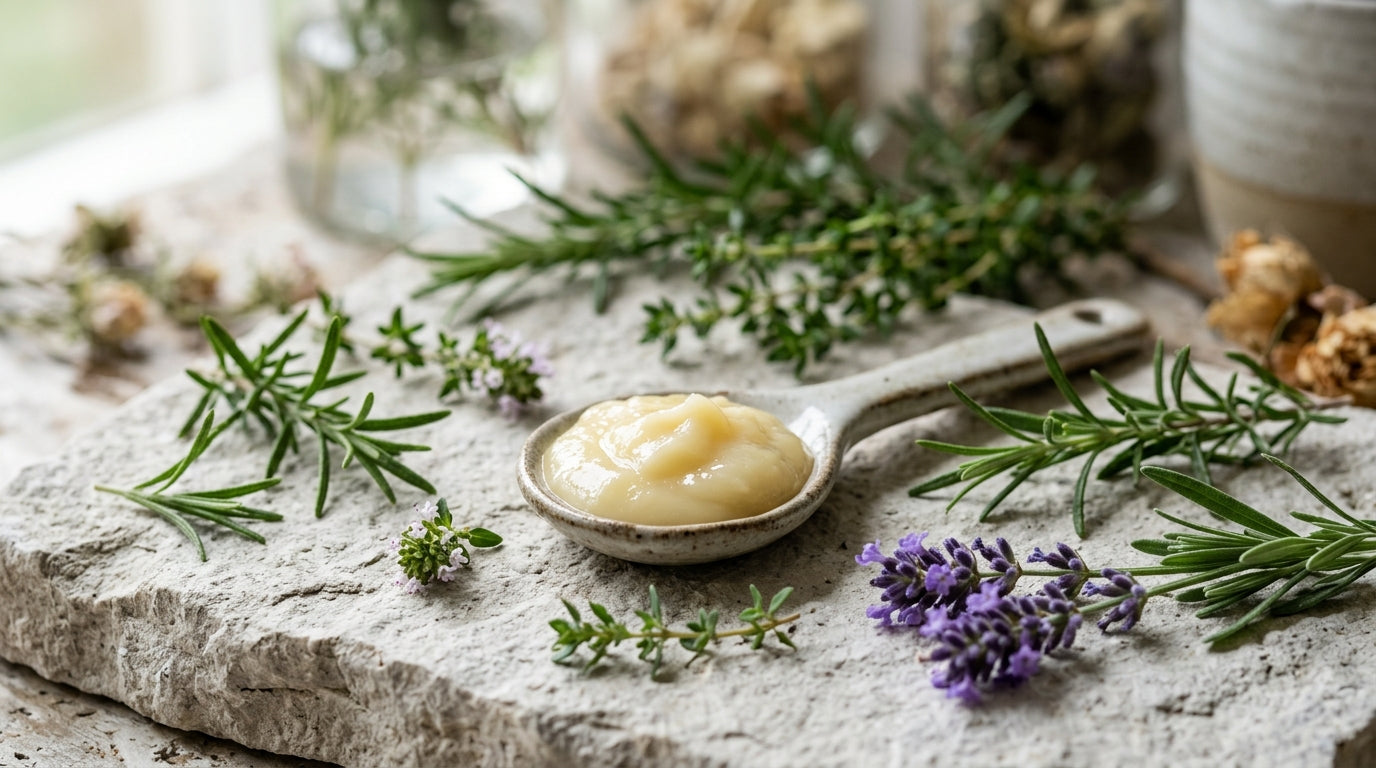
- Can be applied topically in skincare formulations for anti-aging and hydration benefits.
Frequently asked questions
What makes royal jelly different from regular honey?
Royal jelly contains unique compounds like 10-HDA (comprising >50% of fatty acids) and MRJP1 protein that are absent in honey. Unlike honey's simple sugars, royal jelly provides bioactive proteins, fatty acids, and approximately 185 organic compounds including acetylcholine and hormones like testosterone and estradiol.
How does royal jelly support cognitive function?
Royal jelly acid promotes FOXO1-mediated autophagy in brain cells to reduce NLRP3 inflammasome-driven neuroinflammation. It enhances neurogenesis and blood-brain barrier integrity through AMPK/PI3K/AKT pathway activation while supporting acetylcholine synthesis for neurotransmitter function.
Can royal jelly help with menopause symptoms?
10-HDA and 10-HDAA in royal jelly bind to estrogen receptors (ERα/ERβ) with documented binding affinities of -6.3 and -5.8 kcal/mol respectively. These compounds can modulate gene expression and cellular proliferation, potentially supporting hormonal balance during menopause, though human clinical trials are limited.
What is the recommended dosage of royal jelly?
Specific dosing protocols have not been established through large-scale human clinical trials. Current research focuses on bioactive compound concentrations rather than standardized therapeutic doses, indicating that evidence-based dosing recommendations require further clinical validation.
Are there any side effects of taking royal jelly?
The primary concern is allergic reactions in individuals sensitive to bee products, which can range from mild skin irritation to severe anaphylaxis. Preclinical studies suggest low toxicity, but comprehensive safety data from human trials is limited, particularly regarding long-term use and interactions with medications.
Is royal jelly safe during pregnancy and breastfeeding?
While royal jelly contains beneficial nutrients, pregnant and breastfeeding women should consult their healthcare provider before supplementing, as safety data in these populations is limited. Some women may have allergic reactions to bee products, which could pose risks during pregnancy. A qualified practitioner can assess individual circumstances and recommend appropriate alternatives if needed.
Does royal jelly interact with blood thinners or hormonal medications?
Royal jelly may have mild anticoagulant properties and can modulate hormone levels, potentially interacting with blood thinners like warfarin or hormonal medications such as birth control or hormone replacement therapy. Anyone taking these medications should inform their doctor before starting royal jelly supplementation. Your healthcare provider can monitor for interactions and adjust dosing if necessary.
Which form of royal jelly is most effective—fresh, freeze-dried, or liquid extract?
Freeze-dried royal jelly generally preserves the widest range of bioactive compounds, including heat-sensitive proteins and peptides, making it highly effective for cognitive and immune support. Fresh royal jelly offers maximum potency but has a shorter shelf life and requires refrigeration. Liquid extracts are convenient and shelf-stable, though some nutrients may be lost during processing; choose based on your lifestyle preferences and quality standards.
References
- https://www.ncbi.nlm.nih.gov/search/all/?term=Royal+Jelly
- https://pubmed.ncbi.nlm.nih.gov/31410191
- https://www.sciencedirect.com/science/article/pii/S0278691519304086
- https://www.ncbi.nlm.nih.gov/pmc/articles/PMC6323618/
This article is educational and is not medical advice. Statements have not been evaluated by the FDA and are not intended to diagnose, treat, cure, or prevent any disease. Consult a healthcare professional before use.