Rambutan (Nephelium lappaceum) seedlings produce seeds rich in gallic acid, ellagic acid, and corilagin—polyhydroxylated phenolics that neutralize DPPH• and ABTS•⁺ radicals via hydrogen-atom transfer, achieving approximately 59.16 μmol Trolox equivalents/100 g fat, with conserved phenylpropanoid biosynthesis pathway genes (PAL, CHS, F3H) driving flavonoid accumulation as demonstrated in related Sapindaceae species (Wang et al., 2020; PMID 32706804). These seeds also contain oleic and arachidic fatty acids alongside plant-based proteins, and the broader Sapindaceae family exhibits robust polyphenol and secondary-metabolite biosynthesis under environmental stress, as confirmed by transcriptomic and phytochemical profiling in Xanthoceras sorbifolia and Sapindus mukorosii (Sahito et al., 2023; PMID 37437621).

Origin
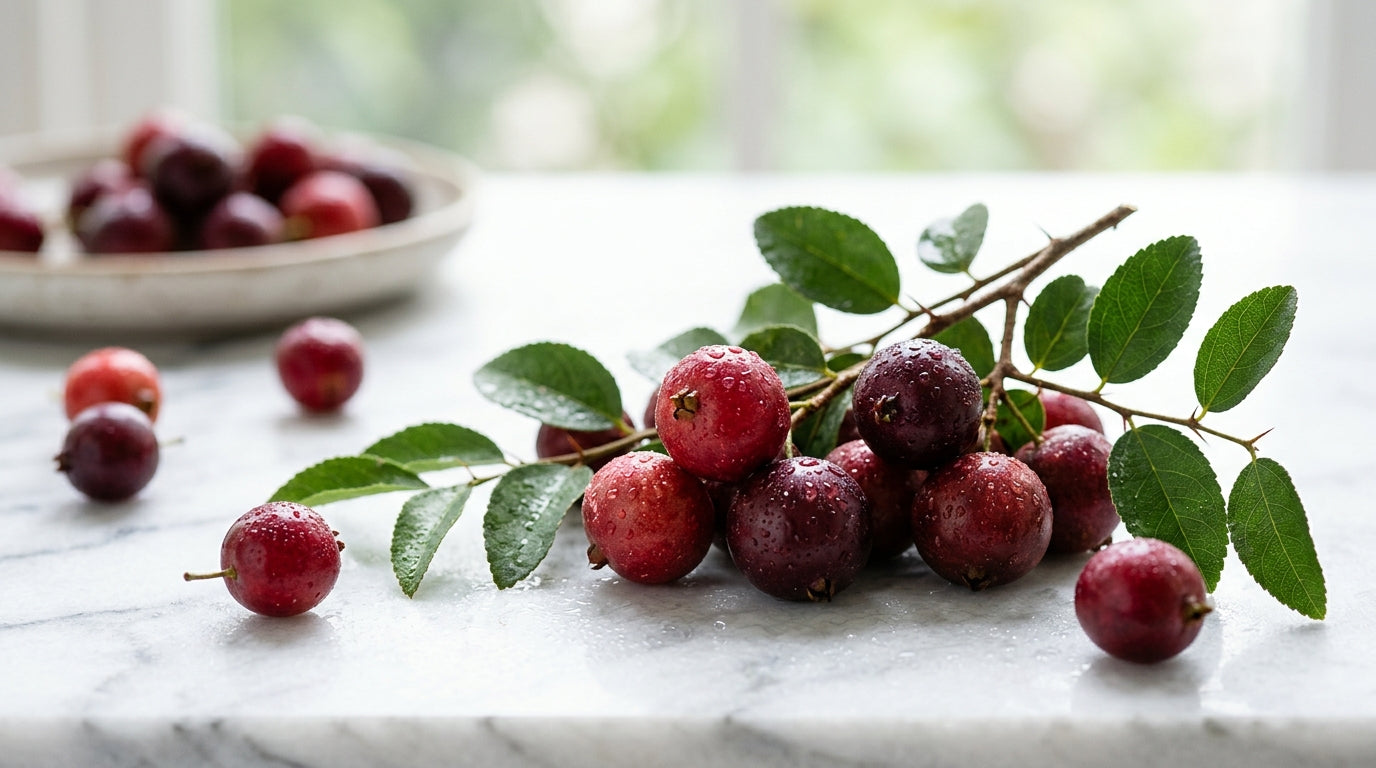
Rambutan Seedling (*Nephelium lappaceum*) originates from the tropical regions of Southeast Asia, particularly Malaysia, Indonesia, and Thailand. While primarily cultivated for its fruit, the processed seeds are a valuable source of healthy fats and plant-based proteins. This ingredient offers potential for supporting energy metabolism, immune resilience, and cardiovascular health.
Potential benefits
- Supports energy metabolism and muscle repair with healthy fats and plant-based proteins from processed seeds.
- Enhances immune resilience and collagen production through the fruit's rich Vitamin C content.
- Promotes cardiovascular health by reducing arterial inflammation and regulating blood pressure.
- Combats oxidative stress and supports cellular health with polyphenols, flavonoids, and tannins.
- Aids digestive and metabolic balance through antimicrobial and anti-inflammatory compounds.
- Supports liver function and detoxification processes.
How it works
Rambutan seed phenolics—gallic acid (3,4,5-trihydroxybenzoic acid), ellagic acid (a dilactone of hexahydroxydiphenic acid), and the ellagitannin glycoside corilagin—scavenge reactive oxygen species (ROS) by donating hydrogen atoms from their polyhydroxylated aromatic rings to DPPH• and ABTS•⁺ radicals, regenerating stable phenoxyl intermediates via single-electron transfer and hydrogen-atom transfer (HAT) mechanisms. These phenolics also chelate transition metal ions (Fe²⁺, Cu²⁺), inhibiting Fenton-reaction-driven hydroxyl radical (•OH) generation and downstream lipid peroxidation in cellular membranes. Upstream biosynthesis is governed by the phenylpropanoid pathway: phenylalanine ammonia-lyase (PAL) converts L-phenylalanine to trans-cinnamic acid, chalcone synthase (CHS) catalyzes flavonoid ring formation, and flavanone 3-hydroxylase (F3H) generates dihydroflavonols—genes confirmed to be upregulated under abiotic stress in Sapindaceae species (Wang et al., 2020; PMID 32706804). Additionally, ellagic acid has been shown to modulate NF-κB and Nrf2/ARE signaling pathways, suppressing pro-inflammatory cytokine expression (TNF-α, IL-6) while upregulating endogenous antioxidant enzymes including superoxide dismutase (SOD), catalase (CAT), and glutathione peroxidase (GPx).
What the research says
Research on rambutan seeds is limited to in vitro laboratory studies with no human clinical trials identified. Laboratory assays demonstrate DPPH antioxidant activity at 59.16 μmol Trolox equivalents per 100g fat and antibacterial activity against Pseudomonas aeruginosa, Burkholderia cepacia, Staphylococcus aureus, and Listeria monocytogenes. Glucosidase inhibition was observed at 50 μg doses in enzyme assays. The evidence base remains preliminary, requiring human studies to establish clinical efficacy and optimal dosing protocols.
Safety and interactions
Raw rambutan seeds contain saponins and low-level anti-nutritional factors (trypsin inhibitors, phytic acid) and should be roasted or otherwise heat-processed before consumption to reduce toxicity; notably, certain Sapindaceae species such as Acer pseudoplatanus produce the toxic amino acid hypoglycin A (Novotná et al., 2023; PMID 37652103; Engel et al., 2023; PMID 37419492), though hypoglycin A has not been confirmed in Nephelium lappaceum seeds at physiologically relevant levels. Gallic acid and ellagic acid may inhibit cytochrome P450 enzymes (particularly CYP3A4 and CYP1A2) in vitro, raising theoretical concerns about altered pharmacokinetics of drugs metabolized via these pathways, including statins, calcium channel blockers, and certain immunosuppressants; patients on such medications should consult a healthcare provider before consuming concentrated rambutan seed extracts. Individuals with tree-nut or latex allergies may exhibit cross-reactivity to Sapindaceae seed proteins, and pregnant or breastfeeding women should avoid unprocessed seed preparations due to insufficient human safety data. No serious adverse events have been reported from commercially available rambutan seed oils or roasted seeds consumed in traditional Southeast Asian quantities.
Suggested use
- Processed Seeds: Roasted or boiled for culinary use, or incorporated into plant-based protein and wellness blends.
- Fruit: Consumed fresh or used in functional foods.
- Seed Oil: Used in cosmetic formulations.
- Dosage: Specific dosage for processed seeds or extracts varies; consult product guidelines.
Frequently asked questions
What are the health benefits of rambutan seeds?
Rambutan seeds are rich in gallic acid, ellagic acid, corilagin, oleic acid, and arachidic acid. These compounds provide potent antioxidant activity (approximately 59.16 μmol Trolox equivalents/100 g fat), support cardiovascular health by reducing arterial inflammation, and supply plant-based proteins and healthy fats that aid energy metabolism and muscle repair when the seeds are properly roasted or processed.
Are rambutan seeds safe to eat?
Raw rambutan seeds contain saponins and anti-nutritional factors that can cause gastrointestinal distress, so they should always be roasted or heat-processed before consumption. While some related Sapindaceae species produce the toxic compound hypoglycin A (Novotná et al., 2023; PMID 37652103), this toxin has not been confirmed at harmful levels in Nephelium lappaceum seeds. Nonetheless, concentrated seed extracts may interact with CYP3A4-metabolized medications, so consult a healthcare provider if you take prescription drugs.
How does rambutan compare to lychee and longan nutritionally?
Rambutan, lychee, and longan are all Sapindaceae family fruits with similar vitamin C content and antioxidant profiles, but rambutan seeds uniquely contain high concentrations of gallic acid, ellagic acid, and corilagin not commonly reported in lychee or longan seeds. Rambutan fruit provides roughly 40% of the daily recommended vitamin C per 100 g serving, comparable to lychee, while its seed offers a distinct oleic-acid-rich fat profile useful in cosmetic and nutraceutical applications.
What antioxidants are found in rambutan seedlings?
Rambutan seedlings biosynthesize polyphenols including gallic acid, ellagic acid, and the ellagitannin corilagin through the phenylpropanoid pathway, driven by PAL, CHS, and F3H enzymes conserved across the Sapindaceae family (Wang et al., 2020; PMID 32706804). These compounds scavenge DPPH• and ABTS•⁺ radicals via hydrogen-atom transfer and chelate pro-oxidant metal ions. Additional flavonoids and tannins contribute to a broad-spectrum antioxidant defense that supports cellular health.
Can rambutan seed extract help with blood sugar or cardiovascular health?
In vitro and preliminary animal studies suggest that rambutan seed phenolics—particularly ellagic acid and gallic acid—may reduce arterial inflammation by modulating NF-κB signaling and lowering pro-inflammatory cytokines (TNF-α, IL-6), which are key drivers of atherosclerosis and metabolic syndrome. The seeds' oleic acid content supports favorable HDL/LDL cholesterol ratios. However, robust human clinical trials are still needed to confirm these cardiovascular and glycemic benefits at specific dosages.
What is the difference between rambutan seed extract and whole rambutan seedling powder?
Rambutan seed extract concentrates the bioactive compounds like polyphenols and flavonoids through processing, potentially offering higher potency per serving, while whole seedling powder retains the complete nutrient profile including fiber and fatty acids. Extract forms typically have faster absorption and more standardized dosing, whereas whole powder provides synergistic benefits from all seed components working together. The choice depends on whether you prioritize concentrated potency or complete food-matrix nutrition.
Is rambutan seedling safe to take with blood pressure or cholesterol medications?
Rambutan seedlings contain compounds that may have mild blood pressure and cholesterol-regulating effects, so combining them with antihypertensive or statin medications could potentially enhance effects and require medical supervision. While traditional use suggests safety, there is limited clinical research on specific drug interactions with common cardiovascular medications. Consult with a healthcare provider before combining rambutan seedling supplements with prescription medications to avoid additive effects.
Who would benefit most from rambutan seedling supplementation?
Athletes and active individuals may benefit from rambutan seedling's plant-based proteins and healthy fats supporting muscle repair and energy metabolism, while those with oxidative stress-related concerns may benefit from its polyphenol and flavonoid content. People with inflammatory conditions or cardiovascular concerns could gain from its potential blood pressure and arterial health support, though evidence is still emerging. Those with limited access to fresh rambutans or seeking concentrated nutritional support may find seedling extracts more practical than whole fruit consumption.
References
- https://www.ncbi.nlm.nih.gov/search/all/?term=Rambutan+Seedling
- https://fdc.nal.usda.gov/fdc-app.html#/search?query=Rambutan+Seedling
- https://pubmed.ncbi.nlm.nih.gov/31908473
- https://www.sciencedirect.com/science/article/pii/S175646461930503X
- https://www.ncbi.nlm.nih.gov/pmc/articles/PMC6994542/
This article is educational and is not medical advice. Statements have not been evaluated by the FDA and are not intended to diagnose, treat, cure, or prevent any disease. Consult a healthcare professional before use.