Manoomin (wild rice) contains bioactive flavonoid glycosides (diglucosyl apigenin, glucosyl-arabinosyl apigenin) and flavan-3-ols (catechin, epicatechin, procyanidin B2) that neutralize reactive oxygen species via oxygen radical absorbance capacity (ORAC) mechanisms, with raw wild rice demonstrating approximately 30 times greater antioxidant activity than white rice. Preliminary research at the University of Minnesota Duluth by Dr. Emily Onello and Dr. Dan Gallaher found that adding lake-harvested manoomin to a high-fat diet promoted a more favorable and diverse gut microbiome profile and reduced biochemical markers associated with colon cancer risk in an animal model.

Origin
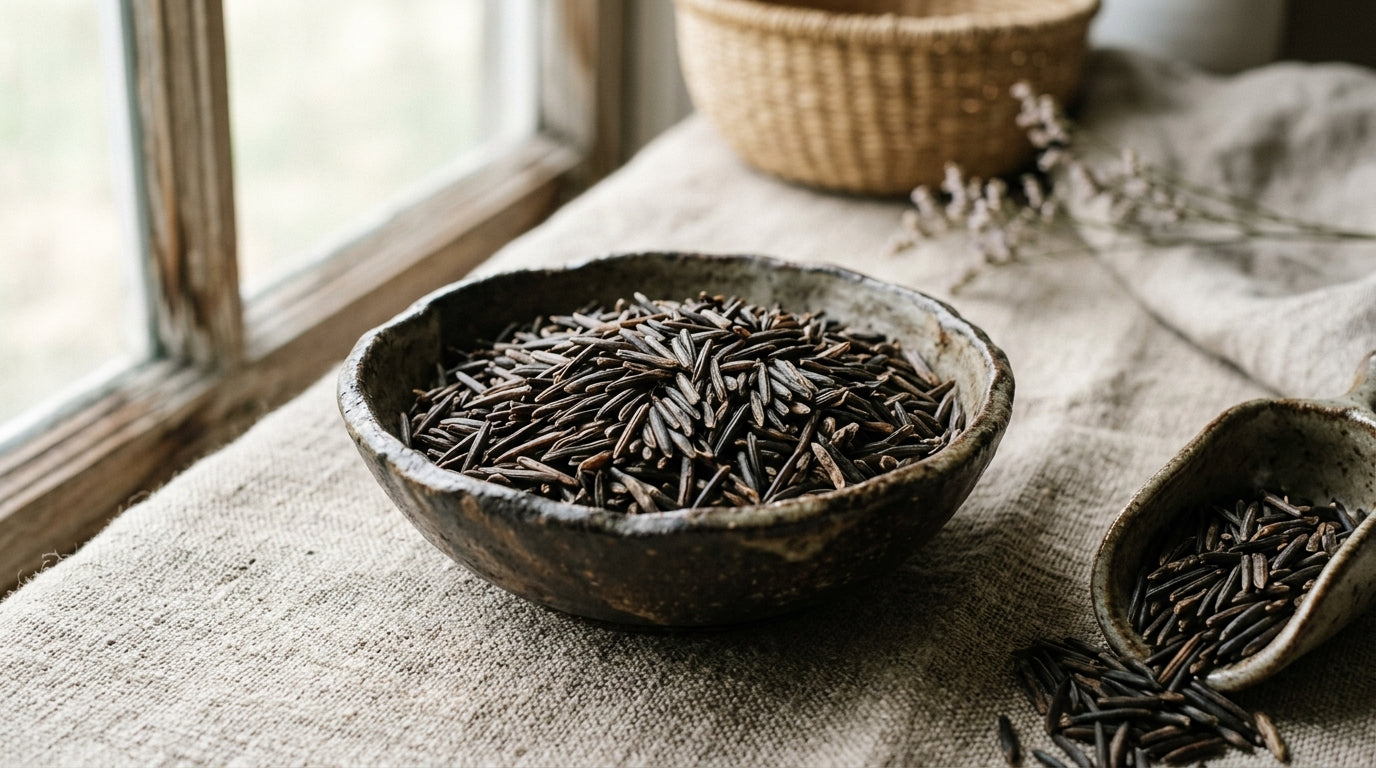
Manoomin (Zizania palustris), commonly known as wild rice, is an aquatic grass seed native to North America, particularly the Great Lakes region. It thrives in shallow freshwater lakes and rivers, forming a vital part of wild ecosystems. This nutrient-dense seed is a complete protein and a cornerstone of functional nutrition, offering sustained energy and comprehensive mineral support.
Potential benefits
- Provides all nine essential amino acids, making it a complete plant-based protein for muscle repair and metabolic function.
- Supports digestive health and promotes satiety through its high dietary fiber content.
- Reduces oxidative stress and supports cardiovascular health via phenolic compounds.
- Supplies essential minerals like magnesium, phosphorus, and zinc, enhancing immune function and bone integrity.
- Aids in cholesterol regulation and overall heart wellness due to its fiber and antioxidant profile.
- Offers a naturally gluten-free grain alternative for sensitive individuals.
How it works
The phenolic compounds in manoomin, particularly flavonoid glycosides (diglucosyl apigenin, glucosyl-arabinosyl apigenin) and flavan-3-ols (catechin, epicatechin, and procyanidin B2), exert antioxidant effects primarily through direct scavenging of reactive oxygen species (ROS) including superoxide anion, hydroxyl radicals, and peroxyl radicals, as measured by oxygen radical absorbance capacity (ORAC) assays. These polyphenols may also modulate inflammatory signaling cascades by inhibiting NF-κB activation and downregulating cyclooxygenase-2 (COX-2) expression, thereby reducing pro-inflammatory prostaglandin synthesis. The high soluble and insoluble fiber content (approximately 6.2 g per cooked cup) undergoes fermentation by colonic microbiota to produce short-chain fatty acids (SCFAs)—particularly butyrate—which serve as the primary energy source for colonocytes, reinforce intestinal barrier integrity, and may exert anti-proliferative effects on aberrant crypt cells. Additionally, manoomin's complete essential amino acid profile, including lysine and methionine, supports glutathione biosynthesis, further enhancing endogenous antioxidant defense systems.
What the research says
Current research on wild rice is limited to in vitro antioxidant measurements and food science applications rather than controlled human clinical trials. Laboratory studies demonstrate significant antioxidant capacity with quantified ORAC values, but human health outcomes have not been systematically evaluated in clinical settings. One food science study showed wild rice reduced rancidity in ground beef, confirming practical antioxidant applications. The evidence for human health benefits remains largely theoretical based on nutritional composition and in vitro antioxidant data.
Safety and interactions
Manoomin is generally recognized as safe (GRAS) as a whole food and has been consumed by Anishinaabe and other Indigenous peoples for thousands of years with no documented adverse effects at typical dietary intakes. No clinically significant CYP450 enzyme interactions have been reported for wild rice or its constituent phenolic compounds at dietary concentrations, though individuals on anticoagulant therapy (e.g., warfarin) should be aware that the vitamin K content (~1.6 µg per cooked cup) is minimal and unlikely to affect INR values. Persons with grass pollen allergies may rarely experience cross-reactive oral allergy syndrome, as Zizania palustris is a member of the Poaceae grass family; those with confirmed grass allergies should introduce manoomin cautiously. Wild rice harvested from contaminated waterways may contain elevated levels of sulfate-derived sulfide or heavy metals, so sourcing from clean, traditionally managed waters is recommended.
Suggested use
- Common forms: Whole grain (raw, parched, pre-cooked), flour.
- Preparation: Cooked as a side dish, added to salads, soups, pilafs, or ground into flour for baking.
- Dosage: 1/2–1 cup cooked wild rice per meal.
Frequently asked questions
Does manoomin (wild rice) help with heart health?
Manoomin may support cardiovascular health through two complementary mechanisms. Its phenolic compounds — including catechin, epicatechin, and procyanidin B2 — scavenge reactive oxygen species and may inhibit NF-κB inflammatory signaling, reducing oxidative stress linked to arterial damage. Additionally, its dietary fiber content supports cholesterol regulation by binding bile acids in the gut and reducing LDL reabsorption. While human clinical trials are limited, the combination of antioxidant activity roughly 30 times greater than white rice and a favorable fiber profile makes manoomin a heart-supportive whole food when incorporated into a balanced diet.
Is manoomin (wild rice) good for gut health?
Yes. Preliminary animal research from the University of Minnesota Duluth (2020) by Dr. Emily Onello and Dr. Dan Gallaher found that adding lake-harvested manoomin to a high-fat Western diet promoted greater gut microbial diversity and reduced biochemical markers associated with colon cancer risk. The dietary fiber in manoomin acts as a prebiotic substrate, fueling beneficial bacteria. Its polyphenols, including flavan-3-ols, may also selectively modulate microbiome composition, further supporting a healthy gut environment.
How much manoomin (wild rice) should I eat per serving?
A common dietary recommendation is one-half to one cup of cooked wild rice per meal. This serving size delivers meaningful amounts of dietary fiber, plant-based complete protein, and essential minerals including magnesium, phosphorus, and zinc. Manoomin can be incorporated into soups, salads, pilafs, or side dishes, or used as a flour in baking. There is no established therapeutic dosage as a supplement; food-form consumption within a balanced diet is the primary mode of intake studied in research to date.
Is manoomin (wild rice) safe for people with gluten intolerance or celiac disease?
Yes. Manoomin is a naturally gluten-free grain, making it a suitable carbohydrate source for individuals with celiac disease or non-celiac gluten sensitivity. Unlike wheat, barley, or rye, wild rice contains no gluten proteins. However, individuals with celiac disease should verify that commercially purchased wild rice is processed in a certified gluten-free facility to avoid cross-contamination. When sourced appropriately, manoomin provides a nutrient-dense, gluten-free alternative to conventional grains.
What antioxidants are found in manoomin (wild rice)?
Manoomin contains a rich profile of antioxidant compounds, including flavonoid glycosides — specifically diglucosyl apigenin and glucosyl-arabinosyl apigenin — and flavan-3-ols such as catechin, epicatechin, and procyanidin B2. These phenolics neutralize reactive oxygen species including superoxide anion, hydroxyl radicals, and peroxyl radicals, as measured by oxygen radical absorbance capacity (ORAC) assays. Raw wild rice demonstrates approximately 30 times greater antioxidant activity than white rice, highlighting its significant potential to reduce oxidative stress associated with chronic disease.
Can manoomin (wild rice) help with weight management or satiety?
Manoomin may support weight management through its high dietary fiber content, which slows gastric emptying, promotes feelings of fullness, and helps regulate postprandial blood glucose levels. Its complete plant-based protein content — providing all nine essential amino acids — further supports satiety and lean muscle preservation, both important factors in metabolic health. Replacing refined carbohydrates like white rice with manoomin in meals can reduce overall glycemic load while delivering greater nutritional density per serving.
Does manoomin (wild rice) have anti-inflammatory properties?
Emerging evidence suggests manoomin's polyphenols may exert anti-inflammatory effects beyond direct antioxidant activity. The flavan-3-ols and flavonoid glycosides in wild rice may inhibit NF-κB signaling pathways and downregulate cyclooxygenase-2 (COX-2) expression, both key drivers of chronic inflammation. While human clinical evidence is currently limited, these mechanisms are well-established for structurally similar polyphenols found in other foods. Including manoomin regularly as part of an anti-inflammatory dietary pattern may complement broader lifestyle strategies for managing low-grade chronic inflammation.
What minerals does manoomin (wild rice) provide and why do they matter?
Manoomin is a notable source of essential minerals including magnesium, phosphorus, and zinc. Magnesium supports over 300 enzymatic reactions, including energy metabolism and muscle function. Phosphorus is critical for bone mineralisation and cellular energy production via ATP. Zinc plays a central role in immune function, protein synthesis, and wound healing. For individuals following plant-based diets, manoomin represents a nutrient-dense whole grain option that contributes meaningfully to mineral intake alongside its protein, fiber, and antioxidant benefits.
What is manoomin and why is it culturally significant?
Manoomin (Zizania palustris) is a semi-aquatic grass seed native to the Great Lakes region, considered a sacred gift and staple food by the Anishinaabe (Ojibwe) people for thousands of years. It is central to Anishinaabe migration narratives, ceremony, and food sovereignty, and its traditional hand-harvesting practices remain a vital cultural and ecological stewardship activity. The word 'manoomin' translates to 'the good berry' or 'the good seed' in Ojibwemowin.
Is manoomin (wild rice) a complete protein?
Yes, manoomin provides all nine essential amino acids, making it one of the few plant-based complete proteins. One cooked cup contains approximately 6.5 grams of protein with notable amounts of lysine and methionine, amino acids often limiting in other cereal grains. This makes it an excellent protein source for vegetarian, vegan, and Indigenous food-sovereignty diets.
References
- https://www.ncbi.nlm.nih.gov/search/all/?term=Manoomin+%28Wild+Rice%29
- https://fdc.nal.usda.gov/fdc-app.html#/search?query=Manoomin+%28Wild+Rice%29
- https://doi.org/10.1016/j.jff.2020.103740
- https://www.sciencedirect.com/science/article/pii/S1874391919307596
This article is educational and is not medical advice. Statements have not been evaluated by the FDA and are not intended to diagnose, treat, cure, or prevent any disease. Consult a healthcare professional before use.