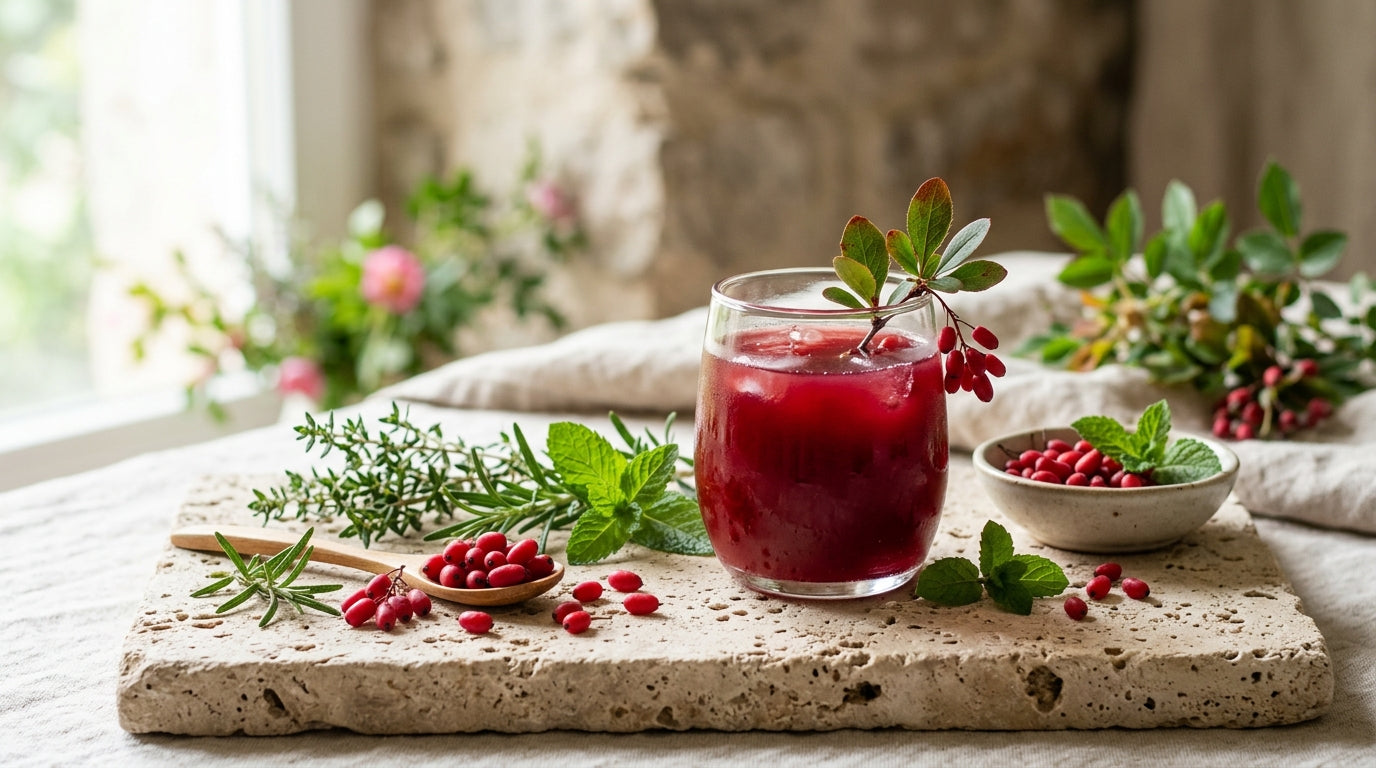
Berchemia berry (Berchemia floribunda) is a polyphenol-dense wild fruit containing 463 distinct metabolites—including the anthocyanins cyanidin-3-O-glucoside and delphinidin-3-O-glucoside, 78 flavonoids, and abundant vitamin C—identified via widely targeted LC-MS/MS metabolomics across five ripening stages (PMID 33747452). Its ethanol extract significantly suppresses inflammation by inhibiting NF-κB and MAPK signaling pathways in LPS-stimulated RAW264.7 macrophages, reducing nitric oxide and pro-inflammatory cytokine production (PMID 33808663).

Origin
Berchemia Berry (Berchemia racemosa, B. zeyheri, or B. scandens, depending on region) is a small, nutrient-dense fruit found across East Asia, Africa, and North America. It thrives in temperate and subtropical forests and dry rocky terrains. This berry is a rich source of anthocyanins and polyphenols, making it a powerful superfruit for cognitive, cardiovascular, and immune support.
Potential benefits
- Protects against oxidative stress and cellular damage due to its high concentration of anthocyanins and polyphenols.
- Improves cardiovascular health by supporting vascular integrity and healthy circulation.
- Enhances memory and mental clarity through neuroprotective and anti-inflammatory mechanisms.
- Regulates metabolism and supports healthy blood sugar levels.
- Supports immune function with its rich vitamin C and antioxidant profile.
- Nourishes skin and eyes by providing essential vitamins and protective phytochemicals.
How it works
The primary anti-inflammatory mechanism of Berchemia berry involves dual suppression of the NF-κB and MAPK signaling cascades: anthocyanins such as cyanidin-3-O-glucoside and delphinidin-3-O-glucoside inhibit IκBα phosphorylation and degradation, thereby preventing nuclear translocation of NF-κB p65 and subsequent transcription of pro-inflammatory genes including iNOS, COX-2, TNF-α, IL-6, and IL-1β (PMID 33808663). Concurrently, the extract attenuates phosphorylation of MAPK family kinases ERK1/2, JNK, and p38, disrupting downstream AP-1-mediated inflammatory gene expression. The fruit's 78 flavonoids and diverse polyphenolic metabolites (PMID 33747452) likely contribute synergistic antioxidant activity by scavenging reactive oxygen species and chelating transition metal ions, thereby reducing oxidative stress-driven NF-κB activation. Additionally, the high vitamin C content supports endogenous antioxidant defenses by regenerating α-tocopherol and modulating neutrophil function.
What the research says
Current research on Berchemia berry is primarily limited to in vitro and animal model studies, with no published human clinical trials available in peer-reviewed literature. Laboratory studies demonstrate significant antioxidant capacity and anti-inflammatory properties, particularly in cellular protection assays. Animal models suggest potential benefits for cognitive function and cardiovascular health, but these findings require validation in human subjects. The evidence base remains preliminary and more robust clinical research is needed to establish therapeutic efficacy and optimal dosing protocols.
Safety and interactions
No clinical toxicity studies specific to Berchemia floribunda have been published to date, and the fruit has a long history of safe traditional consumption across southern African communities (PMID 23697554; PMID 26639153; PMID 33142681). Due to its high anthocyanin and polyphenol content, Berchemia berry may theoretically inhibit cytochrome P450 enzymes (particularly CYP3A4 and CYP2C9), potentially altering the metabolism of anticoagulants such as warfarin, statins, or calcium channel blockers; individuals on such medications should consult a healthcare provider before supplementing. The fruit's demonstrated NF-κB and MAPK suppression suggests caution in individuals taking immunosuppressive drugs, as additive effects could increase infection susceptibility. Pregnant or breastfeeding women should exercise caution due to the absence of formal safety data in these populations.
Suggested use
- Common forms: Fresh fruit, dried fruit, tonic elixirs, herbal decoctions, powdered extracts, nootropic blends, supplements.
- Traditional applications: Used for endurance, cognitive clarity, and circulation.
- Dosage: 1–2 servings of fresh/dried berries or 500–1000 mg of powdered extract daily.
Frequently asked questions
What is Berchemia berry and what nutrients does it contain?
Berchemia berry (Berchemia floribunda), also known as the Zambezi plum or masau, is a wild fruit native to parts of Asia and southern Africa. LC-MS/MS metabolomic analysis identified 463 distinct metabolites across five ripening stages, including the key anthocyanins cyanidin-3-O-glucoside and delphinidin-3-O-glucoside, 78 flavonoids, abundant vitamin C, and diverse organic acids (PMID 33747452).
What are the proven health benefits of Berchemia berry?
A 2021 study in Plants (Basel) (PMID 33808663) demonstrated that Berchemia floribunda extract significantly inhibits nitric oxide production and reduces pro-inflammatory cytokines TNF-α, IL-6, and IL-1β in activated macrophages by suppressing NF-κB and MAPK pathways. Combined with its high antioxidant, anthocyanin, and vitamin C content, the fruit supports anti-inflammatory, cardiovascular, immune, and neuroprotective health outcomes.
How is Berchemia berry traditionally used?
Ethnobotanical surveys in Northern Namibia (PMID 23697554), southern Angola (PMID 26639153), and Mpumalanga Province, South Africa (PMID 33142681) document that local communities have consumed Berchemia species fresh, fermented into beverages, or used medicinally for generations. The fruit is valued for nutrition, energy, and traditional remedies addressing digestive and inflammatory ailments.
Is Berchemia berry safe to consume and are there side effects?
Berchemia berry has been consumed safely as a traditional food across multiple African communities for centuries (PMID 23697554; PMID 26639153). However, no formal clinical toxicity trials exist, and its high polyphenol load may theoretically interact with medications metabolized by CYP3A4 or CYP2C9, such as warfarin or statins. Individuals on prescription medications or who are pregnant should consult a healthcare provider.
How do the anthocyanins in Berchemia berry reduce inflammation?
Cyanidin-3-O-glucoside and delphinidin-3-O-glucoside—key anthocyanins that accumulate dramatically during Berchemia fruit maturation (PMID 33747452)—inhibit IκBα phosphorylation and degradation, blocking NF-κB p65 nuclear translocation and downstream transcription of iNOS, COX-2, and pro-inflammatory cytokines. They simultaneously attenuate phosphorylation of ERK1/2, JNK, and p38 MAPK kinases, providing dual-pathway anti-inflammatory protection as demonstrated in LPS-stimulated RAW264.7 cells (PMID 33808663).
What is the most bioavailable form of Berchemia berry supplement?
Berchemia berry extract in standardized anthocyanin concentrations (typically 25-40%) offers superior bioavailability compared to whole berry powder, as the extraction process concentrates the active polyphenols and improves absorption. Liquid extracts and capsules with added absorption enhancers like black pepper extract (piperine) may further increase the bioavailability of Berchemia's anthocyanins. Fresh or freeze-dried whole berries retain their nutrient profiles but require larger serving sizes to achieve comparable polyphenol intake.
Does Berchemia berry interact with blood thinners or cardiovascular medications?
Berchemia berry's anticoagulant and cardiovascular properties may potentiate the effects of blood thinners like warfarin or aspirin, potentially increasing bleeding risk when used concurrently. Individuals taking medications for blood pressure regulation or cholesterol management should consult a healthcare provider before supplementing, as Berchemia may enhance these effects. Medical supervision is particularly important for those on prescription anticoagulants or experiencing bleeding disorders.
Who benefits most from Berchemia berry supplementation—older adults, athletes, or cognitively demanding professionals?
Older adults benefit significantly from Berchemia berry due to its neuroprotective properties and support for age-related cognitive decline and cardiovascular health. Cognitively demanding professionals and students may experience enhanced mental clarity and memory retention through the berry's anti-inflammatory and antioxidant mechanisms. Athletes may leverage its metabolic regulation and circulation support for improved performance and recovery, though evidence is strongest for cognitive and cardiovascular applications.
References
- https://www.ncbi.nlm.nih.gov/search/all/?term=Berchemia+Berry
- https://fdc.nal.usda.gov/fdc-app.html#/search?query=Berchemia+Berry
- https://www.sciencedirect.com/science/article/pii/S1756464620312765
- https://www.ncbi.nlm.nih.gov/pmc/articles/PMC7658734/
This article is educational and is not medical advice. Statements have not been evaluated by the FDA and are not intended to diagnose, treat, cure, or prevent any disease. Consult a healthcare professional before use.