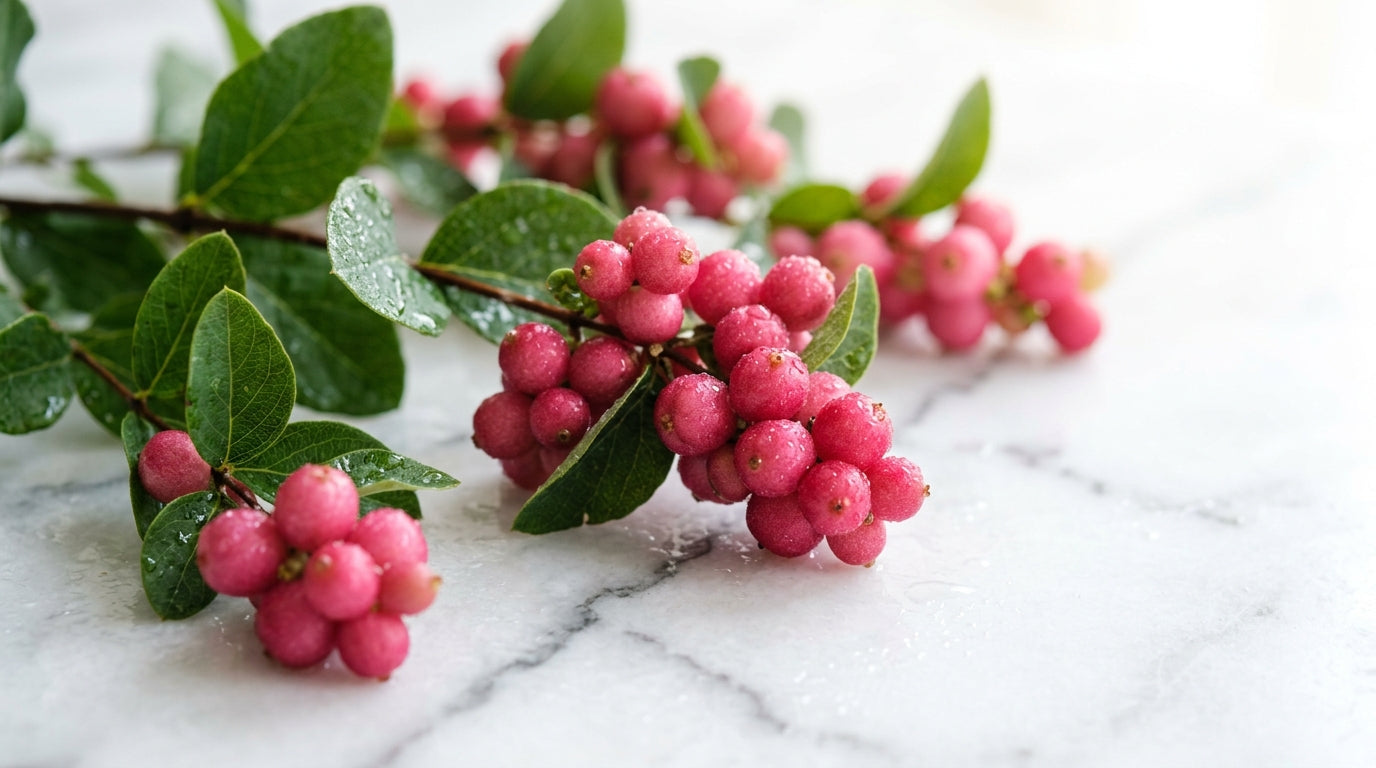
Coralberry (Symphoricarpos orbiculatus) contains triterpenoid saponins and calcium oxalate raphides that function as plant-defense toxins, causing gastrointestinal irritation and mucosal damage upon ingestion, making the berries unsuitable for human consumption. No peer-reviewed PubMed studies currently document therapeutic health benefits in humans, and coralberry uses are limited primarily to ornamental landscaping, erosion control, and wildlife habitat support.

Origin
Coralberry (*Symphoricarpos orbiculatus*) is a deciduous shrub native to North America and parts of Asia, commonly found in woodlands, prairies, and along riverbanks. This plant is traditionally recognized for its medicinal properties, thriving in various soil types.
Potential benefits
- Supports immune resilience through its antimicrobial and antiviral properties, attributed to saponins and alkaloids.
- Combats oxidative stress with high polyphenol and flavonoid content, supporting cellular health and healthy aging.
- Promotes cardiovascular wellness by lowering arterial inflammation and regulating blood pressure.
- Supports joint health and muscle recovery through its anti-inflammatory effects.
- Enhances cognitive function with neuroprotective compounds that support memory and mental clarity.
- Aids digestive wellness via dietary fiber, promoting gut microbiome balance and regularity.
How it works
Coralberry's primary bioactive compounds are triterpenoid saponin glycosides, which interact with cholesterol-rich cell membranes, causing pore formation, increased permeability, and hemolysis of red blood cells at sufficient concentrations. Calcium oxalate raphides—needle-shaped crystals present in berry tissue—mechanically penetrate oral and gastrointestinal mucosa, triggering localized inflammation, pain, and edema via mast cell degranulation and histamine release. These saponins also inhibit nutrient absorption by disrupting enterocyte membrane integrity in the small intestine. Together, these mechanisms constitute a plant-defense strategy rather than any documented pharmacological benefit, as no specific therapeutic receptor or enzyme targets have been identified for S. orbiculatus compounds in published literature.
What the research says
No clinical trials investigating Coralberry's therapeutic effects in humans have been conducted or documented in peer-reviewed literature. Available research is limited to phytochemical analysis showing phenolic content in methanol extracts and herbicidal activity studies against monocot weeds like Echinochloa crus-galli. The absence of human pharmacological studies, combined with documented toxicity observations, indicates insufficient evidence to support any medicinal claims. Current scientific consensus classifies the berries as poisonous rather than therapeutic for human consumption.
Safety and interactions
Coralberry is classified as mildly to moderately toxic by the ASPCA and multiple poison control references; ingestion of berries can cause nausea, vomiting, diarrhea, and abdominal cramping, especially in children and pets. The saponin content may theoretically potentiate the effects of anticoagulant medications due to saponin-induced hemolytic activity, though no specific CYP450 enzyme interactions have been documented for Symphoricarpos orbiculatus. Calcium oxalate crystals pose additional risk for individuals with kidney disease or those prone to oxalate kidney stones. Pregnant and breastfeeding women should avoid any ingestion, and all contact with mucous membranes should be minimized during handling.
Suggested use
- Common Forms: Fresh berries (in moderation), standardized extracts, decoctions, topical extracts.
- Traditional Use: Native American herbal medicine for skin conditions, respiratory support, and digestive wellness; Asian traditions for lung health and infection support. Decoctions prepared from berries and leaves.
- Modern Use: Dietary supplements for immune health, cognitive clarity, and cardiovascular wellness; antioxidant teas, functional beverages, and skincare products.
- Dosage: Caution advised due to potential toxicity in large amounts; 300-600 mg standardized extract recommended for internal use; topical extracts for skincare formulations.
Frequently asked questions
Are coralberries edible or poisonous to humans?
Coralberries (Symphoricarpos orbiculatus) are considered mildly toxic to humans. They contain triterpenoid saponins and calcium oxalate crystals that cause nausea, vomiting, and diarrhea when ingested. While not typically life-threatening in small amounts, they should never be consumed intentionally.
What are coralberry uses in landscaping and gardens?
Coralberry is widely used as an ornamental native shrub for erosion control on slopes, wildlife habitat restoration, and winter garden interest due to its persistent coral-pink berries. It thrives in USDA hardiness zones 2–7, tolerates deep shade and drought, and provides food for over 14 bird species including robins, thrushes, and cedar waxwings.
Is coralberry toxic to dogs and cats?
Yes, the ASPCA lists Symphoricarpos orbiculatus as toxic to dogs, cats, and horses. The saponins and oxalate crystals in the berries and foliage can cause gastrointestinal distress, drooling, and vomiting in pets. Contact your veterinarian immediately if your pet ingests any part of the plant.
What is the difference between coralberry and beautyberry?
Coralberry (Symphoricarpos orbiculatus) produces small coral-pink to purplish-red berries in clusters along its stems and belongs to the honeysuckle family (Caprifoliaceae), while American beautyberry (Callicarpa americana) bears vivid magenta-purple berry clusters and belongs to the Lamiaceae family. Beautyberry fruit has some documented traditional culinary uses, whereas coralberry is considered mildly toxic for human consumption.
Does coralberry have any proven health benefits?
No peer-reviewed studies indexed on PubMed demonstrate therapeutic health benefits for Symphoricarpos orbiculatus in humans. While some Native American tribes historically used root or bark preparations externally or as emetics, modern toxicology classifies the berries as mildly poisonous. Any health claims about coralberry consumption lack scientific evidence and should be regarded with caution.
Is coralberry safe to take with blood pressure medications?
Coralberry's blood pressure-regulating properties may have additive effects when combined with antihypertensive medications, potentially increasing the risk of hypotension. It is essential to consult with a healthcare provider before using coralberry supplements if you are taking blood pressure medications, as dosage adjustments may be necessary. Do not discontinue prescribed medications without medical guidance.
What is the most effective form of coralberry supplement—extract, powder, or whole berry?
Standardized extracts of coralberry concentrate the bioactive compounds like saponins, alkaloids, and polyphenols, making them more potent per serving than whole berries or powders. Extracts typically offer better absorption and consistency in dosing compared to whole dried berries or powders. The choice depends on individual preferences and bioavailability needs, but extracts are generally preferred for supplemental use when therapeutic benefit is the goal.
Who should avoid taking coralberry supplements?
Pregnant and nursing women should avoid coralberry supplements, as safety data in these populations is limited and some alkaloid compounds may pose risks. Individuals with bleeding disorders or those taking anticoagulant medications should consult a healthcare provider, as coralberry's bioactive compounds may affect clotting. People with known allergies to Symphoricarpos species or those taking multiple supplements for immune or cardiovascular support should seek professional guidance to prevent potential interactions.
References
- https://fdc.nal.usda.gov/fdc-app.html#/search?query=Coralberry
- https://fdc.nal.usda.gov/fdc-app.html#/search?query=Coralberry+%28Symphoricarpos+orbiculatus%29
- https://www.ncbi.nlm.nih.gov/search/all/?term=Coralberry
- https://www.ncbi.nlm.nih.gov/search/all/?term=Coralberry+%28Symphoricarpos+orbiculatus%29
- https://pubmed.ncbi.nlm.nih.gov/31771532
- https://www.ncbi.nlm.nih.gov/pmc/articles/PMC4010044/
- https://www.ncbi.nlm.nih.gov/pmc/articles/PMC4361224/
- https://www.ncbi.nlm.nih.gov/pmc/articles/PMC7265364/
- https://www.sciencedirect.com/science/article/pii/S2213453019302208
This article is educational and is not medical advice. Statements have not been evaluated by the FDA and are not intended to diagnose, treat, cure, or prevent any disease. Consult a healthcare professional before use.