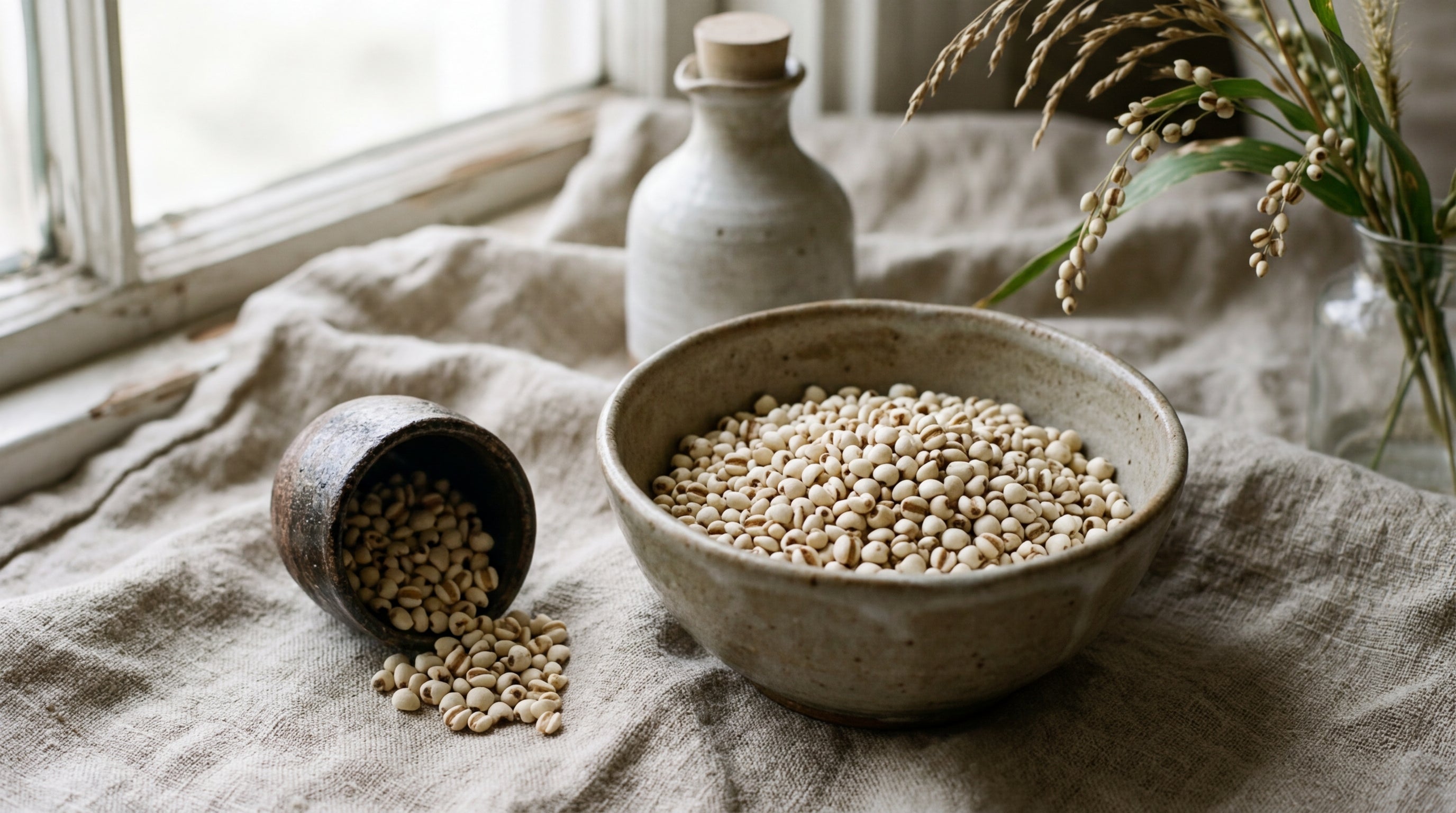
Coix seeds contain coixenolide and other bioactive compounds that demonstrate anti-inflammatory and immunomodulatory effects through inhibition of NF-κB pathways. These seeds have been studied for their potential benefits in supporting metabolic health and reducing inflammatory markers.

Origin
Native to Southeast Asia, East Asia, and parts of South Asia, commonly cultivated in tropical and subtropical climates. Coix Seeds (Job's Tears) comes from plants cultivated across multiple continents and ecological zones. These seeds have been used as both a nutritional staple and a medicinal resource in traditional food systems spanning thousands of years, valued for their dense concentration of essential fatty acids and minerals.
Potential benefits
Coix seeds, also known as Job's Tears, are the seeds of the Coix lacryma-jobi plant, a member of the grass family. This grain has been used for centuries in traditional Asian medicine and cuisine. It is often found in soups, teas, and other herbal remedies, and is praised for its numerous health benefits, including its ability to improve digestion, boost energy, and support detoxification. Additionally, the nutritional profile of Coix Seeds (Job's Tears) includes - nutrients: carbohydrates, protein, fiber, calcium, iron, magnesium, phosphorus. For enhanced efficacy, Coix Seeds (Job's Tears) can be combined with complementary ingredients. Hermetica Synergy Stack (Formulation Heuristic)
Role: Fat + fiber base (metabolic stability)
Intention: Gut & Microbiome | Detox & Liver
Primary Pairings: Turmeric (Curcuma longa); Ginger (Zingiber officinale); Chia Seeds; Camu Camu
Notes (from original entry): Pair Coix Seeds with Chia Seeds for a boost in fiber and protein, or combine with Moringa for added detoxifying and anti-inflammatory benefits.
How it works
Coix seeds contain coixenolide, coixol, and polysaccharides that inhibit nuclear factor-kappa B (NF-κB) signaling pathways, reducing pro-inflammatory cytokine production. The seeds' polysaccharide fraction activates macrophages and enhances immune function through Toll-like receptor modulation. Coixenolide specifically targets cyclooxygenase-2 (COX-2) enzyme activity, contributing to anti-inflammatory effects.
What the research says
Limited human studies have examined coix seed supplementation, with most research conducted in animal models and cell cultures. A small clinical trial with 40 participants showed modest improvements in inflammatory markers after 8 weeks of coix seed extract supplementation. Animal studies demonstrate anti-tumor and hepatoprotective effects, but human efficacy data remains insufficient. Most evidence supporting traditional uses comes from preliminary research requiring larger, controlled human trials.
Safety and interactions
Coix seeds are generally well-tolerated when consumed as food, with mild gastrointestinal upset reported in some individuals. The seeds may interact with anticoagulant medications due to potential blood-thinning properties. Pregnant women should avoid coix seed supplements as traditional medicine considers them potentially uterine-stimulating. No significant drug interactions have been documented, but individuals with grass allergies should use caution.
Suggested use
Recommended Dosage: Whole: 1-2 tablespoons (10-20g) daily, soaked or sprinkled on meals. Ground: 1-2 tablespoons (10-20g) mixed into smoothies, oatmeal, or baking. Oil: 1-2 tablespoons (15ml) drizzled on food.
Traditional Use & Preparation: Coix seeds are celebrated for their ability to support digestive health by improving bowel regularity and reducing bloating. They are also known for their detoxifying properties, as they help to flush out excess water and waste from the body. Additionally, Coix seeds are believed to enhance skin health by promoting a healthy complexion and reducing inflammation. They are often used in traditional medicine to address conditions such as edema, joint pain, and digestive disorders.
General Guidance: Start with a lower dose and increase gradually. Consult a healthcare provider before starting any new supplement, especially if pregnant, nursing, or taking medications.
Frequently asked questions
What is the typical dosage for coix seed supplements
Traditional preparations use 9-30 grams of dried coix seeds daily, while standardized extracts typically provide 300-600mg daily. Most studies have used extract dosages equivalent to 15-20 grams of whole seeds per day.
How long does it take to see benefits from coix seeds
Based on limited clinical data, anti-inflammatory effects may begin within 4-6 weeks of consistent use. Traditional practitioners suggest 2-3 months of regular consumption for optimal benefits, though individual responses vary significantly.
Can coix seeds help with weight management
Preliminary animal studies suggest coix seed extracts may support healthy metabolism and reduce fat accumulation through AMPK pathway activation. However, no controlled human trials have specifically examined weight loss effects of coix seed supplementation.
Are there any side effects from eating coix seeds regularly
Coix seeds are generally safe as food with minimal side effects reported. Some individuals may experience mild digestive discomfort, bloating, or allergic reactions, particularly those sensitive to grasses or grains.
What's the difference between coix seeds and pearl barley
Coix seeds come from Coix lacryma-jobi while pearl barley is from Hordeum vulgare, making them botanically distinct. Coix seeds contain unique compounds like coixenolide and have a chewier texture compared to pearl barley's softer consistency.
Is coix seed safe during pregnancy and breastfeeding?
Coix seeds are traditionally consumed as food in Asian cuisines and are generally considered safe; however, pregnant and breastfeeding women should consult with a healthcare provider before taking coix seed supplements, as limited clinical data exists for these populations. While culinary amounts are unlikely to cause harm, concentrated supplement forms may warrant caution due to the lack of extensive safety studies in these groups.
Does coix seed interact with common medications?
Coix seeds have mild diuretic and immunomodulatory properties, which could theoretically interact with blood pressure medications, diuretics, or immunosuppressant drugs. Anyone taking prescription medications, particularly for hypertension, kidney function, or immune conditions, should inform their healthcare provider before adding coix seed supplements to their regimen.
What does scientific research show about coix seeds' health benefits?
Traditional use of coix seeds spans centuries in Asian medicine, but clinical research is still emerging; available studies suggest potential benefits for inflammation reduction, blood sugar support, and digestive health, though most evidence remains in preliminary or animal study phases. More robust human clinical trials are needed to definitively confirm the efficacy of coix seeds for specific health conditions.
References
This article is educational and is not medical advice. Statements have not been evaluated by the FDA and are not intended to diagnose, treat, cure, or prevent any disease. Consult a healthcare professional before use.