Berberis juice contains berberine, a quaternary isoquinoline alkaloid that regulates blood glucose through AMPK activation and cholesterol metabolism via LDL-receptor upregulation and PCSK9 suppression. The juice demonstrates immunomodulatory effects by shifting immune responses toward Th2 dominance and inducing regulatory T-cells while inhibiting pro-inflammatory cytokines IL-1, TNF, and IFN-γ.

Origin
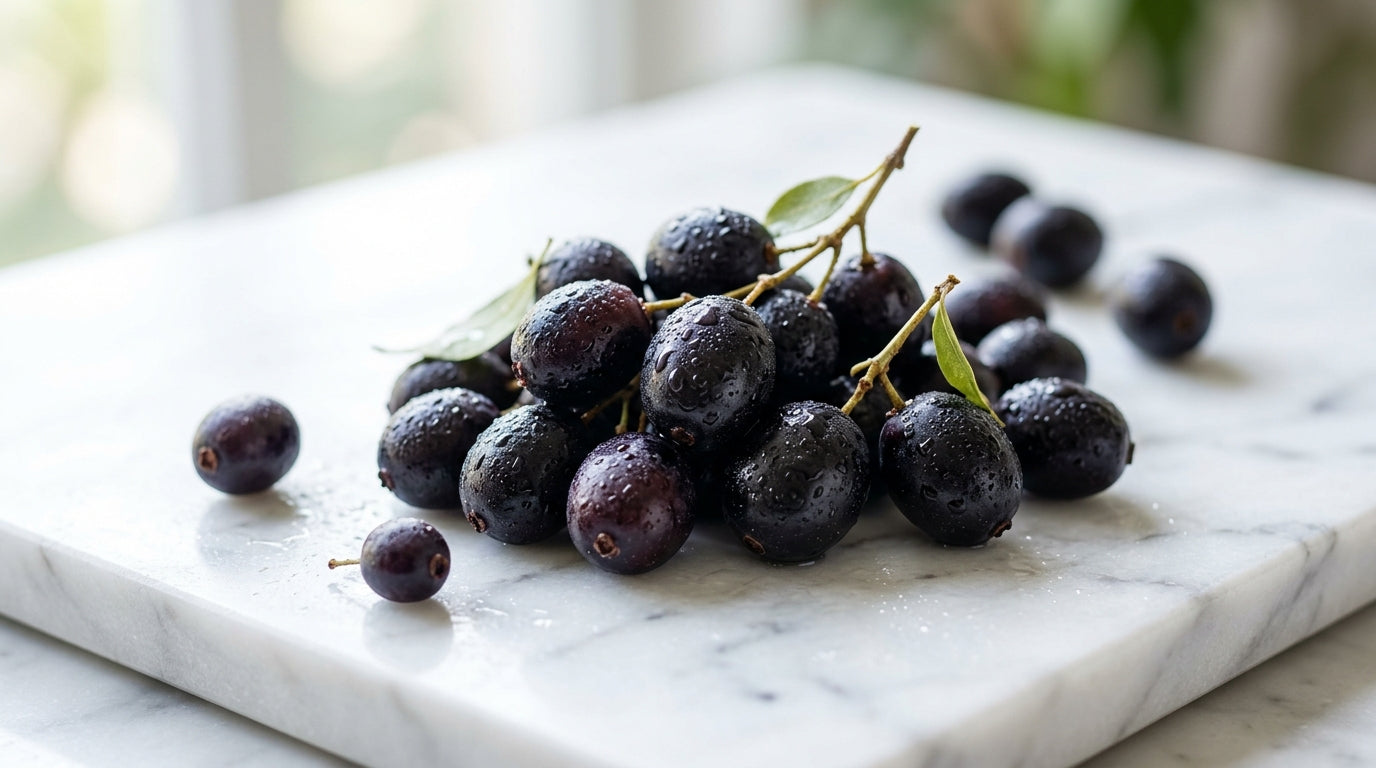
Berberis Juice is a tart, nutrient-rich liquid extracted from the berries of the barberry plant (Berberis vulgaris). This deciduous shrub is native to Europe, North Africa, and Asia, thriving in temperate regions. It is highly valued in functional nutrition for its potent concentration of berberine and vitamin C, which support immune, digestive, and metabolic health.
Potential benefits
- Regulates blood sugar levels and improves insulin sensitivity through its berberine content.
- Boosts immune function with high levels of Vitamin C and potent antioxidants.
- Promotes digestive health by stimulating bile production and reducing gastrointestinal discomfort.
- Provides broad-spectrum antimicrobial properties, supporting gut and systemic health.
- Reduces inflammation throughout the body, benefiting skin and respiratory systems.
How it works
Berberine activates AMPK pathways to inhibit HMG-CoA reductase and reduce cholesterol biosynthesis while upregulating LDL-receptors via ERK pathway activation and PCSK9 suppression. The alkaloid induces immunomodulatory effects by shifting Th1/Th2 cytokine ratios, promoting regulatory T-cell formation, and inhibiting ACAT-2 to reduce intestinal cholesterol absorption. Additional mechanisms include ROS scavenging through hydrogen atom donation and metal ion deactivation.
What the research says
Current evidence is limited to preclinical studies, with no published human clinical trials specifically evaluating Berberis juice efficacy or safety profiles. Animal studies demonstrate cytokine modulation in mouse splenocytes and protective effects in non-obese diabetic mice through hepatic and renal cytokine regulation. While extensive human trials exist for isolated berberine compounds, research on whole Berberis juice remains insufficient for clinical recommendations. The evidence base requires controlled human trials with quantified dosage and outcome parameters.
Safety and interactions
Safety data for Berberis juice is limited, with no established contraindications or drug interaction profiles from clinical studies. Berberine's quaternary alkaloid structure may cause gastrointestinal upset and has potential for reduced bioavailability. Preclinical studies show low toxicity profiles but demonstrate cytotoxic effects on HepG2 cancer cells and HL-60 cell apoptosis. Patients taking medications metabolized by CYP3A4 should exercise caution, and pregnant or lactating women should avoid use due to insufficient safety data.
Suggested use
- Consume as raw juice, fresh or chilled, for maximum nutrient retention.
- Can be blended into smoothies or used to create a concentrated syrup.
- Dosage varies; consult a healthcare professional for specific recommendations, especially due to berberine content.
Frequently asked questions
What is the main active compound in Berberis juice?
Berberine, a quaternary isoquinoline alkaloid, serves as the primary bioactive compound alongside phenolics, terpenoids, and saponins. Ethanol extracts of Berberis lycium root bark demonstrate the highest alkaloid concentrations linked to therapeutic activity.
How does Berberis juice affect cholesterol levels?
Berberine upregulates LDL-receptors through ERK pathway activation while suppressing PCSK9 expression. It simultaneously inhibits HMG-CoA reductase via AMPK activation and blocks intestinal cholesterol absorption by inhibiting ACAT-2 enzyme activity.
Are there clinical trials proving Berberis juice effectiveness?
No human clinical trials have specifically evaluated Berberis juice efficacy or safety profiles. Current evidence derives from preclinical animal studies and in vitro research, while human trials exist only for isolated berberine compounds rather than whole juice preparations.
What immune system effects does Berberis juice have?
Berberis juice shifts immune responses toward Th2 dominance while inducing regulatory T-cell formation and inhibiting pro-inflammatory cytokines IL-1, TNF, and IFN-γ. It simultaneously stimulates anti-inflammatory cytokines IL-4 and IL-10 while inducing apoptosis in antigen-presenting cells.
Can Berberis juice interact with medications?
While specific drug interactions for Berberis juice lack documentation, berberine may inhibit CYP3A4 enzyme activity affecting medication metabolism. Patients taking drugs metabolized through this pathway should consult healthcare providers before use due to potential interaction risks.
What is the recommended daily dosage of Berberis juice, and when should I take it?
Typical dosages of Berberis juice extract range from 500–1,500 mg daily, often divided into 2–3 doses with meals to optimize absorption and minimize gastrointestinal upset. Taking Berberis juice with food, particularly during meals, enhances its bioavailability and allows its active compounds to work synergistically with digestive processes. Consistent daily timing helps maintain stable blood levels of berberine for optimal blood sugar and cholesterol regulation. Consult a healthcare provider to determine the appropriate dose based on your individual health status and goals.
Is Berberis juice safe during pregnancy, breastfeeding, and for children?
Berberis juice should be avoided during pregnancy and breastfeeding, as berberine may stimulate uterine contractions and pass into breast milk in unknown concentrations. Safety data for Berberis juice in children is limited, and pediatric use should only occur under medical supervision due to the potency of its active compounds. Pregnant and nursing women should consult their healthcare provider before considering any Berberis-containing supplement. For children, age-appropriate dosing and professional guidance are essential before supplementation.
Which form of Berberis juice—fresh juice, extract, or standardized supplement—is most effective?
Standardized Berberis extracts (typically standardized to 85–97% berberine content) are more effective than fresh juice because they provide consistent, concentrated levels of active compounds with guaranteed potency. Fresh Berberis juice contains lower concentrations of berberine and may lose efficacy during storage and processing, making standardized supplements a more reliable choice for therapeutic outcomes. Capsule or tablet forms of standardized extracts offer superior bioavailability compared to powders or tinctures due to their controlled delivery and absorption rates. For maximum benefit, choose a third-party tested standardized extract rather than whole juice products.
References
- https://www.researchgate.net/publication/276279505
- https://www.ncbi.nlm.nih.gov/pmc/articles/PMC7661106/
This article is educational and is not medical advice. Statements have not been evaluated by the FDA and are not intended to diagnose, treat, cure, or prevent any disease. Consult a healthcare professional before use.