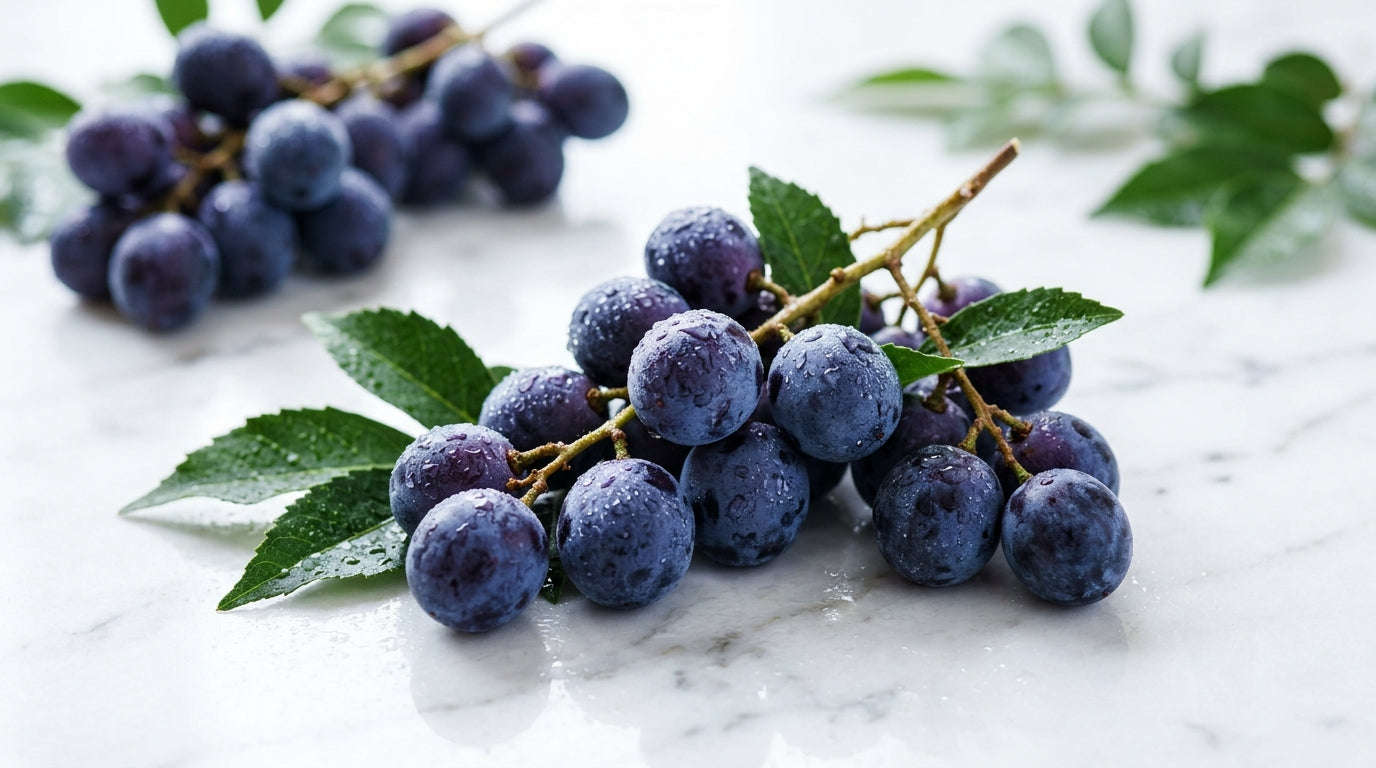
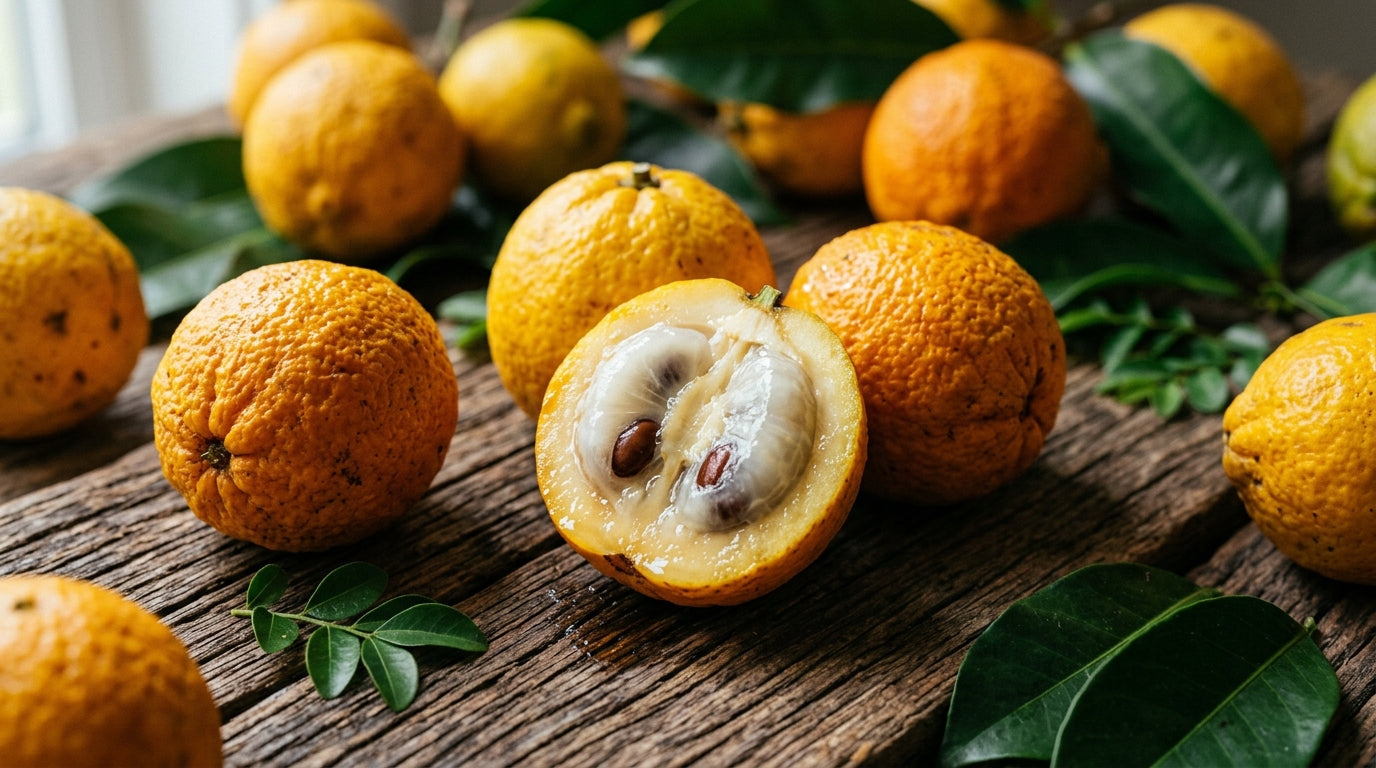
Bacuri Palm Fruit (Platonia insignis) contains prenylated benzophenones like garcinielliptone FC and 30-epi-cambogin that scavenge free radicals and reduce pro-inflammatory cytokines TNF-α, IL-1β, and IL-6. These polyphenolic compounds upregulate phase II detoxifying enzymes including glutathione reductase and heme oxygenase while reducing lipid peroxidation.

Origin
Bacuri Palm Fruit, a species of *Attalea* palm, is native to the Amazon rainforest and tropical regions of Brazil, Colombia, and Peru. This versatile fruit is rich in unique triterpenes and essential fatty acids. It is a key functional food for supporting skin regeneration and metabolic balance.
Potential benefits
- Supports skin regeneration and repair through its unique triterpenes and fatty acids.
- Strengthens immune resilience with its rich content of vitamins, minerals, and polyphenols.
- Promotes metabolic balance by modulating lipid metabolism and supporting blood sugar regulation.
- Fosters gut health by providing prebiotic fiber and anti-inflammatory compounds.
- Enhances stress adaptation, contributing to overall systemic balance and well-being.
- Modulates the anti-inflammatory response, helping to reduce systemic inflammation.
How it works
Bacuri's prenylated benzophenones (garcinielliptone FC, 30-epi-cambogin) and oleic acid work through antioxidant pathways to scavenge free radicals and reduce TBARS lipid peroxidation markers. These compounds upregulate phase II detoxifying enzymes like glutathione reductase and heme oxygenase while suppressing pro-inflammatory cytokines TNF-α, IL-1β, and IL-6 in kidney and liver tissues. Ethanol extraction increases phenolic and flavonoid yields by 4.7- to 13-fold, enhancing plasma antioxidant capacity measured by DPPH assay.
What the research says
No human clinical trials exist for Bacuri Palm Fruit, with evidence limited to pre-clinical in vitro and animal studies. In healthy rat models, related bacuri leaf extract reduced plasma lipid peroxidation and kidney inflammatory cytokine activity (IL-1β, IL-6, TNF-α), while epicarp and mesocarp extracts demonstrated strong antioxidant activity in laboratory assays. The lack of human studies means optimal dosing, safety parameters, and clinical efficacy remain unestablished. Current evidence is preliminary and requires validation through controlled human trials.
Safety and interactions
No documented safety concerns, drug interactions, or contraindications exist for Bacuri Palm Fruit due to absence of human clinical data. Pre-clinical animal studies show no reported adverse effects, but this does not guarantee human safety. Pregnant and breastfeeding women should avoid use due to lack of safety data, and individuals on medications should consult healthcare providers before consumption. The absence of clinical safety profiling necessitates cautious use until human studies establish appropriate dosing and interaction profiles.
Suggested use
- Traditionally consumed fresh, sun-dried, or as oil for internal and topical use.
- Modern forms include whole fruit, extracts, and cold-pressed oil.
- Recommended dosage: 1–2 fruit servings daily or 500–1000 mg of extract.
- Oil can be applied topically for anti-aging and skin repair benefits.
Frequently asked questions
What are the main active compounds in Bacuri Palm Fruit?
Bacuri contains prenylated benzophenones including garcinielliptone FC in the epicarp and 30-epi-cambogin in the mesocarp, along with oleic acid and omega-6 fatty acids. These polyphenolic compounds are responsible for the fruit's antioxidant and anti-inflammatory properties.
Has Bacuri Palm Fruit been tested in human studies?
No human clinical trials have been conducted with Bacuri Palm Fruit. Current evidence is limited to pre-clinical laboratory and animal studies showing antioxidant and anti-inflammatory effects in rat models.
What is the difference between Platonia insignis and Attalea phalerata bacuri?
Platonia insignis (Lecythidaceae family) is the primary species called bacuri, while Attalea phalerata is a palm species also termed bacuri. Both contain bioactive compounds, but Platonia insignis is more extensively studied for its prenylated benzophenones.
How is Bacuri Palm Fruit traditionally processed for maximum benefits?
Ethanol extraction of bacuri epicarp and mesocarp increases phenolic and flavonoid yields by 4.7- to 13-fold compared to other extraction methods. This enhanced extraction improves antioxidant capacity as measured by DPPH assays.
Is Bacuri Palm Fruit safe to consume regularly?
Safety data for regular Bacuri consumption is unavailable due to lack of human clinical trials. While animal studies show no adverse effects, pregnant women and individuals on medications should avoid use until proper safety studies are completed.
What is the most bioavailable form of Bacuri Palm Fruit supplement?
Bacuri palm fruit extracts standardized for triterpenes and fatty acids demonstrate superior bioavailability compared to whole fruit powder due to concentrated active compounds. Cold-pressed oils and lipid-based extracts enhance absorption of fat-soluble triterpenes, while lyophilized (freeze-dried) preparations preserve heat-sensitive polyphenols and vitamins. Pairing Bacuri palm supplements with dietary fat sources further optimizes bioavailability of its lipophilic bioactive compounds.
Who benefits most from Bacuri Palm Fruit supplementation?
Individuals with compromised skin barrier function, chronic inflammatory conditions, or metabolic imbalances stand to benefit most from Bacuri palm fruit's regenerative and modulatory properties. Those with dysbiotic gut microbiota may particularly benefit from its prebiotic fiber content and anti-inflammatory compounds. People experiencing chronic stress or seeking immune support during high-risk periods are also ideal candidates for this ingredient's adaptogenic and immunomodulatory effects.
How does Bacuri Palm Fruit compare to other tropical fruit adaptogens like maca or acai in terms of effectiveness?
While acai offers concentrated anthocyanins for antioxidant support and maca provides glucosinolates for hormonal balance, Bacuri palm fruit uniquely combines skin regeneration properties with prebiotic gut benefits through its specific triterpene and fatty acid profile. Unlike maca's primary focus on endocrine function, Bacuri palm addresses multiple physiological systems—skin, immune, metabolic, and gut—through distinct bioactive mechanisms. The choice depends on specific health goals: Bacuri palm excels for integrated skin-immune-metabolic support, whereas maca and acai target more specialized outcomes.
References
- https://www.ncbi.nlm.nih.gov/search/all/?term=Bacuri+Palm+Fruit
- https://fdc.nal.usda.gov/fdc-app.html#/search?query=Bacuri+Palm+Fruit
- https://www.sciencedirect.com/science/article/pii/S092666902100189X
- https://www.ncbi.nlm.nih.gov/pmc/articles/PMC7327895/
This article is educational and is not medical advice. Statements have not been evaluated by the FDA and are not intended to diagnose, treat, cure, or prevent any disease. Consult a healthcare professional before use.