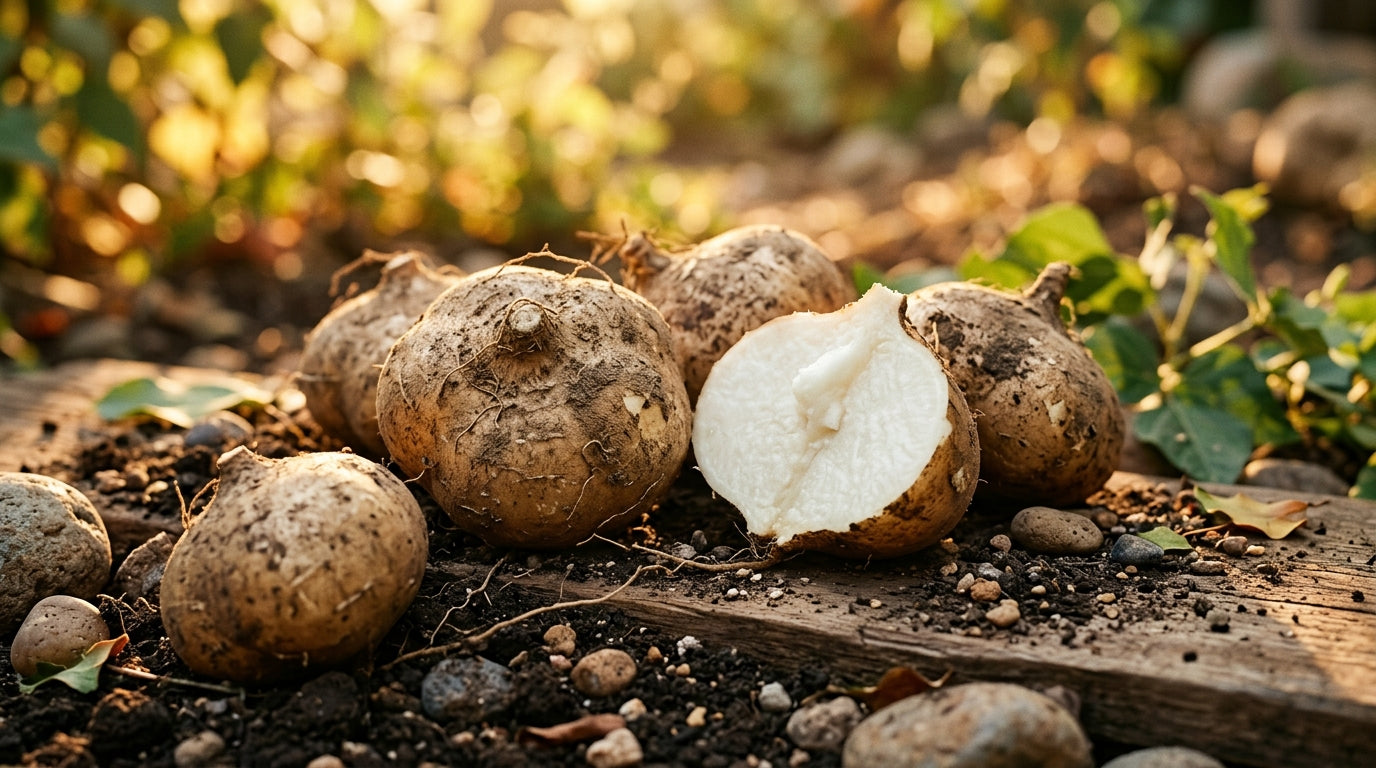
Jiló fruit (Solanum gilo) contains naringenin, catechin, and rutin as primary bioactives that demonstrate antiproliferative effects against breast cancer cells through ROS generation and caspase-3 activation. The fruit's bitter compounds and fiber content support hepatic bile flow stimulation and glucose metabolism modulation, though clinical evidence remains limited to in vitro studies.

Origin
Jiló Fruit (Solanum gilo) is a species of eggplant native to West Africa, now widely cultivated throughout Brazil and tropical South America. This distinctive fruit is characterized by its bittersweet flavor and firm texture. It is valued in functional nutrition for its unique phytonutrient profile that supports liver and digestive health.
Potential benefits
- Supports liver detoxification by stimulating bile flow and aiding the elimination of metabolic waste.
- Improves digestion through its fiber content and bitter compounds that enhance gastrointestinal motility.
- Helps regulate blood sugar levels by modulating glucose absorption and insulin sensitivity.
- Promotes bile flow, which is crucial for fat digestion and nutrient absorption.
- Offers antioxidant protection via phenolic acids and flavonoids that neutralize free radicals.
- Provides anti-inflammatory benefits, reducing systemic inflammation through its bioactive phytonutrients.
How it works
Naringenin, catechin, and rutin in jiló fruit induce apoptosis through ROS generation, mitochondrial depolarization, and G₀/G₁ cell cycle arrest with caspase-3 activation. The fruit's bitter compounds stimulate bile acid secretion and enhance gastrointestinal motility, while condensed tannins inhibit α-glucosidase and α-amylase enzymes to modulate glucose absorption. Phenolic compounds provide antioxidant activity through free radical scavenging mechanisms measured via ABTS assays.
What the research says
Current evidence is limited to in vitro studies showing jiló extracts inhibit MCF-7, MDA-MB-231, and 4T-1 breast cancer cell growth at 5-100 μg/mL concentrations in a dose-dependent manner. Related Solanum aethiopicum studies in animal models using 500-2000 mg/kg doses showed improved lipid profiles and liver biomarkers without hepatotoxicity. No human clinical trials have been conducted to establish therapeutic efficacy or optimal dosing protocols. The evidence base requires controlled human studies to validate preliminary bioactivity findings.
Safety and interactions
Jiló fruit contains cyanogenic glycosides in significant amounts, which may pose toxicity risks with excessive consumption, though specific threshold levels remain undefined. The presence of alkaloids with low bioavailability may contribute to side effects, but no specific drug interactions have been documented in available research. Animal studies up to 2000 mg/kg showed no ulcerogenic effects or liver damage, but human safety data is absent. Pregnant and breastfeeding women should exercise caution due to insufficient safety data and the presence of potentially toxic compounds.
Suggested use
- Culinary Use: Traditionally consumed in Brazilian cuisine, often sautéed or stewed with olive oil, garlic, and herbs.
- Traditional Medicine: Used in folk medicine for liver cleansing and blood sugar support.
- Dosage: 50–100 g of cooked fruit per serving.
- Forms: Typically consumed as whole, cooked fruit.
Frequently asked questions
What are the main bioactive compounds in jiló fruit?
Jiló fruit contains naringenin (flavanone), catechin (flavanol), and rutin as primary bioactive compounds, along with condensed tannins, saponins, and phenolic acids. These compounds demonstrate antioxidant activity and antiproliferative effects in laboratory studies at concentrations of 100-300 μg/mL.
How does jiló fruit support liver detoxification?
Jiló's bitter compounds stimulate bile acid secretion and enhance bile flow, facilitating the elimination of metabolic waste and fat-soluble toxins. The fruit's fiber content and bioactive compounds work synergistically to support hepatic detoxification pathways, though this mechanism requires clinical validation.
Is jiló fruit safe to consume regularly?
While animal studies show no liver damage at high doses, jiló contains cyanogenic glycosides that may pose toxicity risks with excessive consumption. No human safety studies exist to establish safe consumption levels, so moderation is advised until further research clarifies optimal intake amounts.
Can jiló fruit help regulate blood sugar levels?
Laboratory studies suggest jiló's condensed tannins inhibit α-glucosidase and α-amylase enzymes, which could modulate glucose absorption and improve insulin sensitivity. However, no human clinical trials have confirmed these blood sugar benefits, and evidence remains preliminary.
What vitamins does jiló fruit provide?
Jiló fruit contains B-complex vitamins including B1 (1.2±0.16 mg), B2 (10.71±0.4 mg), and B3 (7.33±0.02 mg) per analyzed sample. These vitamins support energy metabolism and nervous system function, contributing to the fruit's nutritional profile beyond its bioactive compounds.
Can jiló fruit interact with medications for blood sugar management or blood thinners?
Jiló fruit may potentiate the effects of blood sugar-lowering medications and anticoagulants due to its glucose-modulating and mild anticoagulant properties, potentially increasing the risk of hypoglycemia or bleeding. Individuals taking medications such as metformin, insulin, warfarin, or aspirin should consult their healthcare provider before adding jiló fruit supplements to their regimen. Medical supervision is recommended to adjust dosages if needed and monitor therapeutic effectiveness.
Who would benefit most from taking jiló fruit supplements—are there specific health conditions it targets?
Jiló fruit supplements are most beneficial for individuals with metabolic concerns including insulin resistance, pre-diabetes, sluggish digestion, or compromised liver function. People seeking natural support for bile production and fat-soluble nutrient absorption, as well as those with chronic inflammatory digestive conditions, may experience the greatest benefits. It is particularly valuable for those unable to obtain sufficient dietary intake through fresh fruit consumption.
How does jiló fruit compare to milk thistle or artichoke extract for liver and digestive support?
While jiló fruit, milk thistle, and artichoke extract all support liver detoxification and bile flow, jiló offers a broader nutritional profile with additional vitamins and minerals alongside its bitter compounds, whereas milk thistle specifically targets silymarin-based hepatoprotection and artichoke focuses on inulin and caffeoylquinic acids. Jiló fruit is generally milder and better tolerated for long-term daily use compared to concentrated extracts, making it suitable for maintenance rather than therapeutic intervention. The choice depends on whether whole-food nutrition or targeted phytocompound concentration is the priority.
References
- https://www.ncbi.nlm.nih.gov/search/all/?term=Jil%C3%B3+Fruit
- https://fdc.nal.usda.gov/fdc-app.html#/search?query=Jil%C3%B3+Fruit
- https://www.ncbi.nlm.nih.gov/pmc/articles/PMC7071532/
- https://www.sciencedirect.com/science/article/abs/pii/S0963996920303127
This article is educational and is not medical advice. Statements have not been evaluated by the FDA and are not intended to diagnose, treat, cure, or prevent any disease. Consult a healthcare professional before use.