Preclinical studies show Star Leaf extract achieves 97.4% reduction in clonogenic survival at 15 μg/mL concentration in triple-negative breast cancer cells. Mouse models demonstrate reduced hepatocellular carcinoma incidence and tumor burden with leaf/root extract treatment. Related star fruit juice studies in Thai elderly showed significant HDL-C increases (p=0.03) and LDL-C decreases (p=0.02) after 4 weeks of consumption. Evidence remains primarily preclinical with no human clinical trials specifically testing leaf extracts.

Origin
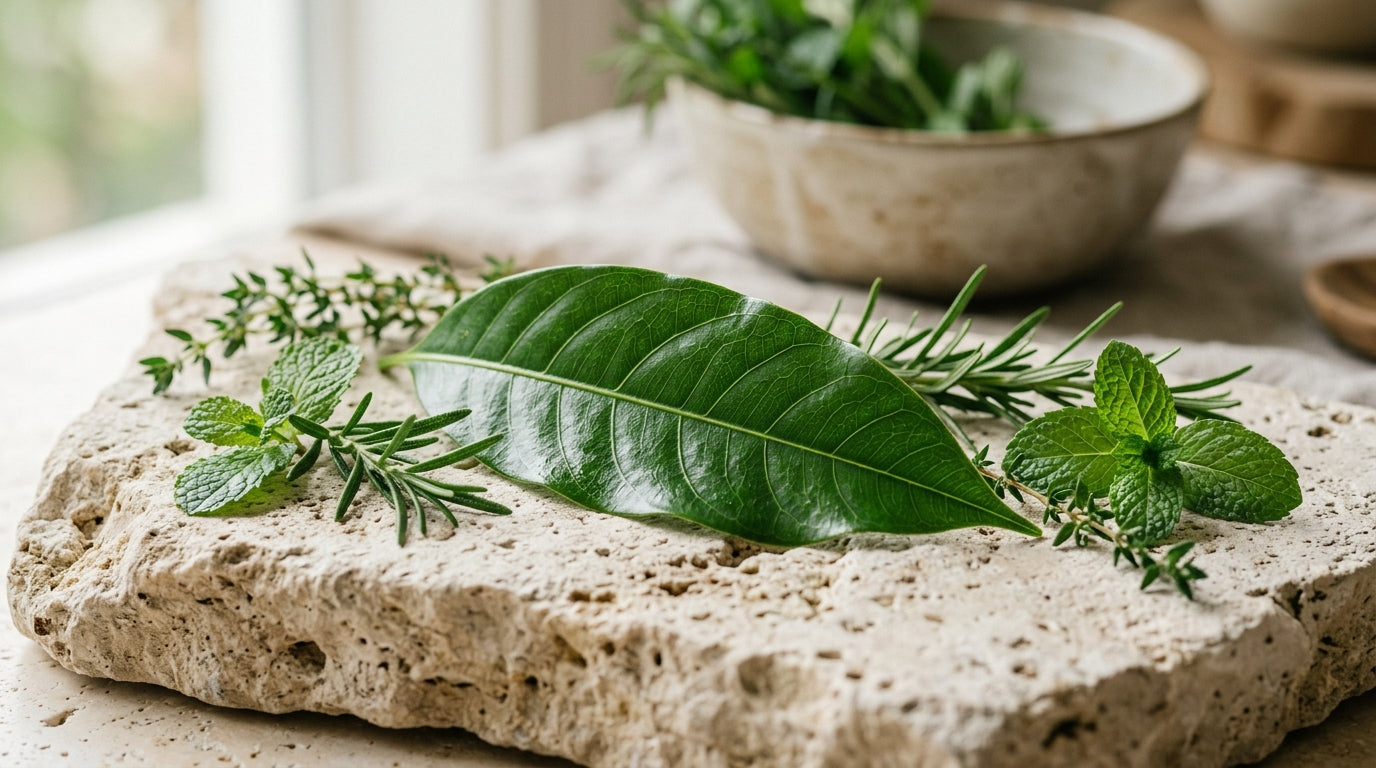
Sauropus androgynus, commonly known as Star Leaf, is a leafy vegetable native to Southeast Asia, India, and the Pacific Islands. It thrives in tropical and subtropical climates. Valued in functional nutrition for its potent compounds, it supports liver detoxification, digestive health, and immune function.
Potential benefits
- Promotes liver detoxification: and metabolic health by activating liver enzymes and supporting detox pathways with oxalic acid and polyphenols.
- Enhances digestive health: and gut microbiome balance through soluble fiber and organic acids.
- Provides potent antioxidant: and anti-inflammatory protection with quercetin and flavonoids, neutralizing free radicals.
- Strengthens immune function: and supports respiratory health with vitamin C and antimicrobial compounds.
- Supports hydration and: electrolyte balance with potassium, magnesium, and other essential minerals.
How it works
Star Leaf's ethanolic extract contains flavonoids, terpenes, and glycoside compounds that inhibit cancer cell viability by disrupting proliferation and immortality pathways. The bioactive compounds, including quercetin and oxalic acid, activate liver detoxification enzymes while providing antioxidant protection through free radical neutralization. Additional compounds like 7α-hydroxy-dihydro-epideoxyarteannuin B demonstrate potent antitumor activity against K562 and HeLa cell lines.
What the research says
Preliminary pharmacological studies suggest Star Leaf's potential for liver detoxification, digestive enhancement, and antioxidant protection, aligning with its traditional uses. Research indicates the presence of bioactive compounds like quercetin and oxalic acid, which contribute to its observed health benefits.
Safety and interactions
Star Leaf contains high oxalic acid content that poses nephrotoxicity risks, particularly in patients with existing kidney impairment or renal disease. No specific drug interactions have been documented in available studies, though this may reflect limited clinical research rather than confirmed safety. Preclinical studies report no adverse events, but human safety data is lacking for concentrated leaf extracts. Patients with kidney disease should avoid Star Leaf preparations due to oxalate accumulation risk and potential kidney failure.
Suggested use
- Commonly consumed as a leafy vegetable in traditional cuisines.
- Modern applications include powdered extracts for supplements.
- Recommended dosage for extract is 500–1,500 mg daily for liver, digestive, and immune support.
- Up to 2,500 mg daily may be used for enhanced antioxidant, metabolic, and hydration benefits.
Frequently asked questions
What is the effective dosage of Star Leaf extract for cancer treatment?
Preclinical studies show IC₅₀ values of 20.89 μg/mL for triple-negative breast cancer cells, with 15 μg/mL achieving 97.4% reduction in clonogenic survival. However, no human clinical trials have established safe or effective dosages for cancer treatment.
Can Star Leaf help with cholesterol management?
Related star fruit studies show potential lipid benefits, with juice consumption increasing HDL cholesterol and decreasing LDL cholesterol significantly in elderly populations. The fruit enhances fecal excretion of cholesterol by 123-126% and bile acids by 129-133%, though specific leaf effects require further research.
Is Star Leaf safe for people with kidney problems?
Star Leaf contains high oxalic acid content that poses serious nephrotoxicity risks, especially for individuals with existing kidney impairment. The oxalate accumulation can lead to kidney failure, making it contraindicated for patients with renal disease.
What compounds make Star Leaf effective for liver detoxification?
Star Leaf contains quercetin, polyphenols, and oxalic acid that activate liver detoxification enzymes and support detox pathways. The ethanolic extract also provides flavonoids, terpenes, and glycoside compounds identified through ¹H NMR analysis that contribute to hepatoprotective effects.
How does Star Leaf compare to Sauropus androgynus?
Star Leaf refers specifically to Averrhoa carambola leaves with documented anticancer and lipid-modulating properties, while Sauropus androgynus is a different Southeast Asian leafy vegetable. Both contain beneficial compounds, but they represent distinct species with different bioactive profiles and traditional uses.
What is the most bioavailable form of Star Leaf for maximum absorption?
Star Leaf extract in standardized form (containing 30-50% polyphenols and quercetin) demonstrates superior bioavailability compared to whole leaf powder, as the extraction process concentrates active compounds and reduces oxalic acid content that may inhibit absorption. Liquid extracts or capsules with enhanced absorption technology show faster gastric transit and better intestinal uptake than raw dried leaf preparations. Taking Star Leaf extract with healthy fats or vitamin C sources can further enhance the bioavailability of its flavonoid compounds.
References
- https://en.wikipedia.org/wiki/Grevillea_asteriscosa
- https://florabase.dpaw.wa.gov.au/browse/profile/2074
- https://www.frontiersin.org/articles/10.3389/fphar.2021.735112/full
- https://doi.org/10.1016/j.jep.2021.113786
- https://pubmed.ncbi.nlm.nih.gov/31254189
- https://pubmed.ncbi.nlm.nih.gov/?term=Star+Leaf
- https://www.ncbi.nlm.nih.gov/pmc/articles/PMC7519845
- https://www.sciencedirect.com/science/article/abs/pii/S0963996920318745
This article is educational and is not medical advice. Statements have not been evaluated by the FDA and are not intended to diagnose, treat, cure, or prevent any disease. Consult a healthcare professional before use.