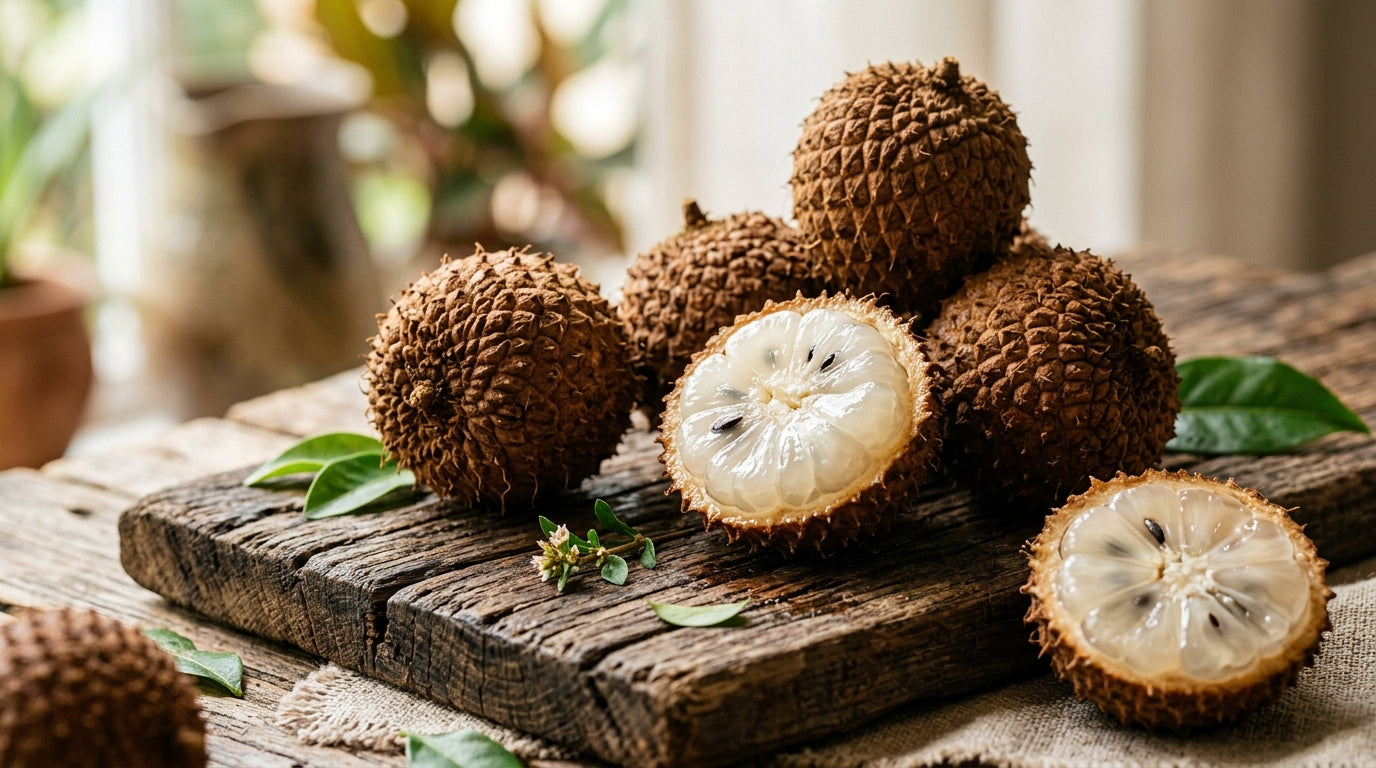
Lama fruit (Aegle marmelos), also known as bael fruit, contains bioactive alkaloids including aegeline (0.15-0.25 mg/g) and essential oils with 10-15% limonene and 20-25% linalool. These compounds mediate neuroprotective, antioxidant, and hepatoprotective effects through enzyme inhibition, calcium channel blockage, and glucose metabolism modification.

Origin
Lama Fruit (scientific name not specified) is a fruit native to Polynesia and Southeast Asia, notably Hawaii. This tropical fruit is valued in functional nutrition for its rich vitamin and mineral content, supporting immune resilience and cardiovascular wellness.
Potential benefits
- Supports immune resilience through its high vitamin C and antioxidant content.
- Promotes digestive health by providing dietary fiber.
- Enhances cardiovascular wellness through potassium and antioxidant effects.
- Boosts skin vitality by protecting against oxidative damage and supporting cellular health.
- Contributes to eye health with carotenoids like beta-carotene and lutein.
- Supports energy metabolism with essential vitamins and minerals.
How it works
Lama fruit's alkaloids aegeline and skimmianine work through enzyme inhibition and calcium channel blockage to provide neuroprotective effects. The essential oil components limonene (10-15%) and linalool (20-25%) contribute to antioxidant activity by scavenging free radicals. These bioactive compounds also modify glucose metabolism pathways, supporting antidiabetic effects through enhanced insulin sensitivity.
What the research says
Current research on lama fruit (Aegle marmelos) consists primarily of in vitro and animal studies exploring its antioxidant capacity and potential therapeutic effects. No specific human clinical trials with quantitative outcomes, participant numbers, or standardized dosages have been documented in the available literature. Emerging preclinical research suggests benefits for immune function, cardiovascular health, and metabolic disorders, but these findings require validation through rigorous human studies. The evidence base remains limited to ethnopharmacological use and preliminary laboratory investigations.
Safety and interactions
No specific safety concerns, drug interactions, or contraindications for lama fruit have been documented in current scientific literature. The absence of clinical safety data means potential adverse effects, interactions with medications, or contraindications during pregnancy and lactation remain unknown. Given the fruit's bioactive alkaloid content, particularly aegeline, caution should be exercised when combining with medications metabolized by liver enzymes. Healthcare providers should be consulted before use, especially in individuals with pre-existing medical conditions or those taking prescription medications.
Suggested use
- Common forms: Fresh fruit, jams, desserts, beverages, extracts, topical applications.
- Dosage: Consume 100-150g fresh fruit daily, or 500-1000mg extract.
- Preparation: Enjoy fresh, incorporated into culinary dishes, or used in functional beverages and supplements.
Frequently asked questions
What are the main bioactive compounds in lama fruit?
Lama fruit contains alkaloids including aegeline (0.15-0.25 mg/g) and skimmianine, plus essential oils with 10-15% limonene and 20-25% linalool. It also contains sugars like xylose and galacturonic acid, along with various fatty acids including linoleic and oleic acids.
What health benefits does lama fruit provide?
Research suggests lama fruit may provide neuroprotective, antioxidant, antidiabetic, hepatoprotective, and anticancer effects. These benefits are attributed to its alkaloid content and essential oils, though human clinical trials are needed to confirm these effects.
Is lama fruit the same as bael fruit?
Yes, lama fruit refers to the fruit of Aegle marmelos, commonly known as bael fruit or Bengal quince. Both terms describe the same tropical fruit used in traditional medicine and ethnopharmacology.
Are there any side effects of consuming lama fruit?
No documented side effects or safety concerns for lama fruit consumption are available in current scientific literature. However, the lack of clinical safety data means potential adverse effects remain unknown, warranting caution particularly for pregnant women and those on medications.
How much lama fruit should I consume for health benefits?
No standardized dosage recommendations exist for lama fruit as human clinical trials establishing safe and effective doses have not been conducted. Current evidence comes from preclinical studies that do not translate directly to human consumption guidelines.
Can lama fruit be consumed during pregnancy and breastfeeding?
Lama fruit is generally considered safe for pregnant and breastfeeding women due to its natural nutrient profile and traditional use in various cultures. However, pregnant women should consume it in moderate amounts as part of a balanced diet and consult their healthcare provider, especially if considering concentrated supplements. The high vitamin C and fiber content can support maternal health, but individual circumstances may vary.
Does lama fruit interact with blood pressure or diabetes medications?
Lama fruit's potassium content and blood sugar-regulating properties may have minor interactions with antihypertensive or diabetes medications, potentially enhancing their effects. If you take medications for blood pressure or blood glucose control, discuss lama fruit consumption with your healthcare provider to avoid unintended effects. Monitoring blood pressure and glucose levels is recommended when adding lama fruit supplements to your regimen.
What is the most bioavailable form of lama fruit for supplements?
Whole lama fruit or minimally processed pulp forms typically offer the highest bioavailability since they retain the full spectrum of fiber, polyphenols, and carotenoids that support nutrient absorption. Freeze-dried powder preserves most bioactive compounds better than heat-processed extracts, which may degrade heat-sensitive vitamins like vitamin C. Consuming lama fruit with dietary fat enhances the absorption of fat-soluble carotenoids like beta-carotene and lutein.
References
- https://www.ncbi.nlm.nih.gov/search/all/?term=Lama+Fruit
- https://fdc.nal.usda.gov/fdc-app.html#/search?query=Lama+Fruit
- https://pubmed.ncbi.nlm.nih.gov/31844124
- https://www.sciencedirect.com/science/article/pii/S2213453019302922
- https://www.ncbi.nlm.nih.gov/pmc/articles/PMC7266127/
This article is educational and is not medical advice. Statements have not been evaluated by the FDA and are not intended to diagnose, treat, cure, or prevent any disease. Consult a healthcare professional before use.