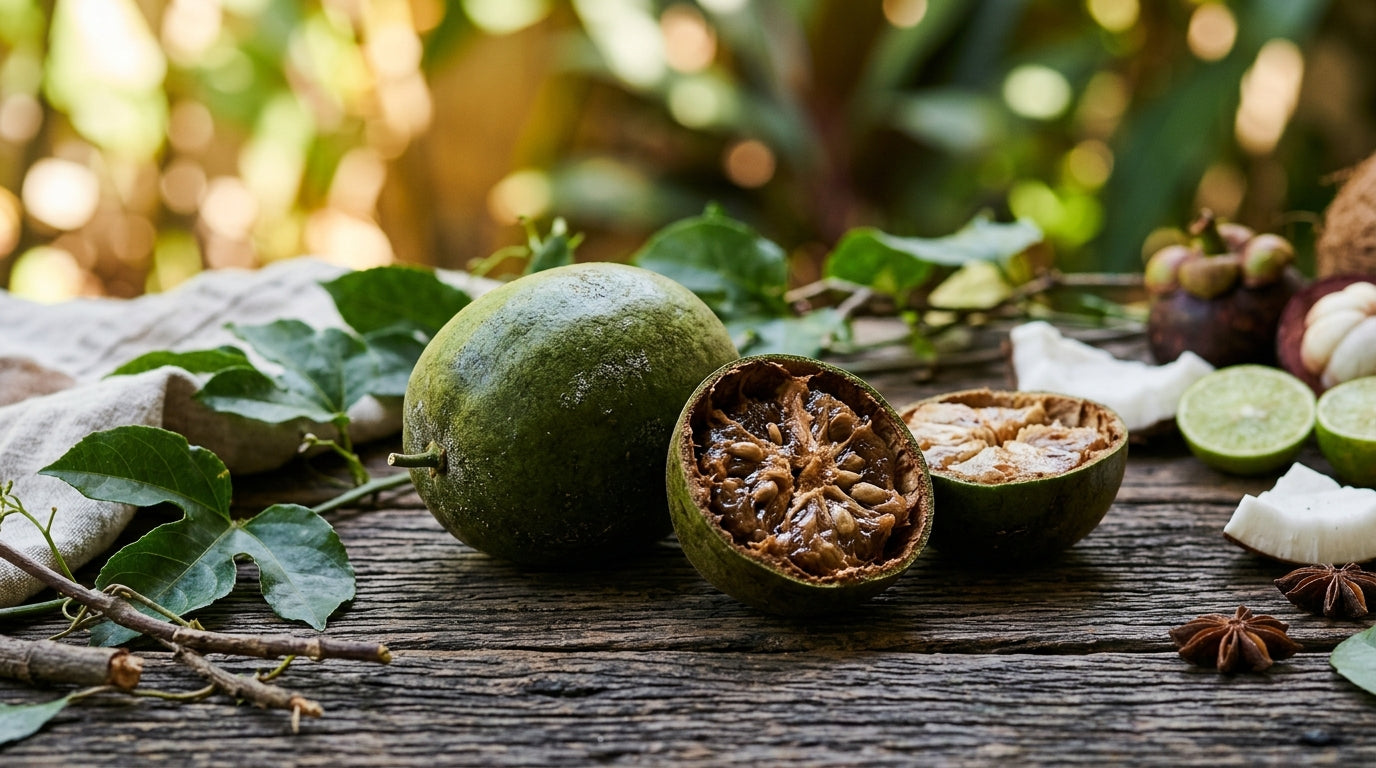
Mongongo nut (Schinziophyton rautanenii) is an African superfood containing 50–60% oil dominated by eleostearic acid (~40%), linoleic acid (~25%), and oleic acid (~15%), alongside exceptionally high vitamin E (γ-tocopherol up to 560 mg/100 g) that provides potent antioxidant and skin-protective activity. Its unique conjugated fatty acid profile, combined with minerals such as calcium, magnesium, zinc, and phosphorus, supports cardiovascular health, skin barrier integrity, and immune function, making it one of the most nutrient-dense wild-harvested nuts in southern Africa.

Origin
The Mongongo Nut (Schinziophyton rautanenii) is native to the arid and semi-arid landscapes of Southern Africa, thriving in regions like the Kalahari Desert. Revered as a "survival food" by indigenous communities, this resilient nut provides essential nourishment during droughts. It is valued for its unique fatty acid profile and robust nutritional content.
Potential benefits
- Supports cardiovascular health with a rich profile of omega-6 and omega-9 fatty acids.
- Enhances skin health through linoleic acid and vitamin E, deeply hydrating and strengthening the skin barrier.
- Provides robust antioxidant protection via flavonoids and vitamin E, combating oxidative stress.
- Contributes to bone and joint health by supplying essential minerals like calcium, magnesium, and phosphorus.
- Strengthens immune response with zinc and various antioxidants, aiding in infection prevention.
- Supports cognitive function, including mental clarity and memory, through its beneficial fatty acid composition.
How it works
The high oleic acid (omega-9) content in mongongo nut oil reduces LDL cholesterol oxidation by decreasing the susceptibility of LDL particles to peroxidative damage and supports endothelial nitric oxide synthase (eNOS) activity, promoting vasodilation. Linoleic acid (omega-6) is enzymatically converted via Δ6-desaturase into gamma-linolenic acid, which modulates ceramide biosynthesis in keratinocytes and reinforces the stratum corneum lipid barrier, thereby reducing transepidermal water loss (TEWL). Eleostearic acid, a conjugated linolenic acid isomer, activates peroxisome proliferator-activated receptor gamma (PPARγ), which may exert anti-inflammatory and lipid-lowering effects. Gamma-tocopherol scavenges reactive nitrogen species (particularly peroxynitrite) more effectively than alpha-tocopherol and inhibits cyclooxygenase-2 (COX-2) activity, providing dual antioxidant and anti-inflammatory protection at the cellular level.
What the research says
Currently, no published clinical trials specifically examine mongongo nut's therapeutic effects in humans. Research is limited to nutritional profiling studies that have identified its unique fatty acid composition and antioxidant content. Traditional use evidence from indigenous Kalahari populations suggests safety and nutritional value, but controlled studies are needed. The evidence base remains preliminary and requires rigorous clinical investigation.
Safety and interactions
Mongongo nuts are generally considered safe when consumed as part of traditional diets, with no widely reported adverse effects in ethnobotanical literature. Individuals with tree nut allergies should exercise caution, as cross-reactivity with other Euphorbiaceae-family seeds has not been thoroughly studied. Due to its high vitamin E (gamma-tocopherol) content, excessive supplemental intake could theoretically potentiate the anticoagulant effects of warfarin or other blood thinners by inhibiting vitamin K-dependent clotting factors; those on anticoagulant therapy should consult a healthcare provider. No specific CYP450 interactions have been documented for mongongo nut oil, but its high polyunsaturated fatty acid load may influence absorption of fat-soluble medications.
Suggested use
- Common forms: Roasted nuts, raw nuts, ground flour, cold-pressed oil.
- Preparation: Consume nuts roasted or raw, or use cold-pressed oil for culinary and topical applications.
- Dosage: 1–2 tablespoons of oil daily, or 1/4–1/2 cup of roasted nuts as a snack.
Frequently asked questions
What are the main benefits of mongongo nut for skin and hair?
Mongongo nut oil is rich in linoleic acid and gamma-tocopherol (vitamin E), which deeply hydrate the skin by reinforcing the ceramide-based lipid barrier and reducing transepidermal water loss. For hair, the oil's eleostearic and oleic acids coat the hair shaft, providing UV protection and reducing protein loss from chemical and heat damage. Its high antioxidant content also helps protect skin cells from premature aging caused by free radicals.
What does mongongo nut taste like and how is it eaten?
Mongongo nuts have a mild, slightly sweet, and subtly earthy flavor often compared to cashews or Brazil nuts. In southern African communities, they are traditionally eaten raw, roasted, or pounded into a paste and added to porridges and stews. The nut meat is also pressed to extract oil used both for cooking and as a cosmetic ingredient.
Is mongongo nut a true superfood and what nutrients does it contain?
Mongongo nut is considered a nutrient-dense superfood due to its exceptional concentration of healthy fats (50–60% oil), protein (~25–30 g per 100 g), gamma-tocopherol (up to 560 mg/100 g), calcium, magnesium, zinc, and phosphorus. Its caloric density and micronutrient richness made it a dietary staple for indigenous San communities for millennia. It delivers significantly more vitamin E per serving than almonds or sunflower seeds.
Where do mongongo nuts come from and how are they harvested?
Mongongo nuts come from the Schinziophyton rautanenii (Manketti) tree, native to the Kalahari sands of southern Africa, particularly Namibia, Botswana, Zambia, and Zimbabwe. The nuts are wild-harvested, primarily by organized groups of rural women who collect them from the ground after natural fruit fall or, uniquely, from elephant dung, as the hard nut shells survive intact through elephant digestion. This sustainable harvesting method supports both conservation and community livelihoods.
Can mongongo nut oil help with cardiovascular health?
Mongongo nut oil's high oleic acid content may support cardiovascular health by reducing LDL cholesterol oxidation and improving endothelial function through enhanced nitric oxide production. Its eleostearic acid fraction, a conjugated fatty acid, has been associated with PPARγ activation, which can modulate lipid metabolism and reduce inflammatory markers. However, dedicated human clinical trials on mongongo nut oil and heart health outcomes have not yet been conducted.
Is mongongo nut safe for people with tree nut allergies?
Mongongo nuts are tree nuts and can trigger allergic reactions in individuals with tree nut allergies, though cross-reactivity varies by specific allergy profile. People with documented tree nut allergies should consult an allergist before consuming mongongo nut products, as the severity of reactions can range from mild itching to anaphylaxis. If you have a known tree nut allergy, it's safest to avoid mongongo nut unless specifically cleared by your healthcare provider.
How does mongongo nut oil compare to other nut oils for skincare effectiveness?
Mongongo nut oil stands out for its exceptionally high linoleic acid content (around 40%) and natural vitamin E concentration, which exceed those found in many mainstream nut oils like almond or coconut oil. Its lightweight texture and rapid skin absorption make it particularly effective for barrier repair without the greasiness of heavier oils like macadamia. Clinical evidence suggests mongongo nut oil's antioxidant profile rivals argan oil while offering superior hydration for compromised skin barriers.
What is the recommended daily intake of mongongo nut or its oil for health benefits?
While traditional use suggests a small handful of mongongo nuts (approximately 1 ounce or 28 grams) daily, formal clinical dosing guidelines are limited due to sparse modern research on this ingredient. For mongongo nut oil used topically on skin, applying a few drops to affected areas 1–2 times daily is standard practice based on traditional and anecdotal evidence. Consult a healthcare practitioner for personalized dosing recommendations, as optimal intake may vary based on individual health status and dietary fat intake.
References
- https://www.ncbi.nlm.nih.gov/search/all/?term=Mongongo+Nut
- https://fdc.nal.usda.gov/fdc-app.html#/search?query=Mongongo+Nut
- https://doi.org/10.1016/j.foodres.2019.108815
- https://www.ncbi.nlm.nih.gov/pmc/articles/PMC6543559/
This article is educational and is not medical advice. Statements have not been evaluated by the FDA and are not intended to diagnose, treat, cure, or prevent any disease. Consult a healthcare professional before use.