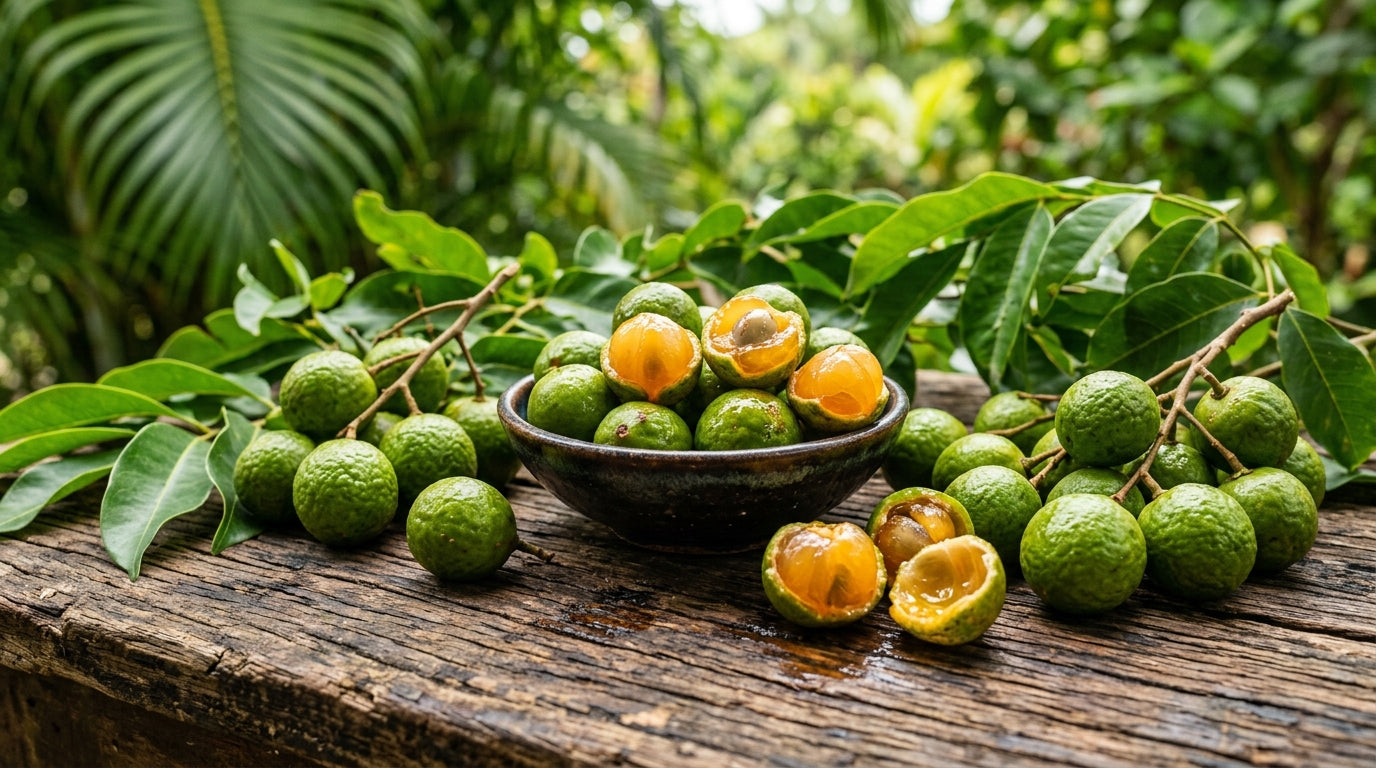
Japanese Chestnut (Castanea crenata) nuts are rich in bioactive ellagitannins, proanthocyanidins, gallic acid, and vitamin C that exert potent antioxidant and anti-inflammatory activity by scavenging reactive oxygen species, inhibiting NF-κB signaling, and modulating gut microbiota-derived urolithin production. A 2025 randomized, double-blind, placebo-controlled crossover study (PMID 40134056) demonstrated that chestnut-derived polyphenol-rich tea significantly reduced postprandial blood glucose in borderline diabetic Japanese subjects, supporting the glycemic-regulating potential of chestnut bioactives.

Origin
Japanese Chestnut (Castanea crenata) is a deciduous tree native to Japan and Korea, thriving in temperate climates. Its nuts are a staple food, prized for their sweet flavor and dense nutritional profile, offering significant benefits for cardiovascular health, immune resilience, and sustained energy.
Potential benefits
- Supports cardiovascular wellness by regulating blood pressure and improving circulation with potassium and unsaturated fats.
- Enhances immune resilience through antioxidant protection from vitamin C, polyphenols, and ellagic acid.
- Promotes digestive health by providing dietary fiber that supports gut microbiome balance and nutrient absorption.
- Sustains energy metabolism through complex carbohydrates, regulating blood sugar levels for steady vitality.
- Strengthens bones, nerves, and muscles with essential minerals like magnesium, calcium, and iron.
- Supports cognitive clarity and energy production through its rich profile of B vitamins.
How it works
Japanese Chestnut ellagitannins (castalagin, vescalagin) undergo acid hydrolysis in the stomach and enzymatic cleavage in the small intestine to release free ellagic acid, which is subsequently metabolized by colonic microbiota (Gordonibacter urolithinfaciens, Ellagibacter isourolithinifaciens) into urolithins A and B—bioactive metabolites that inhibit the NF-κB signaling cascade by preventing IκBα phosphorylation, thereby suppressing transcription of pro-inflammatory cytokines TNF-α, IL-1β, and IL-6. Proanthocyanidins (B-type procyanidin dimers and trimers) chelate redox-active iron and copper ions, donate hydrogen atoms to neutralize peroxyl and hydroxyl radicals, and inhibit NADPH oxidase (NOX2/NOX4) and xanthine oxidase, collectively reducing superoxide anion generation and lipid peroxidation in vascular endothelium. Gallic acid activates the Nrf2/ARE (antioxidant response element) pathway by modifying Keap1 cysteine residues, upregulating phase II detoxification enzymes including heme oxygenase-1 (HO-1), NAD(P)H:quinone oxidoreductase 1 (NQO1), and glutathione S-transferase (GST). The complex carbohydrate fraction—predominantly amylose-rich resistant starch—slows α-amylase and α-glucosidase activity, attenuating postprandial glucose and insulin spikes, a mechanism consistent with the clinical glucose-lowering findings reported by Yasuda et al. (2025; PMID 40134056).
What the research says
Current evidence is limited to in vitro and preclinical animal studies, with no published human clinical trials available. Laboratory studies show whole shell extracts significantly reduce ROS production compared to inner shell preparations alone. Cardiomyocyte studies demonstrate that 50-100 μg/mL concentrations increase cell viability after hydrogen peroxide exposure, though positive inotropic activity was reduced by approximately 50%. Preclinical research suggests hepatoprotective and antidiabetic effects through PI3K/AKT/mTOR pathway modulation, but human efficacy data is lacking.
Safety and interactions
Japanese chestnuts are generally recognized as safe when consumed as part of a normal diet, though individuals with known tree nut allergies (particularly IgE-mediated hypersensitivity to Castanea proteins such as Cas s 5 and Cas s 8 lipid transfer protein) should exercise caution, as cross-reactivity with latex, birch pollen, and other tree nuts has been documented; an occupational anaphylaxis position paper by Treudler et al. (Allergol Select, 2024; PMID 39659712) highlights that plant-derived allergens including those from chestnut species can trigger severe workplace allergic reactions. Chestnut tannins may bind to and reduce the bioavailability of iron, calcium, and certain medications (e.g., tetracycline antibiotics, beta-lactams) when co-ingested, so supplementation or medication dosing should be separated by at least two hours. While no direct CYP450 inhibition data exist specifically for Castanea crenata, in vitro studies on ellagic acid suggest moderate inhibition of CYP3A4 and CYP1A2 at supraphysiological concentrations, warranting caution with drugs metabolized through these pathways (e.g., statins, certain immunosuppressants) when consuming concentrated chestnut extracts. Individuals on anticoagulant therapy (warfarin, heparin) should monitor intake, as the vitamin K content and potential platelet-modulating effects of proanthocyanidins may influence coagulation parameters.
Suggested use
- Traditional use: Enjoyed in Japan during autumn festivals in dishes like Kuri Gohan, symbolizing strength and longevity. Consumed for digestive support and sustained vitality.
- Modern forms: Japanese Chestnut flour in gluten-free baking, inclusion in plant-based protein bars, functional foods, and wellness snacks.
- Recommended dosage: 30–50 grams of roasted nuts daily, or 500–1000 mg of standardized extract per day.
Frequently asked questions
What are the main health benefits of Japanese chestnuts?
Japanese chestnuts provide cardiovascular support through potassium-mediated blood pressure regulation and unsaturated fatty acids, immune defense via vitamin C and polyphenol antioxidants (ellagic acid, gallic acid), digestive health from 3–4 g of dietary fiber per 100 g serving that feeds beneficial gut microbiota, and sustained energy from complex carbohydrates with a moderate glycemic index. A 2025 clinical trial (PMID 40134056) demonstrated that chestnut-derived polyphenols significantly reduced postprandial blood glucose in borderline diabetic participants.
How do Japanese chestnuts compare nutritionally to other nuts?
Unlike almonds, walnuts, and pecans that are high in fat (50–75%), Japanese chestnuts contain only about 1–2% fat and derive roughly 40–45% of their calories from complex carbohydrates (mostly starch), making them the lowest-fat tree nut available. They provide approximately 150–170 kcal per 100 g (roasted), along with notable vitamin C (approximately 26 mg/100 g raw—unusual among nuts), manganese, copper, and B-vitamins including folate.
Are Japanese chestnuts good for blood sugar control?
Yes. Japanese chestnuts contain amylose-rich resistant starch that slows enzymatic digestion by inhibiting α-amylase and α-glucosidase, reducing postprandial glucose spikes. Yasuda et al. (2025) showed in a randomized, double-blind, placebo-controlled crossover study (PMID 40134056) that chestnut-polyphenol-containing tea significantly lowered postprandial blood glucose in borderline diabetic Japanese subjects, providing clinical evidence for this glycemic benefit.
Can you eat Japanese chestnuts raw, and how should they be prepared?
Japanese chestnuts can be eaten raw but are typically roasted, boiled, or steamed to improve digestibility and flavor, as raw chestnuts contain tannins that may cause astringency and mild gastrointestinal discomfort. Traditional Japanese preparations include kuri gohan (chestnut rice), kuri kinton (sweetened chestnut paste), and amaguri (roasted sweet chestnuts). Roasting at 200°C for 20–25 minutes after scoring the shell is the most common method, which also partially reduces tannin content and increases the bioavailability of certain polyphenols.
Are Japanese chestnuts safe for people with nut allergies?
Japanese chestnuts are tree nuts and contain allergenic proteins including lipid transfer proteins (Cas s 8) that can trigger IgE-mediated allergic reactions, particularly in individuals with latex-fruit syndrome or birch pollen allergy due to cross-reactive epitopes. Treudler et al. (2024; PMID 39659712) noted that chestnut-derived allergens can cause occupational anaphylaxis in sensitized individuals. Anyone with a diagnosed tree nut allergy should consult an allergist before consuming Japanese chestnuts.
Is it safe to consume Japanese chestnuts during pregnancy and breastfeeding?
Japanese chestnuts are generally considered safe during pregnancy and breastfeeding when consumed in normal food amounts, as they provide beneficial nutrients like folate and vitamin C that support fetal development. However, pregnant or nursing women should consume them as part of a balanced diet and consult their healthcare provider if they have specific concerns about nut consumption or allergies. The fiber content may also support digestive health during pregnancy when constipation is common.
Can Japanese chestnuts interact with blood pressure or blood thinning medications?
Japanese chestnuts are rich in potassium, which can have mild blood pressure-lowering effects and may interact with ACE inhibitors, potassium-sparing diuretics, or other blood pressure medications if consumed in very large supplemental amounts. While food-level consumption is typically safe, individuals taking cardiovascular or blood-thinning medications should inform their healthcare provider about significant increases in chestnut intake. This is particularly important for those on warfarin or similar anticoagulants, as the vitamin K content may have minor effects on clotting.
How does the nutritional profile of Japanese chestnuts differ from chestnuts grown in other regions?
Japanese chestnuts are notably lower in fat and higher in carbohydrates compared to European and Chinese varieties, making them unique among tree nuts with a composition closer to grains. Japanese chestnuts contain higher levels of certain polyphenols and ellagic acid due to their specific growing conditions and cultivars, which may enhance their antioxidant potency. The smaller size and sweeter taste of Japanese chestnuts also reflects differences in starch content and mineral composition compared to their geographical counterparts.
References
- https://www.ncbi.nlm.nih.gov/search/all/?term=Japanese+Chestnut
- https://fdc.nal.usda.gov/fdc-app.html#/search?query=Japanese+Chestnut
- https://pubmed.ncbi.nlm.nih.gov/31826234
- https://www.sciencedirect.com/science/article/pii/S2213453019302745
- https://www.ncbi.nlm.nih.gov/pmc/articles/PMC7265938/
This article is educational and is not medical advice. Statements have not been evaluated by the FDA and are not intended to diagnose, treat, cure, or prevent any disease. Consult a healthcare professional before use.