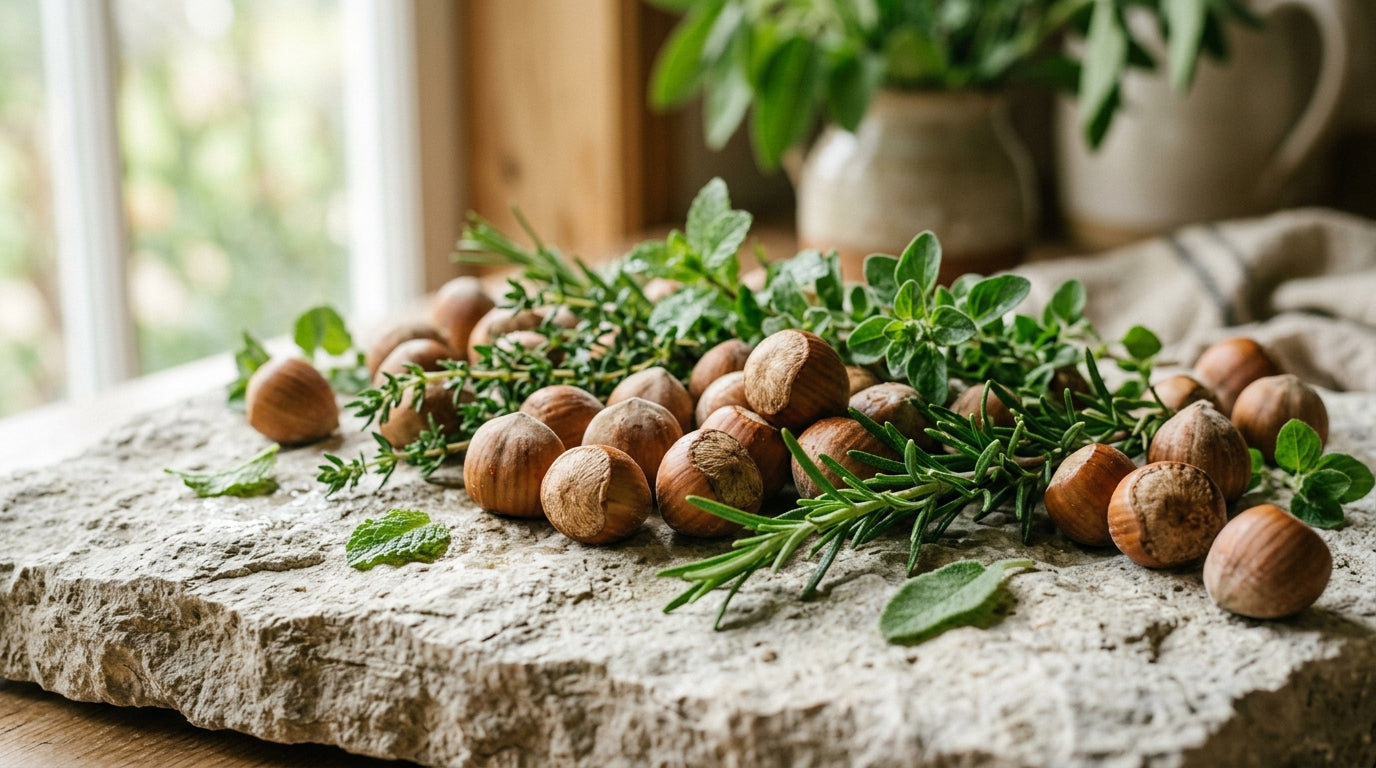
Chilean Red Walnut (Juglans regia) contains ellagic acid and polyphenols that inhibit tumor cell proliferation and produce urolithin A for neuroprotection via PKA/CREB/BDNF pathway activation. The red coloration indicates orange spot disorder from oxidative stress and lipid peroxidation, not bacterial infection.

Origin
The Chilean Red Walnut (Juglans regia 'Red') is a unique cultivar native to Chile's central valleys. Distinguished by its vibrant red skin, this nut is exceptionally rich in omega-3 fatty acids, polyphenols, and anthocyanins, offering superior antioxidant and cardiovascular benefits.
Potential benefits
- Supports cardiovascular health by lowering LDL cholesterol and reducing inflammation through omega-3 fatty acids (ALA) and polyphenols.
- Enhances cognitive function and provides neuroprotection with healthy fats and brain-boosting polyphenols.
- Delivers potent antioxidant and cellular defense through anthocyanins, melatonin, and vitamin E, reducing oxidative stress and aging damage.
- Stabilizes blood sugar levels and supports metabolic health with dietary fiber and plant sterols.
- Promotes skin and hair health by delivering biotin, B vitamins, and collagen-supporting nutrients.
How it works
Ellagic acid and polyphenols inhibit tumor cell proliferation while enhancing acetylcholinesterase activity and liver antioxidant function. Gut microbiota convert ellagic acid to urolithin A, which provides neuroprotection by up-regulating the PKA/CREB/BDNF signaling pathway against oxidative damage. The characteristic red appearance results from citric acid accumulation and TAG hydrolysis causing reactive oxygen species generation.
What the research says
Evidence is limited to in vitro and animal studies with no human clinical trials reported. Laboratory studies show heteropolysaccharides from walnut husks strongly inhibited A172 glioblastoma cell viability and proliferation. Walnut polyphenols demonstrated antimicrobial activity against ciprofloxacin-resistant Gram-positive and Gram-negative bacteria. Twelve identified polyphenols improved glucose and lipid metabolism in animal models, though specific dosages and quantified outcomes were not reported.
Safety and interactions
No specific safety concerns, drug interactions, or contraindications are documented for Chilean Red Walnut consumption. The orange spot disorder represents a quality defect related to oxidative imbalance rather than toxicity concerns. Traditional uses include treating infections and thyroid disorders without reported adverse effects. General walnut consumption appears safe, though pregnant women should consult healthcare providers before therapeutic use.
Suggested use
- Common Forms: Whole nuts (halves).
- Dosage: Consume 28 grams (approximately 14 walnut halves) daily.
- Storage: Store in a cool, airtight container to maintain freshness.
- Applications: Integrate into daily diet for cardiovascular, cognitive, metabolic, and skin health benefits.
Frequently asked questions
What causes the red color in Chilean Red Walnuts?
The red coloration results from orange spot disorder, a physiological condition causing citric acid accumulation and lipid peroxidation in the embryo. This creates oxidative stress and reactive oxygen species generation, not bacterial infection.
What are the main bioactive compounds in Chilean Red Walnuts?
Key compounds include ellagic acid, gallic acid, walnut A polyphenol, and polysaccharides that convert to urolithin A. These work through PKA/CREB/BDNF pathway activation and acetylcholinesterase inhibition.
Are there clinical studies on Chilean Red Walnut benefits?
Human clinical trials are not available; evidence comes from in vitro studies showing glioblastoma cell inhibition and antimicrobial effects. Animal studies demonstrate glucose and lipid metabolism improvements, but specific dosages and outcomes lack quantification.
Is Chilean Red Walnut safe to consume regularly?
No safety concerns or drug interactions are documented for regular consumption. The orange spot represents a quality issue, not toxicity, and traditional use for infections shows no adverse effects.
How does Chilean Red Walnut support brain health?
Urolithin A produced from ellagic acid provides neuroprotection by up-regulating PKA/CREB/BDNF signaling pathways. Polyphenols enhance acetylcholinesterase inhibition and provide antioxidant defense against oxidative brain damage.
How much Chilean Red Walnut should I consume daily for health benefits?
A typical recommended dose is 1–1.5 ounces (about 28–42 grams or a small handful) of Chilean Red Walnuts per day to obtain meaningful cardiovascular and cognitive benefits. This amount provides adequate omega-3 fatty acids (ALA) and polyphenols without excess calories. Consistency is more important than large single doses, as regular consumption allows the body to maximize the anti-inflammatory and antioxidant effects.
Is Chilean Red Walnut safe for children and during pregnancy?
Chilean Red Walnuts are generally safe for children and pregnant women when consumed in moderate amounts as part of a balanced diet, provided there is no tree nut allergy. The omega-3 content (ALA) supports fetal brain development, making them beneficial during pregnancy, though individual medical advice should always be sought. Parents should introduce them gradually to young children and monitor for any allergic reactions, as nut allergies are common in childhood.
Does Chilean Red Walnut interact with blood thinners or cholesterol medications?
Chilean Red Walnuts may have mild anticoagulant properties due to their polyphenol content, so individuals taking blood thinners like warfarin should maintain consistent intake and consult their healthcare provider. The nut's cholesterol-lowering effect through ALA and polyphenols can complement statin therapy but should not replace prescribed medications without medical supervision. No major contraindications with common drugs have been reported, but moderation and medical guidance are recommended for those on multiple medications.
References
- https://www.ncbi.nlm.nih.gov/search/all/?term=Chilean+Red+Walnut
- https://fdc.nal.usda.gov/fdc-app.html#/search?query=Chilean+Red+Walnut
- https://doi.org/10.1016/j.jnutbio.2020.04.005
- https://www.sciencedirect.com/science/article/pii/S221343432030287X
- https://www.ncbi.nlm.nih.gov/pmc/articles/PMC7655588/
This article is educational and is not medical advice. Statements have not been evaluated by the FDA and are not intended to diagnose, treat, cure, or prevent any disease. Consult a healthcare professional before use.