No human clinical trials have been conducted on Hawaiian Uhaloa (Waltheria indica) for asthma, cough, or any other indication as of the available literature. The totality of mechanistic evidence rests on in vitro macrophage inhibition studies identifying 16 quinoline alkaloids with anti-inflammatory activity against LPS-induced cytokine release, with no reported IC50 values, pharmacokinetic parameters, or dose-response curves in human subjects. Ethnobotanical documentation from Native Hawaiian healing practice provides consistent traditional endorsement for respiratory and inflammatory use, which motivates further research but does not constitute clinical evidence. Until prospective human trials with defined endpoints, standardized extracts, and adequate sample sizes are conducted, confidence in clinical recommendations remains very low.

Origin
Waltheria indica is a pantropical shrub native to Hawaii and widely distributed across the Pacific Islands, tropical Americas, Africa, and Asia, where it grows in dry, disturbed, and coastal lowland habitats. In Hawaii, it is considered an indigenous or naturalized plant deeply embedded in Native Hawaiian healing traditions, thriving in open, sunny, low-elevation environments. It is not commercially cultivated at scale; plant material is typically wildcrafted or grown in traditional medicinal gardens by practitioners of lāʻau lapaʻau, the Hawaiian system of herbal medicine.
Potential benefits
- Anti-Inflammatory Activity: Root-derived quinoline alkaloids inhibit key inflammatory mediators (IL-1β, TNF-α, PGE2, and nitrite) in LPS-stimulated RAW 264.7 macrophages in vitro, supporting the traditional use of Uhaloa for inflammatory respiratory conditions like asthma.
- Respiratory and Asthma Relief: Native Hawaiian healers have long prepared teas and decoctions from Uhaloa roots, leaves, and flowers to soothe asthmatic airways and suppress coughing, with astringent and anti-inflammatory phytochemicals likely contributing to mucosal relief.
- Antimicrobial Potential: Ethnobotanical records and preliminary phytochemical analyses indicate activity against infectious agents, consistent with traditional use for throat infections and inflammatory oral conditions treated via root tea rinses.
- Analgesic and Tonic Properties: Traditional Hawaiian medicine attributes analgesic and tonic effects to Uhaloa preparations, properties corroborated by the presence of quinoline alkaloids and polyphenolics that modulate pain-signaling pathways.
- Antioxidant Support: Polyphenolic constituents in Waltheria indica tissues contribute free-radical scavenging activity, potentially protecting airway and systemic tissues from oxidative stress associated with chronic inflammatory conditions.
- Oral and Mucosal Health: Astringent compounds in Uhaloa preparations have traditionally been used as oral rinses for sore throats and mouth infections, with anti-inflammatory alkaloids likely reducing mucosal inflammation and microbial burden.
- Immunomodulatory Effects: Suppression of macrophage-derived cytokines (TNF-α, IL-1β) by isolated quinoline alkaloids suggests a capacity to modulate innate immune responses, which may underlie the plant's broad traditional use across inflammatory and infectious conditions.
How it works
The primary documented mechanism of Waltheria indica involves quinoline alkaloids isolated from root extracts that inhibit the NF-κB-mediated inflammatory cascade in activated macrophages, reducing downstream production of nitric oxide, prostaglandin E2 (PGE2), interleukin-1β (IL-1β), and tumor necrosis factor-alpha (TNF-α) in LPS-stimulated RAW 264.7 cells in vitro. These alkaloids are structurally positioned to interfere with cyclooxygenase and inducible nitric oxide synthase (iNOS) activity, thereby dampening both the eicosanoid and reactive nitrogen species arms of acute inflammation. Astringent tannins and polyphenolics present in leaf and bark tissues contribute additional antioxidant activity by scavenging reactive oxygen species and chelating pro-oxidant metal ions. Collectively, these mechanisms support bronchial smooth muscle relaxation and reduced airway inflammation, providing a plausible pharmacological rationale for the traditional use of Uhaloa in asthma and cough management.
What the research says
The scientific evidence base for Waltheria indica is sparse and almost exclusively preclinical: the most substantial published work originates from University of Hawaiʻi at Hilo researchers who isolated and characterized 16 novel quinoline alkaloids from root extracts and demonstrated their anti-inflammatory activity in macrophage cell culture models, without reporting in vivo animal data or human trials. No randomized controlled trials, observational human studies, or pharmacokinetic studies were identified in peer-reviewed literature for this species. Broader ethnopharmacological surveys of Waltheria indica across Africa and South America have documented antimicrobial and anti-inflammatory activities in crude extracts, but these studies lack standardization of active compound concentrations and do not translate directly to the Hawaiian chemotype. The overall evidence is rated preliminary; clinical conclusions about efficacy in asthma, cough, or any condition cannot be drawn from currently available data.
Safety and interactions
No systematic toxicology studies or clinical safety assessments have been conducted on Waltheria indica, and the absence of reported adverse events in traditional use records suggests a generally favorable safety profile at customary preparation doses, though this cannot be taken as formal evidence of safety. Preclinical data do not raise immediate cytotoxicity flags, and traditional astringent and tonic use supports a low acute toxicity profile; however, the presence of quinoline alkaloids warrants caution, as this compound class can have hepatotoxic potential at high doses in other species. No drug interaction studies exist; theoretically, anti-inflammatory alkaloids could potentiate the effects of NSAIDs, corticosteroids, or immunosuppressants, and individuals on these medications should consult a healthcare provider before use. Safety in pregnancy, lactation, pediatric populations, and individuals with liver or kidney disease has not been evaluated, and use in these groups is not recommended until adequate data are available.
Suggested use
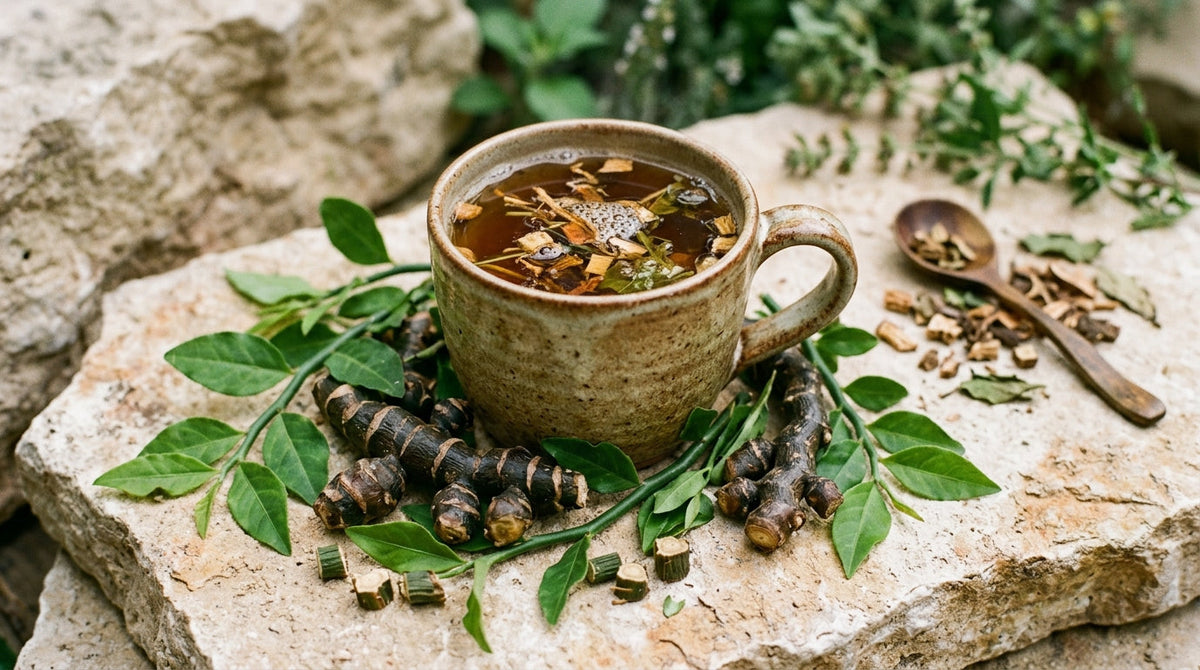
- Traditional Tea (Root/Leaf Decoction): Roots, leaves, flowers, and buds are simmered in water for 10–20 minutes; consumed orally as 1–2 cups per day in Hawaiian lāʻau lapaʻau practice for asthma and cough; no standardized dose established.
- Oral Rinse: Cooled root or leaf decoction used as a gargle or mouth rinse for throat infections and oral inflammation; frequency based on traditional practitioner guidance.
- Dried Root Powder: Used in some Pacific traditional preparations, though no commercial standardized extract or capsule form is currently available from Waltheria indica.
- Standardization: No standardized extract (e.g., % quinoline alkaloids) exists commercially; active compound concentrations in traditional preparations are unknown.
- Dosage Caveat: All dosage information is ethnobotanical; no clinical trial has established a safe or effective dose range for any condition, and self-medication without practitioner guidance is not recommended.
Frequently asked questions
What is Hawaiian Uhaloa used for traditionally?
In Native Hawaiian healing (lāʻau lapaʻau), Uhaloa (Waltheria indica) has been traditionally used to treat asthma, hoarse coughs, sore throats, arthritis, and various inflammatory and infectious conditions. Preparations include teas and decoctions made from the roots, leaves, flowers, and buds, used both as oral drinks and gargled rinses. These uses reflect the plant's documented anti-inflammatory and astringent phytochemical properties.
What are the active compounds in Uhaloa (Waltheria indica)?
University of Hawaiʻi at Hilo researchers isolated 16 novel quinoline alkaloids from Waltheria indica roots, several of which showed significant anti-inflammatory activity in laboratory macrophage models. The plant also contains polyphenolic tannins, flavonoids, and coumarins in its leaves and aerial parts. Exact concentrations of these compounds in traditional preparations have not been quantified in the published literature.
Is there clinical trial evidence supporting Uhaloa for asthma?
No human clinical trials have been conducted on Uhaloa (Waltheria indica) for asthma or any other condition as of current available literature. The existing evidence is limited to in vitro studies showing that isolated quinoline alkaloids inhibit inflammatory cytokines (IL-1β, TNF-α, PGE2) in activated macrophage cell cultures. While this provides a plausible mechanistic basis for traditional use, it does not constitute clinical proof of efficacy.
Is Hawaiian Uhaloa the same plant as Cyperus articulatus?
No, Hawaiian Uhaloa refers to Waltheria indica, a member of the Malvaceae family used in Native Hawaiian healing traditions. Cyperus articulatus (priprioca) is a completely distinct species from the Cyperaceae family, native to the Amazon region of South America, with no documented Hawaiian ethnobotanical association. The two plants are occasionally confused in ingredient databases but have separate botanical identities, phytochemistries, and traditional use contexts.
What is the recommended dose of Uhaloa and is it safe?
No standardized or clinically validated dose has been established for Uhaloa (Waltheria indica); traditional Hawaiian practice involves drinking 1–2 cups of root or leaf decoction daily for respiratory conditions, guided by practitioner knowledge. No major adverse effects have been reported in traditional use records, but formal toxicology studies are absent and the quinoline alkaloid content warrants caution at high doses. Pregnant or lactating individuals, and those taking anti-inflammatory medications or immunosuppressants, should consult a healthcare provider before use.
Does Hawaiian Uhaloa interact with asthma medications or corticosteroids?
While Uhaloa's anti-inflammatory compounds (quinoline alkaloids) support respiratory function, there is limited clinical data on specific interactions with prescription asthma medications like albuterol or inhaled corticosteroids. Because Uhaloa may have additive effects on inflammatory pathways, individuals taking asthma medications should consult their healthcare provider before adding Uhaloa supplements to avoid unintended synergistic effects. No major contraindications have been documented, but personalized medical guidance is recommended for concurrent use.
References
- https://pubmed.ncbi.nlm.nih.gov/?term=hawaiian+uhaloa+waltheria+indica
- https://pubmed.ncbi.nlm.nih.gov/31686273
This article is educational and is not medical advice. Statements have not been evaluated by the FDA and are not intended to diagnose, treat, cure, or prevent any disease. Consult a healthcare professional before use.