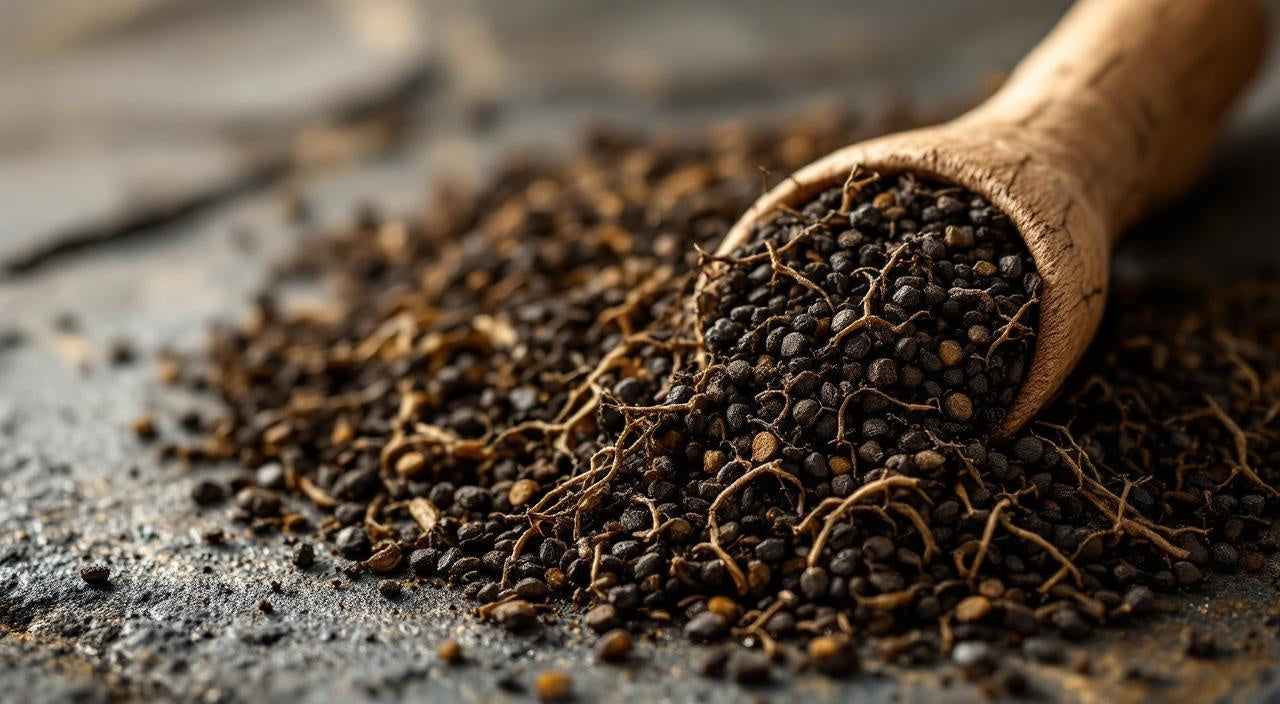
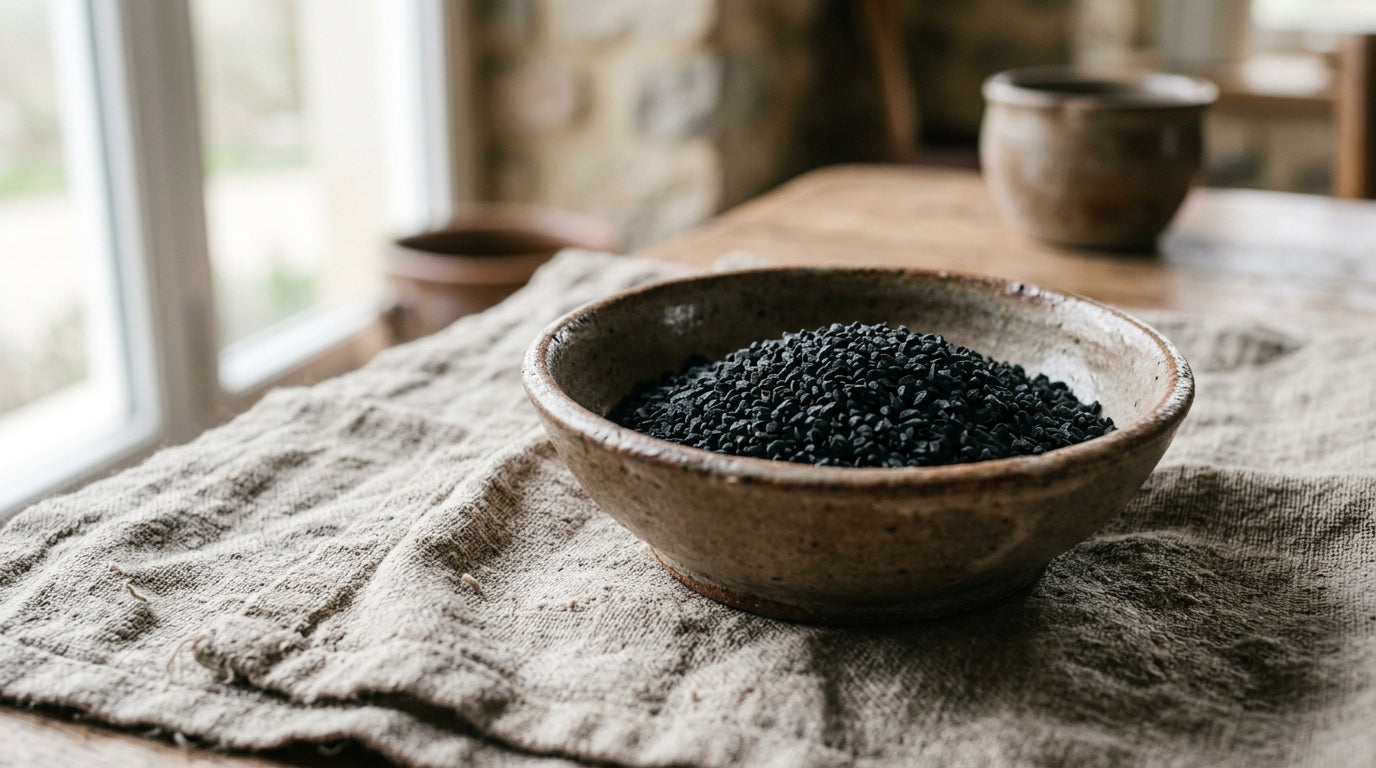
Black corn (Zea mays L.) contains exceptionally high concentrations of anthocyanins, particularly cyanidin and pelargonidin-3-glucoside derivatives, which provide potent antioxidant activity by stabilizing free radicals through structural conjugation. These compounds demonstrate cellular protective mechanisms by reducing lipid peroxidation while enhancing endogenous antioxidant enzyme activities including catalase, thioredoxin peroxidase, and superoxide dismutase.

Origin
Black Corn (Zea mays), also known as Maiz Morado, is a heritage variety of corn native to the Andean highlands of South America, particularly Peru. Cultivated for millennia by Incan and pre-Incan civilizations, it thrives in temperate climates and is now grown globally. This distinctive corn is highly valued for its exceptional anthocyanin content, offering powerful antioxidant and cardiovascular benefits.
Potential benefits
- Provides potent antioxidant benefits through its high concentration of anthocyanins, which combat oxidative stress and promote cellular health.
- Supports cardiovascular health by improving blood circulation, helping to regulate blood pressure, and lowering LDL cholesterol levels.
- Exerts anti-inflammatory properties, potentially reducing the risk of chronic diseases.
- Aids in regulating blood sugar levels due to its complex carbohydrates and dietary fiber, supporting glycemic balance.
- Promotes healthy aging by protecting against cellular damage and supporting overall vitality.
How it works
Anthocyanins in black corn, primarily cyanidin, pelargonidin, and peonidin-3-glucoside, provide antioxidant activity through structural conjugation that stabilizes free radicals. Phenolic acids, particularly ferulic acid, reduce free radical formation and eliminate reactive oxygen species while preventing oxidation-related biomolecule degradation. At the cellular level, these compounds significantly reduce malondialdehyde concentrations while increasing endogenous antioxidant enzyme activities including catalase, thioredoxin peroxidase, and superoxide dismutase.
What the research says
Current evidence is limited to in vitro and animal studies, with no human clinical trials available in the literature. In mouse organ studies, purple corn extract demonstrated significant reduction in lipid peroxidation markers while increasing antioxidant enzyme activities in kidney, liver, and brain tissues. Raw purple corn cob material contains 127.47 ± 0.59 mg GAE/g dry matter total phenolic content and 125.76 ± 1.23 mg TA/g dry matter total anthocyanins. Industrial processing reduces anthocyanin content by 37-75% and antioxidant capacity by 28-55%, though levels remain relatively high post-processing.
Safety and interactions
Safety data for black corn supplementation is currently limited, with no documented adverse effects, drug interactions, or contraindications available in the literature. The lack of human clinical trials means safety profiles during pregnancy, lactation, and in pediatric populations remain undefined. Individuals with corn allergies should exercise caution when consuming black corn products. Further in vivo studies are needed to establish comprehensive safety parameters and potential interactions with medications.
Suggested use
- Whole Kernels: Use in traditional dishes like tamales, or add to soups, salads, and stews for texture and nutrients.
- Flour: Grind into flour for gluten-free baking (breads, cakes, tortillas) or as a thickener for stews and porridges.
- Beverage: Brew into 'Chicha Morada,' a traditional Peruvian drink, by boiling with spices and fruit for an antioxidant-rich elixir.
- Powdered Form: Blend into smoothies or health drinks for convenient daily consumption.
- Dosage: Incorporate 1-2 servings (e.g., ½ cup cooked kernels or 30-60g flour) daily for optimal antioxidant and cardiovascular benefits.
Frequently asked questions
What makes black corn different from regular corn nutritionally?
Black corn contains exceptionally high concentrations of anthocyanins (125.76 ± 1.23 mg TA/g dry matter) and phenolic compounds that provide potent antioxidant activity not found in yellow corn varieties. These bioactive compounds include cyanidin, pelargonidin, and peonidin-3-glucoside derivatives that give the corn its distinctive purple-black coloration.
Does cooking black corn reduce its health benefits?
Industrial processing including nixtamalization and cooking reduces anthocyanin content by 37-75% and antioxidant capacity by 28-55%. However, processed black corn retains relatively high levels of beneficial compounds compared to other cereal grains, maintaining significant antioxidant activity even after cooking.
What specific antioxidant compounds are found in black corn?
Black corn contains six main anthocyanin types including cyanidin, pelargonidin, and peonidin-3-glucoside derivatives, plus eight identified phenolic compounds: chlorogenic acid, caffeic acid, rutin, ferulic acid, morin, quercetin, naringenin, and kaempferol. Additional bioactive compounds include carotenoids, phytoesterols, vitamin E, lignans, and policosanols in smaller proportions.
Is there clinical evidence supporting black corn's health benefits?
Current evidence is limited to laboratory and animal studies with no human clinical trials available. Mouse studies show purple corn extract reduces lipid peroxidation while increasing antioxidant enzyme activities in organs, but human efficacy and safety data are lacking.
What is the traditional origin and use of black corn?
Black corn is a heritage variety native to the Andean highlands, particularly Peru, cultivated for millennia by Incan and pre-Incan civilizations. Traditional uses include corn silk tea preparation in various cultures for treating kidney stones, urinary tract infections, and fluid retention, though these applications require scientific validation.
Can black corn supplements interact with blood pressure or cholesterol medications?
Black corn may have additive effects when combined with antihypertensive or statin medications due to its blood pressure-lowering and LDL-cholesterol-reducing properties. It is important to consult with a healthcare provider before taking black corn supplements if you are currently on medications for cardiovascular health, as dosage adjustments may be necessary. Monitoring blood pressure and cholesterol levels regularly can help identify any significant interactions.
What form of black corn supplement provides the best absorption of anthocyanins?
Concentrated extracts and standardized anthocyanin formulations typically offer superior bioavailability compared to whole grain powders, as the extraction process isolates and concentrates the active compounds. Liquid extracts or capsules with enhanced absorption technology may be more efficiently utilized by the body than ground black corn flour. However, whole black corn consumed with healthy fats can still provide meaningful anthocyanin absorption through the diet.
Who would benefit most from taking black corn supplements?
Individuals with elevated blood pressure, high cholesterol, or those at risk for cardiovascular disease may experience the most significant benefits from black corn supplementation. People seeking additional antioxidant protection against oxidative stress and chronic inflammation, as well as those with limited dietary access to anthocyanin-rich foods, are also ideal candidates. Anyone with a family history of heart disease or metabolic disorders could benefit from consulting a healthcare provider about adding black corn to their wellness routine.
References
- https://www.frontiersin.org/articles/10.3389/fnut.2019.00121/full
- https://www.webmd.com/diet/health-benefits-corn?utm_source=chatgpt.com
- https://pubmed.ncbi.nlm.nih.gov/29084212/
- https://pubmed.ncbi.nlm.nih.gov/?term=Black+Corn
- https://www.ncbi.nlm.nih.gov/pmc/articles/PMC6315794/
This article is educational and is not medical advice. Statements have not been evaluated by the FDA and are not intended to diagnose, treat, cure, or prevent any disease. Consult a healthcare professional before use.