Nagami kumquat (Fortunella margarita) contains volatile oils with d-limonene (41.64%) and phenolic compounds like DGPP that demonstrate anticancer and tyrosinase inhibitory activities in laboratory studies. The volatile oil induces apoptosis in prostate cancer cells through caspase-8 activation and NF-κB inhibition, while DGPP achieves 71.7% tyrosinase inhibition at 2.5 mM concentration.

Origin
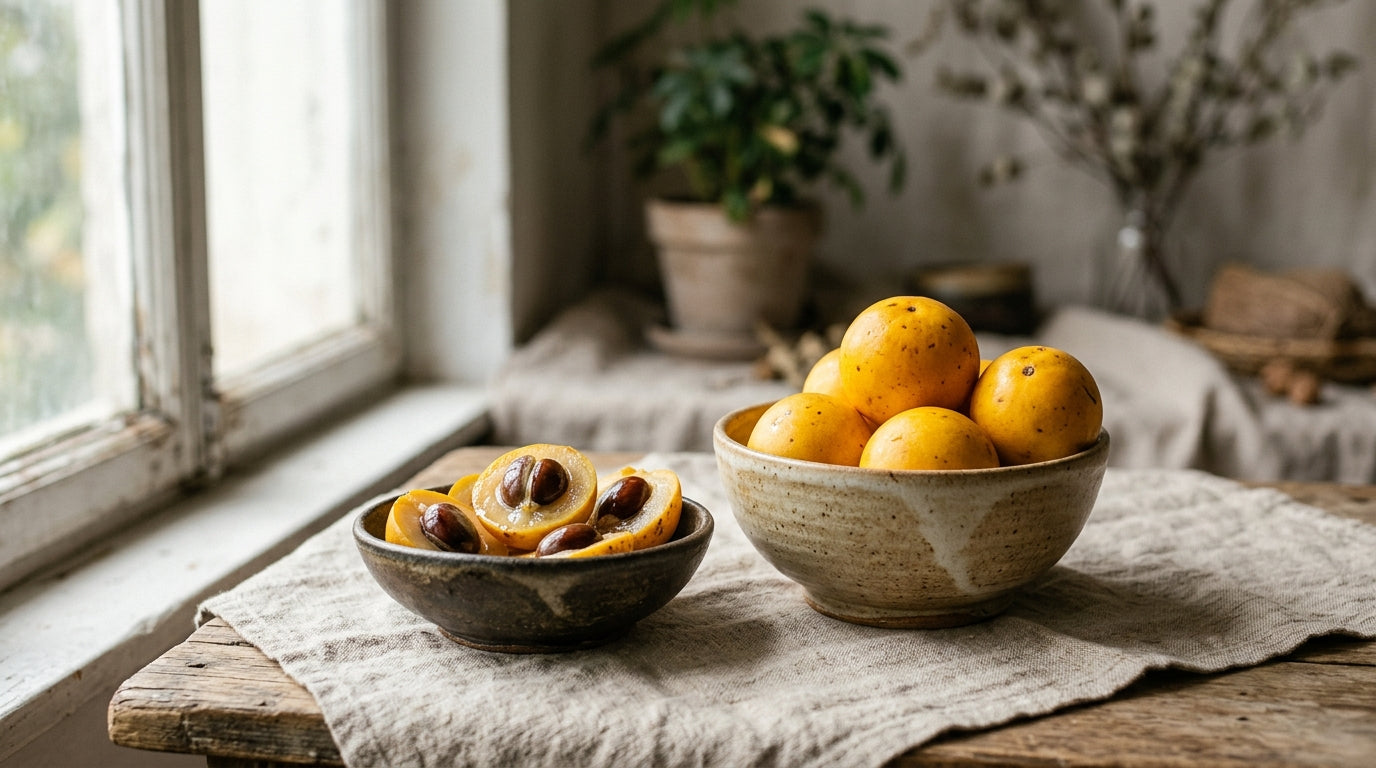
Nagami Kumquat (Fortunella margarita) is a small, oval citrus fruit native to China and Southeast Asia. It thrives in subtropical climates and is cherished for its unique sweet-tart profile, with a sweet, edible peel and tangy pulp. This vibrant fruit is a popular choice for culinary and wellness uses, offering significant benefits for functional nutrition.
Potential benefits
- Supports immunity and collagen production due to its rich Vitamin C content.
- Reduces oxidative stress and inflammation through the high concentration of flavonoids in its peel.
- Aids digestion and promotes gut balance with its high dietary fiber content.
- May improve insulin sensitivity and metabolic health, contributing to blood sugar regulation.
- Promotes youthful, radiant skin through the combined action of Vitamin C and antioxidants.
How it works
The volatile oil's d-limonene (41.64%) and β-myrcene (16.54%) induce apoptosis in cancer cells via extrinsic pathway activation through caspase-8 cleavage, while upregulating bax/bcl-2 and p53 tumor suppressor genes. The phenolic compound DGPP (diosmetin-2''-O-α-L-rhamnosyl(1→2)-β-D-glucopyranoside) inhibits tyrosinase enzyme activity and provides antioxidant protection. Additional flavonoids like apigenin-8-C-neohesperidoside enhance NK cell activity and interferon-γ production for immune modulation.
What the research says
Current evidence is limited to in vitro cell studies and animal models, with no human clinical trials reported. Laboratory studies show volatile oil at 200 ppm concentration inhibited prostate cancer LNCaP cell proliferation by 55-63.4% over 24-72 hours with confirmed DNA fragmentation. Hot water peel extracts demonstrated 75.5% tyrosinase inhibition at 2.5 mM, significantly outperforming arbutin (25.7%). While promising for antioxidant and anticancer potential, human studies are needed to establish clinical efficacy and optimal dosing.
Safety and interactions
No specific safety data, drug interactions, or contraindications have been documented for Nagami kumquat in the available research. Essential oil components showed weak antimicrobial activity, suggesting low potency for adverse effects in typical consumption amounts. General citrus precautions may apply, including potential allergic reactions in sensitive individuals and possible phototoxicity from limonene exposure to sunlight. Pregnant and breastfeeding women should consult healthcare providers before using concentrated extracts, as safety during pregnancy has not been established.
Suggested use
- Traditionally eaten whole, or used in jams, syrups, and candied peel for both sweet and savory dishes.
- Modern applications include incorporation into smoothies, dressings, functional beverages, and skincare formulations.
- Recommended intake: 1–2 fresh kumquats daily or 200–400 mg of extract.
Frequently asked questions
What is the main active compound in Nagami kumquat?
The primary bioactive compound is d-limonene, comprising 41.64% of the volatile oil, along with β-myrcene (16.54%) and the phenolic compound DGPP. These compounds demonstrate anticancer and antioxidant properties in laboratory studies.
How effective is Nagami kumquat against cancer cells?
In vitro studies show volatile oil at 200 ppm concentration inhibited prostate cancer cell proliferation by 55-63.4% over 24-72 hours through apoptosis induction. However, these are laboratory studies only, and human clinical trials have not been conducted.
Can Nagami kumquat help with skin whitening?
The phenolic compound DGPP from kumquat peel extract shows 71.7% tyrosinase inhibition at 2.5 mM concentration, significantly better than arbutin (25.7%). This suggests potential for skin lightening applications, though human studies are needed.
Is Nagami kumquat safe to consume regularly?
No specific safety concerns have been documented for normal consumption amounts, and the essential oils show weak antimicrobial activity suggesting low toxicity. However, concentrated extracts lack safety data, and individuals with citrus allergies should exercise caution.
What's the difference between Nagami and other kumquat varieties?
Nagami kumquat (Fortunella margarita) is oval-shaped and contains higher concentrations of d-limonene (41.64%) compared to related varieties like Changshou (F. obovata) or Liuyang (F. crassifolia). The specific bioactive compound profile varies between species, affecting their therapeutic potential.
How much Nagami kumquat should I consume daily to support immunity and skin health?
Most research suggests consuming 2–4 fresh Nagami kumquats daily or 30–60 ml of fresh juice provides sufficient vitamin C (approximately 40–80 mg) to support immune function and collagen synthesis. For concentrated supplement forms, follow product-specific dosing guidelines, as extraction methods may alter bioavailability. Consistency over time yields better results than occasional high doses for cumulative antioxidant benefits.
Is Nagami kumquat safe for children and during pregnancy?
Nagami kumquat is generally safe for children and pregnant women when consumed in whole-food amounts (2–4 fruits daily), as it provides beneficial fiber and vitamin C without known contraindications. However, concentrated extracts or supplements should be discussed with a healthcare provider during pregnancy to ensure appropriate dosing. Whole kumquats pose minimal risk, though individuals with citrus allergies should avoid consumption.
What makes Nagami kumquat's peel more beneficial than the flesh for reducing inflammation?
Nagami kumquat peel contains significantly higher concentrations of flavonoids (including hesperidin and quercetin) compared to the flesh, which are responsible for its potent anti-inflammatory and antioxidant properties. The peel-to-flesh ratio means consuming whole kumquats, skin included, maximizes flavonoid intake and oxidative stress reduction. This is why eating Nagami kumquats whole rather than peeling them is nutritionally superior for inflammatory response management.
References
- https://www.ncbi.nlm.nih.gov/search/all/?term=Nagami+Kumquat
- https://fdc.nal.usda.gov/fdc-app.html#/search?query=Nagami+Kumquat
- https://doi.org/10.1016/j.jff.2017.04.019
- https://www.sciencedirect.com/science/article/pii/S1874391917302217
This article is educational and is not medical advice. Statements have not been evaluated by the FDA and are not intended to diagnose, treat, cure, or prevent any disease. Consult a healthcare professional before use.