Curry Bush Leaf (Murraya koenigii) contains carbazole alkaloids including koenimbin and mahanimbine that demonstrate anti-inflammatory activity by reducing IL-1β, IL-6, and TNF-α cytokines. The flavonoids with 3- and 5-hydroxyl groups provide antioxidant activity through free radical scavenging and electron delocalization mechanisms.

Origin
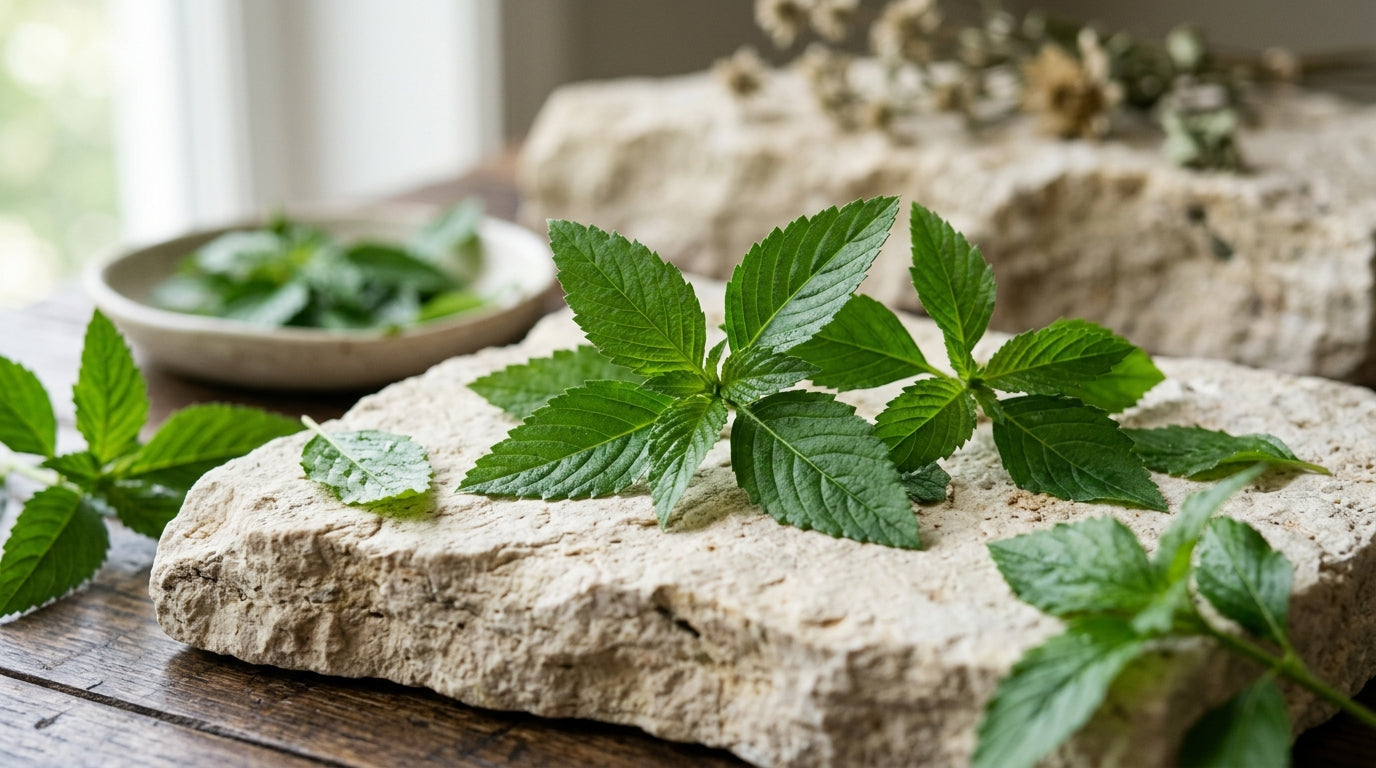
Curry Bush Leaf, a common name for various aromatic plants, thrives in the semi-arid regions of Australia, Africa, and South Asia. This resilient botanical is recognized for its potent bioactive compounds, offering significant functional nutrition benefits.
Potential benefits
- Reduces systemic inflammation by modulating inflammatory pathways.
- Enhances cognitive function by supporting neural pathways and circulation.
- Strengthens immune resilience through its rich array of bioactive compounds.
- Improves digestive health by stimulating enzyme activity and supporting gut flora.
- Promotes respiratory clarity by soothing airways and reducing congestion.
- Balances metabolic processes, contributing to overall metabolic wellness.
- Supports healthy circulation, optimizing nutrient delivery and waste removal.
How it works
Carbazole alkaloids (koenimbin, mahanimbine, girinimbine) modulate PI3K/AKT, mTOR, and MAPK signaling pathways while reducing inflammatory cytokines IL-1β, IL-6, and TNF-α. Flavonoids with catechol-like structures scavenge free radicals through C₂-C₃ double bonds conjugated with 4-keto groups. Koenimbin specifically induces apoptosis in cancer cells by inhibiting glycogen synthase kinase-3 beta (GSK-3β).
What the research says
In vitro studies demonstrate DPPH radical scavenging activity with IC₅₀ values ranging from 103.4-194.3 μg/mL in breast cancer cell lines, compared to tamoxifen's 87.2% inhibition. Antioxidant activity shows strong correlation with polyphenol content (R² = 0.92) and flavonoid content (R² = 0.88). Current evidence is limited to preliminary in vitro and animal studies, with human clinical trials needed to validate therapeutic efficacy and establish optimal dosing protocols.
Safety and interactions
Comprehensive safety data for curry bush leaf supplementation is currently unavailable in published literature. No documented drug interactions, contraindications, or adverse effects have been systematically studied in human populations. Pregnant and nursing women should avoid use due to lack of safety data. Patients taking anticoagulant medications or those with autoimmune conditions should consult healthcare providers before use due to potential inflammatory pathway modulation.
Suggested use
- Traditionally consumed as herbal teas or applied topically in poultices.
- Modern forms include dried leaf powder or standardized extracts.
- Recommended dosage for tea is 1-2 cups daily.
- Extracts are typically dosed at 500-1000 mg daily, targeting immune, cognitive, and metabolic benefits.
Frequently asked questions
What are the main bioactive compounds in curry bush leaf?
Curry bush leaf contains 23.73% alkaloids including carbazole alkaloids (koenimbin, mahanimbine, girinimbine), 4.4% polyphenols, 1.24% flavonoids, 8.74% saponins, and 5.2% tannins. These compounds work synergistically to provide antioxidant and anti-inflammatory effects.
How effective is curry bush leaf for cancer treatment?
In vitro studies show IC₅₀ values of 103.4-194.3 μg/mL against breast cancer cells, with koenimbin inducing apoptosis through GSK-3β inhibition. However, these are preliminary laboratory results and human clinical trials are needed to establish anticancer efficacy and safety.
What is the recommended dosage for curry bush leaf extract?
No standardized dosage has been established for curry bush leaf extract due to limited human clinical research. Most studies used varying concentrations from 20 mg/mL to 194.3 μg/mL in laboratory settings, but therapeutic dosing requires further clinical investigation.
Can curry bush leaf interact with medications?
Specific drug interactions have not been systematically studied for curry bush leaf. Given its effects on inflammatory pathways and potential anticoagulant properties, it may interact with blood thinners, immunosuppressants, or anti-inflammatory medications requiring medical supervision.
Is curry bush leaf safe during pregnancy?
Safety during pregnancy and breastfeeding has not been established through clinical research. Due to the lack of comprehensive safety data and potential hormonal or metabolic effects, pregnant and nursing women should avoid curry bush leaf supplementation until further studies are completed.
What is the most bioavailable form of curry bush leaf supplement?
Standardized leaf extracts and concentrated powders typically offer superior bioavailability compared to whole dried leaf, as extraction processes concentrate the bioactive compounds responsible for anti-inflammatory and cognitive benefits. Liquid extracts and encapsulated concentrates allow for faster absorption and more consistent dosing of curry bush leaf's active alkaloids and polyphenols. For optimal absorption, curry bush leaf supplements are best taken with meals containing healthy fats, which enhance the uptake of its fat-soluble bioactive compounds.
Who benefits most from curry bush leaf supplementation?
Individuals seeking natural cognitive support, those with chronic inflammatory conditions, and people looking to strengthen immune resilience are among the primary candidates for curry bush leaf supplementation. Additionally, those with digestive irregularities or seeking respiratory support may experience benefits from its enzyme-stimulating and airway-soothing properties. Athletes and aging populations may particularly benefit from its circulation-enhancing effects combined with its anti-inflammatory action.
How does curry bush leaf compare to other adaptogenic herbs for inflammation and cognitive function?
Unlike some adaptogenic herbs that focus primarily on stress response, curry bush leaf combines potent anti-inflammatory action with direct neural support, making it distinct in addressing both systemic inflammation and cognitive clarity simultaneously. While turmeric offers curcumin-based inflammation reduction, curry bush leaf provides a broader spectrum of bioactive compounds that also target digestive health and respiratory function. Curry bush leaf's mechanism of modulating inflammatory pathways differs from ashwagandha's cortisol-balancing approach, making it complementary rather than redundant for comprehensive wellness protocols.
References
- https://www.ncbi.nlm.nih.gov/search/all/?term=Curry+Bush+Leaf
- https://fdc.nal.usda.gov/fdc-app.html#/search?query=Curry+Bush+Leaf
- https://www.sciencedirect.com/science/article/pii/S1756464622001342
- https://www.ncbi.nlm.nih.gov/pmc/articles/PMC7325184/
This article is educational and is not medical advice. Statements have not been evaluated by the FDA and are not intended to diagnose, treat, cure, or prevent any disease. Consult a healthcare professional before use.