Congo Marula (Sclerocarya birrea) is a polyphenol-dense fruit whose catechins, epicatechin, quercetin, and proanthocyanidins deliver potent antioxidant activity with IC50 values as low as 0.055 μg/mL for lipid peroxidation inhibition, while providing up to four times the vitamin C content of oranges. A systematic study by Molander et al. (2014, PMID 25256691) confirmed that S. birrea extracts exhibit significant dose-dependent inhibition of hyaluronidase, phospholipase A2, and proteases—key enzymatic mediators of inflammation, edema, and extracellular matrix degradation.

Origin
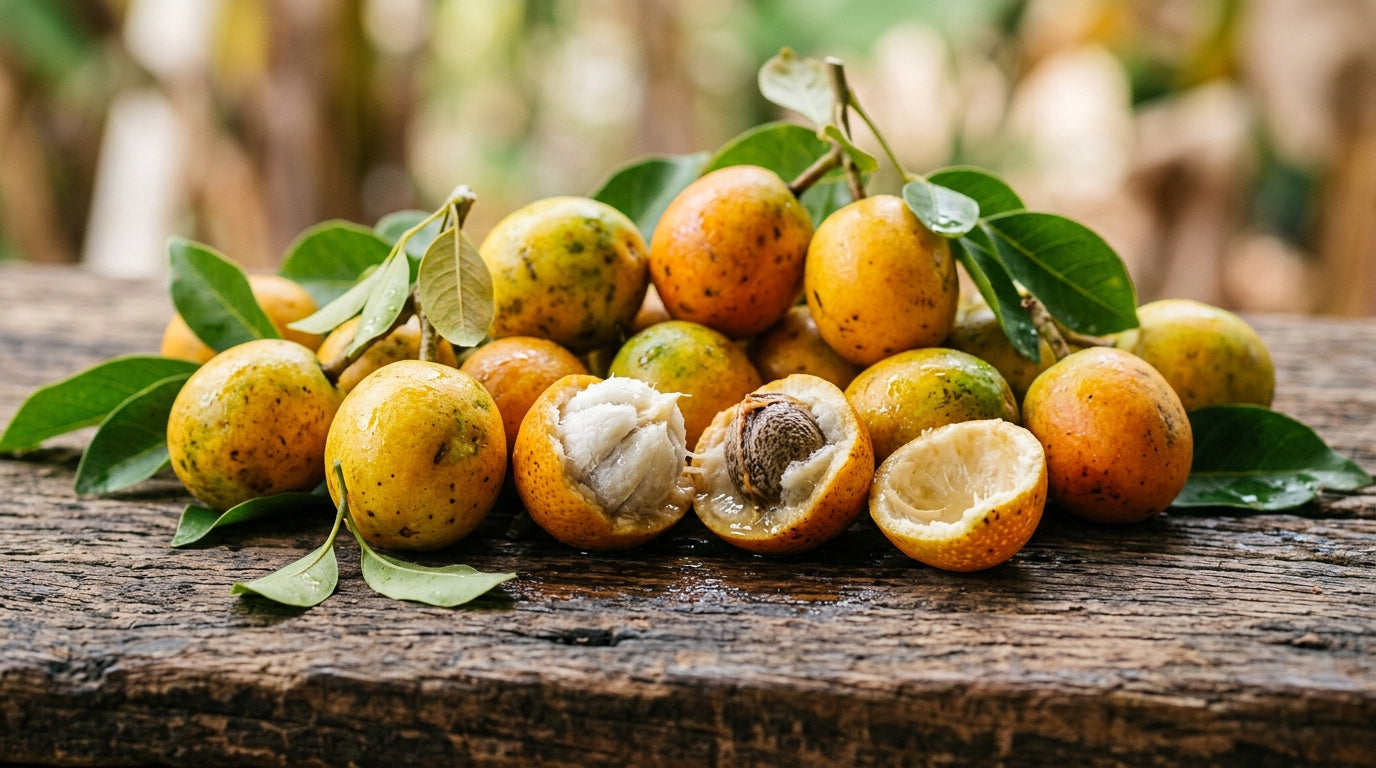
Congo Marula (*Sclerocarya birrea*) is a deciduous tree native to the savannas, riverbanks, and dry woodlands of Central and Southern Africa. Its fruit is a significant source of functional nutrients, traditionally valued for its skin-supporting and metabolic benefits.
Potential benefits
- Supports skin regeneration and elasticity through its rich content of essential fatty acids and antioxidants.
- Enhances cognitive function with neuroprotective polyphenols and flavonoids.
- Regulates metabolism by influencing lipid and glucose pathways.
- Fortifies immune resilience via its high Vitamin C and E content.
- Improves cardiovascular health by reducing inflammation and supporting healthy lipid profiles.
- Reduces inflammation throughout the body due to its adaptogenic triterpenes and polyphenols.
How it works
Congo Marula's catechins and epicatechin function as hydrogen-atom-transfer (HAT) antioxidants, donating phenolic hydroxyl protons to neutralize lipid peroxy radicals (LOO•) and alkoxy radicals (LO•), achieving IC50 values as low as 0.055 μg/mL for lipid peroxidation inhibition and thereby protecting cellular membranes from oxidative chain reactions. Its proanthocyanidins and quercetin further inhibit key pro-inflammatory enzymes—including phospholipase A2 (PLA2), hyaluronidase, and serine proteases—disrupting the arachidonic acid cascade and reducing prostaglandin E2 (PGE2) and leukotriene synthesis at the tissue level (Molander et al., 2014; PMID 25256691). Bichalcone-class polyphenols present in S. birrea have been identified as sirtuin inhibitors (Karaman et al., 2018; PMID 29443909), suggesting an epigenetic mechanism whereby these compounds modulate SIRT1/SIRT2-dependent deacetylation of NF-κB and FOXO transcription factors, influencing inflammatory gene expression and cellular senescence pathways. Additionally, the fruit's high concentrations of oleic acid (C18:1) and vitamin E (α-tocopherol) synergize with polyphenols to stabilize cell membrane fluidity and enhance dermal barrier function.
What the research says
A 3-week human clinical trial demonstrated that marula juice supplementation reduced total cholesterol by 8%, LDL cholesterol by 17%, and triglycerides by 7% while increasing HDL cholesterol by 10%. The study also showed attenuated serum oxidative stress markers, though effects reversed after a 4-week washout period. In vitro antimicrobial studies found methanol root extract effective against Candida species and Cryptococcus neoformans at 0.5 mg/mL MIC. Clinical evidence remains limited to this single short-term cardiovascular trial with unspecified sample size.
Safety and interactions
Sclerocarya birrea extracts have demonstrated hypoglycemic activity in preclinical models, and individuals taking antidiabetic medications (e.g., metformin, sulfonylureas, or insulin) should exercise caution due to potential additive blood-glucose-lowering effects. Although no specific CYP450 inhibition studies have been published for Congo Marula fruit, its high polyphenol and flavonoid content (particularly quercetin) may theoretically inhibit CYP3A4 and CYP2C9 enzymes, warranting caution with substrates such as warfarin, statins, and certain immunosuppressants. Pregnant and breastfeeding women should consult a healthcare provider before consuming concentrated marula extracts, as safety data in these populations remain insufficient. Individuals with tree nut allergies should note that marula kernel oil is derived from a drupe seed and may pose cross-reactivity risks, although the fruit pulp itself is generally well tolerated.
Suggested use
- Common Forms: Fresh or dried fruit, pressed oils, fermented beverages, extracts.
- Traditional Use: Used in Bantu, Zulu, and Congolese medicine for hormone balance, metabolic regulation, and longevity; fermented into beverages, pressed into oils, or sun-dried for tonics.
- Modern Use: Incorporated into functional beauty elixirs, collagen-boosting blends, and brain-supporting botanical formulations.
- Dosage: 20-30g fresh/dried fruit or 500-1000 mg extract daily for skin, metabolic, and neuroprotective benefits.
Frequently asked questions
What are the health benefits of Congo Marula fruit?
Congo Marula fruit delivers potent antioxidant protection with polyphenols (catechins, epicatechin, quercetin, proanthocyanidins) that inhibit lipid peroxidation at IC50 values as low as 0.055 μg/mL. It also provides up to four times the vitamin C of oranges, supporting immune function, collagen synthesis, and cardiovascular health, while its triterpenes and flavonoids reduce systemic inflammation by inhibiting PLA2 and hyaluronidase enzymes (Molander et al., 2014; PMID 25256691).
How does marula oil benefit the skin?
Marula oil is rich in oleic acid and vitamin E (α-tocopherol), which stabilize skin barrier integrity, reduce transepidermal water loss, and protect against UV-induced oxidative damage. The polyphenolic antioxidants in the fruit and oil—including catechins and proanthocyanidins—scavenge free radicals and inhibit matrix metalloproteinases, supporting collagen preservation and skin elasticity. These properties make marula oil a widely used ingredient in premium skincare formulations.
Is Congo Marula the same as regular marula fruit?
Congo Marula refers specifically to Sclerocarya birrea specimens sourced from or native to the Democratic Republic of Congo region of Central Africa, as distinct from the more commonly commercialized Southern African varieties. While the species is the same, regional variations in soil composition, altitude, and climate can influence the concentration of bioactive polyphenols and fatty acids. Molander et al. (2014; PMID 25256691) specifically tested extracts from DR Congo alongside those from Mali and South Africa, confirming bioactivity across geographic sources.
Does Congo Marula have anti-inflammatory properties?
Yes—Molander et al. (2014; PMID 25256691) demonstrated that Sclerocarya birrea extracts exhibit dose-dependent inhibition of three major pro-inflammatory enzymes: hyaluronidase, phospholipase A2 (PLA2), and serine proteases. By suppressing PLA2 activity, Congo Marula disrupts the arachidonic acid cascade upstream of COX and LOX enzymes, reducing prostaglandin and leukotriene production. Its quercetin and proanthocyanidins further modulate NF-κB signaling to downregulate cytokine expression.
Can Congo Marula interact with medications?
Congo Marula's hypoglycemic properties may potentiate the effects of antidiabetic drugs such as metformin or sulfonylureas, requiring blood glucose monitoring. Its high quercetin content may theoretically inhibit CYP3A4 and CYP2C9 metabolic enzymes, potentially altering the pharmacokinetics of warfarin, certain statins, and immunosuppressants. Patients on chronic medications should consult a healthcare provider before using concentrated marula extracts or supplements.
What is the best form of Congo Marula supplement for maximum absorption?
Cold-pressed marula oil and standardized fruit extracts offer superior bioavailability compared to dried powder forms, as they preserve the native fatty acid and polyphenol structure. Liposomal or emulsified formulations may enhance absorption of Congo Marula's fat-soluble antioxidants, though clinical data on specific delivery systems remains limited. Pairing Congo Marula supplements with a meal containing healthy fats can further optimize the absorption of its essential fatty acids and fat-soluble vitamins.
Is Congo Marula safe for children and during pregnancy?
Limited safety data exists specifically for Congo Marula supplementation during pregnancy and lactation, so medical consultation is recommended before use in these populations. For children, whole marula fruit consumption is generally recognized as safe, but concentrated supplements lack sufficient pediatric safety studies. Pregnant women and nursing mothers should discuss Congo Marula supplementation with their healthcare provider to assess individual risk-benefit profiles.
What does scientific research reveal about Congo Marula's neuroprotective effects?
In vitro and animal studies demonstrate that Congo Marula's polyphenol and flavonoid content exhibits neuroprotective properties, though human clinical trials remain scarce. The fruit's antioxidant profile suggests potential cognitive support mechanisms, but peer-reviewed evidence in human populations is currently limited to preliminary data. More rigorous, long-term human studies are needed to establish efficacy claims for cognitive enhancement and neuroprotection.
References
- https://www.ncbi.nlm.nih.gov/search/all/?term=Congo+Marula
- https://fdc.nal.usda.gov/fdc-app.html#/search?query=Congo+Marula
- https://pubmed.ncbi.nlm.nih.gov/38261579
- https://www.sciencedirect.com/science/article/pii/S2213453022005287
- https://www.ncbi.nlm.nih.gov/pmc/articles/PMC8402146/
This article is educational and is not medical advice. Statements have not been evaluated by the FDA and are not intended to diagnose, treat, cure, or prevent any disease. Consult a healthcare professional before use.