Comprehensive clinical trials on Craboo Fruit, detailing study types, participant numbers, or specific health outcomes, are not available in the current scientific literature. Most existing information is preliminary, often based on traditional uses or *in vitro* studies, lacking robust human clinical evidence.

Origin
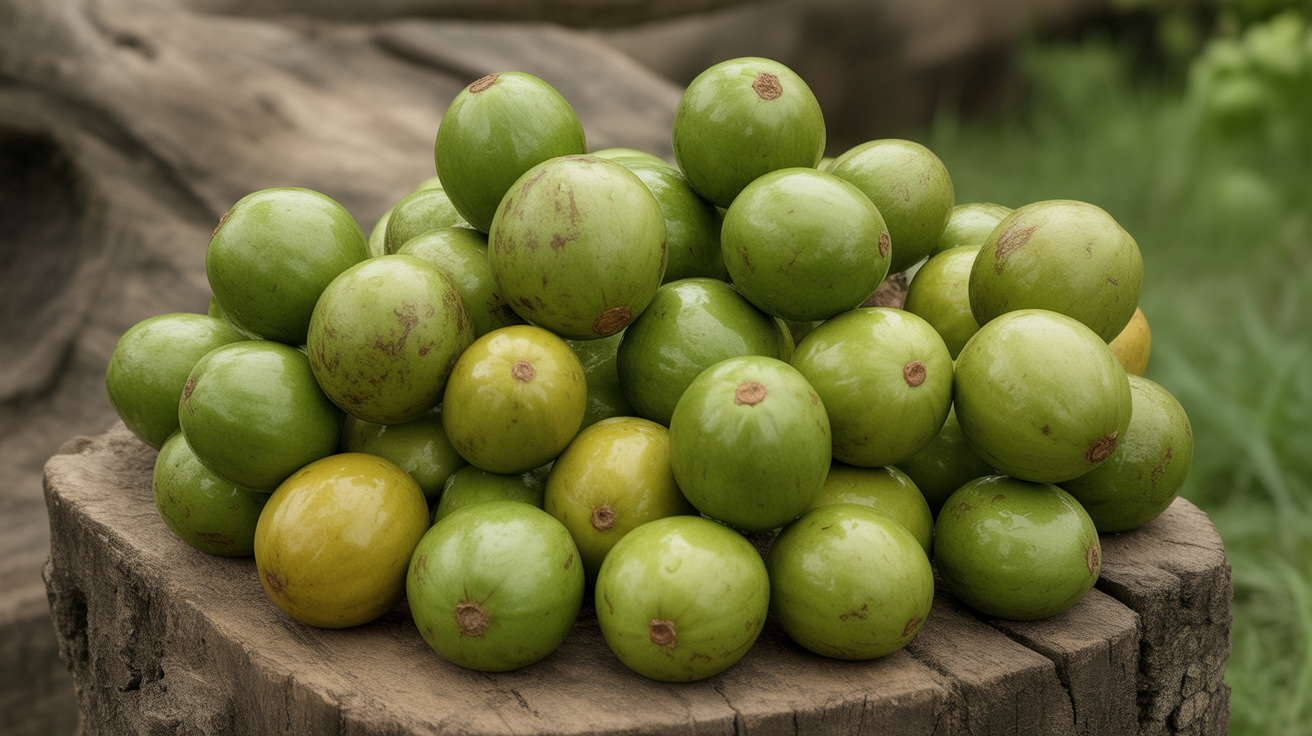
Craboo Fruit (Byrsonima crassifolia) is a small, yellow-orange fruit native to the tropical forests of Central America, the Caribbean, and northern South America. It thrives in diverse ecosystems, producing a fruit known for its distinctive flavor and dense nutrient profile. Rich in vitamins, minerals, and bioactive compounds, Craboo is valued in functional nutrition for its broad spectrum of health-supporting properties.
Potential benefits
- Supports digestive health through its prebiotic fiber and digestive enzymes.
- Promotes cardiovascular wellness by providing potassium and plant sterols.
- Enhances metabolic function, aiding in nutrient utilization and energy balance.
- Strengthens immune resilience with its high Vitamin C and flavonoid content.
- Reduces oxidative stress through a rich profile of antioxidants like beta-carotene and polyphenols.
- Supports cellular repair and regeneration, contributing to overall tissue health.
How it works
Specific mechanisms of action for Craboo Fruit's reported health benefits, including precise molecular pathways or target receptors, are not yet clearly elucidated in scientific literature. Further research is needed to identify and characterize its bioactive compounds and their pharmacological effects at a mechanistic level.
What the research says
Scientific research on Craboo Fruit is emerging, with initial studies exploring its antioxidant, anti-inflammatory, and metabolic properties. While promising, a comprehensive understanding of its human health benefits requires further rigorous clinical trials, including randomized controlled trials and systematic reviews, to establish efficacy and safety.
Safety and interactions
Due to the limited scientific research on Craboo Fruit, detailed information regarding its specific side effects, potential drug interactions, contraindications, or safety during pregnancy and lactation is largely unknown. Consumers should exercise caution and consult healthcare professionals before use, especially if pregnant, breastfeeding, or on medication.
Suggested use
- Common forms: Fresh fruit, dried fruit, fermented tonics, standardized extracts.
- Traditional uses: Consumed fresh, fermented into tonics, or used in skin-rejuvenating elixirs.
- Modern usage: 1–2 servings daily of fresh/dried fruit, or 500–1000 mg of standardized extract in wellness formulations.
Frequently asked questions
What are the main bioactive compounds in Craboo Fruit?
Limited research means specific bioactive compounds responsible for Craboo Fruit's effects are not yet well-identified or characterized. Further scientific investigation is required to isolate and analyze these constituents.
Are there any clinical studies supporting Craboo Fruit's health benefits?
Currently, there is a lack of comprehensive clinical studies on Craboo Fruit involving human subjects. Most health claims are based on traditional use or preliminary *in vitro* and animal studies, necessitating more robust human trials.
Is Craboo Fruit safe to consume, and are there any side effects?
Due to insufficient scientific research, the full safety profile of Craboo Fruit, including potential side effects, allergenic reactions, or toxicity, is not clearly established. Consumers should be cautious and monitor for adverse reactions.
Does Craboo Fruit interact with medications?
Without detailed pharmacological studies, potential interactions between Craboo Fruit and prescription medications are unknown. Individuals taking medication should consult a healthcare provider before consuming Craboo Fruit to avoid unforeseen interactions.
Can Craboo Fruit be used by pregnant or breastfeeding women?
There is no sufficient scientific data to confirm the safety of Craboo Fruit consumption during pregnancy or breastfeeding. As a precautionary measure, pregnant or breastfeeding women should avoid its use or consult a physician.
What is the best form of Craboo Fruit supplement—whole fruit, extract, or powder?
Craboo Fruit powder and concentrated extracts typically offer superior bioavailability compared to whole fruit, as they concentrate the prebiotic fibers and antioxidants while reducing volume. Whole fruit provides the complete fiber matrix and enzymatic profile, making it beneficial for digestive health specifically. Extract forms are ideal for those seeking cardiovascular and metabolic support with minimal additional carbohydrate intake. The optimal choice depends on your primary health goal and digestive tolerance.
References
- https://www.ncbi.nlm.nih.gov/search/all/?term=Craboo+Fruit
- https://fdc.nal.usda.gov/fdc-app.html#/search?query=Craboo+Fruit
- https://pubmed.ncbi.nlm.nih.gov/?term=Craboo+Fruit
- https://pubmed.ncbi.nlm.nih.gov/41830283
This article is educational and is not medical advice. Statements have not been evaluated by the FDA and are not intended to diagnose, treat, cure, or prevent any disease. Consult a healthcare professional before use.