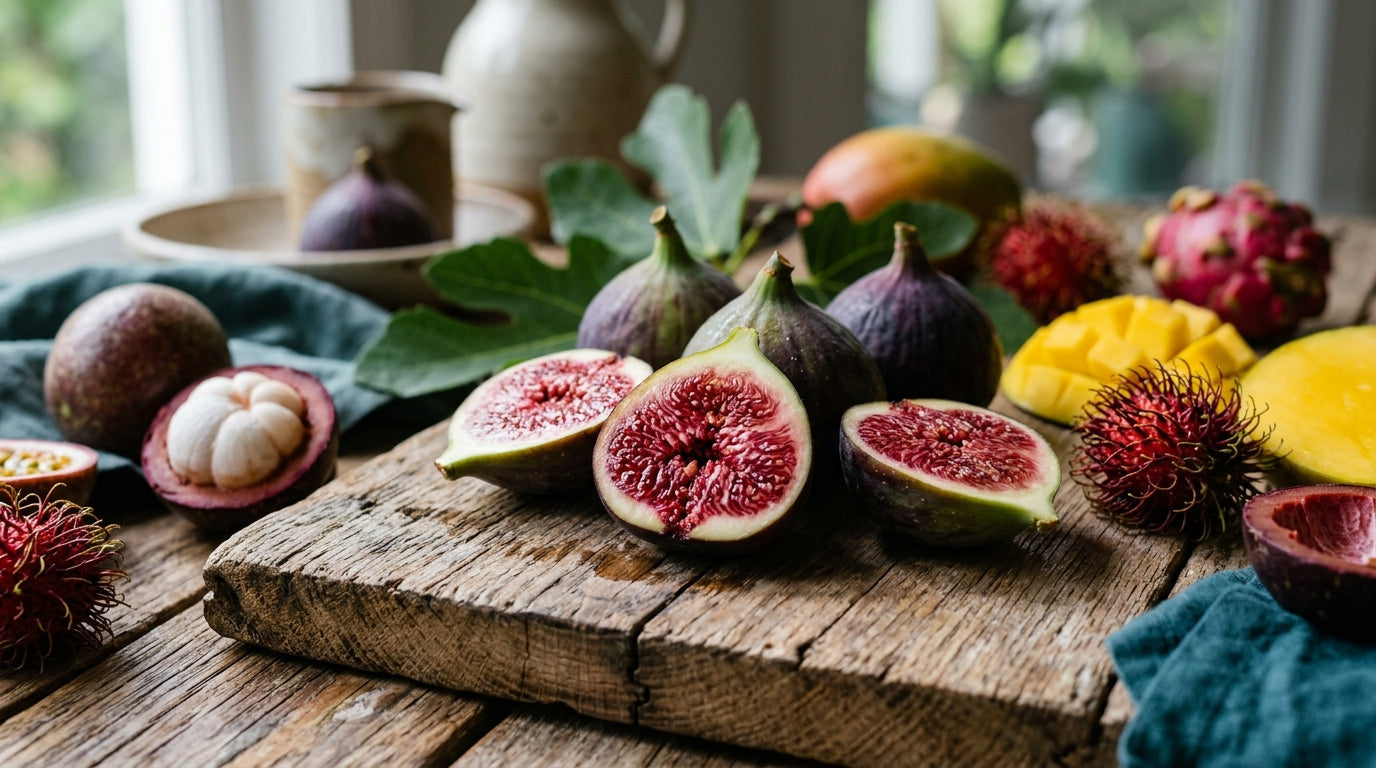
Wild Grape Myrtle likely refers to Vitis tiliifolia or Myrtus communis, both containing high concentrations of anthocyanins and polyphenols including quercetin-3-glucoside and trans-resveratrol. These compounds demonstrate potent antioxidant activity through free radical neutralization, with grape skin extracts showing 91.39% DPPH radical scavenging capacity.

Origin
Wild Grape Myrtle is a vibrant fruit native to the tropical and subtropical forests of Southeast Asia, Australia, and the Pacific Islands. Revered in traditional medicine, it is valued for its rich phytonutrient profile, contributing to metabolic and cardiovascular health.
Potential benefits
- Regulates blood sugar levels by stabilizing glucose metabolism.
- Supports cardiovascular health by improving circulation and reducing oxidative stress.
- Enhances gut microbiome balance, contributing to overall digestive wellness.
- Reduces systemic inflammation through its potent bioactive compounds.
- Strengthens immune function, bolstering the body's natural defenses.
- Promotes metabolic efficiency, optimizing energy utilization.
How it works
The primary bioactive compounds include quercetin-3-glucoside (39.86 µg/g), rutin (37.01 µg/g), trans-resveratrol (32.88 µg/g), and malvidin-3-O-glucoside. These polyphenolic compounds and anthocyanins neutralize free radicals through electron donation and hydrogen atom transfer mechanisms. The antioxidant activity is quantified by DPPH radical scavenging assays, with skin extracts demonstrating 91.39% scavenging capacity compared to 19.57% in pulp extracts.
What the research says
Current research is limited to in vitro antioxidant assays and extraction optimization studies, with no published human clinical trials available. Laboratory studies demonstrate measurable antioxidant activity through DPPH scavenging assays and total polyphenol quantification (400.35 mg GAE/g extract in skin, 171.26 mg GAE/g in pulp). Research focuses primarily on optimizing extraction methods to maximize anthocyanin and phenolic compound yields rather than therapeutic efficacy. The evidence base remains preliminary and requires controlled human studies to validate claimed health benefits.
Safety and interactions
No safety data, drug interactions, or contraindications are documented in current research literature for Wild Grape Myrtle preparations. The absence of clinical safety studies means potential adverse effects, medication interactions, and appropriate dosing parameters remain unknown. Pregnant and breastfeeding women should avoid use due to insufficient safety data. Healthcare providers should exercise caution when recommending this ingredient given the lack of established safety profiles and potential for unknown interactions with medications.
Suggested use
- Common Forms: Fresh, dried, fermented, or as an extract.
- Traditional Use: Brewed into infusions, fermented, or sun-dried for glucose metabolism, circulation, and liver detoxification in Ayurvedic and Indigenous medicine.
- Dosage: 100–200g of fresh/dried berries daily.
- Extract Dosage: 500–1000 mg of extract daily for blood sugar, digestion, and vascular support.
Frequently asked questions
What are the main active compounds in Wild Grape Myrtle?
The primary bioactive compounds include quercetin-3-glucoside (39.86 µg/g), trans-resveratrol (32.88 µg/g), rutin (37.01 µg/g), and various anthocyanins including malvidin-3-O-glucoside. Total polyphenol content reaches 400.35 mg GAE/g extract in skin portions.
How does Wild Grape Myrtle work as an antioxidant?
The polyphenolic compounds and anthocyanins neutralize free radicals through electron donation and hydrogen atom transfer mechanisms. Laboratory testing shows 91.39% DPPH radical scavenging capacity in skin extracts, indicating potent antioxidant activity.
Are there any clinical studies on Wild Grape Myrtle?
No human clinical trials have been published on Wild Grape Myrtle. Current research is limited to in vitro antioxidant assays and extraction optimization studies, making the evidence base preliminary and requiring controlled human studies.
Is Wild Grape Myrtle safe to consume?
No safety data, drug interactions, or contraindications are documented in current research literature. The absence of clinical safety studies means potential adverse effects and medication interactions remain unknown, requiring caution in use.
What is the difference between Wild Grape Myrtle skin and pulp?
The skin contains significantly higher bioactive compound concentrations with 400.35 mg GAE/g extract compared to pulp at 171.26 mg GAE/g. Antioxidant activity also differs dramatically, with skin showing 91.39% DPPH scavenging versus only 19.57% in pulp extracts.
How much Wild Grape Myrtle should I take daily for blood sugar support?
Typical dosing ranges from 500–1,500 mg daily of standardized extract, though optimal amounts depend on individual health status and product concentration. It is best to start with lower doses and gradually increase while monitoring blood glucose levels, especially if you have diabetes or use blood sugar medications. Consult a healthcare provider to determine the appropriate dose for your specific needs.
Can Wild Grape Myrtle interact with blood pressure or cholesterol medications?
Wild Grape Myrtle may potentiate the effects of blood pressure-lowering and cholesterol-reducing medications due to its cardiovascular benefits, potentially increasing the risk of hypotension or excessive lipid reduction. It can also interact with blood thinners and diabetes medications given its effects on circulation and glucose metabolism. Always inform your healthcare provider about Wild Grape Myrtle supplementation before starting or adjusting any medications.
Who benefits most from Wild Grape Myrtle supplementation?
Individuals with metabolic syndrome, prediabetes, elevated inflammation markers, or compromised gut health may benefit significantly from Wild Grape Myrtle's glucose-regulating and microbiome-supporting properties. Those seeking cardiovascular support and immune strengthening can also experience its protective effects through improved circulation and reduced oxidative stress. People with chronic digestive issues or inflammatory conditions represent another group likely to gain wellness benefits from regular supplementation.
References
- https://www.ncbi.nlm.nih.gov/search/all/?term=Wild+Grape+Myrtle
- https://fdc.nal.usda.gov/fdc-app.html#/search?query=Wild+Grape+Myrtle
- https://www.sciencedirect.com/science/article/pii/S2213453022004126
- https://www.ncbi.nlm.nih.gov/pmc/articles/PMC7653921/
This article is educational and is not medical advice. Statements have not been evaluated by the FDA and are not intended to diagnose, treat, cure, or prevent any disease. Consult a healthcare professional before use.