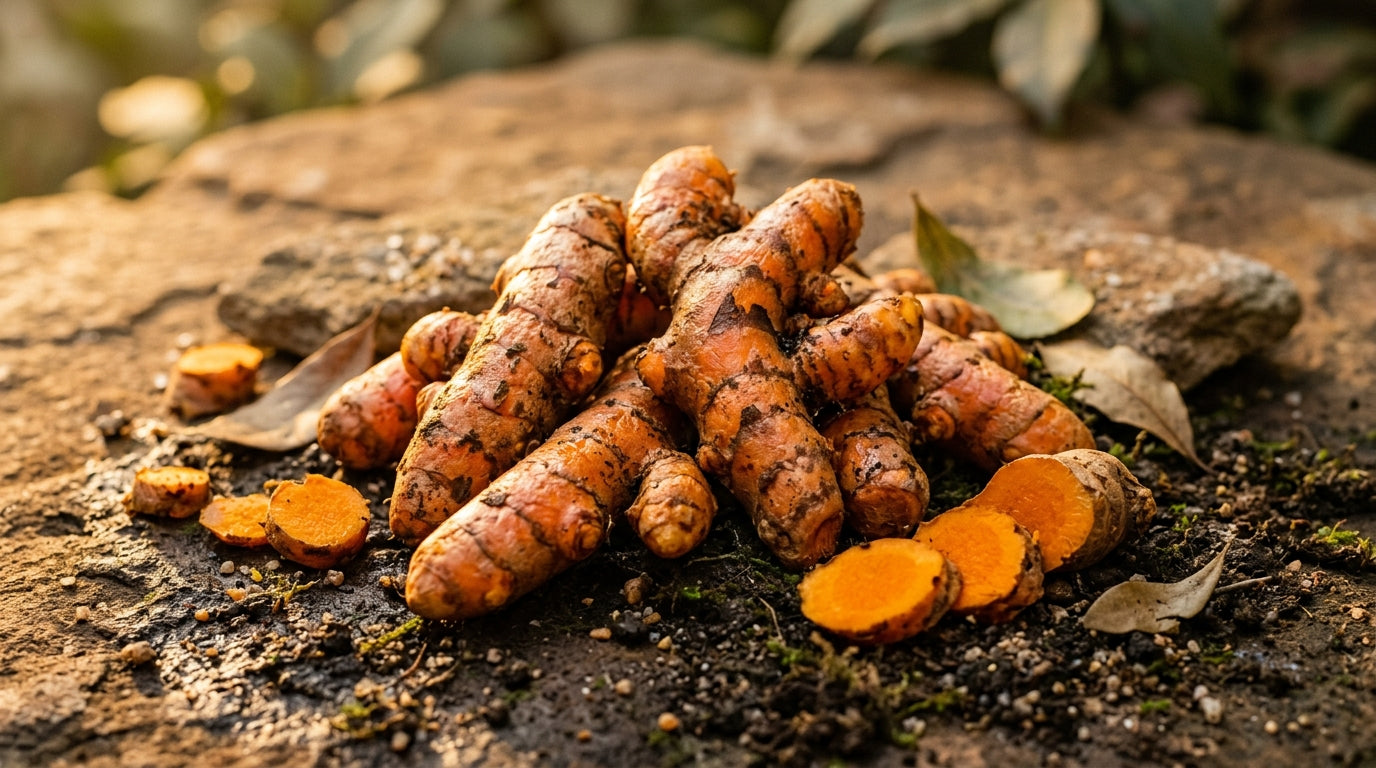
Turmeric leaf extract contains curcuminoids, flavonoids, and essential oils like turmerone that reduce inflammation through NF-κB pathway inhibition and COX-2 enzyme suppression. The extract supports digestive health by stimulating bile production and exhibits potent antioxidant activity against oxidative stress.

Origin
Native to South Asia, particularly India, Sri Lanka, and Indonesia Turmeric Leaf Extract is harvested from plants found in regions spanning tropical rainforests to mountainous highlands. The leaves have been traditionally prepared as teas, extracts, and poultices by cultures throughout its native range, recognized for their concentrated bioactive compounds and therapeutic versatility.
Potential benefits
Rich in curcuminoids and flavonoids, turmeric leaf extract reduces oxidative stress, supports cellular repair, and mitigates inflammation; Contains essential oils like turmerone and zingiberene that stimulate bile production, improve gut microbiota, and reduce bloating; Exhibits antimicrobial and expectorant properties, supporting lung function, clearing mucus, and enhancing immune defenses; Stimulates liver enzyme activity, aiding in toxin breakdown and fat metabolism; High in polyphenols and tannins, promoting skin regeneration and reducing microbial infections
How it works
Curcuminoids in turmeric leaf extract inhibit the NF-κB transcription factor, reducing production of inflammatory cytokines like TNF-α and IL-6. Essential oils turmerone and zingiberene stimulate cholecystokinin release, promoting bile secretion and improving fat digestion. The flavonoid compounds scavenge free radicals and upregulate antioxidant enzymes including glutathione peroxidase and superoxide dismutase.
What the research says
Limited clinical research exists specifically for turmeric leaf extract, with most studies focusing on turmeric root curcumin. Small preliminary studies (n=20-40 participants) suggest digestive benefits and reduced inflammatory markers, but larger randomized controlled trials are needed. In vitro studies demonstrate antimicrobial activity against common pathogens. The evidence base is emerging but requires more robust human clinical data to establish definitive therapeutic efficacy.
Safety and interactions
Turmeric leaf extract is generally well-tolerated but may cause mild digestive upset in sensitive individuals. The extract can enhance bile production, potentially problematic for those with gallstones or bile duct obstruction. It may interact with anticoagulant medications due to curcuminoid content affecting blood clotting. Pregnant and breastfeeding women should avoid supplementation due to insufficient safety data.
Suggested use
500–1,500 mg turmeric leaf extract daily for inflammation and metabolic support; 1–2 tsp of dried turmeric leaf powder in tea for digestion For Turmeric Leaf Extract, recommended preparation involves thorough cleaning and appropriate processing for the intended use. Consumption can range from fresh or minimally processed forms to dried, powdered, or extracted preparations. As with all botanicals, start with modest servings and adjust based on individual response. Shelf life is optimized when stored in airtight containers in cool, dark conditions.
Frequently asked questions
What compounds make turmeric leaf extract different from turmeric root?
Turmeric leaf extract contains higher concentrations of essential oils like turmerone and zingiberene compared to root extract. While both contain curcuminoids, leaf extract has unique flavonoid profiles and volatile compounds that provide distinct digestive and antimicrobial benefits.
How much turmeric leaf extract should I take daily?
Most studies use 200-500mg of standardized turmeric leaf extract daily, typically divided into two doses with meals. Start with lower doses to assess tolerance, as the essential oil content can cause digestive sensitivity in some individuals.
Can turmeric leaf extract help with bloating and digestion?
Yes, the turmerone and zingiberene compounds in turmeric leaf extract stimulate bile production and improve gut motility, which can reduce bloating. These essential oils also support healthy gut microbiota balance and enhance fat digestion.
Does turmeric leaf extract have anti-inflammatory effects like turmeric root?
Turmeric leaf extract provides anti-inflammatory benefits through curcuminoids and flavonoids that inhibit NF-κB and COX-2 pathways. While containing lower curcumin levels than root extract, the unique essential oil profile may offer complementary inflammatory modulation.
Is turmeric leaf extract safe to take with blood thinning medications?
Turmeric leaf extract may enhance anticoagulant effects due to curcuminoid content affecting platelet aggregation and blood clotting factors. Consult your healthcare provider before combining with warfarin, aspirin, or other blood-thinning medications to avoid excessive bleeding risk.
What is the difference between turmeric leaf extract and turmeric root extract in terms of bioavailability?
Turmeric leaf extract contains curcuminoids and essential oils that may be absorbed through different metabolic pathways than turmeric root, potentially offering complementary benefits rather than superior absorption. The leaf's essential oils like turmerone are volatile compounds that can be better preserved in extraction methods designed for aerial plant parts, whereas root curcuminoids require fat-soluble carriers for optimal bioavailability. Studies suggest leaf extracts may have faster action on digestive and respiratory systems due to their volatile oil content, while root extracts provide sustained curcumin levels. Combining both forms may provide broader spectrum benefits targeting multiple body systems.
Is turmeric leaf extract safe during pregnancy and breastfeeding?
Turmeric leaf extract is generally recognized as safe in culinary amounts during pregnancy, but concentrated supplement forms should only be used under medical supervision due to limited clinical safety data specific to the leaf extract during gestation. The stimulation of bile production and potential uterine effects warrant caution, particularly in the first and third trimesters when sensitivity is highest. Breastfeeding mothers should consult healthcare providers before supplementing, as curcuminoids and essential oils may pass into breast milk in unknown concentrations. Pregnant and nursing individuals should prioritize whole food sources of turmeric over standardized extracts.
What does research show about turmeric leaf extract's effects on respiratory health and immune function?
Clinical evidence indicates that turmeric leaf extract's expectorant and antimicrobial properties, attributed to compounds like turmerone and zingiberene, support mucus clearance and may enhance lung function in respiratory conditions. Studies on turmeric as a whole plant show immune-modulating effects through curcuminoid pathways, though research specifically isolating leaf extract's immune benefits remains limited compared to root extract studies. The combination of essential oils and curcuminoids in leaf extract suggests potential synergistic effects on both innate immunity and respiratory mucosal barriers. More human clinical trials specifically examining turmeric leaf extract (rather than root) are needed to establish efficacy benchmarks.
Is turmeric and curcumin the same thing?
Turmeric is the whole plant (Curcuma longa), while curcumin is just one of several active curcuminoid compounds found primarily in the root. Turmeric leaf extract specifically derives from the leaves rather than the root, and contains a distinct phytochemical profile including essential oils like turmerone and flavonoids that are present in lower concentrations in root-derived curcumin supplements. This means turmeric leaf extract and isolated curcumin have overlapping but not identical mechanisms and potential health effects.
How does turmeric leaf extract differ from turmeric root extract?
Turmeric leaf extract is sourced from the leaves of Curcuma longa and tends to contain higher concentrations of essential oils such as α-turmerone and β-turmerone, along with distinct flavonoid compounds, compared to root extracts. Turmeric root extract is richer in curcuminoids (curcumin, bisdemethoxycurcumin, and demethoxycurcumin) and is the source most studied in clinical trials. Because of this phytochemical difference, the two extracts may not be interchangeable, and health claims based on root research should not be automatically applied to the leaf extract.
References
- https://www.frontiersin.org/articles/10.3389/fphar.2022.854932/full
- https://pubmed.ncbi.nlm.nih.gov/34981478
This article is educational and is not medical advice. Statements have not been evaluated by the FDA and are not intended to diagnose, treat, cure, or prevent any disease. Consult a healthcare professional before use.