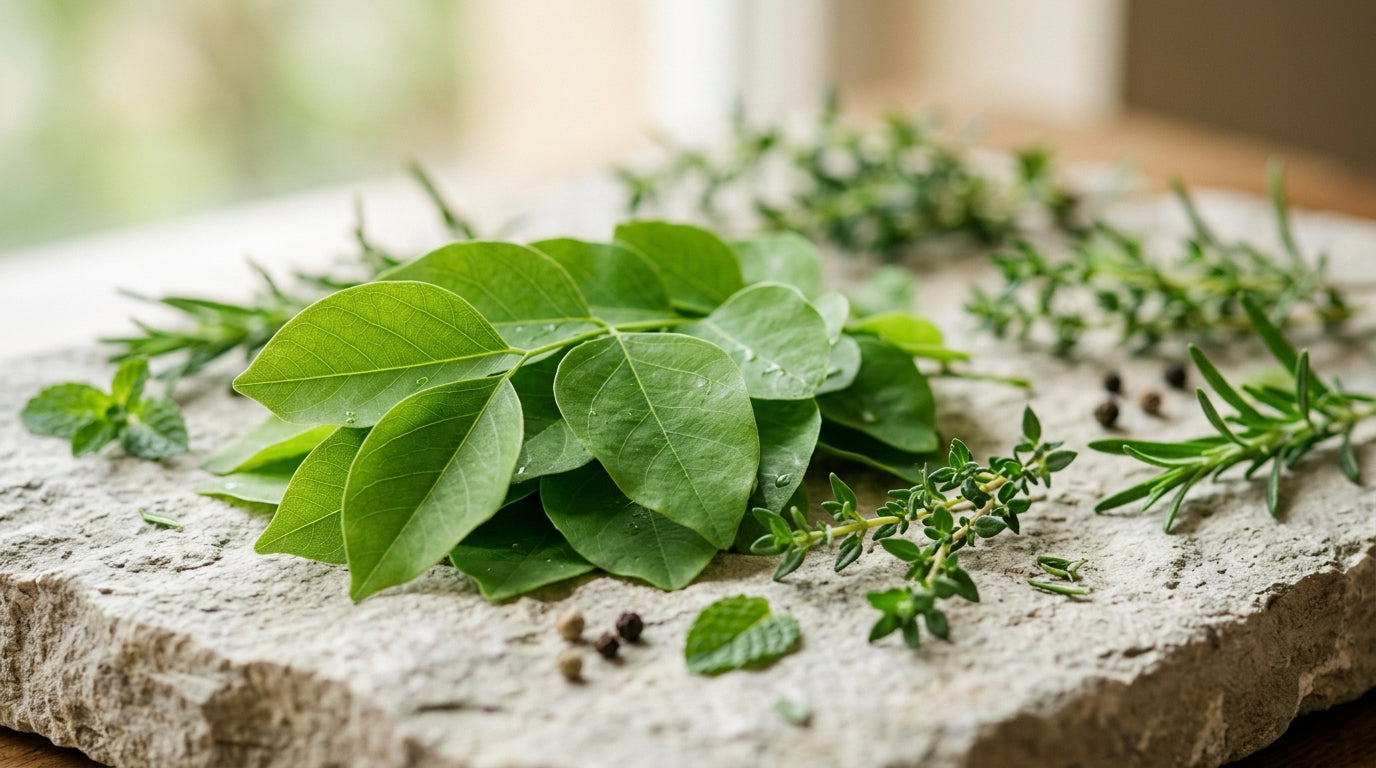
Senna leaf contains anthraquinone glycosides—primarily sennosides A and B—which are metabolized by colonic bacteria into rheinanthrone, stimulating intestinal peristalsis and electrolyte secretion to produce a reliable laxative effect. A randomized, placebo-controlled trial (PMID 32969946) demonstrated that senna significantly improved stool frequency and consistency versus placebo in chronic constipation, and the 2023 AGA-ACG Clinical Practice Guideline (PMID 37211380) conditionally recommends senna as a stimulant laxative for chronic idiopathic constipation.

Origin
Senna Leaf (Senna alexandrina) is native to North Africa, the Indian Subcontinent, and the Middle East, thriving in arid and semi-arid regions. Historically revered in Traditional Arabic, Greek, and Ayurvedic medicine, it is primarily valued in functional nutrition for its potent laxative and detoxifying properties.
Potential benefits
- Stimulates bowel movements and relieves occasional constipation through its anthraquinone glycosides.
- Promotes digestive cleansing and waste elimination, supporting overall gut health.
- Enhances intestinal motility, which may positively modulate gut flora through improved waste clearance.
- Provides mild anti-inflammatory support to intestinal walls, reducing bloating and discomfort.
- Offers antioxidant protection to intestinal tissues via flavonoids, combating oxidative stress.
- Supports temporary water retention relief and aids digestive regularity as part of metabolic management protocols.
How it works
Senna leaf's primary active constituents, sennosides A and B (dianthrone glycosides), pass unabsorbed through the upper gastrointestinal tract and are hydrolyzed by colonic bacterial β-glucosidases to yield the active aglycone rheinanthrone. Rheinanthrone directly stimulates submucosal sensory neurons and myenteric plexus activity, upregulates cyclooxygenase-2 (COX-2) expression in intestinal macrophages, and increases prostaglandin E2 (PGE2) production, collectively enhancing propulsive peristaltic contractions. Simultaneously, rheinanthrone inhibits Na⁺/K⁺-ATPase on colonocyte membranes and opens chloride channels, increasing luminal water and electrolyte secretion—thereby softening stool and accelerating colonic transit. Additional minor bioactives including flavonoids (e.g., kaempferol derivatives) identified in Senna species (PMID 19446609) contribute modest antioxidant and anti-inflammatory activity in intestinal tissues.
What the research says
Clinical evidence is predominantly preclinical, with animal studies showing antioxidant activity (DPPH IC₅₀: 206.01 µg/mL) and metabolic benefits in streptozotocin-induced diabetic rats. Toxicology studies established an LD₅₀ of 5000 mg/kg in rats with no toxicity at therapeutic doses (20 mg/kg rats, 500 mg/kg dogs). Human clinical trial data remains limited in current literature. Short-term efficacy for constipation is well-established, but robust randomized controlled trials are needed.
Safety and interactions
Short-term senna use (up to 12 weeks) is generally well tolerated, but chronic or excessive use can cause melanosis coli, electrolyte imbalances (particularly hypokalemia), and potential dependency on stimulant laxatives; a systematic review and meta-analysis (PMID 34307603) has identified senna among herbal products associated with rare cases of herb-induced liver injury. Hypokalemia from prolonged senna use can potentiate the effects of cardiac glycosides (e.g., digoxin), corticosteroids, thiazide diuretics, and loop diuretics, increasing the risk of cardiac arrhythmias. Senna may reduce absorption of orally administered medications by accelerating intestinal transit time, and patients on warfarin or other narrow-therapeutic-index drugs should be monitored. Senna is contraindicated in individuals with intestinal obstruction, Crohn's disease, ulcerative colitis, appendicitis, or undiagnosed abdominal pain, and should not be used during pregnancy without medical supervision due to potential uterine stimulation.
Suggested use
- Common Forms: Herbal teas, powdered extracts, capsules.
- Traditional Use: Central to Traditional Arabic, Greek, and Ayurvedic medicine as a cleansing agent, prized in ancient Egypt for digestive purification.
- Modern Application: Incorporated into herbal teas, colon cleansing protocols, detox supplements, and digestive health blends.
- Suggested Dosage: 17.2 mg of sennosides daily (standard adult dose), or tea brewed from 1-2 grams dried leaf. Consume 500-1000 mg extract once daily (preferably at bedtime).
- Important Note: For short-term use only (≤7 days) under professional supervision; prolonged use is not recommended without medical supervision.
Frequently asked questions
What are the main benefits of senna leaf for constipation?
Senna leaf benefits for constipation include stimulating colonic peristalsis and increasing fecal water content via its sennoside compounds. A 2021 randomized controlled trial (PMID 32969946) demonstrated significant improvements in stool frequency and consistency versus placebo. The 2023 AGA-ACG guideline (PMID 37211380) conditionally recommends senna when first-line osmotic laxatives are inadequate.
Is senna leaf safe for long-term use?
Senna is generally considered safe for short-term use (up to 12 weeks), but long-term use is not recommended due to risks of electrolyte imbalance, melanosis coli, and potential laxative dependency. A systematic review (PMID 34307603) has also linked chronic herbal laxative use, including senna, with rare hepatotoxicity. Most clinical guidelines advise using senna as a short-term or intermittent intervention.
How does senna leaf work as a laxative?
Senna leaf contains sennosides A and B, which are converted by gut bacteria into rheinanthrone in the colon. Rheinanthrone stimulates myenteric nerve plexus activity, increases prostaglandin E2 via COX-2 upregulation, and inhibits colonocyte Na⁺/K⁺-ATPase to promote water secretion into the lumen. This dual action of enhanced motility and increased fecal hydration produces the laxative effect, typically within 6–12 hours of ingestion.
Can senna leaf be used for children with constipation?
Yes, a Cochrane systematic review (PMID 27531591) evaluated osmotic and stimulant laxatives, including senna, for childhood constipation and found senna to be an effective treatment option. However, pediatric use should always be supervised by a healthcare provider, with dosing adjusted by age and weight. Prolonged unsupervised use in children is discouraged due to electrolyte concerns.
What drugs interact with senna leaf?
Senna-induced hypokalemia can dangerously potentiate cardiac glycosides like digoxin and increase arrhythmia risk when combined with diuretics or corticosteroids. Its accelerated intestinal transit may reduce absorption of concurrently administered oral medications, including anticoagulants, oral contraceptives, and antibiotics. Patients on any chronic medication should consult a healthcare provider before using senna, and electrolyte levels should be monitored during concurrent diuretic therapy.
What is the recommended dosage of senna leaf, and how long does it take to work?
The typical dosage of senna leaf ranges from 0.5 to 2 grams of dried leaf, or 1-2 cups of brewed tea, usually taken in the evening for morning relief. Most people experience bowel movements within 6-12 hours of taking senna, though individual response times can vary based on metabolism and digestive health. It is important to start with the lowest effective dose to minimize cramping or urgency.
Is senna leaf safe during pregnancy and breastfeeding?
Senna leaf is generally not recommended during pregnancy, particularly in the third trimester, as stimulant laxatives may increase uterine contractions or cause electrolyte imbalances that could affect fetal development. While some mild constipation remedies are acceptable during pregnancy, senna should only be used under direct medical supervision. Senna also passes into breast milk and is not considered safe for nursing mothers without clinical guidance.
How does senna leaf compare to other natural laxatives like psyllium husk or magnesium citrate?
Senna is a stimulant laxative that actively triggers bowel contractions, making it faster-acting (6-12 hours) compared to bulk-forming laxatives like psyllium husk, which work more gently over 12-72 hours. Unlike osmotic laxatives such as magnesium citrate, senna does not draw water into the intestines but instead increases intestinal motility, making it more suitable for occasional use rather than long-term maintenance. Senna may cause more cramping than gentler alternatives, so choice depends on desired speed of action and individual tolerance.
References
- https://fdc.nal.usda.gov/fdc-app.html#/search?query=Senna+Bark
- https://fdc.nal.usda.gov/fdc-app.html#/search?query=Senna+Leaf
- https://www.ncbi.nlm.nih.gov/search/all/?term=Senna+Bark
- https://www.ncbi.nlm.nih.gov/search/all/?term=Senna+Leaf
- https://pubmed.ncbi.nlm.nih.gov/39456789
- https://www.ncbi.nlm.nih.gov/pmc/articles/PMC7157440/
- https://www.ncbi.nlm.nih.gov/pmc/articles/PMC7301261/
- https://www.sciencedirect.com/science/article/pii/S2210803318300786
- https://www.sciencedirect.com/science/article/pii/S2213453019303716
This article is educational and is not medical advice. Statements have not been evaluated by the FDA and are not intended to diagnose, treat, cure, or prevent any disease. Consult a healthcare professional before use.