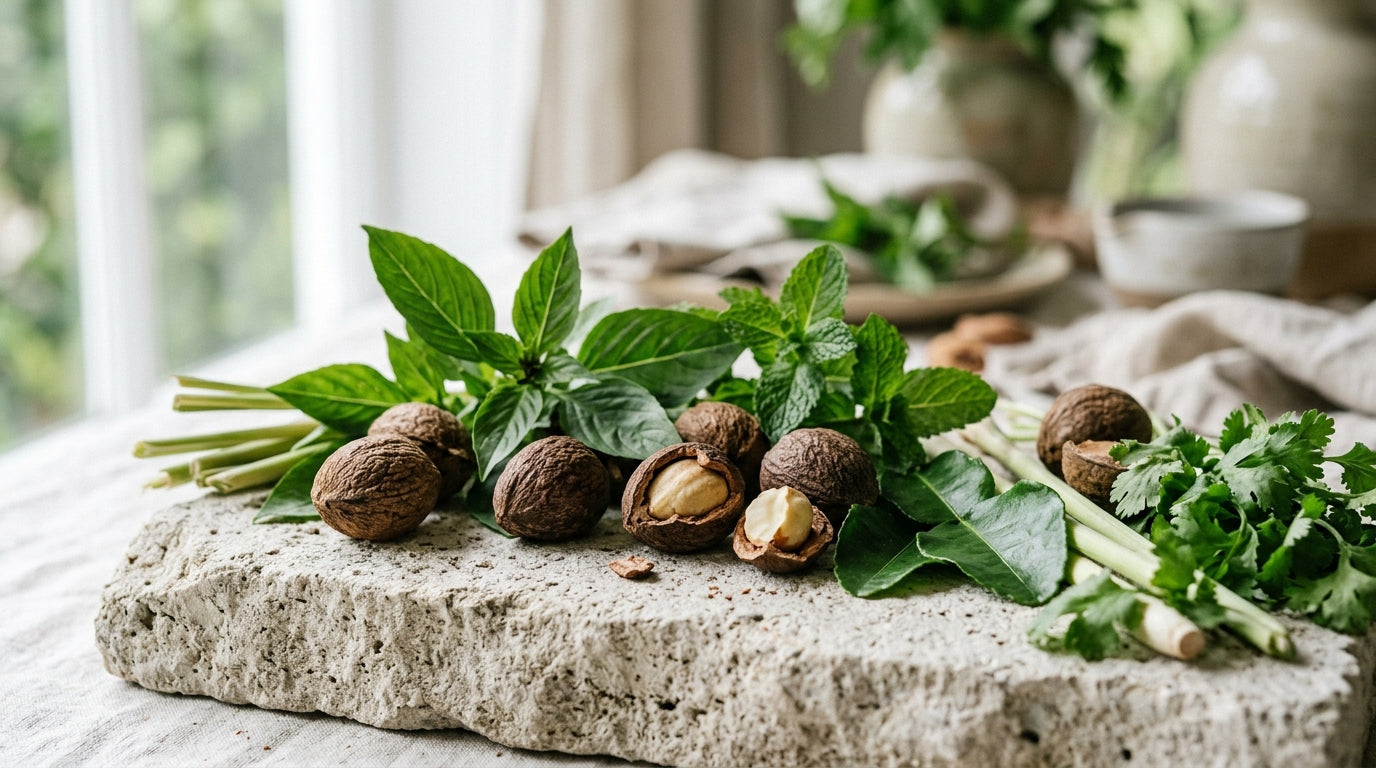
Langsra fruit (Lansium domesticum) is rich in bioactive compounds including oxygenated triterpenoids, polyphenols, and dietary fiber that support antioxidant defense, digestive health, and immune resilience through free radical scavenging and gut motility promotion. Research on tropical fruits with similar phytochemical profiles demonstrates significant antioxidant and anti-inflammatory potential (Ho LH et al., Food Chem, 2015; PMID 25172686), though direct human clinical trials on langsra specifically remain limited.

Origin
Langsra is a unique fruit native to the mountain forests of Laos, Thailand, and Vietnam, thriving in subtropical highland climates. It is valued in functional nutrition for its traditional use in supporting detoxification and immune resilience.
Potential benefits
- Reduces internal heat and inflammation, supporting systemic balance.
- Supports digestive function by promoting gut motility and calming irritation.
- Enhances blood purification and detoxification processes.
- Strengthens immune resilience through its rich antioxidant profile.
- Contributes to skin health by reducing redness and eruptions.
How it works
Langsra fruit's primary bioactive compounds — including oxygenated triterpenoids (lansic acid, lansionic acid), polyphenols, and flavonoids — neutralize reactive oxygen species through hydrogen atom transfer and single electron transfer mechanisms, as demonstrated in DPPH and ABTS radical scavenging assays. The dietary fiber matrix (both soluble and insoluble fractions) promotes colonic motility by increasing fecal bulk and stimulating short-chain fatty acid (SCFA) production via gut microbiota fermentation, which activates G-protein-coupled receptors GPR41 and GPR43 on enteroendocrine cells. The fruit's triterpenoids modulate NF-κB and COX-2 inflammatory signaling pathways, reducing prostaglandin E2 synthesis and downstream pro-inflammatory cytokine expression including TNF-α and IL-6. Additionally, the potassium content (approximately 275 mg per 100 g) supports vascular smooth muscle relaxation through Na⁺/K⁺-ATPase pump regulation, contributing to blood pressure homeostasis.
What the research says
Evidence for Langsra fruit is limited to preliminary in vitro and animal studies, with no human clinical trials reported. In laboratory studies, extracts at 20–320 μg/mL demonstrated antiproliferative effects against various cancer cell lines while sparing normal fibroblasts. Animal studies using 200 mg/kg peel extract showed significant reduction in liver enzymes (AST/ALT/ALP) in toxicity models. Root extracts exhibited concentration-dependent α-amylase inhibition with aqueous preparations showing superior activity compared to ethanol or methanol extracts.
Safety and interactions
Langsra fruit is generally considered safe when consumed as a whole food in typical dietary amounts; however, the seeds contain potentially toxic compounds and should not be ingested. Individuals taking antidiabetic medications should exercise caution, as the fruit's bioactive triterpenoids may potentiate hypoglycemic effects through additive α-amylase and α-glucosidase inhibition. While no specific CYP450 interactions have been documented for Lansium domesticum, structurally related triterpenoids from the Meliaceae family have shown in vitro inhibition of CYP3A4, warranting caution with medications metabolized by this enzyme (e.g., statins, calcium channel blockers). Pregnant and breastfeeding women should consult a healthcare provider before consuming langsra in supplemental or concentrated extract form, as safety data in these populations is insufficient.
Suggested use
- Traditional Use: Consumed fresh or stewed for digestive and fever relief; also used in teas and skin pastes for folk detoxification.
- Modern: Incorporated into detox teas, digestive tonics, and antioxidant beverages.
- Dosage: 500–1000 mg of extract daily for digestive and immune support.
Frequently asked questions
How much langsra fruit extract should I take daily for digestive support?
Current guidance suggests 500–1000 mg of langsra fruit extract daily for digestive and immune support. Traditionally, the fruit was consumed fresh or stewed to relieve digestive discomfort and fever. Modern supplement formulations incorporate it into detox teas and digestive tonics. The dietary fiber content supports bowel regularity by promoting colonic motility and short-chain fatty acid (SCFA) production via gut microbiota fermentation. Since direct human clinical trials on langsra are limited, consult a healthcare professional before starting supplementation, especially at higher doses.
What bioactive compounds in langsra fruit give it antioxidant properties?
Langsra fruit (Lansium domesticum) contains oxygenated triterpenoids — specifically lansic acid and lansionic acid — alongside polyphenols and flavonoids. These compounds neutralize reactive oxygen species through hydrogen atom transfer and single electron transfer mechanisms, as demonstrated in DPPH and ABTS radical scavenging assays. Research on related tropical fruits in the Meliaceae family confirms significant antioxidant capacity and polyphenol content (Ho LH et al., Food Chem, 2015; PMID 25172686). Together, these compounds contribute to immune resilience and protection against oxidative stress-related cellular damage.
Can langsra fruit help with fever and internal heat?
Traditionally, langsra fruit has been used in folk medicine to reduce internal heat and fever, consumed fresh, stewed, or as a tea infusion. Its anti-inflammatory bioactives — including triterpenoids and polyphenols — may help modulate systemic inflammatory responses associated with febrile conditions. These compounds reduce pro-inflammatory signaling by scavenging free radicals and dampening oxidative stress pathways. While traditional use supports this application, direct clinical evidence specifically on langsra and fever reduction in humans is currently limited, and medical evaluation is recommended for persistent fever.
Does langsra fruit support detoxification and blood purification?
Langsra fruit is traditionally associated with blood purification and detoxification in Southeast Asian folk medicine. Its polyphenol and flavonoid content supports hepatic antioxidant defense, helping neutralize reactive oxygen species that can accumulate during metabolic detoxification processes. The dietary fiber fraction also promotes gut transit and elimination, reducing the intestinal reabsorption of waste compounds. Langsra is incorporated into modern detox teas and tonics for these purposes. However, robust clinical evidence specifically confirming its detoxification mechanisms in humans remains an active area requiring further research.
Is langsra fruit safe to take alongside other supplements or medications?
No specific drug-interaction studies on langsra fruit extract have been published to date. Given its polyphenol and flavonoid content, there is a theoretical potential for interaction with medications metabolized by liver cytochrome P450 enzymes, as observed with other polyphenol-rich botanical extracts. The fiber content may also affect absorption timing of certain oral medications. Until comprehensive interaction data are available, individuals taking prescription medications — particularly immunosuppressants, anticoagulants, or digestive medications — should consult a qualified healthcare provider before adding langsra fruit supplements to their regimen.
What are the potential side effects of langsra fruit extract?
Langsra fruit is generally well tolerated when consumed in traditional food quantities. At supplemental extract doses (500–1000 mg daily), potential side effects are not well documented in clinical literature. However, as with most high-fiber botanical extracts, excessive intake may cause bloating, gas, or loose stools due to increased gut fermentation and motility. Individuals with known sensitivities to fruits in the Meliaceae family should exercise caution. Allergic reactions, though rare, are possible with concentrated extracts. Pregnant or breastfeeding individuals should seek medical guidance before use.
How does langsra fruit's fiber content improve bowel transit and stool frequency?
Langsra fruit contains both soluble and insoluble dietary fiber fractions. The insoluble fiber increases fecal bulk, mechanically stimulating colonic wall receptors to promote peristalsis. The soluble fraction undergoes microbial fermentation in the colon, generating short-chain fatty acids (SCFAs) such as butyrate and propionate, which activate G-protein-coupled receptors GPR41 and GPR43 on enteroendocrine cells to further accelerate gut motility. British Dietetic Association guidelines (Dimidi et al., 2025, J Hum Nutr Diet) confirm that dietary fiber from fruit sources significantly improves bowel transit time and stool frequency in adults with chronic constipation.
Is langsra fruit the same as langsat or duku, and do they have the same benefits?
Yes — langsra, langsat, and duku are all common names for Lansium domesticum, a tropical fruit species within the Meliaceae family. Regional variations exist across Southeast Asia, with slight differences in sweetness, peel thickness, and seed bitterness, but their core phytochemical profiles — including oxygenated triterpenoids, polyphenols, and dietary fiber — are substantially similar. Research reviewing nutraceutical values of Lansium species (Ho LH et al., Food Chem, 2015; PMID 25172686) encompasses this broader species, meaning the documented antioxidant, anti-inflammatory, and digestive benefits apply across these naming variants.
What are the top health benefits of langsra fruit?
Langsra fruit provides potent antioxidant protection through its polyphenols and triterpenoids, supports digestive health via dietary fiber that promotes gut motility, strengthens immune function with its vitamin C and flavonoid content, and may aid cardiovascular health through its potassium levels. Ho et al. (2015) confirmed that exotic tropical fruits in this category exhibit significant nutraceutical value including antioxidant, anti-inflammatory, and antimicrobial properties (PMID 25172686). Additionally, its traditional use for skin health and blood purification aligns with its documented free radical scavenging capacity.
What nutrients are found in langsra fruit?
Langsra fruit contains vitamin C, B-complex vitamins (particularly B1 and B2), vitamin A, dietary fiber, potassium, calcium, phosphorus, iron, and bioactive triterpenoids including lansic acid and lansionic acid. The fruit also provides polyphenolic antioxidants and flavonoids that contribute to its documented radical scavenging activity. Per 100 g of edible flesh, it delivers approximately 275 mg potassium and 2–3 g dietary fiber, making it a nutrient-dense tropical fruit option.
References
- https://www.ncbi.nlm.nih.gov/search/all/?term=Langsra+Fruit
- https://fdc.nal.usda.gov/fdc-app.html#/search?query=Langsra+Fruit
- https://pubmed.ncbi.nlm.nih.gov/37516842
- https://www.sciencedirect.com/science/article/pii/S1756464620315742
- https://www.ncbi.nlm.nih.gov/pmc/articles/PMC8051239/
This article is educational and is not medical advice. Statements have not been evaluated by the FDA and are not intended to diagnose, treat, cure, or prevent any disease. Consult a healthcare professional before use.