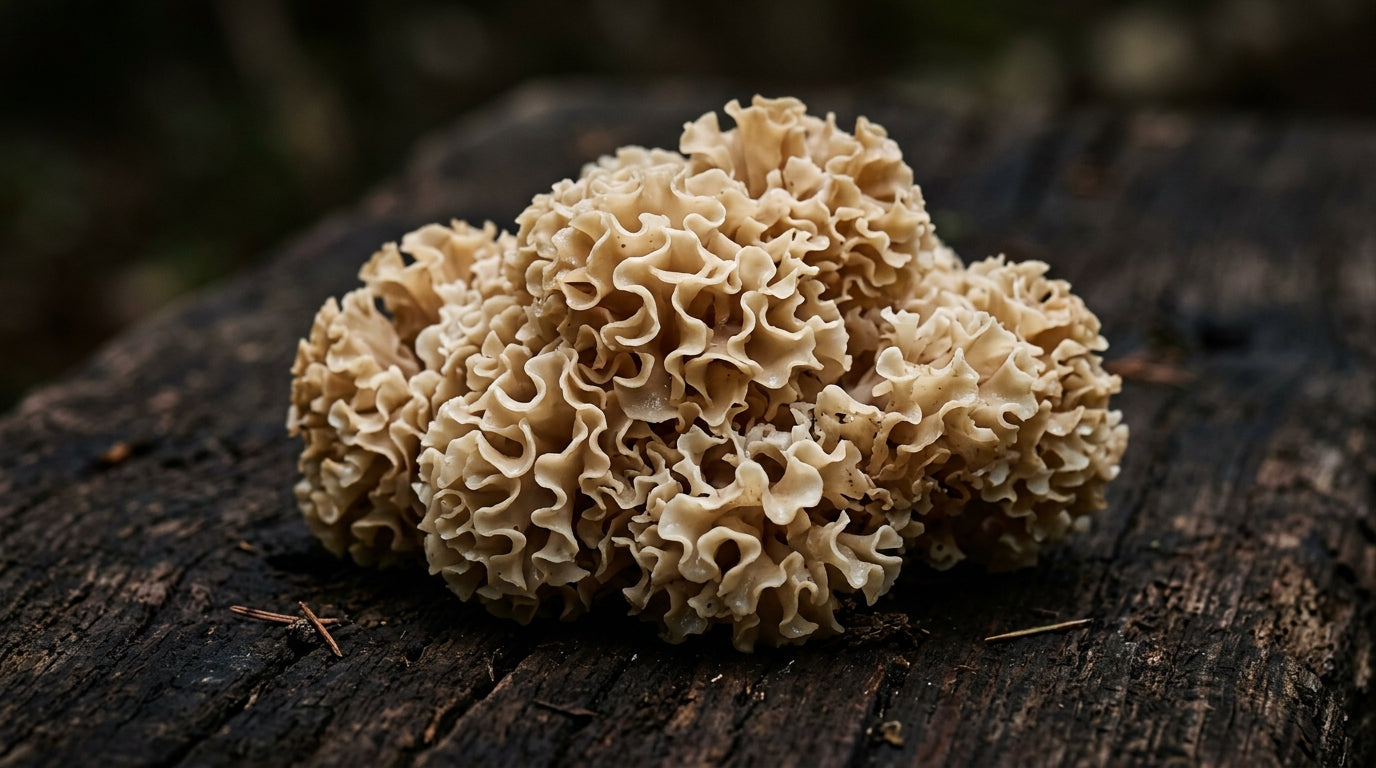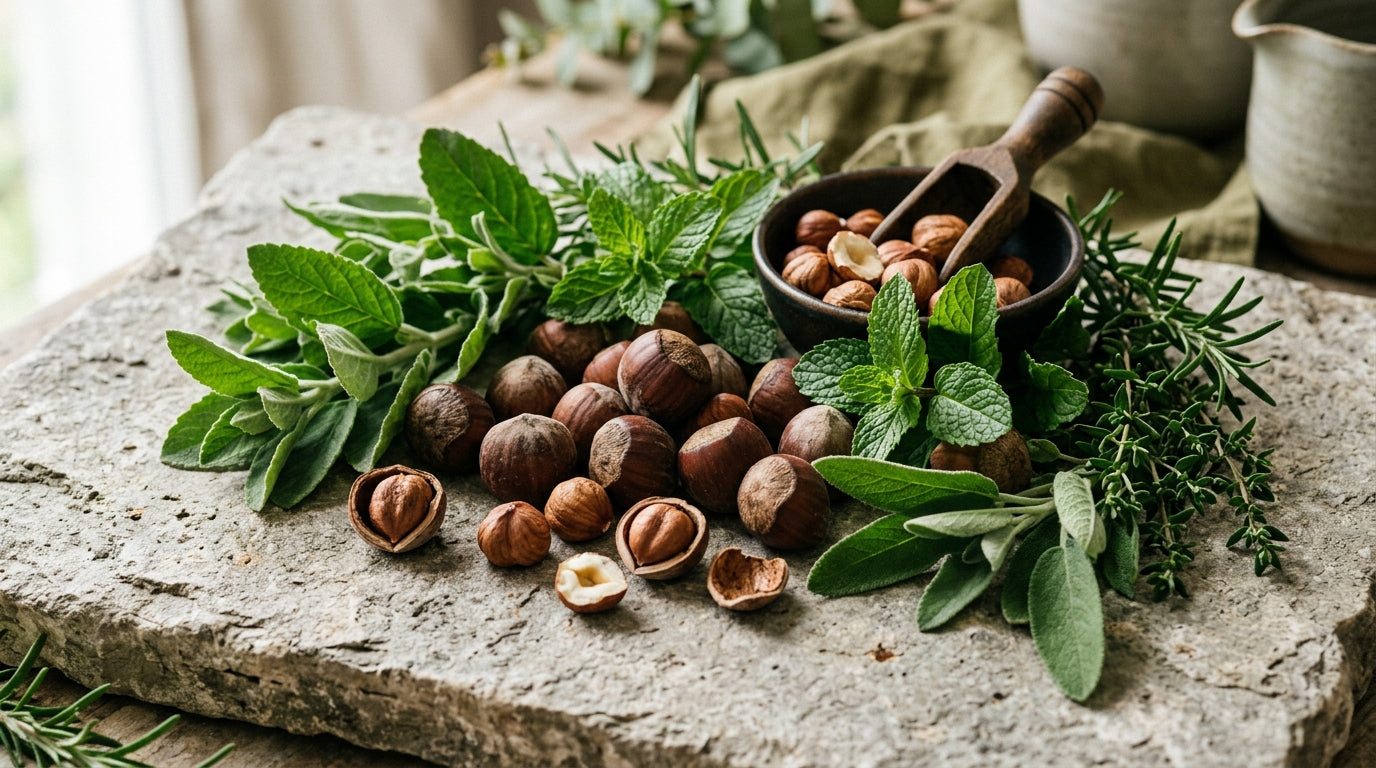
Chilean hazel nuts contain phenolic compounds including caffeic acid hexoside and cyclic dipeptides like cyclo(Arg-Trp) that reduce oxidative stress and protect endothelial function. These bioactive compounds work alongside vitamin E and phytosterols to modulate inflammatory pathways and compete with dietary cholesterol absorption.

Origin
The Chilean Hazel (Gevuina avellana) is an evergreen tree native to southern Chile and adjacent regions of Argentina. Its nuts are prized for their rich monounsaturated fat content and diverse micronutrients, offering significant functional benefits for cardiovascular and cognitive health.
Potential benefits
- Supports cardiovascular health by regulating cholesterol levels and improving circulation through monounsaturated fats.
- Enhances cognitive function, boosting memory and focus via omega-3 fatty acids.
- Promotes skin vitality and anti-aging effects due to its high vitamin E content.
- Aids digestive health by supporting gut motility and microbiome balance through dietary fiber.
- Supports metabolic efficiency and energy production.
- Reduces systemic inflammation and may alleviate joint pain.
- Enhances immune resilience through its rich antioxidant profile.
How it works
Phenolic compounds including caffeic acid hexoside, epicatechin, and chlorogenic acid reduce oxidative stress and modulate inflammatory pathways to protect endothelial function. Phytosterols compete with dietary cholesterol in micelle formation at the intestinal level, reducing cholesterol absorption. Vitamin E (α-tocopherol) provides antioxidant protection and regulates gene expression, while squalene acts as a radical scavenger protecting biological molecules.
What the research says
Current research on Chilean hazel consists primarily of in vitro cell-based studies and in vivo animal studies examining bioactive compound extraction and antioxidant properties. No specific human clinical trials with quantified outcomes or defined sample sizes are documented in the available literature. The evidence supporting health claims remains limited to laboratory studies rather than controlled human intervention trials. Additional clinical trial data from medical databases would be required to establish therapeutic efficacy in humans.
Safety and interactions
Safety data, adverse effects, and drug interactions for Chilean hazel are not established in the current literature. Contraindications and pregnancy safety have not been documented through clinical research. Individuals with tree nut allergies should exercise caution, though cross-reactivity with Chilean hazel has not been specifically studied. Patients taking cholesterol medications should consult healthcare providers before use due to potential additive effects on cholesterol metabolism.
Suggested use
- Common Forms: Raw or roasted nuts, cold-pressed oil, nut flour, nut butter.
- Dosage: Consume 30-50 grams of whole nuts daily. For Chilean Hazel oil, 1-2 tablespoons daily.
- Applications: Enjoy as a snack, incorporate into gourmet dishes, spreads, or dairy-free milks. The oil is suitable for cooking and salad dressings.
Frequently asked questions
What makes Chilean hazel different from regular hazelnuts?
Chilean hazel (Gevuina avellana) contains unique cyclic dipeptides like cyclo(Arg-Trp) and specific phenolic compounds including caffeic acid hexoside not found in common hazelnuts. It also has higher concentrations of squalene and distinct phytosterol profiles compared to Corylus species hazelnuts.
How much Chilean hazel should I consume daily?
No established dosage recommendations exist for Chilean hazel as human clinical trials have not been conducted. Current research consists only of laboratory studies on bioactive compounds without defined therapeutic dosing parameters.
Can Chilean hazel help lower cholesterol naturally?
Laboratory studies show Chilean hazel phytosterols compete with dietary cholesterol absorption in micelle formation, potentially reducing cholesterol levels. However, this mechanism has not been validated in human clinical trials with quantified cholesterol reduction outcomes.
Is Chilean hazel safe during pregnancy?
Pregnancy safety for Chilean hazel has not been established through clinical research or safety studies. Pregnant women should avoid Chilean hazel supplementation until comprehensive safety data becomes available.
What antioxidant compounds are found in Chilean hazel?
Chilean hazel contains vitamin E (α-tocopherol), phenolic compounds including sinapic acid hexoside and hydroxybenzoic acid, plus squalene which acts as a radical scavenger. These compounds demonstrate antioxidant activity in laboratory studies but require human trials for clinical validation.
Does Chilean hazel interact with blood thinning medications like warfarin or aspirin?
Chilean hazel contains vitamin K and monounsaturated fats that may have mild anticoagulant properties, which could potentially interact with blood thinners like warfarin or high-dose aspirin. Individuals taking anticoagulant or antiplatelet medications should consult their healthcare provider before adding Chilean hazel supplements to their routine. While dietary amounts are generally safe, supplemental concentrations warrant medical oversight to prevent any adverse interactions.
Who benefits most from Chilean hazel supplementation—athletes, office workers, or older adults?
Chilean hazel benefits multiple populations differently: office workers and students benefit from its omega-3 content for sustained cognitive focus and memory, athletes gain cardiovascular and metabolic support from its monounsaturated fats, and older adults benefit from its vitamin E and fiber content for circulation, cognitive preservation, and digestive health. The high antioxidant profile makes it especially valuable for anyone experiencing age-related cognitive decline or cardiovascular concerns. Those with sedentary lifestyles or high-stress cognitive demands may see the most noticeable benefits from regular Chilean hazel consumption.
How does Chilean hazel absorption compare when consumed raw versus roasted, or as an oil extract?
Raw Chilean hazel nuts provide intact fiber and heat-sensitive compounds, while roasting may enhance fat bioavailability but can degrade some heat-sensitive antioxidants and omega-3 fatty acids. Cold-pressed oil extracts concentrate monounsaturated fats and fat-soluble vitamins (like vitamin E) for superior absorption, but lack the dietary fiber benefits of whole nuts. For maximum comprehensive benefits, whole raw or lightly roasted nuts paired with adequate dietary fat sources optimize the absorption of both fat-soluble and water-soluble micronutrients.
References
- https://www.ncbi.nlm.nih.gov/search/all/?term=Chilean+Hazel
- https://fdc.nal.usda.gov/fdc-app.html#/search?query=Chilean+Hazel
- https://www.sciencedirect.com/science/article/pii/S1756464619300795
- https://www.ncbi.nlm.nih.gov/pmc/articles/PMC7323529/
This article is educational and is not medical advice. Statements have not been evaluated by the FDA and are not intended to diagnose, treat, cure, or prevent any disease. Consult a healthcare professional before use.