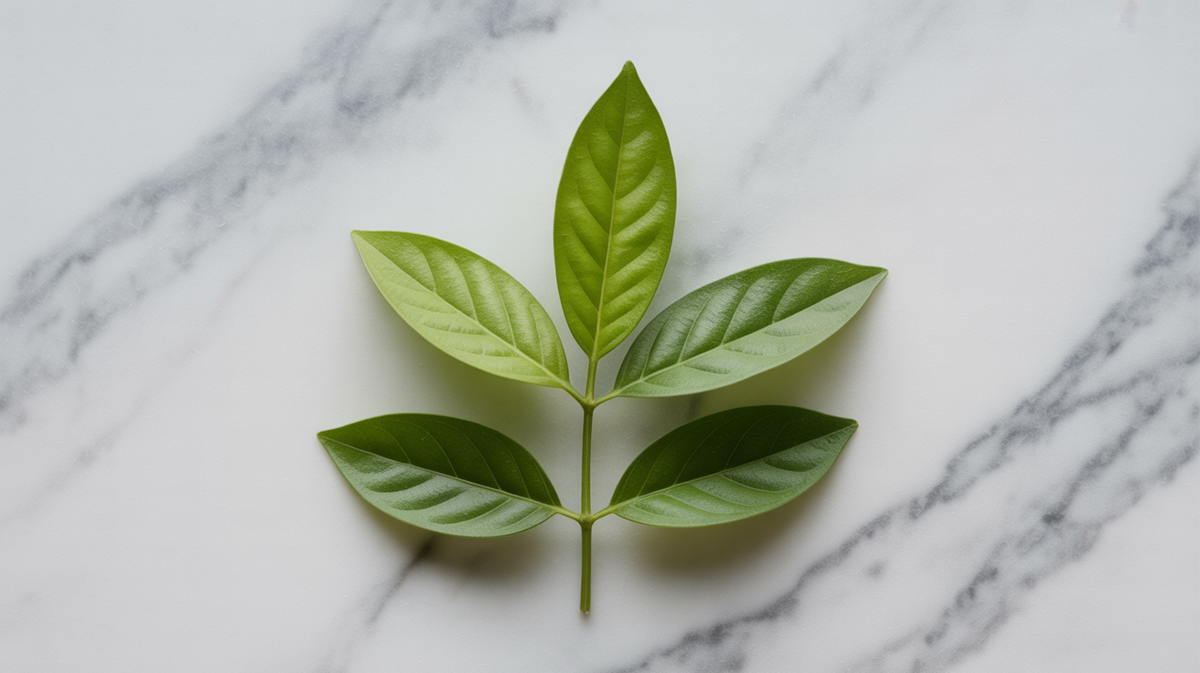
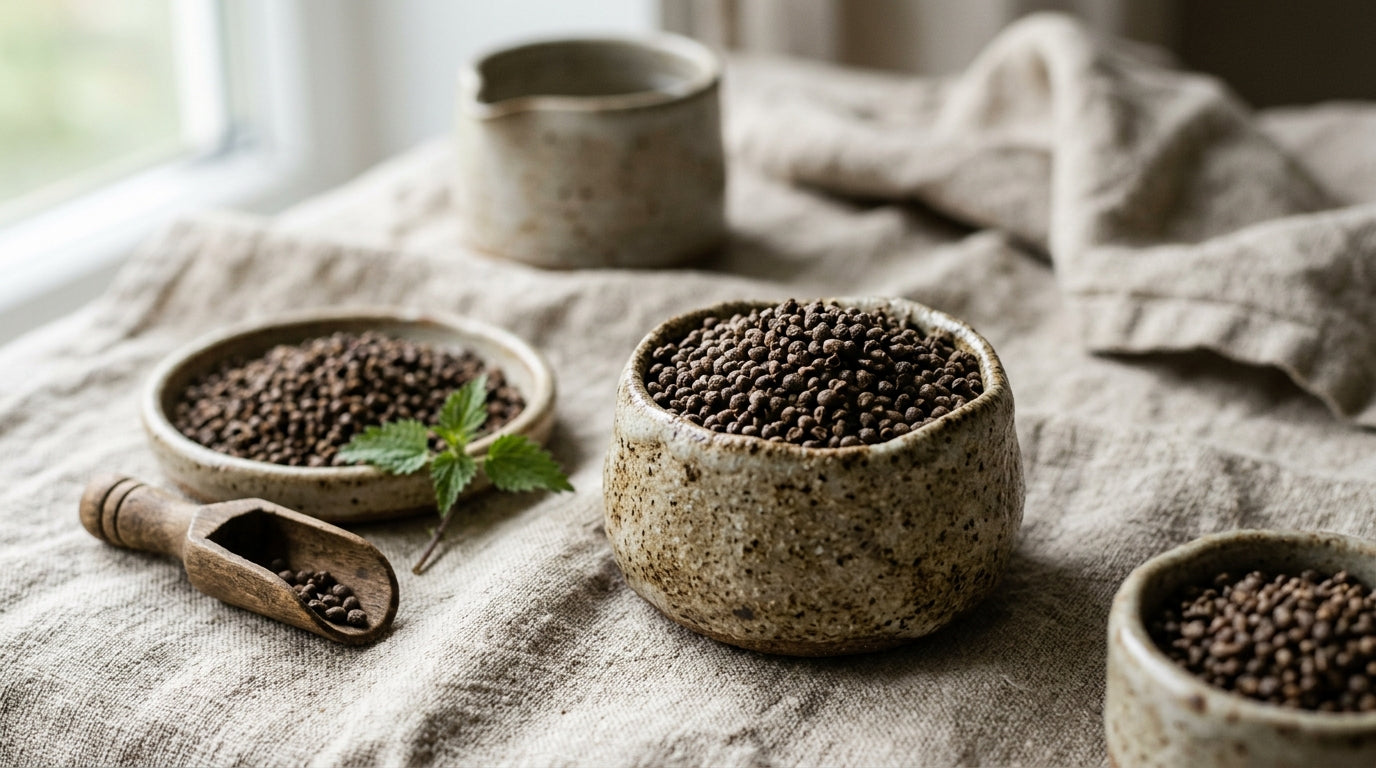
Scientific investigations into Cape Jasmine Leaf Tea primarily involve in vitro and animal models, exploring its anti-inflammatory and hepatoprotective properties. While these studies highlight the potential of its flavonoid and iridoid compounds, most research on *Gardenia jasminoides* emphasizes fruit extracts rather than the leaves specifically. Therefore, direct clinical evidence for Cape Jasmine Leaf Tea is currently limited.

Origin
Cape Jasmine Leaf Tea, derived from Gardenia jasminoides, is a fragrant herbal infusion. Native to East Asia, particularly China and Japan, it is now widely cultivated in tropical and subtropical regions. It is valued in functional nutrition for its calming, liver-supporting, and antioxidant-rich properties.
Potential benefits
- Reduces oxidative stress through its rich antioxidant profile, protecting cellular health.
- Enhances liver function and detoxification pathways, supporting metabolic health.
- Promotes digestive health by soothing the gut and aiding nutrient absorption.
- Reduces stress and promotes relaxation with its calming aroma and bioactive compounds.
- Supports skin health by reducing inflammation and promoting a clear complexion.
- Provides anti-inflammatory benefits, contributing to overall systemic balance.
How it works
The primary bioactive compound, geniposide, through its active metabolite genipin, inhibits inflammatory mediators such as NF-κB and AP-1. It also exhibits antioxidant effects by scavenging free radicals and upregulating endogenous antioxidant enzymes. Other compounds like crocetin may contribute to neuroprotective and retinal health benefits.
What the research says
Scientific studies, primarily in vitro and animal models, have investigated Cape Jasmine Leaf Tea for its anti-inflammatory properties, benefits for liver health, and potential in skin rejuvenation. Research highlights the role of its flavonoid and iridoid compounds in these effects. While promising, more human clinical trials are needed to confirm these benefits and establish optimal dosages.
Safety and interactions
Information regarding the specific safety profile, potential side effects, drug interactions, contraindications, or use during pregnancy for Cape Jasmine Leaf Tea (from *Gardenia jasminoides* leaves) is not provided in the existing research. As with any herbal supplement, consulting a healthcare professional before use is recommended, especially for individuals with pre-existing conditions or those taking medication.
Suggested use
- Common form: Herbal infusion (tea).
- Preparation: Steep 1–2 teaspoons of dried Cape Jasmine leaves in 250ml of hot water for 5–10 minutes.
- Dosage: Consume 1–2 cups daily for general wellness; up to 3 cups for enhanced liver detoxification or skin support.
- Timing: Can be consumed throughout the day, often in the evening for relaxation.
Frequently asked questions
What are the primary bioactive compounds in Cape Jasmine Leaf Tea?
The key bioactive compounds include iridoid glycosides, with geniposide being the primary active component. Other important compounds are organic acids, flavonoids, saffron glycosides like crocetin, phenolic acids, and triterpenoids.
How does Cape Jasmine Leaf Tea exert its health benefits?
Its benefits are largely attributed to geniposide, which, through its metabolite genipin, inhibits inflammatory pathways like NF-κB and AP-1. It also functions as an antioxidant by neutralizing free radicals and boosting the body's natural antioxidant enzymes.
What is the current scientific evidence for Cape Jasmine Leaf Tea?
Current scientific studies, mainly in vitro and animal models, suggest potential anti-inflammatory and liver-protective properties. However, most research on *Gardenia jasminoides* focuses on fruit extracts, meaning direct evidence for the leaf tea is primarily preclinical and limited.
Are there any known side effects or drug interactions for Cape Jasmine Leaf Tea?
available research does not detail specific side effects, drug interactions, or contraindications for Cape Jasmine Leaf Tea. It is always advisable to consult with a healthcare professional before incorporating new herbal teas or supplements, especially if you have health conditions or are on medication.
What is the recommended daily dosage for Cape Jasmine Leaf Tea, and how often should I drink it?
The typical recommendation is 1-2 cups of Cape Jasmine Leaf Tea daily, prepared by steeping 1 teaspoon of dried leaves in hot water for 5-10 minutes. For optimal benefits, consistency matters more than quantity; regular daily consumption allows the antioxidants and bioactive compounds to accumulate in your system and exert their protective effects. Individual tolerance may vary, so it's advisable to start with one cup daily and adjust based on personal response.
Is Cape Jasmine Leaf Tea safe during pregnancy and breastfeeding?
While Cape Jasmine Leaf Tea is generally recognized as safe for culinary use, pregnant and breastfeeding women should consult their healthcare provider before regular supplemental consumption, as comprehensive safety studies in these populations are limited. The herb's bioactive compounds may pass into breast milk, and some constituents could have uterotonic properties that warrant medical evaluation during pregnancy. It is best reserved for non-pregnant, non-lactating individuals unless explicitly approved by a qualified practitioner.
References
- https://www.ncbi.nlm.nih.gov/search/all/?term=Cape+Jasmine+Leaf+Tea
- https://fdc.nal.usda.gov/fdc-app.html#/search?query=Cape+Jasmine+Leaf+Tea
- https://pubmed.ncbi.nlm.nih.gov/?term=Cape+Jasmine+Leaf+Tea
This article is educational and is not medical advice. Statements have not been evaluated by the FDA and are not intended to diagnose, treat, cure, or prevent any disease. Consult a healthcare professional before use.