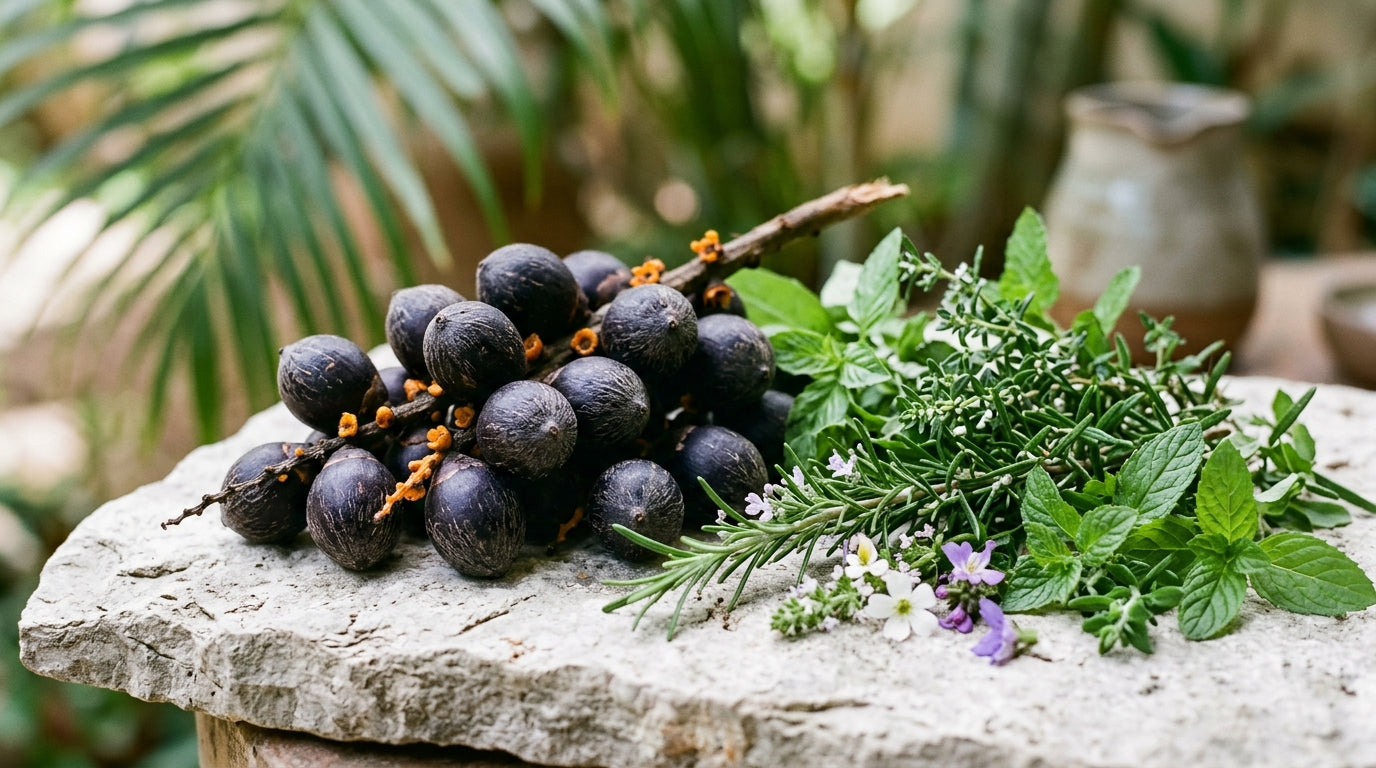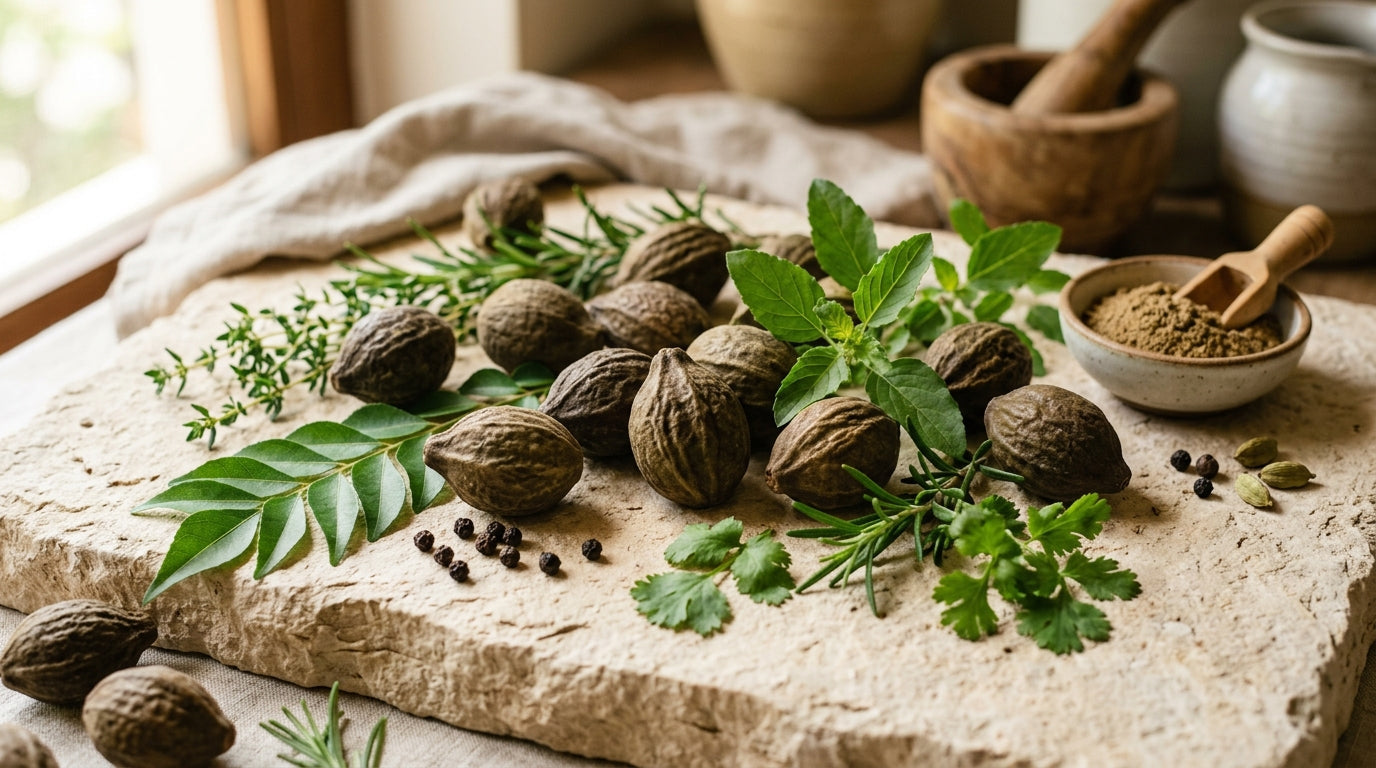
Baheda (Terminalia bellirica) contains bioactive tannins, chebulinic acid, gallic acid, and β-sitosterol that exert potent antioxidant effects by scavenging superoxide anions and hydroxyl radicals while restoring cellular antioxidant enzymes (SOD, CAT, GSH), conferring hepatoprotective, anti-inflammatory, and antimicrobial properties. Research confirms its antifungal potential—a study published in the Pakistan Journal of Biological Sciences demonstrated that Terminalia bellirica, as a Triphala ingredient, significantly inhibited Aspergillus species growth during storage (PMID: 24199459).

Origin
Baheda, scientifically known as Terminalia bellirica, is a large deciduous tree native to the Indian subcontinent and Southeast Asia, commonly found in forests across India, Sri Lanka, Nepal, and Myanmar. Revered in Ayurvedic medicine, its fruit is a key component of the traditional Triphala formulation, valued for its profound digestive, respiratory, and detoxifying properties.
Potential benefits
- Supports digestive health by improving bowel regularity and relieving constipation through its fiber content.
- Promotes respiratory health by reducing mucus buildup and soothing coughs with expectorant properties.
- Enhances liver function by aiding in detoxification and protecting against oxidative stress.
- Provides antimicrobial effects, inhibiting the growth of harmful bacteria and fungi.
- Boosts immune function by supporting overall cellular health with its rich antioxidant profile.
How it works
The primary bioactive compounds in Terminalia bellirica—tannins (including chebulinic acid), gallic acid, ellagic acid, and β-sitosterol—act as potent free radical scavengers by directly neutralizing superoxide anions (O₂⁻), hydroxyl radicals (·OH), and peroxynitrite (ONOO⁻), while chelating pro-oxidant Fe²⁺/Fe³⁺ ions to prevent Fenton reaction-mediated oxidative damage. These polyphenolic compounds upregulate endogenous antioxidant defense enzymes—superoxide dismutase (SOD), catalase (CAT), and glutathione (GSH)—through activation of the Nrf2/ARE signaling pathway, thereby protecting hepatocytes and other tissues from lipid peroxidation. Gallic acid and related tannins also suppress the NF-κB inflammatory cascade and inhibit cyclooxygenase-2 (COX-2) and lipoxygenase (LOX) enzymes, reducing pro-inflammatory cytokines such as TNF-α and IL-6. Additionally, β-sitosterol contributes immunomodulatory effects by enhancing lymphocyte proliferation and natural killer cell activity, supporting the herb's traditional use as a Rasayana (rejuvenative).
What the research says
Current evidence for Terminalia bellirica is primarily based on in vitro and animal studies rather than human clinical trials. In rat hepatotoxicity models, aqueous acetone extracts reduced CCl₄-induced liver injury markers to levels comparable to silymarin controls and normalized serum enzyme levels. Concentration-dependent free radical scavenging activity has been demonstrated in vitro, with fruit pulp extracts showing superior antioxidant capacity compared to bark and seed extracts when tested against quercetin standards. While traditional Ayurvedic use as part of Triphala spans centuries, robust human clinical data with specific dosages and outcomes remains limited.
Safety and interactions
Baheda is generally considered safe when consumed in traditional Ayurvedic dosages (typically 3–6 g of fruit powder daily or as part of Triphala), though high doses may cause gastrointestinal discomfort, loose stools, or diarrhea due to its laxative properties. Due to its tannin-rich composition, baheda may reduce the absorption of iron supplements and certain medications if taken concurrently; a gap of at least two hours is recommended. Individuals on anticoagulant or antiplatelet therapy (e.g., warfarin, aspirin) should exercise caution, as gallic acid and related polyphenols may potentiate bleeding risk, and potential CYP450 enzyme interactions (particularly CYP3A4 modulation by gallic acid) have been noted in preliminary in vitro studies. Pregnant and lactating women, children, and individuals with chronic liver or kidney disease should consult a healthcare provider before use, as robust human safety data for isolated baheda supplementation remain limited.
Suggested use
- Common forms: Powder, tea, or capsules.
- Dosage: 1 teaspoon of powder mixed with warm water or honey daily for digestive and respiratory health.
- Preparation: Brew 1 teaspoon of powder in hot water for a soothing herbal tea.
- Usage: Can be taken as a convenient supplement in capsule form for liver and immune support.
Frequently asked questions
What are the main health benefits of baheda (Terminalia bellirica)?
Baheda benefits include potent antioxidant protection (via gallic acid, chebulinic acid, and tannins), hepatoprotective activity by reducing lipid peroxidation, digestive support through mild laxative action, respiratory health promotion by acting as an expectorant to reduce mucus, and antimicrobial effects against bacteria and fungi. A 2012 study confirmed its antifungal activity against Aspergillus species (PMID: 24199459).
How does baheda support liver health and detoxification?
Baheda's polyphenolic compounds—especially gallic acid and chebulinic acid—protect the liver by scavenging free radicals, chelating pro-oxidant metal ions, and restoring antioxidant enzyme levels (SOD, CAT, GSH) through Nrf2/ARE pathway activation. These mechanisms collectively reduce hepatic lipid peroxidation and oxidative damage, supporting the liver's natural detoxification processes.
Is baheda the same as Triphala, and how are they related?
Baheda (Terminalia bellirica) is one of three fruits in Triphala, alongside Amla (Emblica officinalis) and Haritaki (Terminalia chebula). In Triphala, baheda specifically contributes antioxidant, antimicrobial, and mild laxative properties, and research on Triphala's antifungal activity has confirmed the individual contribution of baheda against storage-associated Aspergillus species (PMID: 24199459).
What is the recommended dosage of baheda and are there any side effects?
Traditional Ayurvedic dosages range from 3–6 grams of baheda fruit powder daily, often taken with warm water or honey. Side effects at recommended doses are rare but may include mild gastrointestinal upset or loose stools due to its laxative action. High doses or prolonged use should be supervised by a healthcare professional, especially for those on blood-thinning medications.
Does baheda have antimicrobial or antifungal properties?
Yes, baheda has demonstrated significant antifungal activity. Gautam AK (2012) showed that Terminalia bellirica, as a Triphala ingredient, effectively inhibited Aspergillus species growth during storage conditions (Pak J Biol Sci, PMID: 24199459). Its tannins and gallic acid also exhibit broad-spectrum antibacterial effects against both gram-positive and gram-negative pathogens in various in vitro studies.
Can baheda be taken alongside common digestive medications like laxatives or antacids?
Baheda's natural laxative properties may interact with prescription laxatives or stool softeners, potentially causing excessive bowel movements or electrolyte imbalances. It is advisable to consult with a healthcare provider before combining baheda with antacids or acid-reducing medications, as timing and interactions may affect absorption of both substances. A gap of 2–3 hours between doses of baheda and other digestive medications is generally recommended.
Is baheda safe to use during pregnancy and breastfeeding?
Baheda is traditionally used in Ayurvedic medicine and is generally considered safe; however, its strong laxative properties warrant caution during pregnancy, particularly in the first and third trimesters when bowel stimulation should be minimized. Pregnant and breastfeeding women should consult their healthcare provider before supplementing with baheda, as limited clinical data exists for these populations. Safety for nursing infants through breast milk has not been thoroughly studied.
How does baheda's bioavailability change when taken with food versus on an empty stomach?
Baheda is best absorbed when taken with warm water or herbal tea on an empty stomach, as this allows its tannins and active compounds to act directly on the digestive tract for maximum efficacy. Taking it with meals, particularly those high in fat, may slow absorption and reduce its expectorant and laxative effects. Traditional Ayurvedic practice recommends taking baheda in the morning or evening away from other supplements and medications for optimal results.
References
- https://www.ncbi.nlm.nih.gov/search/all/?term=Baheda+%28Terminalia+bellirica%29
- https://fdc.nal.usda.gov/fdc-app.html#/search?query=Baheda+%28Terminalia+bellirica%29
- https://www.ncbi.nlm.nih.gov/pmc/articles/PMC3954250
- https://link.springer.com/article/10.1007/s11655-012-1260-5
This article is educational and is not medical advice. Statements have not been evaluated by the FDA and are not intended to diagnose, treat, cure, or prevent any disease. Consult a healthcare professional before use.